








Executive Overview
In the highly specialized landscape of macro photography, innovation is often measured in millimeters of working distance and fractions of reproduction ratios. For decades, the industry standard has dictated that true 1:1 macro photography belongs almost exclusively to the domain of telephoto focal lengths—typically ranging from 90mm to 180mm. While these telephoto lenses excel at isolating subjects and providing comfortable working distances, they do so at the cost of environmental context, completely dissolving the background into a uniform, abstract blur.
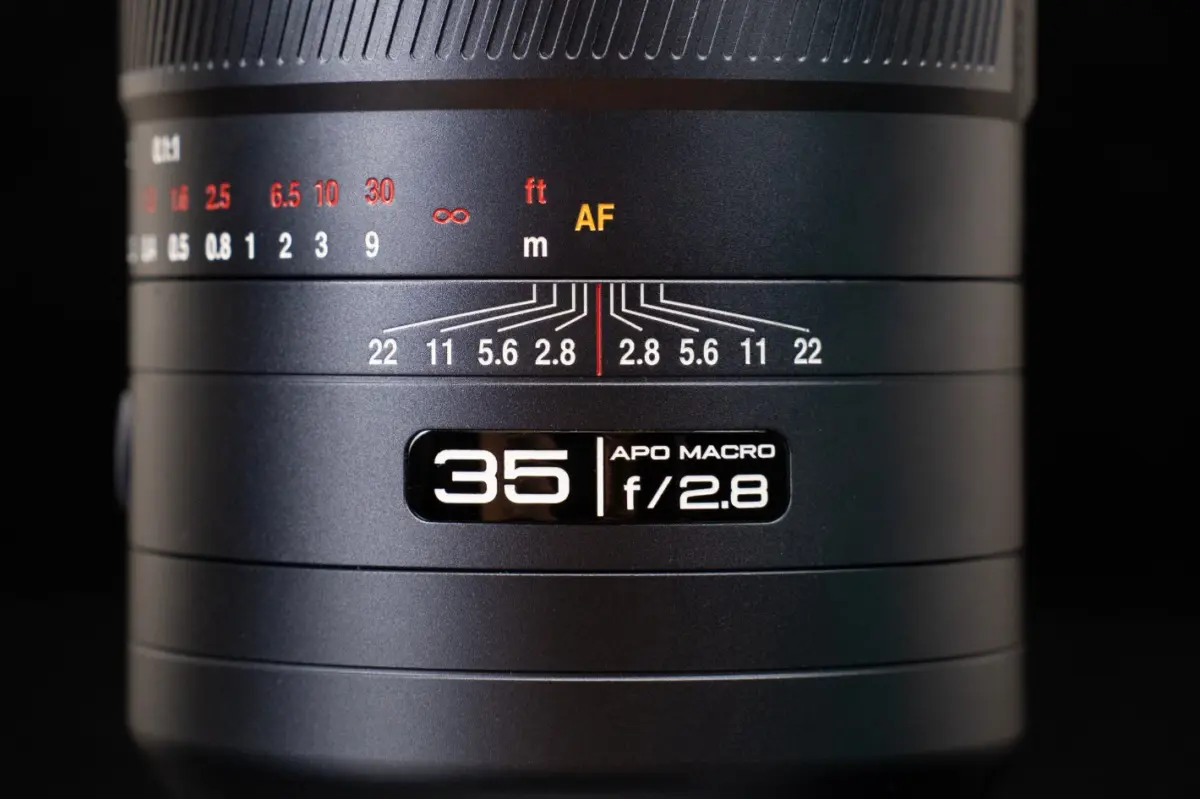
Venus Optics, under its pioneering Laowa brand, has systematically challenged these optical conventions. Their latest release, the Laowa ACRIS 35mm f/2.8 1X AF Macro APO, represents a significant technological and philosophical shift. Priced aggressively at USD $449, the ACRIS is marketed as the world’s first full-frame, autofocus-enabled 35mm lens featuring true 1:1 life-size magnification.
By marrying a classic, natural 35mm wide-angle perspective with life-size reproduction capabilities, a fast f/2.8 aperture, a hybrid dual-mode focusing system, and an advanced Apochromatic (APO) optical formula, the ACRIS 35mm aims to redefine how photographers document the natural world. This investigative report explores the development, technical specifications, market positioning, and broader industry implications of this landmark optical release.
Detailed Chronology: The Evolution of Environmental Macro
To understand the significance of the Laowa ACRIS 35mm, one must trace the history of what is known as "environmental macro" or "wide-angle macro" photography.
The Pioneer Philosophy
Traditionally, macro photography was synonymous with subject isolation. Photographers sought to eliminate distracting backgrounds to focus entirely on the intricate details of an insect’s eye or the stamen of a flower. However, a counter-movement emerged, championed by visionary nature photographers such as Paul Harcourt Davies and Clay Bolt.
Davies and Bolt argued that isolating a subject stripped it of its ecological narrative. They advocated for close-up photography that kept the subject prominent in the frame while preserving the background, thereby showing the organism within its native habitat. In their seminal eBook, “Wide-angle macro – the essential guide,” they outlined the creative potential and optical hurdles of this approach.
[Traditional Macro (90mm-180mm)] ───► Subject Isolated / Background Obliterated
[Environmental Macro (15mm-35mm)] ──► Subject Prominent / Habitat & Context Preserved
Historically, executing this technique required significant compromise. Photographers had to adapt standard wide-angle lenses using extension tubes or close-up filters, which severely degraded image quality, introduced heavy field curvature, and restricted focus to a microscopic, inflexible window.
Laowa’s Legacy of Innovation
Venus Optics recognized this market void early on and built its reputation on filling highly specific niche demands. Over the years, the manufacturer has amassed nearly 20 specialized macro lenses in its portfolio. Key milestones in their wide-angle and macro catalog include:
- Laowa 15mm f/4 Wide Angle Macro: Renowned as the world’s widest 1:1 macro lens, offering an ultra-wide perspective but requiring manual focus and suffering from the extreme perspective distortion inherent to a 15mm focal length.
- Laowa 15mm f/4.5 Zero-D Shift / Macro Variants: Designed to solve perspective distortion while allowing close-up capabilities.
- Laowa 55mm f/2.8 Tilt-shift 1X Macro: A specialized tool for product and macro photographers requiring perspective and depth-of-field control.
Despite these breakthroughs, a critical gap remained: the lack of a moderate, natural wide-angle lens that offered both autofocus and true 1:1 reproduction. While some conventional 35mm "macro" lenses existed, they typically capped their reproduction ratios at 0.5x (half life-size). The release of the ACRIS 35mm f/2.8 1X AF Macro APO officially bridges this gap, bringing autofocus convenience and 1:1 magnification to the classic 35mm focal length.
Supporting Context & Technical Metrics
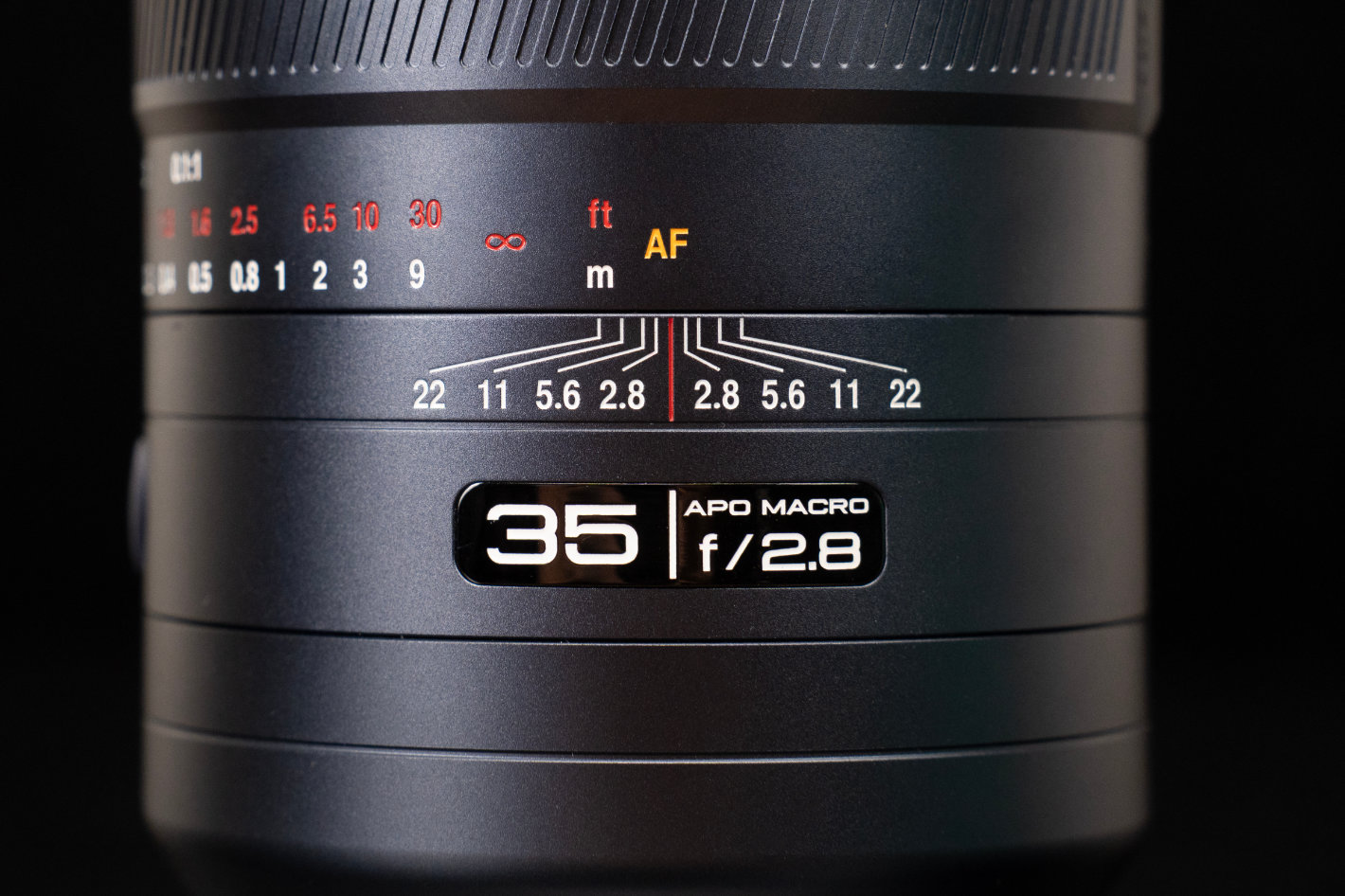
The Laowa ACRIS 35mm f/2.8 is not merely a standard 35mm lens with a shortened minimum focus distance; it is an optical system engineered from the ground up to handle the extreme physical demands of 1:1 magnification.
| Specification | Metric / Feature |
|---|---|
| Focal Length | 35mm |
| Maximum Aperture | f/2.8 |
| Max Magnification Ratio | 1:1 (Life-size) |
| Optical Construction | 13 elements in 10 groups |
| Optical Correction | Apochromatic (APO) design |
| Focusing System | Dual-Mode Hybrid (AF / MF Assist) |
| Build Quality | All-metal, weather-sealed |
| Filter Thread | Ø72mm (AF versions) / Ø67mm (MF versions) |
| MSRP | USD $449 |
Optical Architecture and the APO Advantage
At the core of the ACRIS 35mm is an optical construction consisting of 13 elements arranged in 10 groups.
Standard wide-angle lenses focused at close distances routinely suffer from field curvature, resulting in soft edges and a loss of fine micro-textures. Laowa’s optical engineers designed the ACRIS to maintain edge-to-edge sharpness and high contrast across the entire focus range—from infinity down to the 1:1 close-up limit.
Light Path Comparison:
Achromatic Lens (Standard):   Red/Blue Focus ──► [ Focal Plane ] ◄── Green Focus (Color Fringing)
Apochromatic Lens (Laowa):    Red/Green/Blue Focus ──────────────────► [ Single Focal Plane ] (Zero Fringing)
Furthermore, the lens incorporates Laowa’s highly regarded Apochromatic (APO) design. In standard achromatic lenses, only two wavelengths of light (typically red and blue) are focused onto the same plane, leaving green out of focus and causing lateral and longitudinal chromatic aberrations (color fringing). The ACRIS’s APO design corrects for three wavelengths of light, focusing them onto the exact same focal plane. This results in:
- Elimination of purple and green fringing in both high-contrast in-focus edges and out-of-focus highlights (bokeh).
- Significantly reduced post-production correction time for professional workflows.
- True-to-life color fidelity and micro-contrast, critical for scientific and botanical documentation.
The Dual-Mode Hybrid Focusing System
To balance the needs of everyday street/portrait photography with the precision required for high-magnification macro work, Laowa has implemented a versatile, dual-mode focusing system:
- Standard Autofocus Mode (Infinity to 0.5 meters): Within this range, the lens operates as a fast, responsive autofocus prime. It utilizes modern AF algorithms to deliver quick, accurate eye, face, and subject tracking—making it highly effective for environmental portraiture, documentary work, and street photography.
- Macro Focus Assistance Mode (0.5 meters to 1:1): At distances closer than 0.5 meters, autofocus becomes highly susceptible to minor physical shifts, wind, and camera shake. To combat this, the ACRIS seamlessly transitions to a tactile, micro-step manual focus system. This mode integrates with focus-bracketing features in modern mirrorless cameras, allowing photographers to execute precise focus-stacking sequences with ease.
Ergonomics, Build, and Mechanical Reliability
Operating in wet, dusty, or unpredictable outdoor environments requires robust physical protection. The ACRIS 35mm features an all-metal housing paired with comprehensive weather-sealing to prevent dust and moisture ingress.
       [ Weather-Sealed Metal Outer Barrel ]
  ┌─────────────────────────────────────────────┐
  │   [ Fixed Front Element ]                   │  ◄── No barrel extension
  │      └─► [ Internal Focus Group ] ◄─        │      during 1:1 focusing
  └─────────────────────────────────────────────┘
A crucial mechanical feature is its internal focusing design. In traditional macro lenses, the lens barrel extends significantly as the focus moves toward 1:1, which can scare away skittish insects, cast unwanted shadows on the subject, or physically collide with delicate flora. Because the physical length of the ACRIS remains constant, photographers can approach subjects with confidence.
Additionally, the lens features a dedicated Focus Assist Button for instant mode switching, and varies its filter threads based on the mount type (Ø72mm for AF-supported mounts and Ø67mm for manual-only variants), allowing the easy attachment of circular polarizers or neutral density (ND) filters.
Official Statements & Market Analysis
Laowa’s official communications highlight the unique storytelling capabilities of the lens. According to the company, the ACRIS 35mm was designed to resolve a long-standing compromise in close-up photography:
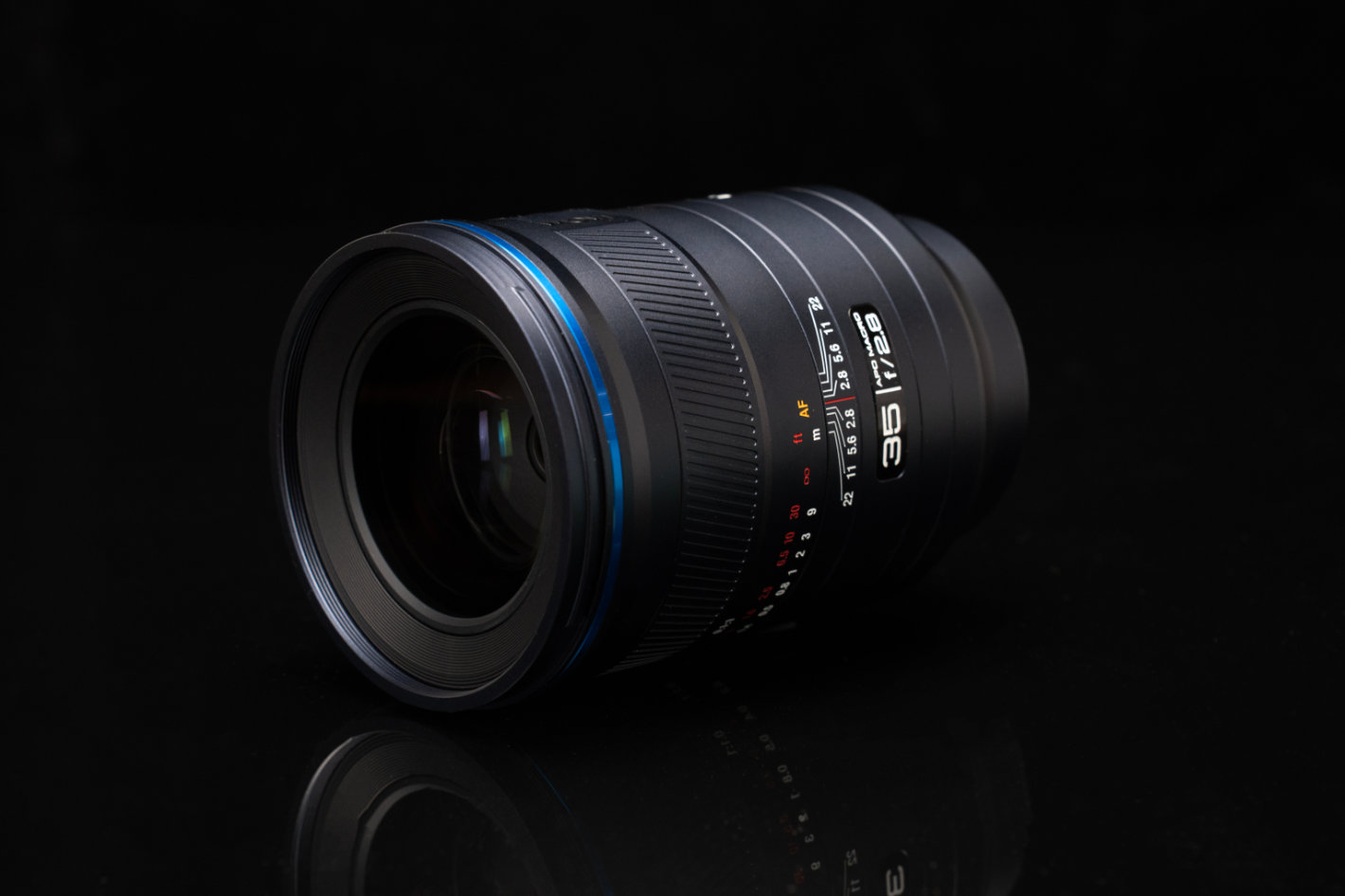
"Even at extreme 1:1 close-up distances—where standard lenses frequently suffer from field curvature and soft edges—the ACRIS preserves fine micro-textures and fine detail, whether shot wide open at f/2.8 or stopped down. The lens clearly sets a new standard for wide-angle macro photography, as its focal length preserves a natural field of view."
Market Positioning and Mount Availability
The lens is strategically priced at USD $449, a highly competitive price point that undercuts first-party macro options while offering features they do not possess. The lens is distributed across two distinct functional categories based on camera mount:
- Autofocus-Enabled Mounts: Sony E, Canon EF, and Nikon Z.
- Manual-Focus-Only Mounts: Canon RF and L-Mount.
This split-mount strategy allows Laowa to cater to the dominant mirrorless and DSLR ecosystems. While the lack of native autofocus on Canon RF and L-mount systems reflects the ongoing proprietary licensing restrictions of those mounts for third-party manufacturers, the manual focus operation remains fully functional for dedicated macro shooting, where manual focus is often preferred.
Future Outlook: Implications for the Photographic Industry
The launch of the Laowa ACRIS 35mm f/2.8 1X AF Macro APO is poised to influence several segments of the imaging industry:
                  ┌─────────────── Laowa ACRIS 35mm ───────────────┐
                  │                                                │
                  ▼                                                ▼
     [ Creative Democratization ]                     [ Videography Expansion ]
  - True 1:1 macro at $449 MSRP.                   - Cinematic 35mm perspective.
  - No longer requires expensive gear              - Smooth pull-focus from infinity
    or heavy cropping for environmental shots.       to macro without barrel extension.
The Democratization of Specialized Optics
Historically, achieving high-quality, wide-angle macro images required exotic tilt-shift lenses, specialized bellows, or expensive custom setups. At $449, the ACRIS 35mm lowers the barrier to entry, allowing amateur enthusiasts, student researchers, and budget-conscious professionals to explore environmental macro photography without financial strain.
A New Tool for Videographers and Content Creators
The 35mm focal length is a favorite among cinematographers due to its natural, human-eye perspective. A 35mm lens that can pull focus seamlessly from infinity down to a 1:1 macro shot opens up creative options for:
- Product Videography: Capturing wide, establishing shots of a product and moving directly into extreme, high-detail texture shots in a single, continuous take.
- Nature Documentaries: Recording small wildlife within their native habitats, showing wind-blown trees, weather changes, and surrounding terrain while keeping the animal sharply in focus in the foreground.
- Medical and Scientific Imaging: Documenting procedures or specimens with a natural field of view, reducing the claustrophobic distortion of ultra-wide lenses while maintaining high resolution.
Challenging First-Party Dominance
By introducing the world’s first full-frame AF 35mm 1:1 macro lens, Venus Optics continues to push the boundaries of lens design. This release will likely pressure major camera manufacturers (such as Sony, Canon, and Nikon) to expand their own macro lineups beyond traditional 90mm and 100mm focal lengths, driving further optical innovation.
As imaging sensors continue to increase in resolution, the demand for highly corrected, high-contrast, and specialized lenses like the Laowa ACRIS 35mm f/2.8 will only grow. This lens successfully bridges the gap between technical precision and creative, environmental storytelling.