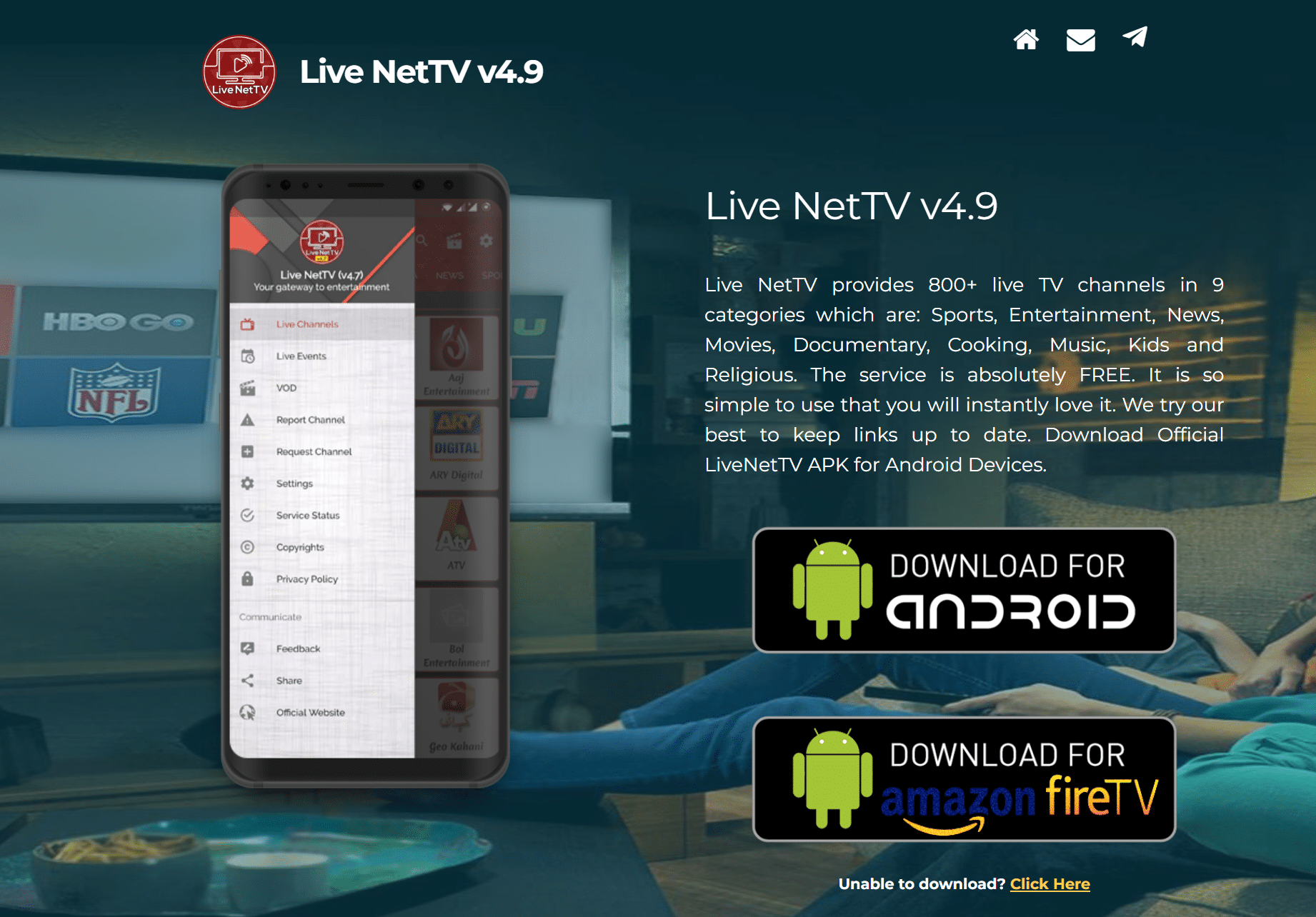
In the relentless global war against digital piracy, few victories are as symbolic as the complete dismantling of a long-standing infrastructure. The Alliance for Creativity and Entertainment (ACE), the world’s leading anti-piracy coalition, has officially announced the definitive shutdown of LiveNetTV, a massively popular free Internet Protocol Television (IPTV) application. Operating in a legal gray zone for an entire decade, the ad-supported service successfully evaded multiple waves of legal pressure, technological countermeasures, and corporate crackdowns before finally meeting its match in a coordinated international enforcement action.
The final chapter of LiveNetTV’s decade-long run was written not through a sudden stroke of digital legislation, but via a high-stakes criminal investigation originating in Istanbul, Turkey. Two individuals identified as the Turkey-based operators of the platform—referred to legally only by their initials, A.B. and R.B.—have entered into a formal settlement with ACE. As part of this comprehensive legal resolution, the operators surrendered ten vital domain names to the Motion Picture Association (MPA), which manages the ACE coalition, and issued a sweeping, deeply remorseful public mea culpa.
While the application’s video streams unexpectedly went dark back in February following a dramatic dawn raid by local law enforcement, the true scope of the enforcement action and the permanent surrender of the platform’s digital assets remained shrouded in mystery for months. Today, with the official release of details from ACE, a clear picture emerges of how a combination of criminal complaints, local police raids, and relentless legal pressure managed to permanently neutralize one of the most resilient pirate streaming applications of the Android era.
Detailed Chronology: From Rise to Raid and Resolution
The Ten-Year Ascent of an Android Staple
Launched originally around 2016, LiveNetTV quickly established itself as a cornerstone of the alternative media consumption ecosystem. Designed primarily for Android-based mobile devices and increasingly popular media streaming hardware—most notably Amazon’s Fire TV sticks—the application offered a deceptively simple value proposition: free access to hundreds of live television channels spanning dozens of countries.
Unlike traditional subscription-based services, LiveNetTV operated on an ad-supported revenue model, capturing millions of users who sought a cost-free alternative to cable packages and legal streaming subscriptions. Over its ten-year lifespan, the platform weathered continuous threats from rightsholders. When mainstream app stores banned its distribution, the developers relied on sideloading—installing applications via downloaded APK files—to keep their user base growing.
The application’s resilience became legendary within pirate communities. In an effort to curb the proliferation of copyright-infringing software, tech giant Amazon took direct countermeasures last year, utilizing remote management tools to automatically disable and remove several prominent piracy applications sideloaded onto Fire TV devices, explicitly targeting LiveNetTV. Yet, even this direct corporate intervention failed to land a knockout blow. The developers swiftly engineered updates and workarounds, successfully slipping past Amazon’s technological filters and keeping the service operational well into the new year.
The February Raid in Istanbul
The impenetrable armor protecting LiveNetTV finally shattered in late February, though the catalyst was entirely offline. According to information provided by ACE, the crackdown was initiated following a formal criminal complaint filed by MPA member companies with the public prosecutor’s office in Istanbul.
Acting on this complaint, local Turkish law enforcement agencies, accompanied by a court-appointed technical expert, executed a coordinated search-and-seizure operation targeting the platform’s operators. Facing physical raids, the seizure of equipment, and severe criminal exposure, A.B. and R.B. made the immediate decision to pull the plug on the service.
Users opening the app during those final days in February were met with a confusing interface: while the application still opened and thumbnails loaded, every video stream remained stubbornly dead. For months, the operators maintained absolute silence, leaving the global user base to speculate whether the platform had simply succumbed to internal burnout or external legal pressures. In reality, the application was already dead in the water, dismantled from the inside out following direct intervention by law enforcement.
Settlement and Domain Surrender
Following the February raids, months of intense legal negotiations ensued between the Turkish operators and the legal representatives of ACE and the MPA. By late June, a formal settlement had been reached, though the legal proceedings continued to ripple forward as digital assets were systematically transferred.
The most tangible manifestation of this settlement is the wholesale surrender of LiveNetTV’s web presence. WHOIS registry records highlight a methodical handover of the platform’s core infrastructure throughout the summer. Ten domain names—originally registered a decade prior when the app first launched—were formally transferred to the MPA:
livenettv.net (Transferred June 29, 2026)
livenettv.info (Transferred June 29, 2026)
livenettv.pro (Transferred June 29, 2026)
livenettv.cc (Transferred June 29, 2026)
livenettv.co (Transferred June 30, 2026)
livenettv.org (Transferred August 12, 2026)
livenettv.me (Transferred August 13, 2026)
livenettv.us (Transferred August 24, 2026)
livenettv.tv (Transferred August 24, 2026)
livenettv.xyz (Transferred September 8, 2026)
Today, typing any of these historic URLs into a web browser no longer leads to an APK download portal or streaming directory. Instead, visitors are instantly redirected to ACE’s official "Watch Legally" portal, effectively transforming a former piracy hub into an educational redirection tool for legitimate content consumption.
Supporting Context & Metrics: The True Scale of LiveNetTV
While web-traffic statistics rarely paint the full picture of an application-based service, the metrics associated with LiveNetTV’s domain network underscore its substantial reach. At the height of its popularity, ACE reported that the platform’s primary websites drew approximately 2.4 million annual visits.
However, industry analysts and anti-piracy experts emphasize that web traffic numbers represent only a fraction of the platform’s actual footprint. The vast majority of LiveNetTV’s users interacted with the service exclusively through the dedicated Android application or sideloaded Fire TV interfaces, meaning actual daily active users and streaming sessions vastly exceeded the 2.4 million annual web hits.
The platform’s survival strategy relied heavily on the proliferation of Android-powered devices. The transformation of inexpensive streaming sticks—particularly Amazon’s Fire TV product line—into ubiquitous household items created an expansive, ready-made market for illicit streaming software. Because these devices allowed users to easily install applications outside of official storefronts via sideloading, services like LiveNetTV could bypass traditional app store vetting processes.
Amazon’s aggressive software updates last year proved that tech platforms are increasingly willing to police their own ecosystems, yet LiveNetTV’s ability to bounce back demonstrated the persistent nature of decentralized app developers. It required a physical, cross-border law enforcement intervention—bridging US-based copyright holders with Turkish police authorities—to achieve what software updates could not.
Official Statements and Operator Remorse
As part of the terms of their settlement with ACE, the two Turkish operators, A.B. and R.B., agreed to issue a joint public statement. Published as part of ACE’s official press release, the statement serves as a rare, unfiltered look into the psychological and financial realities faced by commercial-scale digital pirates when caught in the crosshairs of international intellectual property enforcement.
"What started as a way to make money online quickly got out of hand," the operators confessed in their joint mea culpa. "We didn’t fully appreciate the legal consequences or the impact our actions would have."
Reflecting on the totality of the legal fallout, the statement concludes with a stark warning to others operating in the shadow economy of digital media:
"Looking back, the financial gains were simply not worth everything we’ve lost."
While ACE has remained tight-lipped regarding the specific financial penalties or damages agreed upon in the settlement—traditionally favoring multi-million-dollar figures in corporate press releases—anti-piracy representatives suggest that obtaining a public admission of guilt and remorse carries unique deterrent value. For a coalition dedicated to shifting cultural perceptions around copyright infringement, a voluntary confession from seasoned operators can prove far more potent than a purely monetary judgment.
ACE leadership was quick to praise the collaborative nature of the cross-border operation. Representatives expressed gratitude to law enforcement authorities in Türkiye for executing the swift search-and-seizure protocols that ultimately brought the ten-year enterprise to a grinding halt.
Future Outlook: The Shrinking Landscape for Sideloaded IPTV
The collapse of LiveNetTV is far from an isolated incident; rather, it represents a hardening consensus among global law enforcement agencies and anti-piracy coalitions regarding the legal status of third-party streaming apps. For years, developers of applications like LiveNetTV operated under the mistaken assumption that hosting APKs externally or routing streams through decentralized architectures offered a permanent shield against copyright litigation.
The successful prosecution and settlement in Istanbul demonstrate that physical borders and app-sideloading workarounds are no longer sufficient to protect illicit streaming operators. ACE and its parent organization, the MPA, have increasingly turned their focus toward identifying the human beings behind anonymous development handles, utilizing international criminal complaints to pierce the veil of digital anonymity.
As major hardware manufacturers like Amazon continue to tighten the security and software restrictions on media sticks and smart devices, and as anti-piracy coalitions coordinate seamlessly with international police forces, the golden age of the independent, long-surviving pirate streaming app is rapidly drawing to a close. For current and aspiring operators watching the LiveNetTV saga unfold, the cautionary words of A.B. and R.B. echo clearly across the digital landscape: the short-term financial gains of unauthorized streaming carry devastating, long-term personal and legal costs.