









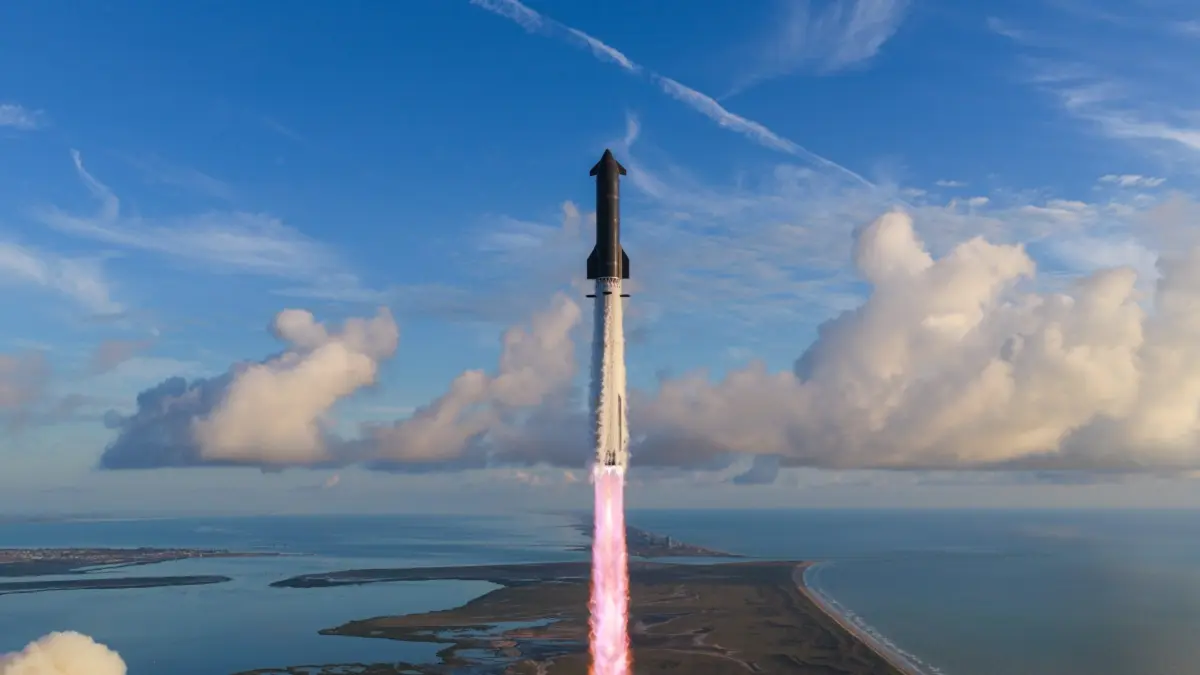
SpaceX’s monumental Starship vehicle achieved a critical operational milestone early Monday morning, completing its 14th integrated test flight by successfully breaking out of suborbital trajectories and attaining full low-Earth orbit (LEO) velocity for the first time. Lifting off from the private Starbase facility in South Texas at 8:49 am EDT (12:49 UTC), the 407-foot-tall (124-meter) rocket—the most powerful launch vehicle ever built—demonstrated its full performance envelope after 13 preceding test flights intentionally utilized dialed-back suborbital profiles.
The successful insertion into a stable orbit roughly 171 miles (276 kilometers) above Earth was more than a technical triumph; it unlocked the vehicle’s commercial deployment capabilities. Tucked away inside Starship’s cavernous cargo bay were 26 next-generation Starlink V3 broadband satellites. Deploying these payloads via a novel internal mechanism reminiscent of a "Pez dispenser," SpaceX successfully established communication with the entire batch shortly after separation.
While the mission validated key elements of Starship’s architecture—including the successful ignition of a center Raptor engine to achieve orbital insertion and a subsequent controlled de-orbit burn—it was not entirely without technical drama. Propulsion anomalies involving both the Super Heavy booster and the Starship upper stage underscore that SpaceX’s cutting-edge Raptor 3 engines remain an evolving technology. Nevertheless, with the Federal Aviation Administration (FAA) clearing the flight without requiring a formal mishap investigation, the path is clear for SpaceX to accelerate its launch cadence, integrate new pads in Florida and Louisiana, and inch closer toward total and rapid reusability.
Detailed Chronology of Flight 14
Liftoff and Ascent from Starbase
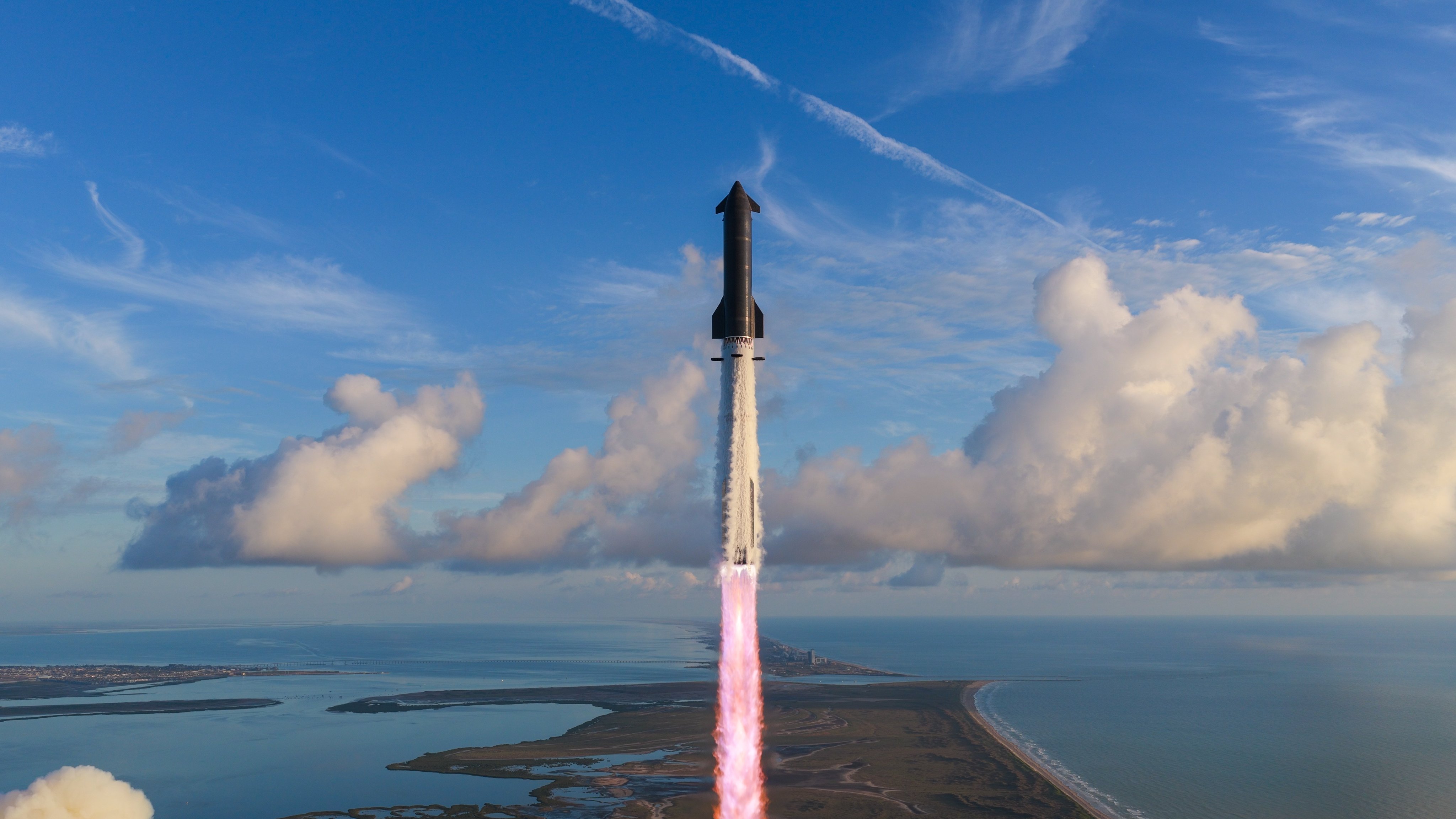
The countdown culminated in a thunderous morning liftoff from SpaceX’s facilities in Boca Chica, Texas, with the striking backdrop of South Padre Island across the water. Thirty-three methane-fueled Raptor engines roared to life, generating an unprecedented 18 million pounds of thrust to lift the fully fueled behemoth off the pad.
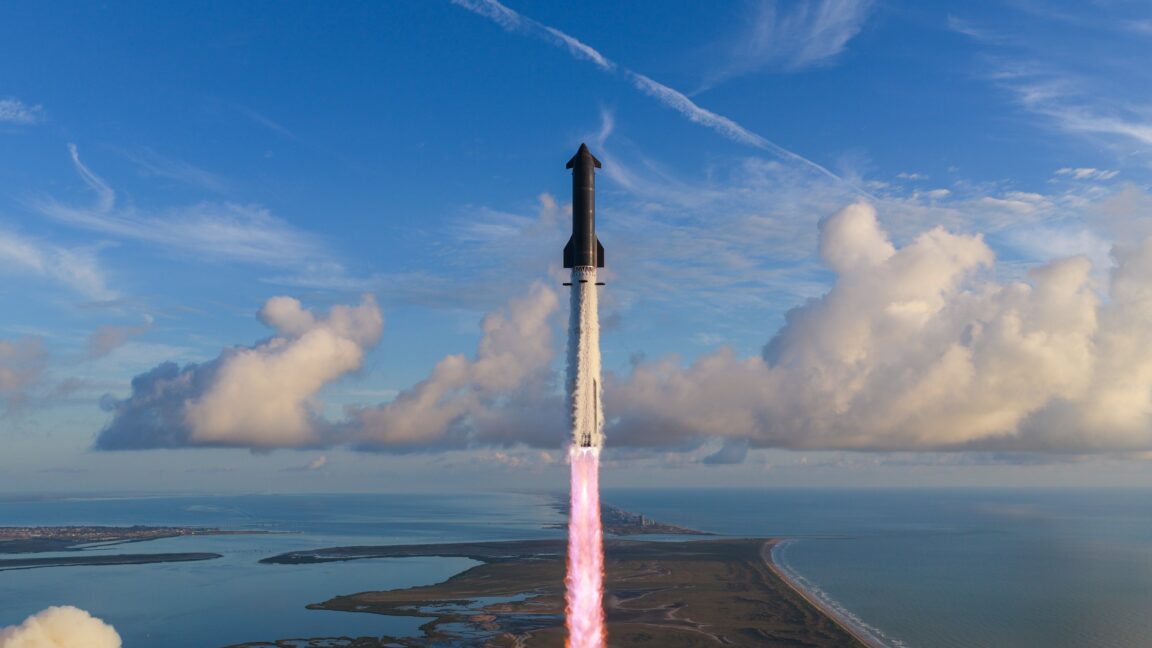
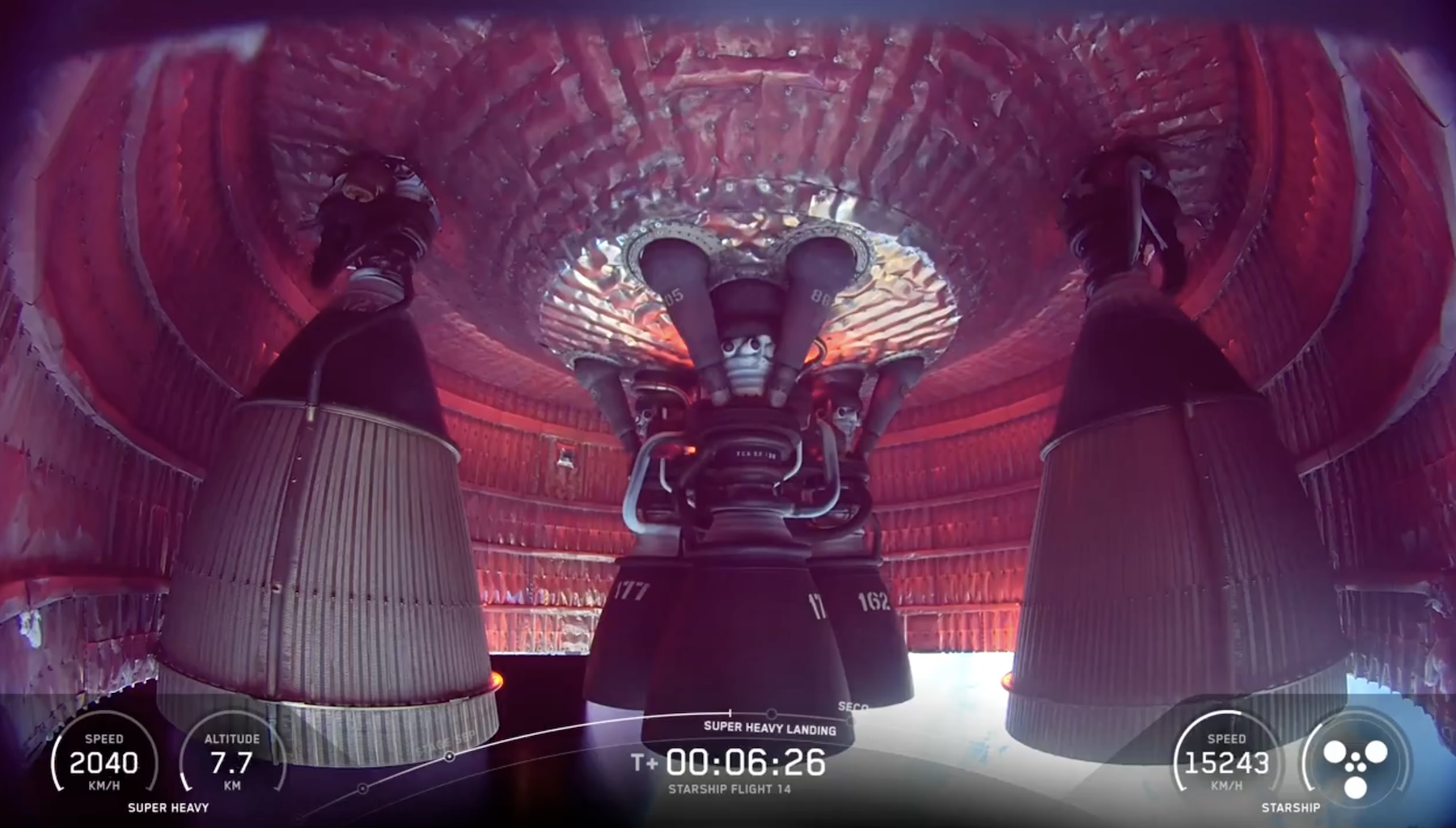
Powering through the sound barrier, the vehicle ascended through the stratosphere over the Gulf of Mexico. Roughly two and a half minutes into flight, the Super Heavy first-stage booster successfully hot-staged and separated from the Starship upper stage. Executing a rapid high-altitude turnaround maneuver, the booster steered back toward the Texas coast, culminating in a controlled splashdown in the Gulf. Meanwhile, the upper stage continued its ascent, shutting down its primary array of Raptor engines just over eight minutes into the mission.
The Orbital Insertion Pivot
At this juncture, mission controllers faced a critical operational fork in the road. Telemetry indicated that one of Starship’s six upper-stage Raptor engines had shut down prematurely during the ascent burn, forcing the remaining five engines to burn longer to compensate. Furthermore, telemetry suggested transient performance issues on a pair of Super Heavy Raptors.
Faced with these anomalies, SpaceX’s flight control team initially considered aborting the planned orbit insertion—a contingency that would have seen Starship follow a traditional suborbital coast toward an unpowered reentry over the Indian Ocean. However, recognizing that the failed engine was independent of the specific center engine required for the orbital insertion burn, mission managers opted to proceed conservatively.
"We were only going to go if we were very confident in the core systems that have to work to get you out of orbit once you’re up there," noted SpaceX commentator Dan Huot during the live broadcast.
Following a tense coast phase, the designated steerable center Raptor engine reignited for a flawless 19-second burn. This maneuver imparted an additional 204 miles per hour (approximately 1 percent of the vehicle’s overall velocity), cleanly overcoming Earth’s gravitational pull and placing Starship into a stable, low-Earth orbit at an altitude of 276 kilometers.
Starlink V3 Deployment
With orbital velocity secured, Starship executed the mission’s primary commercial objective: the maiden deployment of commercial-grade Starlink V3 broadband satellites.
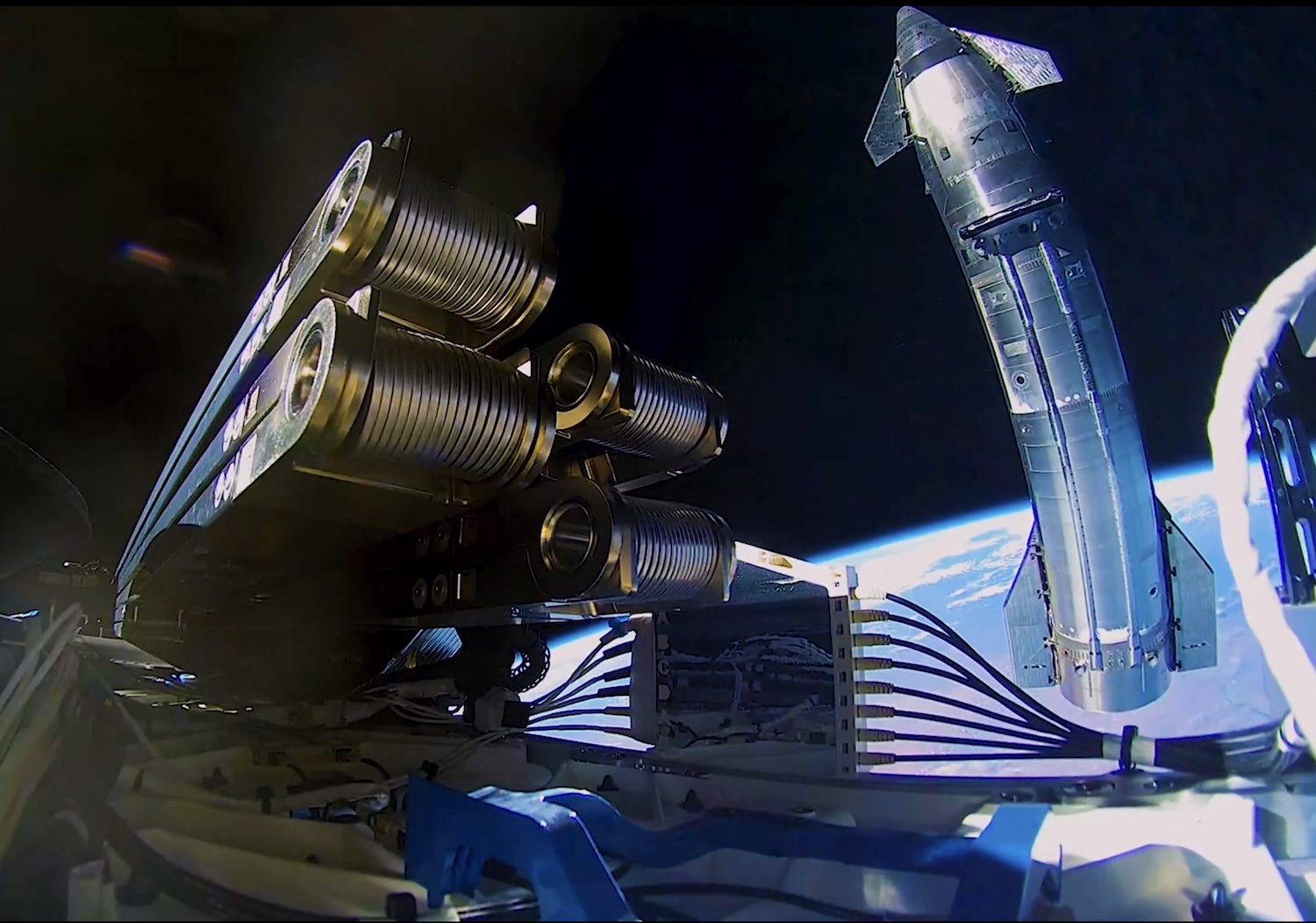
Unlike previous configurations deployed by the workhorse Falcon 9, the Starlink V3 platform is structurally too large for standard payload fairings. Measuring roughly 2 metric tons (4,400 pounds) each at launch, these next-generation satellites rely exclusively on Starship. Using a specialized cable-and-pulley system that ejects the flat-packed spacecraft outward like a giant Pez dispenser, Starship successfully dispensed 26 satellites into a low-inclination orbit as the vehicle soared over regions including South Africa. SpaceX engineers subsequently verified positive telemetry and established contact with all 26 units.
Early Return and Splashdown
Out of an abundance of caution regarding the ascent engine anomalies, SpaceX flight controllers curtailed what was originally intended to be a nearly 10-hour orbital endurance test. Instead, the team elected to execute the vehicle’s first-ever in-space de-orbit burn shortly after satellite deployment.
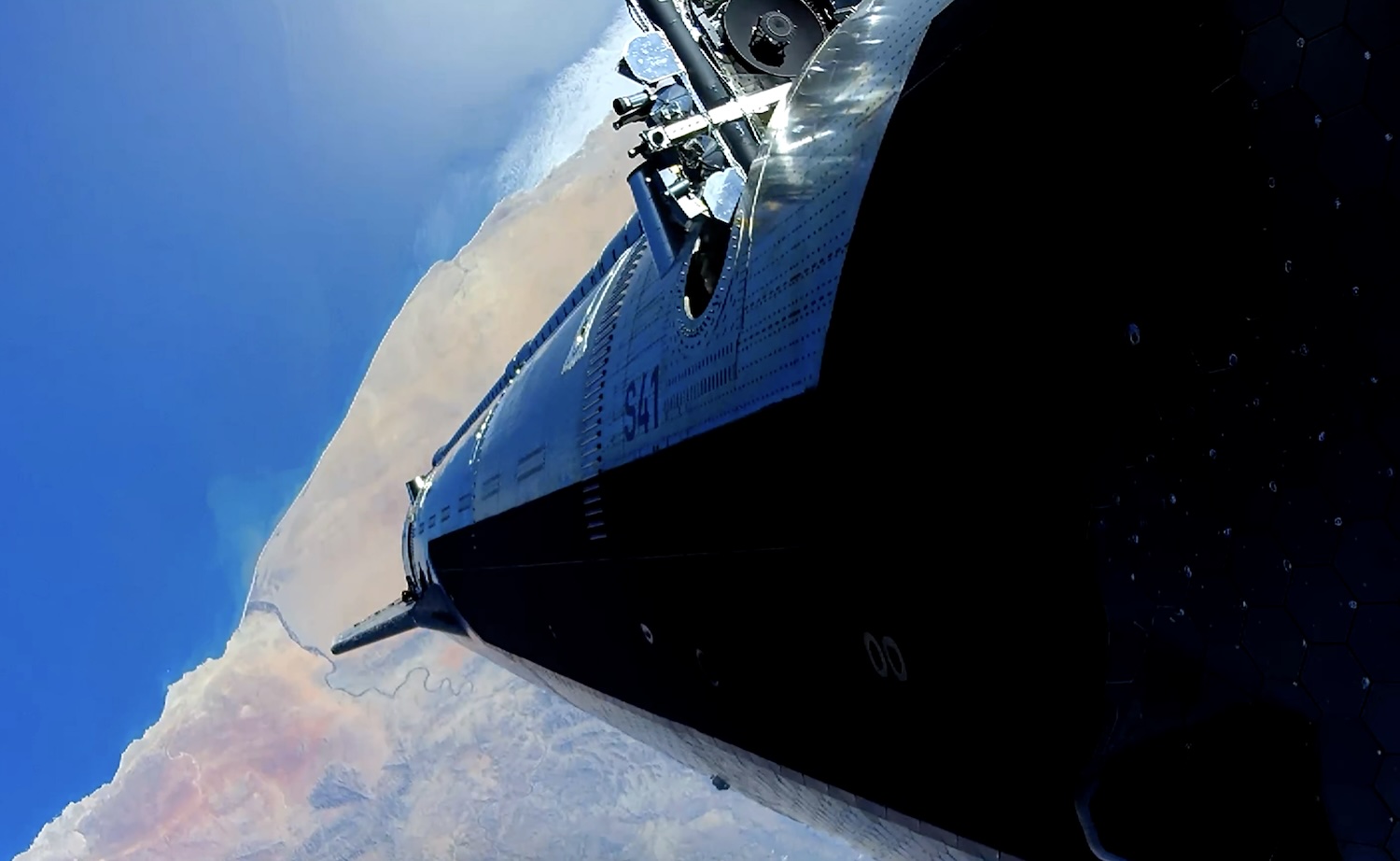
The de-orbit sequence proceeded seamlessly. Starship plunged back into Earth’s atmosphere over the remote Pacific Ocean, its advanced heat shield successfully withstanding atmospheric friction and temperatures soaring up to 2,600°F (1,430°C). Descending belly-first through scattered cloud cover, the vehicle successfully executed a flip-and-burn maneuver, targeting a precise splashdown zone north of Hawaii.
Impact occurred at 11:57 am EDT (15:57 UTC)—roughly three hours after liftoff. True to form for ocean test landings, the vehicle tipped over and disintegrated upon hitting the water, concluding a mission that significantly advanced SpaceX’s flight envelope data.
Supporting Context & Metrics
The Starlink V3 Paradigm Shift
The operational integration of Starlink V3 satellites represents a fundamental upgrade to SpaceX’s global broadband infrastructure. According to company specifications, each V3 platform is equipped with substantially larger solar arrays and advanced phased-array antennas, enabling a staggering capacity of 1 Tbps per satellite—a tenfold increase over older generations deployed by Falcon 9.
This dramatic leap in bandwidth is projected to drastically improve network speeds, reduce latency, and enhance direct-to-device cellular connectivity as well as specialized military applications like the Starshield network. Quilty Space research director Caleb Henry noted that while these initial 26 satellites will require weeks to integrate into the active constellation, they signal the beginning of the end for Falcon 9-deployed Starlinks. SpaceX has already begun phasing out Cape Canaveral-based Falcon 9 flights dedicated to the constellation, transitioning heavy-lifting duties entirely to Starship.
Future Starship iterations are projected to scale capacity even further, eventually hauling up to 60 Starlink V3 satellites per launch.
Propulsion Evolution: The Raptor 3 Challenge
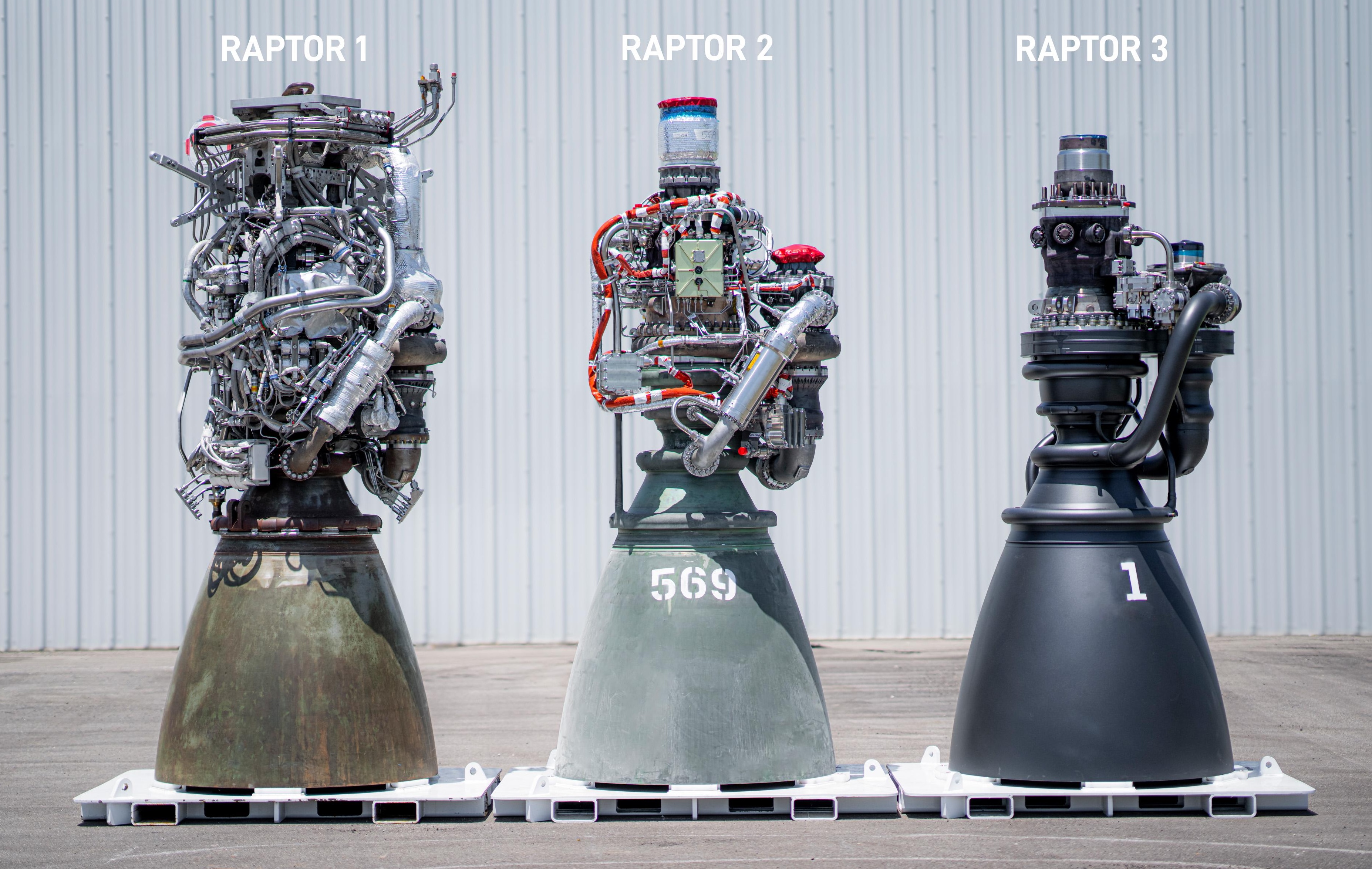
Monday’s flight provided crucial real-world data on the Raptor 3 engine variant. Engineered with a lighter, highly streamlined architecture that drastically reduces part counts and eliminates external fluid lines, Raptor 3 is designed to deliver higher thrust with improved thermal efficiency.
However, transitioning to this advanced design has not been without growing pains. Engine irregularities have cropped up during each of the three flight tests utilizing Raptor 3 hardware. During a May flight, premature shutdowns occurred on both booster and ship stages, while a July launch attempt was scrubbed on the pad due to pre-launch ignition failures.
Company founder Elon Musk has acknowledged the immense manufacturing complexities inherent in the design, noting on social media that while Raptor 3 vastly reduces leak paths and mass, its intricate internal geometry requires highly specialized 3D metal printing. Despite these iterative hurdles, propulsion engineers are rapidly closing in on reliability thresholds, and flight data from Flight 14 is expected to inform upcoming hardware revisions without threatening the broader launch schedule.
Official Statements & Regulatory Clearances
Reactions from industry analysts and regulatory bodies underscored the significance of Monday’s flight.
Describing the decision-making process during the orbital insertion window, Dan Huot emphasized the engineering rigor guiding the mission:
"We took some extra time, added some extra drama, but we were able to clear the three center engines and do our first-ever orbital insertion burn. So that was a huge success… We were only going to do all this stuff today if we were really, really sure that those sea level engines on Starship were going to perform because we needed to do that de-orbit burn."
On the regulatory front, the Federal Aviation Administration (FAA) issued a swift validation of the mission’s safety protocols. An agency spokesperson confirmed that no formal mishap investigation would be required:
"All flight events for both the Starship vehicle and the Super Heavy booster occurred within the scope of planned and FAA authorized activities."
Market analysts likewise pointed to the mission’s psychological and operational breakthroughs. Caleb Henry of Quilty Space emphasized that while the newly deployed satellites will take time to noticeably shift the consumer experience, proving out the launch vehicle’s payload deployment mechanism in true orbital conditions is a watershed moment for commercial space logistics.
Future Outlook: The Road Ahead for Starship
With Flight 14 in the books, SpaceX is wasting no time pivoting toward its next operational horizons.
Launch Infrastructure Expansion
The coming months will see a massive scaling of launch infrastructure. Ground teams at NASA’s Kennedy Space Center in Florida are actively testing and activating a brand-new Starship launch pad, alongside the construction of a massive on-site manufacturing facility. While initial Florida flights will rely on hardware transported from Starbase, the establishment of a dual-coast launch capability will fundamentally alter SpaceX’s operational tempo. Furthermore, future environmental and trajectory approvals could see launches from proposed infrastructure in Louisiana.

Reusability and the Lunar Horizon
Having successfully demonstrated orbital insertion, satellite deployment, and controlled ocean splashdowns, the next major evolutionary step for Starship is full-stack reusability. SpaceX aims to transition from ocean splashdowns to catching the Starship upper stage with the launch tower’s giant mechanical "chopstick" arms—a feat already routinely practiced with Super Heavy boosters. Such maneuvers will require extensive safety reviews for overland reentries.
Beyond terrestrial satellite deployment, mastering orbital operations, long-duration coast phases, and complex in-orbit propellant transfers remain critical prerequisites. These capabilities are absolute mandates for NASA’s Artemis program, which relies on Starship Human Landing Systems (HLS) to return American astronauts to the lunar surface.
As commercial demands multiply—spanning global broadband expansion, national security payloads, and conceptual orbital data centers—Starship stands poised to transition from an experimental development project to the undisputed workhorse of the modern space economy.