






Executive Overview
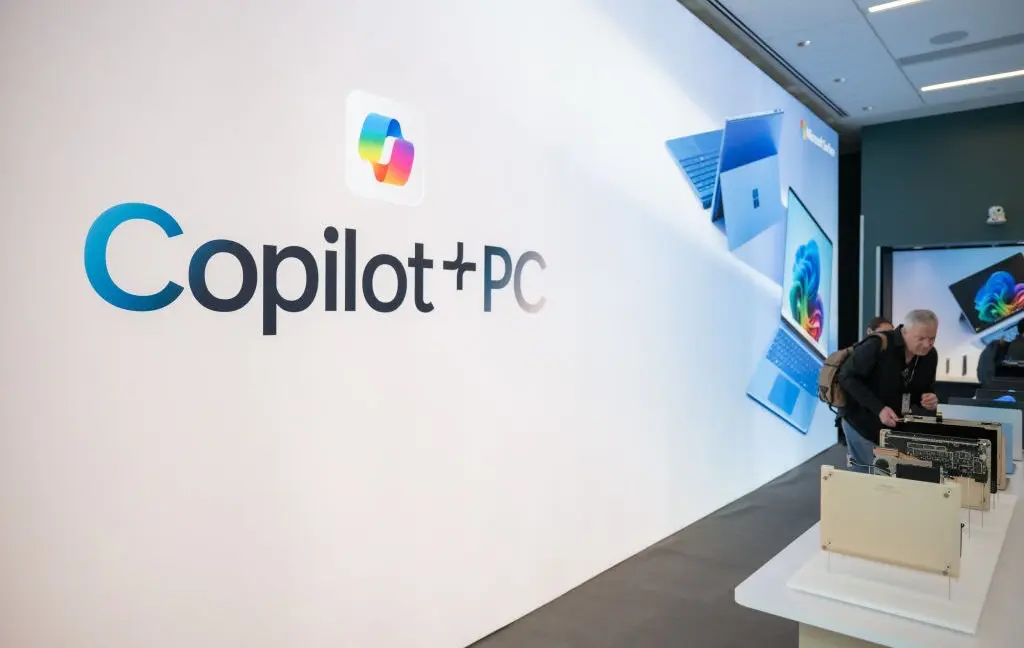
The technology industry moves at a blistering pace, but rarely does a multi-billion-dollar marketing initiative go from crown jewel to corporate ghost town quite as rapidly as Microsoft’s "Copilot+ PC" brand. Launched with fanfare and grand ambitions in early 2024, the Copilot+ PC designation was intended to serve as the definitive consumer compass for the dawn of the local artificial intelligence era. It was designed to clear up market confusion, assuring buyers that a machine bearing the badge possessed the heavy silicon lifting power required to run complex, on-device AI workloads without relying entirely on remote data centers.
Yet, when Microsoft pulled back the curtain on its latest generation of Surface hardware, eagle-eyed observers noticed a glaring omission: the Copilot+ PC brand was entirely absent. Despite the new Surface Pro and Surface Laptop iterations easily surpassing the strict technical criteria previously mandated for the badge—boasting bleeding-edge Neural Processing Units (NPUs) doubling the original performance floor—Microsoft’s executives deliberately chose not to use the terminology.
This unexpected pivot is far more than a minor administrative rebranding. It represents a strategic retreat from a marketing moniker that quickly grew tarnished, confusing, and increasingly redundant in a market where AI capability has simply become table stakes. Industry insiders, partner disclosures, and quiet web updates reveal a broader, synchronized withdrawal by Microsoft and major original equipment manufacturers (OEMs) alike. As the industry transitions from treating local AI as a luxury novelty to a standard architectural expectation, the "Copilot+" label has been quietly shuffled off the stage—a victim of shifting consumer perception, hardware realities, and a maturing technological landscape.
Detailed Chronology: From Launch to Quiet Burial
The 2024 Genesis: Defining the Edge AI Standard
The story of the Copilot+ PC began in earnest in 2024, as Microsoft sought to cement Windows as the premier operating system for the next generation of computing. Recognizing that cloud-based AI processing introduced latency, privacy concerns, and astronomical bandwidth costs, Microsoft pivoted toward hybrid and edge computing architectures.
To anchor this vision, the company introduced the "Copilot+ PC" marketing initiative. The goal was straightforward: establish a rigid, easily recognizable certification tier that cut through the noise of traditional PC marketing. Consumers and enterprise buyers were told to look for the Copilot+ seal if they wanted a future-proof machine capable of executing advanced local AI tasks like real-time translations, sophisticated generative image creation, and semantic system searches (such as the controversial Recall feature) entirely on the device.
However, from its inception, the initiative carried baggage. The rigid hardware requirements—most notably the mandate for an integrated Neural Processing Unit (NPU) capable of at least 40 trillion operations per second (TOPS), alongside baseline minimums of 16GB of RAM and 256GB of storage—drew immediate scrutiny. Major silicon legacy heavyweights like Intel and AMD found themselves temporarily locked out of the initial wave, struggling to meet the aggressive TOPS thresholds while managing thermal and power efficiencies. This generated friction within the Windows ecosystem, as Microsoft leaned heavily on Qualcomm’s Snapdragon X architecture to kickstart the initiative, leaving traditional x86 partners scrambling to catch up.
The Slipping Narrative and Web Redirections
As months passed, the friction began to show. While Microsoft’s marketing pages as recently as May proudly declared Copilot+ PCs to be "a class of AI PCs and laptops" representing "the fastest, most intelligent Windows PCs ever," reality on the retail floor was proving more complex. Consumers often struggled to understand why a standard, high-performance laptop priced similarly to a Copilot+ device lacked the specific badge, or conversely, why features tied to the brand faced regulatory delays and privacy pushback.
The turning point became undeniable when digital archives exposed a quiet corporate retreat. The dedicated Copilot+ PC landing page—once the focal point of Microsoft’s Windows hardware push—was subtly altered. Instead of leading visitors to a vibrant, dedicated showcase of the brand, the URL began quietly redirecting to a more generalized "Performance PCs" page. While the term "Copilot+ PCs" was not entirely scrubbed from the digital ether, its footprint was dramatically minimized, relegated to fine print rather than serving as the overarching marquee for high-end computing.
The Surface Launch Absence
The definitive nail in the coffin arrived with the announcement of Microsoft’s latest hardware lineup: the Surface Pro (12-inch, 2nd Edition) and the Surface Laptop (13-inch, 2nd Edition), slated for an October 13 release. Both machines are technological powerhouses, driven by Qualcomm Snapdragon X2 Plus processors and packing Qualcomm Hexagon NPUs rated at an astounding 80 TOPS—double the original Copilot+ baseline requirement.
Yet, speaking directly with industry publications like Windows Central, Brett Ostrum, Corporate Vice President of Surface at Microsoft, confirmed the reality that many had suspected: the new machines "are not called Copilot+ PCs."
The brand, for all practical purposes, had been quietly retired at the executive level.
Supporting Context & Metrics: The Hardware Reality
To understand why Microsoft and its manufacturing partners chose to quietly bury the Copilot+ brand, one must examine the underlying hardware metrics and the shifting economics of the semiconductor industry.
The Metrics of the Bar
When Microsoft initially drew the line in the sand for Copilot+ certification, the metrics were intentionally aggressive to force the industry forward:
- Neural Processing Unit (NPU): Minimum 40 TOPS (Trillions of Operations Per Second).
- System Memory (RAM): Minimum 16GB.
- Storage: Minimum 256GB SSD.
These specifications were not arbitrary; they represented the computational floor required to run Microsoft’s suite of local AI models smoothly without dragging down CPU and GPU performance or draining battery life within minutes.
However, silicon development moves at a relentless pace. By the time Microsoft’s second-generation Surface devices were prepared for production, the industry had leapfrogged the original 40 TOPS threshold. The integration of Qualcomm’s Snapdragon X2 Plus chips introduced NPUs capable of hitting 80 TOPS—metrics that rendered the original "Copilot+" baseline not as an elite tier, but as the baseline norm for modern computing.
The OEM and Silicon Friction
Behind closed doors, the Copilot+ branding created significant friction among Microsoft’s hardware partners. For Intel and AMD, whose initial chipsets lagged behind Qualcomm’s early NPU output, the Copilot+ moniker felt like an exclusionary marketing tool that unfairly penalized their architectures during critical sales cycles. Even as Intel (Lunar Lake) and AMD (Strix Point) eventually cleared the 40 TOPS hurdle and earned the badge, the brand had already become synonymous with launch-window controversy, software delays (such as the rollout of Windows Recall), and consumer confusion over what "AI on the edge" actually meant for daily workflows.
For OEMs like Dell, HP, Lenovo, and Microsoft’s own Surface division, maintaining a separate marketing tier for AI capabilities began to feel counterproductive. When virtually every premium and mid-range laptop rolling off the assembly line features an NPU capable of local acceleration, marketing a specific subset as "Copilot+" becomes redundant.
Official Statements and Industry Perspectives
The quiet retirement of the branding has been met with calculated pragmatism by industry leaders, who are eager to pivot the conversation away from marketing labels and back toward tangible user experiences.
Microsoft’s Internal Stance
Confirming the strategic shift, Microsoft Surface chief Brett Ostrum emphasized that while the nomenclature is gone, the underlying engineering philosophy remains fully intact.
"They do meet all the requirements of our previous bar for what Copilot+ devices are," Ostrum explained to Windows Central. "We still lean into the narrative around AI on the edge and being able to have a hybrid solution out there."
In essence, Microsoft is acknowledging that the hardware speaks for itself. The company no longer feels the need to lean on a distinct, hyphenated marketing sub-brand to convince buyers that a Surface device is intelligent. AI integration has transitioned from an external feature set to an inherent property of the Windows ecosystem.
Qualcomm’s Perspective
As a primary silicon partner whose Snapdragon processors helped define the performance metrics of the original initiative, Qualcomm viewed the evolution philosophically. Kedar Kondap, Senior Vice President of Compute at Qualcomm, noted that the primary function of the branding was catalytic rather than permanent.
“[T]he purpose for Copilot+ PCs was to be able to deliver [NPU] experience,” Kondap stated. “So, it was to define a certain category of devices with a certain bar and metric, like, for example, a 45 TOPS NPU… So from that perspective, it’s more offering the same experiences, probably without just using [Copilot+ PC] terminology now.”
Kondap’s comments underscore a vital reality: the marketing label was training wheels for the industry. It gave consumers a shorthand to understand a complex technological shift (the transition from cloud-dependent AI to edge processing). Now that the market has internalized that shift, the training wheels are coming off.
Future Outlook: The Normalization of the AI PC
As the tech industry looks past the wreckage of the Copilot+ branding experiment, what does the future hold for Windows hardware and AI integration?
The Death of the "AI PC" Sub-Category
The most profound takeaway from the quiet burial of the Copilot+ brand is that all PCs are rapidly becoming AI PCs. Just as computers stopped needing special "Multimedia PC" (MPC) badges in the late 1990s once sound cards and CD-ROM drives became standard equipment, dedicated AI branding is suffering from inevitable obsolescence.
Within the next few generation cycles, purchasing a computer without an integrated NPU capable of high-TOPS processing will be as unusual as buying a smartphone without a camera or a laptop without Wi-Fi. When silicon features become ubiquitous, marketing departments lose the justification for special sub-brands. Moving forward, consumers will evaluate laptops based on traditional metrics—battery life, display quality, build, and raw processing power—while assuming that local AI acceleration is simply part of the package.
The Road Ahead for Microsoft Surface
For Microsoft’s Surface division, shedding the baggage of Copilot+ allows for a cleaner, more direct marketing message ahead of the October 13 launch of the new Surface Pro and Surface Laptop editions. By focusing on raw performance, exceptional battery longevity enabled by advanced Snapdragon silicon, and seamless hybrid cloud-edge capabilities, Microsoft can market these devices on their overall merits rather than tying their identity to a specific, tarnished software feature or marketing acronym.
Ultimately, the failure of the Copilot+ PC brand is not a failure of AI technology itself, but a lesson in the lifecycle of tech marketing. Labels are useful when introducing a radical paradigm shift, but they have a notoriously short shelf life. As edge AI transitions from a futuristic selling point to the invisible fabric of everyday computing, Microsoft and its partners are wise to let the hardware speak for itself—leaving the marketing buzzwords behind in the digital archive.