











Executive Overview
The retail technology landscape is undergoing a structural evolution. As artificial intelligence transitions from a novelty chat interface into an operational execution layer, ecommerce merchants are forced to adapt at an unprecedented pace. This week’s product releases, platform updates, and strategic infrastructure announcements reveal a singular overarching trend: the complete convergence of AI agents, automated decision-making engines, and secure, frictionless global payment and logistics frameworks.
From OpenAI launching sponsored AI agents directly within ChatGPT Ads to Salesforce introducing its first CRM reasoning model, technology giants and nimble software-as-a-service (SaaS) providers alike are fundamentally rewriting how brands acquire customers, optimize digital storefronts, and manage operations. Simultaneously, structural financial initiatives—such as the European Central Bank’s digital euro pilot—and advanced delivery security measures, like FedEx Authenticated Delivery, highlight a parallel push toward institutional trust and verifiable transaction safety.
For digital merchants, omnichannel operators, and high-volume parcel shippers, this week’s developments signal that passive digital strategies are no longer viable. Success now requires deep integration into agent-driven ecosystems, automated conversion loops, and data-rich operational frameworks. This report offers a comprehensive analysis of the most significant product releases, platform updates, and technological breakthroughs impacting the merchant community this week.
Detailed Chronology: Key Merchant Product Releases & Platform Updates
1. Advertising, Discovery, & AI-Driven Acquisition
OpenAI Debuts Sponsored AI Agents Inside ChatGPT Ads
OpenAI is formally testing Sponsored Agents, transforming traditional display and search paradigms by allowing consumers to launch direct, interactive conversations with business-sponsored agents immediately after clicking an ad within ChatGPT. To lower the barrier to entry for brands, OpenAI has introduced prompt-based ad creation workflows through ChatGPT Work, paired with upgraded AI creative tools inside Ads Manager. Furthermore, foundational integrations with HubSpot (OpenAI’s first official CRM partner) and Shopify (its premier ecommerce partner) embed ChatGPT Ads natively into the daily operational software merchants already rely on.
Pinterest Unveils Visual Search Performance Ads
Pinterest has expanded its ad suite with the introduction of Visual Search Ads, designed to capture consumer intent during active product discovery. By placing advertisers directly into Pinterest search results and pin close-ups, the format fuses keyword relevance with image-based visual search as users evaluate, compare, and finalize purchase decisions. These ads are fully compatible with Performance+, Pinterest’s proprietary AI-driven advertising suite, and are rolling out in beta.

Google Ads Tests Product Value Optimization
Google Ads has initiated a beta test for Product Value Optimization, a sophisticated automated bidding adjustment tool. This feature empowers advertisers to assign specific, nuanced values to individual products and pipe those metrics directly into automated bidding algorithms. By applying product-level value adjustments, utilizing custom product attributes, scaling conversion values selectively, and managing adjustments at the campaign tier rather than the account tier, merchants gain granular control over return on ad spend (ROAS).
2. Payments, Financial Infrastructure, & Agentic Commerce
European Central Bank Launches Digital Euro Pilot
The Eurosystem—comprising the European Central Bank (ECB) and national central banks across the eurozone—has officially invited ecommerce merchants operating within the region to participate in the upcoming digital euro pilot. This initiative is designed to test structural technical frameworks, evaluate cross-border merchant integration, and actively shape the future of digital fiat currency settlements throughout Europe.
Worldline Integrates Universal Commerce Protocol for Agentic Payments
Europe-based payments giant Worldline has integrated the Universal Commerce Protocol (UCP), an open standard for agentic commerce co-developed by Google and key industry partners. UCP establishes a standardized technical language that allows autonomous AI agents to discover, evaluate, and purchase products across diverse platforms seamlessly. Merchants can now configure their payment systems once, enabling them to accept credit cards, mobile wallets, and alternative payment methods across any UCP-enabled agentic framework.
Alchemy Partners with Mastercard for Agentic Transactions
Alchemy, a leading development and infrastructure platform powering agentic commerce, announced that its AgentCard will support Mastercard payment credentials through the newly launched Mastercard Agent Pay integration. This synergy supplies developers with robust architecture to build AI agents capable of executing secure purchases on behalf of human users. The system marries Alchemy’s agent protocols with Mastercard’s established global payment network, featuring rigorous user authorizations, issuer controls, fraud protections, and verifiable proofs of intent.
3. Logistics, Supply Chain, & Fulfillment Security
Maersk Expands North American Reach via Shipstore Partnership
Global shipping and logistics titan Maersk has formed a strategic partnership with Shipstore, an advanced automation platform tailored for high-volume parcel shippers. Through this integration, Shipstore customers gain direct access to Maersk’s expansive North American delivery network. The collaboration consolidates order and shipment management into a single control layer, allowing high-volume merchants to execute automated business rules, generate shipping labels, compile compliance documentation, and track freight via a unified workflow.

FedEx Launches Authenticated Delivery for High-Value Shipments
FedEx Corp. has rolled out Authenticated Delivery for eligible residential and commercial shipments across North America. Engineered to mitigate package theft and secure high-value or sensitive inventory, the service utilizes encrypted QR code validation. At the point of drop-off, the recipient must present a secure QR code that the FedEx driver scans and validates before releasing the package, ensuring custody transfer exclusively to authorized individuals.
4. CRM, Retail Operations, & Integration Frameworks
Salesforce Launches Koa: A CRM Reasoning Model for Agentforce
Salesforce has unveiled Koa, its first dedicated CRM reasoning model developed for Agentforce through a strategic technical collaboration with Nvidia. Trained on a specialized corpus of synthetic enterprise scenarios, Koa mimics the complex logical deduction, tool utilization, and decision-making workflows executed by human customer service and sales representatives. From generating leads and qualifying pipeline opportunities to resolving multifaceted service cases, Koa grounds AI operations deeply within enterprise workflows, business rules, and operational policies.
Tulip Retail Introduces AI-Assisted Integration Builder and Shopify Connector
Retail customer engagement platform Tulip has launched Integration Builder alongside an upgraded Shopify Connector. Integration Builder extracts and harmonizes data from fragmented multi-source environments, routing it directly into APIs, flat files, and cloud-native data warehouses such as Snowflake, Databricks, and BigQuery while automatically adapting to unique merchant taxonomies. Meanwhile, the Shopify Connector links regional storefronts into a unified Tulip operational environment, maintaining pristine product catalogs, localized pricing structures, and native language settings.
5. Conversion Optimization, Customer Feedback, & Affiliate Ecosystems
Noibu Deploys AI Agents for Autonomous Store Optimization
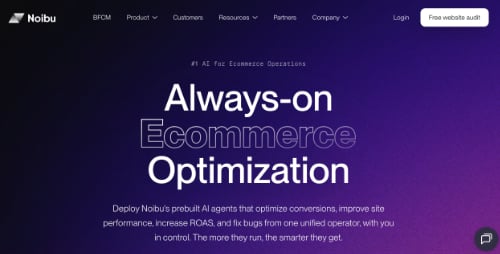
Conversion optimization platform Noibu has released a suite of six specialized AI agents designed to continuously monitor, diagnose, and remediate digital storefront issues. These autonomous agents analyze site telemetry, identify technical glitches or conversion bottlenecks, draft code fixes, deploy changes upon human executive approval, and measure post-implementation metrics. By linking real-time consumer behavioral responses directly to iterative code deployment, Noibu covers conversion rate optimization (CRO), A/B testing, ADA compliance, bug resolution, and page speed performance.
MikMak Expands AI Intelligence and Orchestration Suite
Ecommerce intelligence platform MikMak has launched a series of advanced AI capabilities designed to streamline conversion forecasting and retail marketing workflows. The suite includes Aura (predictive intelligence synthesizing POS data and first-party signals across more than 8,000 retailers), Datasembly (store-level inventory intelligence), Build with Mak (conversational AI creation), and Analyze with Mak (conversational analytics). Additionally, Insights MCP integrates MikMak’s intelligence layers directly into enterprise AI tools like OpenAI, Claude, and Microsoft Copilot.

Euka AI Bridges TikTok Shop and Instagram for Affiliate Marketing
Affiliate marketing platform Euka AI has expanded its TikTok Shop capabilities with a powerful new Instagram integration backed by Shopify-connected fulfillment. Brands can now discover and vet creators across both TikTok and Instagram based on product alignment, audience demographics, and historical performance metrics. Furthermore, AI automates outreach, invite sequences, and approval workflows, consolidating all creator communications into a centralized multi-channel dashboard.
Marvin Unveils Live Intercept for AI-Moderated Research
Customer feedback repository Marvin has introduced Live Intercept within its research tooling ecosystem. Live Intercept conducts automated, voice-to-voice, AI-moderated customer interviews directly inside digital storefronts to capture in-the-moment user feedback. The AI Interviewer dynamically executes custom discussion guides, poses contextual follow-up questions, and adapts to user sentiment in real time across more than 40 languages.
Snipp Interactive Releases Conversational Plugins for Loyalty and Promotions
Shopper marketing and loyalty specialist Snipp Interactive has launched the $nipp ChatGPT plugin and the $nipp Connector for Claude. These integrations make promotional campaigns, rebates, and loyalty rewards fully discoverable through natural language AI conversations. The connectors tie directly into Snipp’s core data intelligence platform, supporting receipt optical character recognition (OCR), SKU-level product validation, fraud risk scoring, automated reward fulfillment, and compliance audit logging.
AIQ Introduces Astro: An AI Operating System for Retailers
Retail marketing and loyalty platform AIQ has debuted Astro, an all-in-one AI operating system designed to convert retail data intelligence into immediate operational action. Astro unifies AI-driven campaign creation, advanced analytics, shared corporate memory, customer conversation interfaces, and merchant onboarding into a centralized intelligence layer that ingests customer, transaction, loyalty, and operational data across the AIQ ecosystem.
Supporting Context & Metrics
The velocity of these releases underscores a massive shift in capital allocation and technological adoption across global retail. Industry analysts point to several underlying metrics driving this wave of innovation:

- Agentic Commerce Adoption: With platforms like OpenAI, Google (via UCP), and Mastercard standardizing agent-to-agent protocols, early forecasts suggest that autonomous AI agents could initiate up to 15% of all routine consumer reorders and digital service purchases by 2028.
- Logistics & Security Demands: Package theft and unauthorized delivery claims cost North American retailers billions annually. The rapid adoption of authenticated handoff solutions like FedEx’s QR-based delivery reflects a market-wide imperative to secure high-value supply chains.
- CRM & Data Unification: Fragmented data silos remain the primary barrier to effective AI implementation. The collaboration between enterprise giants like Salesforce, Nvidia, and Tulip signals a multi-billion-dollar push toward native, schema-adaptive integration layers that eliminate manual data mapping.
Official Statements & Industry Perspectives
Executives across the retail technology sector emphasize that these product deployments represent foundational shifts rather than incremental feature updates.
"We are moving past the era where AI merely acts as a passive advisory chatbot. By introducing Sponsored Agents and native CRM integrations with HubSpot and Shopify, we are embedding intelligence directly into the transaction funnel where commerce actually happens," noted a product lead close to OpenAI’s enterprise initiatives.
On the logistics front, industry stakeholders view automated verification as essential for high-volume trade.
"As high-volume parcel shipping scales, the margin for error in final-mile delivery narrows significantly," noted representatives from Shipstore regarding their North American expansion with Maersk. "Merchants require a single control layer that enforces operational rules while guaranteeing absolute chain-of-custody security."
In the financial sector, the rollout of standardized protocols like the Universal Commerce Protocol highlights a collaborative push toward open ecosystems.
"Agentic commerce cannot thrive in walled gardens," stated digital payments strategists at Worldline. "By supporting open standards like UCP, we ensure that merchants can declare their payment configurations once and securely transact across any AI-driven marketplace in the world."
Future Outlook: What Merchants Must Do Next
As the retail technology ecosystem absorbs this wave of autumn announcements, digital merchants must proactively evaluate their technical stack to remain competitive. Strategic priorities for the months ahead include:
- Audit AI Readiness: Merchants should examine how their product catalogs, pricing structures, and inventory feeds are exposed to AI discovery engines. Ensuring compatibility with protocols like UCP and Model Context Protocol (MCP) will be vital for capturing agent-driven traffic.
- Upgrade Fraud & Security Protocols: With the rise of high-value shipments moving through autonomous or authenticated delivery channels (such as FedEx Authenticated Delivery), online stores must integrate secure validation checkpoints to protect against friendly fraud and chargebacks.
- Embrace Autonomous Optimization Tools: Platforms offering self-healing code and conversion optimization agents (such as Noibu and Tulip) demonstrate that manual A/B testing cycles are too slow for modern retail. Integrating automated diagnostic agents will be necessary to maintain peak digital store performance.
- Prepare for Cross-Border Digital Currencies: European merchants must closely monitor the progression of the European Central Bank’s digital euro pilot to ensure their payment gateways are primed for future sovereign digital currency adoption.
Ultimately, the merchants who thrive in this new era will be those who view AI not merely as a marketing copywriting assistant, but as an autonomous, deeply integrated operational partner capable of executing complex workflows across advertising, logistics, payments, and customer retention.