






Executive Overview
In a quiet maneuver that has caught the tech industry by surprise, X (formerly Twitter) has officially pulled the plug on its standalone messaging application, XChat. Spotted first by industry analysts and developers, including prominent tech reporters at 9to5Mac and MacRumors’ Aaron Perris, the dedicated client was unlisted from both the Apple App Store and the Google Play Store late last week. Subsequent investigations into the platform’s backend source code confirm that all references to the standalone application have been thoroughly purged, signaling a definitive end to what many digital strategists regarded as a brief, confounding detour from Elon Musk’s grand master plan.
The sudden vanishing act of XChat marks an abrupt conclusion to an experiment that began just months prior. Following an extensive beta-testing phase with select power users, X officially launched the standalone chat application in April, breaking out direct messaging (DM) functionalities into an isolated ecosystem. At the time of its release, the strategy baffled many industry observers. It appeared to directly contradict Elon Musk’s loudly proclaimed vision of transforming X into the definitive Western "everything app"—a centralized digital town square modeled after platforms like China’s WeChat, where users could execute every conceivable daily task, from social networking to financial transactions, within a single, unified interface.
Yet, as investigative analysis and regulatory tracking suggest, the birth of XChat was likely never about consumer-facing utility. Instead, it was widely interpreted as a tactical chess move—an architectural maneuver designed to navigate complex regulatory minefields, secure elusive financial licenses, and compartmentalize high-security features like end-to-end encrypted messaging. Now, with alternative financial infrastructure securely established via partnerships with entities like Cross River Bank, X no longer requires a segregated digital storefront. By quietly deprecating XChat, the platform is aggressively realigning with its original, monolithic identity, consolidating messaging back into the core X application and rendering the standalone app a fascinating, if short-lived, footnote in the company’s tumultuous corporate history.
Detailed Chronology: From Concept to Deletion
To fully understand the swift rise and fall of XChat, one must trace its lineage back through the rapid iterations of product development that have defined the post-acquisition era of Twitter. Since Elon Musk finalized his acquisition of the social media giant, overhauling the messaging infrastructure has been a top engineering priority. However, for well over a year, these improvements—ranging from encrypted voice and video calls to enhanced DM organization—remained strictly embedded within the main X application.
The trajectory shifted dramatically in late 2024 and early 2025, when whispers began circulating within developer communities that X was preparing to spin off its messaging suite into a standalone entity.
- The Beta Phase (Late 2024 – Early 2025): X quietly rolled out a closed beta test for a dedicated messaging client dubbed "XChat." Access was restricted to a handpicked cohort of users, allowing engineers to stress-test high-volume messaging protocols, media sharing speeds, and advanced encryption keys isolated from the core social media algorithm and timeline feed.
- The Official Global Launch (April 2025): Following months of iterative refinements, X officially released XChat to the general public on both iOS and Android platforms. The launch generated considerable debate across the tech sector. Analysts questioned why a company striving for an all-in-one "super app" ecosystem would deliberately fragment its user base by forcing them to download a secondary application merely to chat with their contacts.
- The Regulatory and Payment Pivot (Summer 2025): Throughout the spring and summer, as X sought to roll out its native creator payout systems and peer-to-peer payment features ("X Money"), the company encountered severe regulatory hurdles. Multiple U.S. state regulators denied or delayed crucial money transmitter licenses (MTLs). Concurrently, X forged a strategic partnership with Cross River Bank in July, utilizing the institution’s banking infrastructure to legally power X Money accounts and creator payouts without relying entirely on direct, state-by-state licensing.
- The Unlisting and Source Code Purge (September 2025): Late last week, tech sleuths discovered that XChat had vanished without an official press release or blog post from Apple and Google app marketplaces. Verification confirmed that the removal was self-initiated by X. Shortly thereafter, developer Aaron Perris of MacRumors revealed that source code audits of the main X application had begun stripping out integration hooks and deep links previously reserved for XChat.
Supporting Context & Metrics: Why XChat Was Built (and Abandoned)
The creation and subsequent deletion of XChat cannot be understood in a vacuum; it must be analyzed through the lenses of corporate strategy, regulatory compliance, and software architecture.
The "Everything App" Paradox
Elon Musk’s primary mandate for X has consistently been the realization of the "everything app" paradigm. In theory, a super app maximizes user retention by eliminating friction—users never need to leave the ecosystem to read news, watch video content, hail a ride, or send money to a friend.
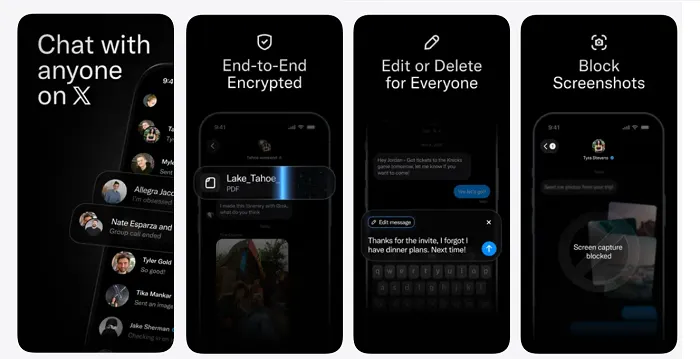
Launching XChat directly challenged this philosophy. Requiring users to transition from the main X app to a secondary application for extended messaging introduced cognitive friction and user drop-off. Industry metrics traditionally show that standalone messaging apps face an uphill battle against established incumbents like WhatsApp, Apple iMessage, Telegram, and Facebook Messenger unless they offer fundamentally disruptive capabilities. XChat offered novel encryption, but not enough unique utility to justify the fragmentation of the core user experience.
Regulatory Arbitrage and Money Transmitter Licenses
A more compelling explanation for XChat’s existence lies in the bureaucratic labyrinth of American financial regulation. To operate a peer-to-peer payment network or a comprehensive digital wallet, companies must typically secure Money Transmitter Licenses (MTLs) in individual U.S. states—a grueling, expensive, and frequently unsuccessful process for tech firms attempting to disrupt legacy banking.
In the early stages of the X Money rollout, X faced significant resistance and rejections from state regulatory bodies concerned about data privacy, cross-border financial flows, and platform security. Within this context, isolating advanced messaging and transactional infrastructure into a standalone corporate entity or app container was viewed by legal experts as a potential strategy to firewall compliance issues. By separating sensitive communications and financial data streams from the public-facing, highly volatile social network, X may have hoped to present a more palatable, tightly regulated profile to state banking commissioners.
However, the necessity for this architectural firewall evaporated in July when X announced its operational partnership with Cross River Bank. By leveraging Cross River Bank’s pre-existing chartered banking infrastructure to power X Money accounts for U.S. creators and everyday users, X largely bypassed the immediate requirement to acquire standalone MTLs in every single jurisdiction. With the regulatory pressure valve released, the strategic justification for maintaining a separate, resource-intensive messaging app vanished overnight.
Official Statements and Industry Reactions
True to form under its current leadership, X did not issue a formal press release or media statement explaining the disappearance of XChat. Instead, the company relied on its traditional playbook of letting algorithmic silence and developer discoveries speak for themselves.
Independent Apple ecosystem tracker 9to5Mac was the first to confirm that the app’s disappearance from the App Store and Google Play was an intentional corporate unlisting rather than a policy violation suspension. This was quickly corroborated by prominent reverse-engineer Aaron Perris, who posted code repository findings indicating that deep integrations and internal references linking the main X application to XChat had been systematically excised.
Reactions from the broader tech community and social media analysts have been overwhelmingly analytical, framing the move as a course correction.

- "Building XChat was always a bizarre tactical pivot that flew in the face of the super-app manifesto," noted one digital media strategist. "It was clearly an engineering sandbox designed to test end-to-end encryption and compliance wrappers under the radar. Now that the Cross River Bank partnership has stabilized their payout and wallet infrastructure, keeping a separate app alive was just an unnecessary drain on engineering resources."
- Financial technology analysts have similarly emphasized the pragmatic nature of the shutdown. By folding messaging capabilities back into the primary application, X ensures that its daily active user (DAU) metrics and engagement times remain consolidated—a crucial factor when negotiating advertising rates and demonstrating platform vitality to enterprise brand partners.
Future Outlook: What This Means for DMs, Encryption, and X Money
As the dust settles on the XChat experiment, attention naturally shifts to what comes next for the core X application. The definitive burial of the standalone app does not mean that the engineering work poured into XChat has been wasted. Quite the contrary: the features developed during the app’s brief lifespan are actively being migrated back into the main client.
1. Reintegration of Advanced Messaging and Encryption
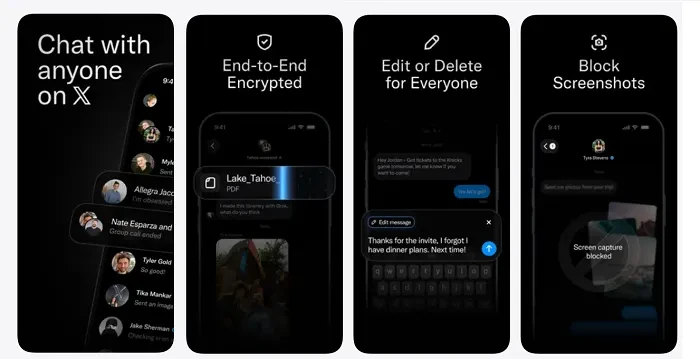
Users can expect the robust security features tested within XChat—including advanced end-to-end encryption protocols for direct messages, improved voice and video calling stability, and more granular media-sharing controls—to be fully woven into the standard X app experience. Rather than forcing users to adopt a new digital habit, X is returning to its roots: delivering enhanced utility directly within the familiar timeline interface.
2. The Acceleration of X Money
With Cross River Bank handling the underlying financial architecture for creator payouts and digital wallets, the rollout of broader consumer-facing payment features is expected to accelerate. Analysts predict that peer-to-peer tipping, creator subscriptions, and e-commerce checkout options will soon be deeply embedded within the core X app’s DM and profile interfaces. This fulfills the original vision of the super app without the administrative burden of maintaining redundant application storefront listings.
3. Streamlined Product Strategy
The demise of XChat serves as a reminder of the trial-and-error methodology currently driving product development at X. While public-facing pivots can appear erratic—such as launching a standalone app only to quietly sunset it five months later—they reflect an aggressive willingness to test hypotheses, evaluate regulatory hurdles, and ruthlessly cut dead weight when corporate strategy shifts.
Ultimately, XChat will be remembered as a bridge app—a temporary technological bridge that allowed X to test high-security messaging and regulatory frameworks away from the prying eyes of the main timeline. Now that the bridge has served its purpose, X has burned it behind them, marching forward with a unified application designed to consolidate social interaction, secure communications, and digital commerce under a single, formidable digital roof.