The digital commerce ecosystem is undergoing a profound structural shift. As online merchants navigate an increasingly competitive global marketplace, technology providers are racing to deploy advanced artificial intelligence (AI), streamline international supply chains, and integrate sophisticated financial instruments directly into merchant workflows. This week’s roundup of merchant services highlights an unmistakable industry-wide pivot: generic, standalone applications are rapidly being replaced by deeply integrated, AI-native operating systems and cross-channel automation suites.
From generative AI search engines and automated page builders to long-term bulk European warehousing and autonomous drone delivery networks, the velocity of innovation in the merchant tech sector is unprecedented. Platforms are no longer just tools of convenience; they are core architectural pillars that dictate a brand’s discoverability, operational resilience, and financial agility.
This comprehensive analysis examines the major product releases, strategic partnerships, and venture capital movements shaping the ecommerce industry. By breaking down these developments across AI, logistics, payments, and marketing, merchants and industry observers can better understand the trajectory of modern retail infrastructure.
Detailed Chronology of Merchant Services and Product Releases
1. Artificial Intelligence and Search Infrastructure
WP Engine Opens Smart Search AI (August 2026): WP Engine formally introduced Smart Search AI to the broader WordPress ecosystem. Purpose-built for the platform, the tool offers native compatibility with Advanced Custom Fields and WooCommerce, alongside flexible headless architecture integration via WPGraphQL and REST APIs. The plugin also grants access to the Smart Search AI MCP (Model Context Protocol) Server, currently in open beta.
RankingCoach & Extendify BeyondSEO Plugin: RankingCoach partnered with agentic AI platform Extendify to pre-install BeyondSEO as part of Extendify’s default setup. Operating on a freemium model without requiring an active RankingCoach account, the plugin aims to maximize small business visibility across traditional search engines and generative AI platforms simultaneously.
Uncanny Automator Page Builder: Uncanny Automator launched an AI-first page builder for WordPress. Users can input natural language descriptions of layout, style, and target audience, or upload screenshots, allowing the Uncanny Agent to automatically generate site hierarchy, design styling, and structural components.
2. Supply Chain, Warehousing, and Fulfillment Innovations
Amazon Long-Term Bulk Storage in Europe (August 20, 2026): Amazon expanded its Warehousing and Distribution (AWD) program into Germany, France, Italy, Spain, and the United Kingdom. Designed to combat chronic supply chain volatility, AWD provides merchants with long-term bulk storage paired with automated replenishment capabilities directly into local FBA (Fulfillment by Amazon) distribution centers, effectively mitigating stock-out risks.
Veho Real-Time Tracking Integration with Shopify: Delivery specialist Veho integrated its end-to-end tracking framework directly into Shopify, officially earning Shopify Tracking Partner status. The integration tracks shipments from pre-transit to final doorstep drop-off without forcing merchants to alter existing label-creation or shipping workflows.
TopDawg Multichannel Dropshipping Expansion: U.S.-based dropshipping and wholesale automation platform TopDawg integrated with BigCommerce and TikTok Shop. This addition allows retailers to manage product sourcing, multi-channel listings, inventory updates, and order routing through a single centralized portal alongside existing connections to Amazon, Walmart, eBay, Shopify, and WooCommerce.
Ordoro and Arda Inventory Collaboration: Fulfillment platform Ordoro partnered with replenishment tool Arda. By linking Ordoro’s multi-channel order and shipping engine with Arda’s material forecasting system, merchants can synchronize component-level manufacturing replenishment with outbound customer fulfillment.
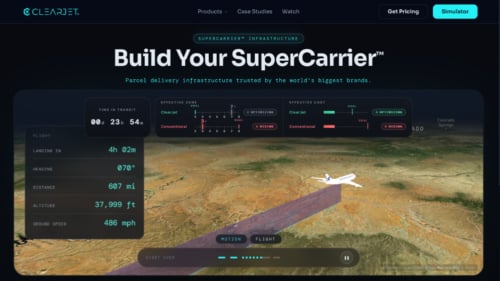
ClearJet Secures $25 Million Funding: Parcel logistics infrastructure provider ClearJet raised a $25 million equity investment led by Edison Partners. The funds will scale its "SuperCarrier" network across 95 U.S. airports, leveraging unused commercial airline cargo space to deliver packages at air-freight speeds for ground-shipping prices.
Amazon Prime Air U.K. Drone Launch: Amazon launched its Prime Air drone delivery service in Darlington, England—its first deployment outside the United States. Utilizing autonomous MK30 drones equipped with advanced detect-and-avoid technology, customers within a 7.5-mile radius can receive select packages in under 60 minutes.
3. Financial Technology, Payments, and Risk Management
Airwallex Integrates Affirm Installment Payments: Global cross-border payment platform Airwallex added Affirm to its checkout suite across 35 international markets. Merchants can now offer consumers installment payment plans of up to 24 months natively through Airwallex’s diverse integration channels, including Shopify, Payment Links, and native APIs.
Blink Digital Creator Platform: Blink launched an all-in-one storefront and checkout ecosystem tailored for digital product creators (ebooks, courses, templates). Blink acts as the Merchant of Record, automatically calculating, collecting, and remitting global sales tax, VAT, and GST while handling chargebacks and processing multicurrency transactions across 150 countries.
Abakira Post-Purchase Upsell for Shopify: Abakira LLC released its Post-Purchase Upsell app, allowing merchants to insert one-click promotional offers between the payment confirmation and final receipt page. Accepted offers seamlessly append to the existing transaction without requiring a secondary checkout session or a separate payment authorization.
Assureful and CedCommerce Liability Insurance: AI-driven commercial insurance provider Assureful partnered with ecommerce platform CedCommerce to offer pay-as-you-sell commercial general liability insurance to U.S. marketplace merchants, covering property damage and bodily injury claims dynamically.
Goflow Capital Integration: Multichannel operating system Goflow introduced "Capital," a native financing solution enabling sellers to access working capital directly inside their operational dashboard to bridge inventory and cash-flow gaps.
Morph Stablecoin Payments Platform: Stablecoin-focused network Morph launched Morph Payments, enabling global businesses to send and receive settlements securely via self-custodial on-chain wallets, tapping into the multi-trillion-dollar stablecoin economy.
Yuno Raises $45 Million Series B: Global AI-native payments orchestrator Yuno secured $45 million in a funding round led by Global PayTech Ventures. The platform connects businesses to over 1,000 payment methods across 190 countries via a single API, offering intelligent routing and automated fraud prevention.
4. Advanced Analytics, Listing Tools, and Marketing Automation
eBay AI Listing Tool (Australia): eBay Australia rolled out an AI-driven listing generator within the mobile app’s photography suite. Sellers simply upload product photos, and the software executes a three-stage generation process to draft complete listings automatically.
Decile Customer Intelligence MCP: Customer data analytics platform Decile launched its Model Context Protocol (MCP) integration, allowing marketers to query customer metrics, behavioral insights, and audience segmentation data naturally within AI environments like Claude and ChatGPT.
Xnurta Retail Media MCP: AI-driven advertising platform Xnurta introduced an MCP server designed to connect retail media metrics with generative AI platforms, eliminating manual CSV data exports and enabling real-time conversational analysis of ad performance and campaign structures.
Supporting Context & Metrics: The Macro Picture
To fully contextualize these product announcements, one must evaluate the macroeconomic environment driving them. Cross-border ecommerce is expanding at a compound annual growth rate (CAGR) exceeding 26%, heavily driven by emerging markets in Southeast Asia and Latin America. However, this growth brings friction: regulatory fragmentation around indirect taxes (VAT/GST), soaring parcel logistics costs, and shifting consumer expectations regarding delivery speeds.
Technology Category
Primary Driver
Key Industry Impact
Generative AI & MCPs
Manual workflow fatigue; shift to conversational search.
Real-time data querying without CSV exports; automated store design and marketing copy.
Instant working capital access; stablecoin settlement and flexible BNPL integration.
The introduction of Model Context Protocol (MCP) servers by companies like WP Engine, Decile, and Xnurta marks a turning point in how merchants interact with business data. Instead of navigating cluttered multi-pane dashboards, marketers and operators can converse directly with their warehouse management systems, customer relationship databases, and retail media networks using natural language large language models (LLMs).
Simultaneously, financial tech innovations reflect the maturation of global commerce. With stablecoin transaction volumes soaring past historical benchmarks—exemplified by Morph’s infrastructure rollout and Yuno’s $45 million funding haul—merchant ecosystems are actively bypassing traditional, high-fee intermediary banking rails for instant cross-border settlement.
Official Statements and Industry Insights
Industry leaders behind these releases emphasize that operational efficiency and ecosystem unification are the ultimate goals of modern tech development.
"Merchants today are exhausted by software fragmentation. The future belongs to platforms that can dissolve the boundaries between inventory sourcing, multi-channel listing, and capital deployment," noted representatives from TopDawg following their platform expansion into BigCommerce and TikTok Shop.
Regarding the massive push toward embedded AI analytics, Decile executives highlighted the revolutionary impact of MCP infrastructure:
"By bringing customer intelligence directly into AI workflows like ChatGPT and Claude, we are eliminating hours of manual data wrangling. Marketers can now translate raw customer data into high-converting audience segments using plain English."
In the logistics sector, the physical delivery layer is transforming just as rapidly. Speaking on the expansion of ClearJet’s SuperCarrier network funded by their recent $25 million equity round, leadership emphasized the economic imperative of tapping into underutilized passenger airline cargo holds to achieve air-freight speeds at ground-shipping rates. Meanwhile, Amazon’s deployment of Prime Air in Darlington, U.K., signals that regulatory hurdles for autonomous aerial delivery are steadily clearing outside North America.
Future Outlook: What Merchants Should Expect Next
As we look toward the remainder of 2026 and into 2027, several clear trends emerge for merchants striving to maintain a competitive edge:
The Rise of Agentic Commerce: Autonomous AI agents will increasingly handle backend optimization tasks—ranging from dynamic ad-spend adjustments via MCP integrations to automated inventory replenishment triggered by predictive demand models.
De-siloed Financial Operations: The traditional separation between banking, payments, and working capital will completely dissolve. Embedded financing features—such as those launched by Goflow and Airwallex—will allow merchants to secure operational funds based on real-time sales velocity rather than historical credit scores.
Hyper-Localized and Autonomous Fulfillment: With Amazon bringing bulk storage and drone delivery deeper into European markets, regional competitors will be forced to adopt hyper-localized warehousing strategies and leverage carrier-agnostic, multi-modal logistics providers (like ClearJet and Veho) to meet same-day delivery expectations.
Merchants must audit their current technology stacks to ensure interoperability. Platforms that fail to support API flexibility, headless environments, and AI conversational frameworks risk operational obsolescence in an increasingly automated retail economy.