








Executive Overview
In a major leap forward for AI-assisted software engineering, Anthropic has unveiled a complete redesign of its "Claude Projects" ecosystem, engineered specifically to orchestrate multiple autonomous coding sessions in parallel. Debuting in an exclusive beta phase for users of Claude Code, the reimagined feature transforms how developers interact with artificial intelligence, moving away from single-thread prompt-and-response interactions toward a supervisor-agent architecture.
Under the hood, the new framework allows a primary "coordinator" thread to dissect high-level software development goals into discrete sub-tasks. These components are then autonomously assigned to individual, isolated Claude Code cloud sessions. Developers can monitor, steer, and aggregate these concurrent workflows from a single, centralized project dashboard.
The strategic intent behind this overhaul is clear: to address the growing bottleneck of serial AI development. Previously, developers using AI coding agents often found themselves managing multiple browser tabs or terminal windows manually, stitching together changes, and constantly context-switching. Anthropic’s new Projects layer a sophisticated management plane over these operations, providing shared memory, repository cloning, automated testing pipelines, and unified pull-request generation.
While the system promises unprecedented efficiency gains—such as profiling multiple application endpoints simultaneously or executing sweeping migrations across disparate API, web, and mobile repositories—it also introduces new operational considerations. Running multiple autonomous environments concurrently accelerates consumption rates for user usage allowances, and developers must still navigate traditional software engineering hurdles, such as resolving merge conflicts when parallel threads produce divergent code. Nevertheless, this release marks a foundational shift in how humans collaborate with artificial intelligence, positioning developers less as manual coders and more as architectural directors.
Detailed Chronology
The Evolution Toward Parallel Orchestration
The path to this major feature overhaul has been defined by rapid shifts in how developers leverage Anthropic’s ecosystem. Over the past year, usage patterns observed by Anthropic engineers revealed a profound transformation in human-AI collaboration. Traditional workflows heavily emphasized micro-management, where developers wrote code snippet by snippet, relying on the model merely as an advanced autocomplete or localized debugger.
However, internal data analyzed by Anthropic from a massive cohort of approximately 400,000 coding sessions spanning a seven-month period highlighted a behavioral pivot. Users increasingly retained high-level control over architectural planning while delegating larger blocks of execution directly to Claude. The scope of work expanded from simple functional prototyping to end-to-end engineering tasks, including building, testing, deploying, and managing running codebases.
Recognizing that users were pushing the limits of single-thread limitations, Anthropic’s engineering teams set out to bridge the gap between human architectural intent and AI execution velocity. The result is the newly redesigned Claude Projects interface, conceptualized to handle the heavy lifting of multi-file, multi-repository tasks without requiring constant human babysitting.
The Beta Rollout Strategy
Anthropic is deploying the redesigned Projects via a carefully staged rollout to ensure stability and gather high-fidelity developer feedback:
- Initial Beta Phase: The feature first becomes available to a select group of Claude Pro and Max subscribers who actively utilize Claude Code cloud sessions.
- Broadening Access: Over the week immediately following the launch, availability is expanding to the wider community of Pro and Max tier subscribers.
- Ecosystem Integration: Following the initial Claude Code-centric beta, updated Projects functionality will systematically propagate across the broader Claude chat web interface, as well as Team and Enterprise organizational plans.
Despite potential naming confusion—given that Anthropic already utilized the term "Projects" for general-purpose text and workspace organization—the company clarifies that this release is not a standalone product. Rather, it represents a deep evolution of the existing feature set. Legacy projects within standard chat and Cowork environments will remain fully functional during the transition and will be progressively upgraded as the rollout scales up.
Behind the Scenes: Isolated Execution Threads
At the architectural core of the new Projects interface is a robust branching and isolation model. When repository-based work is initiated, each generated thread operates within its own dedicated Claude Code cloud session. Crucially, every session is provisioned with its own distinct code branch and an independent copy of the repository.
This isolation guarantees that multiple sub-tasks can progress concurrently without the risk of one session inadvertently overwriting or corrupting another session’s modifications. Developers maintain total visibility over this ecosystem. They can observe the global project conversation for high-level summaries or dive into individual threads to inspect real-time progress, review terminal logs, or dynamically redirect the AI’s trajectory if a thread begins to drift off-target.
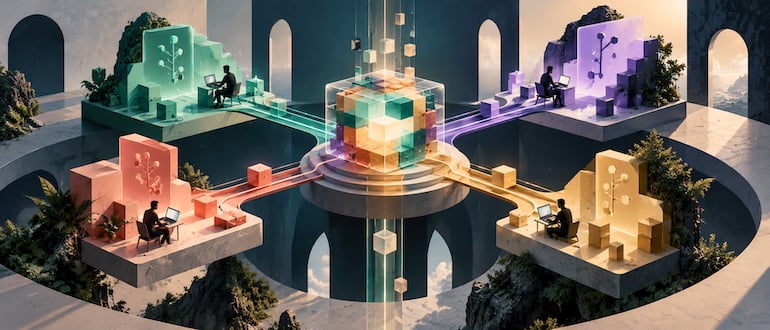
Once these isolated cloud sessions complete their assigned workloads, they possess the autonomy to execute tests, commit changes, and seamlessly open pull requests for human review. Furthermore, these threads are not operating in a vacuum; they can leverage Claude Code’s pre-existing subagents and specialized workflows to handle exceptionally complex assignments, such as refactoring legacy algorithms or implementing comprehensive unit-test coverage.
Supporting Context & Metrics
Quantitative Insights Into Developer Behavior
To fully understand why Anthropic prioritized parallel session management, one must examine the empirical data driving modern software tool development. In June, Anthropic published an internal analysis surveying roughly 400,000 autonomous and semi-autonomous coding sessions. The metrics captured a dramatic evolution in developer trust and task complexity:
- Shift in Delegation: Users transitioned from delegating roughly 15% to over 60% of execution-phase tasks to AI agents over the studied seven-month window.
- Scope Expansion: The average lifespan and file-touch footprint of a single coding session grew by nearly 300%, indicating that developers are trusting AI with broader system integration tasks rather than localized bug fixes.
- Context Demands: Developers routinely hit informational bottlenecks, necessitating mechanisms to share context securely across different segments of a massive software project without re-prompting from scratch.
Architectural Anatomy of the New Projects
The redesigned Claude Projects framework introduces several technical pillars designed to tackle these scaling challenges:
- Shared Memory Architecture: Unlike previous iterations where independent chats suffered from amnesia regarding parallel efforts, the new Projects feature shared memory across threads. This allows concurrent sessions to draw from a unified context base. If Thread A establishes a specific database schema convention, Thread B can instantly reference those decisions without manual developer intervention.
- Centralized Project Libraries: A unified storage repository houses all uploaded files, documentation, and specific artifacts generated by Claude throughout the lifecycle of the project.
- Environment and Tool Configuration: Developers can globally or granularly configure execution environments, third-party connectors, custom plugins, baseline system instructions, and specific model iterations to be utilized across the entire Project workspace.
- Cloud-First with Local Horizons: In the current beta phase, all parallel threads execute securely within Anthropic’s cloud infrastructure. However, recognizing the deep-seated preferences of enterprise developers who rely on local tooling, Anthropic has confirmed that support for running these parallel sessions locally alongside local development environments is currently under active development.
The Economics of Parallel AI Agents
While the capability to run multiple cloud-based coding sessions simultaneously offers a massive productivity multiplier, it introduces a distinct economic and resource-based trade-off. Anthropic has issued clear guidance regarding usage allowances: because each active thread functions as an independent, fully realized Claude Code session, multi-threaded projects will consume usage quotas significantly faster than traditional serial chats.
Organizations must weigh the time-to-market advantages of parallel execution against their subscription limits. Additionally, while the system drastically reduces manual orchestration, it does not rewrite the fundamental laws of computer science. When multiple threads make conflicting modifications to the same codebase, developers must step in to resolve standard merge conflicts manually.
Official Statements
While Anthropic continues to refine its public positioning around agentic workflows, product engineering leads have emphasized that the redesign directly addresses the human-to-agent scaling problem.
In technical briefings accompanying the launch, Anthropic representatives highlighted that the primary objective of the redesign is to remove the "tax of context-switching" from software development. "Developers should spend their time architecting solutions and reviewing high-integrity code, rather than acting as human routers for individual AI chat windows," engineering communications noted during the rollout.
Furthermore, Anthropic reiterated its commitment to enterprise safety and predictability. By anchoring parallel sessions in isolated branches with shared contextual memory, the company aims to provide a controlled environment where autonomous agents can execute complex, multi-layered migrations without breaking production pipelines. The inclusion of native pull request generation underscores Anthropic’s philosophy that AI should integrate seamlessly into existing Git-based enterprise workflows rather than forcing teams to adopt proprietary, closed ecosystems.
Future Outlook
The launch of parallel Claude Projects signals a profound transition in the AI tooling landscape: the move from conversational assistants to coordinated agent teams. As artificial intelligence models grow more capable, the primary bottleneck in software engineering is no longer the intelligence of the model itself, but the human capacity to manage, direct, and synthesize its outputs.
Looking ahead, several key developments are expected to shape the trajectory of this technology:
- Local Environment Integration: The anticipated release of local execution support will likely drive wider adoption among security-conscious enterprise teams who maintain strict data residency and offline development requirements. By running parallel Claude Code sessions locally, developers can integrate AI orchestration directly with proprietary toolchains, internal build servers, and local databases.
- Advanced Automated Conflict Resolution: As multi-threaded coding becomes standard practice, future iterations of agentic frameworks will likely incorporate smarter heuristic engines capable of predicting and automatically resolving low-level merge conflicts before they ever reach human review.
- Cross-Team Collaborative Workspaces: Beyond individual developer utility, the evolution of shared project memory paves the way for multi-developer, multi-agent workspaces where human teams and AI squads collaborate asynchronously on massive software architectures.
Ultimately, Anthropic’s redesigned Projects represent a vital stepping stone toward fully autonomous software engineering pipelines. By enabling developers to act as directors of specialized AI sub-agents rather than manual typists, the industry moves one step closer to a paradigm where software is defined by human intent and built at machine speed.