








Executive Overview
For decades, human interaction with computing technology has been bottlenecked by physical apparatuses. Whether manipulating plastic keys on a QWERTY keyboard, swiping glass mobile screens, or clicking a mouse, our digital experiences have relied on external peripherals that act as mediators between our thoughts and machine processing. However, a seismic shift is underway in the landscape of neurotechnology. Max Hodak, co-founder of Neuralink and current CEO of Science Corporation, is spearheading a movement aimed at eliminating the physical barrier entirely.
Science Corporation has spent the past several months advancing a radically different vision of computing: the biohybrid brain-computer interface (BCI). By enlisting a top-tier neurobiologist to lead the first U.S. human trials for its proprietary sensor technology, the company is moving past theoretical neurology and into actionable, clinical reality. Hodak’s trajectory—from early programming prodigy to biomedical engineer, and eventually to the vanguard of neural interfaces—places him at the center of a technological revolution that promises to transform how humans interface with artificial intelligence, medical prosthetics, and digital infrastructure.
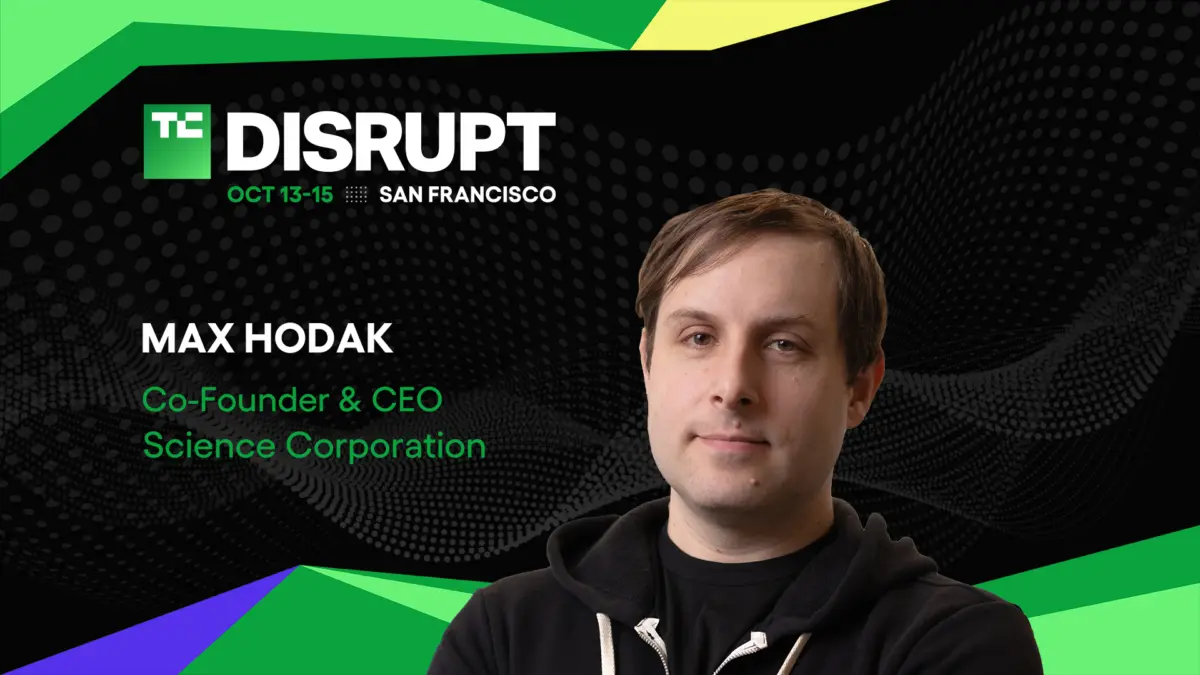
This deep dive examines Hodak’s career, the technological breakthroughs powering Science Corporation, the regulatory and clinical milestones defining the company’s current phase, and what this post-screen future implies for the broader tech ecosystem. Furthermore, as Hodak prepares to take the stage at TechCrunch Disrupt 2026 in San Francisco, this article explores the implications of a world where technology adapts directly to the human brain.
Detailed Chronology: From Biomedical Roots to Biohybrid Horizons
To understand the magnitude of Science Corporation’s current human trials, one must trace the evolutionary path of Max Hodak’s career—a journey driven by a persistent conviction that traditional human-machine interfaces are fundamentally limited.
Early Foundations and Academic Pursuits
Hodak’s fascination with computing began extraordinarily early; he was writing code by the age of six. This early exposure to software logic quickly evolved into a broader curiosity regarding how biological systems process information. He pursued this multidisciplinary interest at the Duke Pratt School of Engineering, where he studied biomedical engineering. During his formative academic years, Hodak secured a coveted position in Miguel Nicolelis’s renowned brain-computer interface laboratory at Duke University. Nicolelis’s lab was famous for pioneering early demonstrations of monkeys moving robotic arms using only their neural signals. These foundational experiences planted the seeds for Hodak’s life’s work: bridging the gap between biological neural networks and silicon processors.
Entrepreneurial Ventures: Transcriptic and Neuralink
Before diving headfirst into neural engineering, Hodak applied his operational and technical skills to the life sciences sector. He co-founded Transcriptic, a robotic cloud laboratory designed to automate biological research and streamline experimentation for biotech firms.
However, Hodak’s most influential leap came in 2016, when he co-founded Neuralink alongside Elon Musk and a team of top neuroscientists and engineers. As the company’s initial president, Hodak played an instrumental role in scaling the enterprise and propelling brain implants into the public consciousness. Under his leadership, Neuralink laid much of the groundwork for modern high-bandwidth BCIs.
The Birth of Science Corporation
In 2021, departing from Neuralink to pursue an independent vision, Hodak founded Science Corporation. While many high-profile neural tech companies focus predominantly on ultra-high-channel-count invasive computer interfaces, Science Corporation carved out a distinct niche. The company focuses heavily on translational applications capable of yielding immediate clinical utility—specifically targeting conditions that impair vision, cognition, and mobility.
By emphasizing a biohybrid approach—integrating biological tissue with electronic sensors in ways that minimize tissue damage and maximize biocompatibility—Science Corporation quickly distinguished itself in the neurotech arena.
Supporting Context & Metrics: The Science Corp Ecosystem
Science Corporation’s rise is backed by aggressive fundraising, clinical validations, and technological innovations that set it apart from its competitors. The following metrics and milestones outline the company’s current operational standing:

- Venture Capital Backing: Science Corporation secured a massive $230 million Series C financing round, driving the company’s valuation to an impressive $1.5 billion. This robust financial foundation has enabled the firm to accelerate its research and development pipelines without immediate pressure from short-term monetization.
- Clinical Validation (The PRIMA Implant): Unlike companies solely focused on speculative future applications, Science Corporation has already achieved monumental real-world success. Its PRIMA subretinal implant has successfully restored functional eyesight in patients suffering from geographic atrophy caused by dry age-related macular degeneration (AMD). The system utilizes a pair of specialized glasses equipped with a tiny camera that projects captured visual scenes directly onto a microscopic silicon chip implanted beneath the retina.
- Upcoming U.S. Human Trials: Building on the clinical success of the PRIMA system internationally, Science Corporation has enlisted a leading neurobiologist to direct its inaugural U.S. human trials for its next-generation biohybrid brain-computer interface sensor.
- TechCrunch Disrupt 2026 Presence: Hodak will present these findings to an audience of more than 10,000 tech founders, investors, and industry leaders during his "Beyond Screens" keynote session at TechCrunch Disrupt 2026, held at Moscone West in San Francisco.
Official Statements and Visionary Insights: Beyond the Screen
The philosophy driving Science Corporation is rooted in the idea that humanity has hit a plateau in how we consume and interact with digital information. Screens, keyboards, and mice are merely transitional tools—analog crutches used to bridge the vast gap between human thought and digital execution.
Redefining the Interface
In his upcoming presentations and public commentary, Hodak challenges the tech industry to look past incremental improvements in device design. He argues that the next evolutionary era of technology will not be defined by foldable phones, augmented reality glasses, or faster processors, but by adaptive, bidirectional neural interfaces.
"The next era of technology will not be built on better glass or faster pixels," industry observers note of Hodak’s thesis. "It will be built upon an interface that adapts directly to us—creating seamless feedback loops between human cognition and machine execution."
This biohybrid model envisions a future where the boundary between user and machine blurs. Rather than forcing the human brain to learn the rigid syntax of programming languages or graphical user interfaces, the machine learns to interpret the native electrochemical language of the nervous system.
Therapeutic and Clinical Horizons
While the long-term sci-fi implications of BCIs often dominate public discourse—such as telepathic communication or direct internet browsing via thought—Hodak consistently pivots the conversation back to urgent medical needs. Science Corporation’s clinical roadmap is heavily anchored in healing and restoration. Beyond restoring sight to the blind, ongoing research at the company investigates how implanted neural sensors could potentially:
- Repair Damaged Neural Pathways: Stimulating localized neural regions to encourage neuroplasticity and cellular recovery following trauma or stroke.
- Epileptic Seizure Warning Systems: Utilizing real-time neural monitoring to predict epileptic episodes well before physical symptoms manifest, allowing for preemptive therapeutic interventions.
- Neurodegenerative Disease Management: Developing targeted neural modulation therapies to alleviate debilitating motor symptoms associated with conditions like Parkinson’s disease and essential tremor.
Future Outlook: The Road Ahead for Neurotechnology
As Science Corporation prepares to plant its newest sensors in human participants during its landmark U.S. trials, the broader implications for society, ethics, and industry are profound.
Navigating Regulatory and Ethical Frontiers
The transition from animal models to human clinical trials represents a high-stakes threshold. Regulatory bodies such as the U.S. Food and Drug Administration (FDA) maintain rigorous safety standards for implantable medical devices. Science Corporation’s ability to successfully navigate these regulatory pathways while managing public perception regarding brain-implanted technology will serve as a bellwether for the entire neurotech industry.
Ethical considerations must also evolve alongside the technology. Questions regarding data privacy—specifically, the ownership and security of neural data generated directly from human brain activity—will take center stage as BCIs move from specialized clinical treatments toward broader consumer applications. Ensuring that neural telemetry remains strictly confidential and protected from malicious exploitation will be paramount for engineers, ethicists, and lawmakers alike.
The Startup Ecosystem and TechCrunch Disrupt 2026
For the startup founders, investors, and technologists gathering at TechCrunch Disrupt 2026, Hodak’s vision serves as a powerful reminder of how quickly speculative science fiction becomes commercial reality. As AI programming, robotics, and biotechnology converge, founders across all sectors must begin contemplating a post-screen product landscape. How will software applications be designed when users interact via thought rather than touch? What new UX paradigms will emerge when latency between intent and execution drops to near zero?
Max Hodak’s journey with Science Corporation underscores a fundamental truth of Silicon Valley: the most transformative companies are those willing to question the most basic assumptions of how humans interact with the world around them. As the inaugural U.S. human trials get underway, the tech world watches with bated breath, recognizing that the era of "Beyond Screens" is no longer a distant abstraction—it is arriving now.