






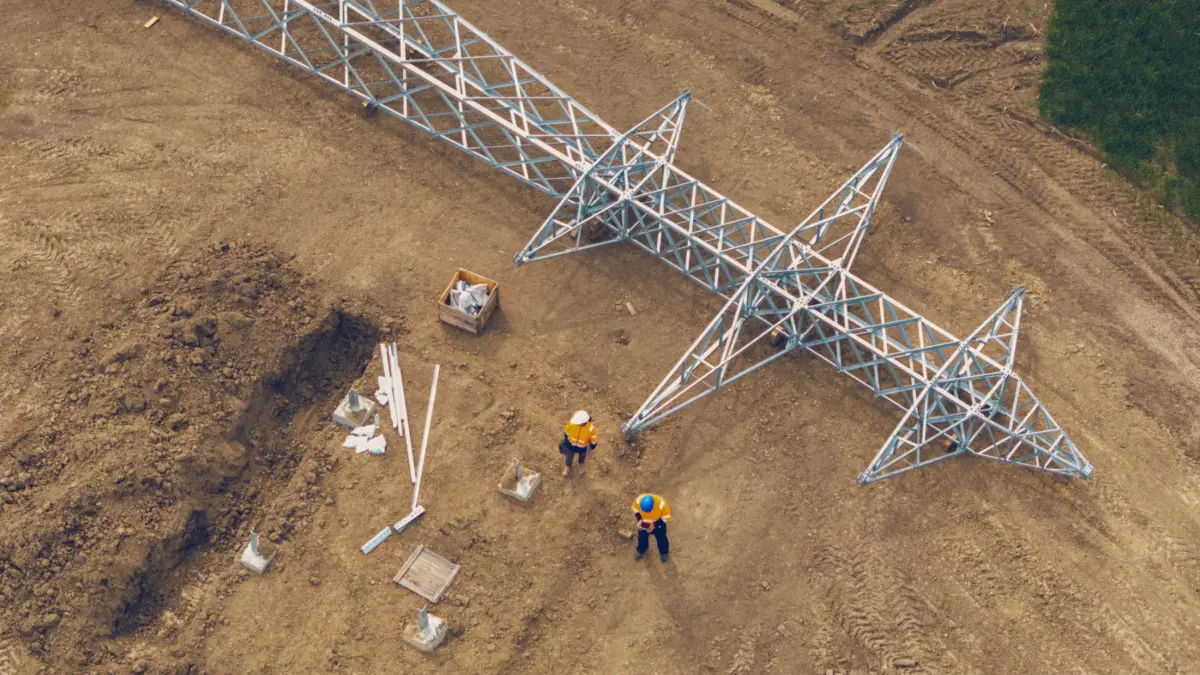
When a multi-billion-dollar artificial intelligence data center project abruptly pauses, scales back, or walks away, it leaves behind far more than an empty patch of industrial earth. Behind the sleek corporate press releases and high-stakes announcements lies a complex, high-voltage footprint embedded deep within the regional electrical grid.
Connecting a modern, high-density computing facility requires far more than plugging into a wall outlet. It demands a secured position in a utility’s interconnection queue, substantial financial deposits to hold grid capacity, and, in many cases, massive capital investments by local utilities to construct new substations, upgrade transformers, and string heavy transmission lines tailored to the exact specifications of the anticipated load.
When a project stalls, these commitments do not simply vanish into thin air. Instead, they are caught in a web of bureaucratic reassignment, regulatory limbo, and unrecovered financial commitments. The resulting costs—ranging from stranded utility assets to delayed green energy transitions—eventually surface in places few ordinary electricity consumers think to look: their monthly utility bills.
Executive Overview
According to the Capgemini Research Institute’s 2026 report, “AI Meets the Grid: Shaping the Data Center Power Play,” nearly one in five data center interconnection requests never materialize into real, operational electrical load. Based on a comprehensive survey of more than 600 global electricity executives conducted in January 2026, roughly 67% of industry leaders described these speculative filings as “phantom load requests.”
This staggering failure rate highlights a profound structural misalignment. As hyper-scalers, independent developers, and enterprise cloud providers race to secure scarce electrical capacity to fuel the generative AI boom, they are submitting speculative and defensive queue requests. The result is an unprecedented strain on utility planning teams who are being asked to forecast and build ahead of highly fluid, uncertain, and volatile demand.
When these speculative projects collapse, the financial fallout does not stop with the developer. While private entities absorb multi-million-dollar losses in sunk engineering, land-use, and permitting costs, the broader utility rate base is frequently left holding the bag for prematurely constructed transmission infrastructure. This deep dive investigates the mechanics of "phantom load," the structural flaws in current grid queues, and the hidden economic ripple effects threatening utility customers across North America and Europe.
The Anatomy of Stranded Capacity: Who Pays, and When?
It is easy to assume that when a high-profile data center venture goes under, the private developer absorbs all the losses and the local community simply moves on. Industry experts note, however, that this comforting assumption is only partially true.
Developer Sunk Costs vs. Utility Exposure
Private developers undoubtedly suffer severe financial friction from sunk costs. According to Sam Tabar, CEO of WhiteFiber, these unrecoverable expenses primarily encompass early-stage engineering, zoning, environmental permitting, and preliminary civil construction.
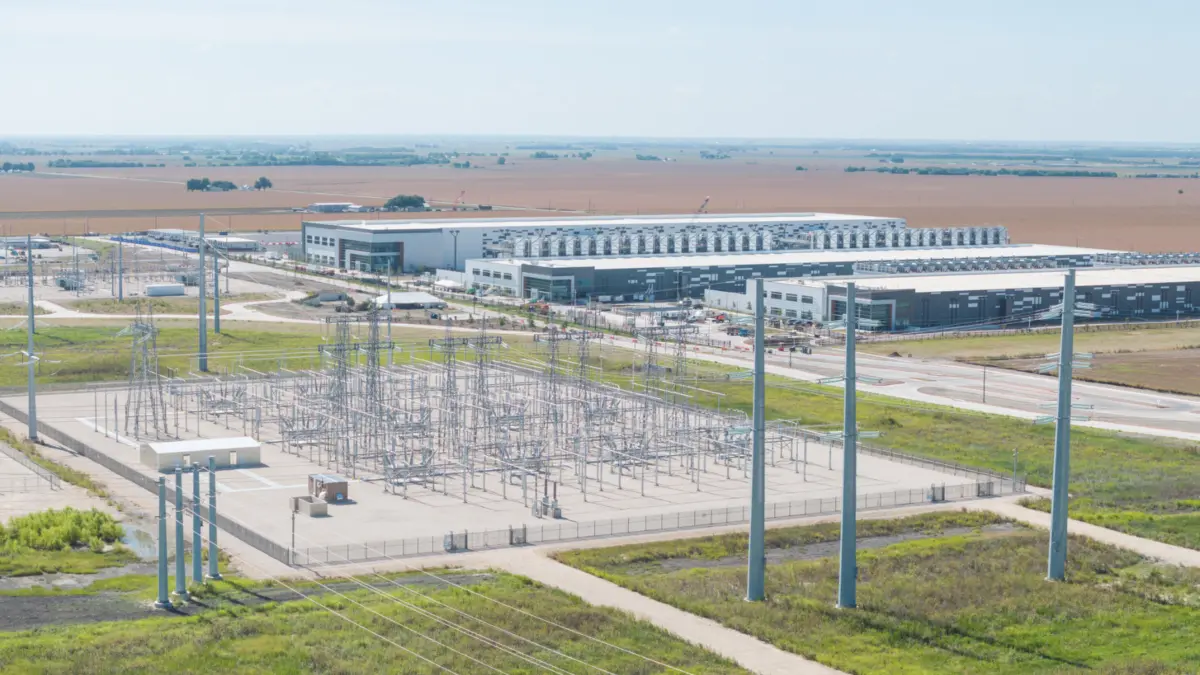
However, utilities are exposed to an entirely different class of risk. By the time a data center project falters, the serving utility may have already broken ground on dedicated substations, high-voltage transmission spurs, and grid-strengthening upgrades designed exclusively to handle the facility’s massive power draw. Under traditional utility ratemaking models, these infrastructure investments are often integrated directly into the utility’s rate base—regardless of whether the computing load ever actually plugs in.
"It is this cost socialization that is largely unaccounted for in the public discussion around data center projects," Tabar told Data Center Knowledge.
The Chronology of Cost Shifting
According to Ildi Telegrafi, a Policy Fellow at the Alliance for Innovation and Infrastructure, the ultimate destination of these stranded costs is determined strictly by timing:
- Pre-Construction Cancellation: If a developer pulls out of a project before the utility has initiated physical grid construction or locked in capital expenditures, the financial burden remains squarely with the private entity, cushioned by forfeited interconnection deposits.
- Post-Construction Abandonment: If physical transmission lines or substations are already underway—or fully completed—at the time of the cancellation, the financial liability shifts dramatically. The capital expense is frequently funneled into general rate cases, forcing ordinary residential, commercial, and industrial utility customers to foot the bill for unutilized infrastructure.
This dynamic creates a profound regulatory dilemma. Jim Tyler, CEO of Erthos, points out that there is no uniform national framework or default rule to handle these scenarios.
"This creates highly complex regulatory dilemmas about whether these costs should be reassigned to other projects, sit with the utility, or enter a rate case to be paid by ordinary customers," Tyler explained. State public utility commissions (PUCs) are increasingly forced into reactive postures, negotiating these massive stranded-asset disputes on a case-by-case basis with little historical precedent to guide them.
The Interconnection Queue Bottleneck
A common misconception among the public and policymakers alike is that grid queues operate like a simple waiting list at a restaurant: when the party at the front of the line cancels, the next party simply steps forward, seamlessly inheriting the table and all its pre-arranged benefits.
In reality, electrical grid engineering does not function on modular, plug-and-play principles.
Why Queue "Swaps" Fail
Interconnection studies are intensely location-sensitive, highly localized, and mathematically bound to specific operational profiles.
- Load Profiles: A 500-megawatt liquid-cooled AI training cluster has vastly different harmonic signatures, ramp rates, and voltage support requirements than a traditional cloud storage server farm or a localized manufacturing facility.
- Geographical Constraints: Swapping a completely different project into an abandoned interconnection point almost universally triggers a mandatory, comprehensive restudy by the regional transmission organization (RTO) or independent system operator (ISO).
The High Cost of Restudies
These restudies are far from minor administrative checkboxes. They introduce punishing delays into an already overburdened infrastructure pipeline.
"Restudies take time, sometimes six months to over a year, and the project inherits updated assumptions about grid conditions that can change its economics significantly," noted Whitaker Irvin Jr., founder and CEO of Q Hydrogen.
During this extended window of regulatory review, regional grid conditions shift, neighboring projects alter their status, and macroeconomic headwinds can completely alter the financial viability of the replacement venture. Consequently, the assumption that freed capacity immediately alleviates grid congestion is largely a myth.
Case Studies in Grid Disruption: Georgia, Virginia, and Cloud Leases
To fully understand how cancellations and reassignments cascade through regional power markets, industry analysts look to three distinct recent case events. Each demonstrates a completely different mechanism of failure and recovery.
1. The Georgia Blueprint: Delayed Succession
In late 2022, Atlanta-based T5 Data Centers proposed a major facility near the historic Fort Gordon military installation in Augusta, Georgia. Before the year concluded, the firm withdrew its application, leaving behind a cleared site and preliminary grid planning.
Sometime later, Eagle South LLC stepped into the vacancy, filing formal plans for "Project Eisenhower"—a massive $2 billion, 2.1 million-square-foot data center campus designed to exploit the exact same Georgia Power substation infrastructure that initially drew T5 to the location.
While the site eventually found a successor, the transition was far from instantaneous. Project Eisenhower has faced notable delays relative to its original operational timeline, missing its targeted completion window due to the administrative drag of restarting site development, updating environmental reviews, and managing local community relations from scratch.
2. The Virginia Corridor: Stranded Transmission Assets
In stark contrast to the Georgia reuse model, the saga of Prince William County, Virginia’s notorious "Digital Gateway" corridor illustrates the catastrophic risk of localized political and legal collapse.
The ambitious 2,139-acre development corridor was projected to draw up to $30 billion in cumulative investment. However, after prolonged litigation, state courts ultimately invalidated the county’s aggressive rezoning approvals. Major players quickly fled the wreckage:
- Compass Datacenters officially walked away in April 2026 after sinking an estimated $40 million into pre-development activities.
- QTS Data Centers officially terminated its remaining legal appeals in July 2026.
Crucially, this corridor was mapped out directly atop heavy-duty Dominion Energy transmission infrastructure—capacity that county economic developers had spent years marketing as the ultimate selling point for AI infrastructure. Today, that hard-won transmission capacity sits in regulatory limbo, with no confirmed successor project capable of utilizing the high-voltage assets built to serve the canceled corridor.
3. Corporate Cloud Reassignments
Not all capacity shocks involve traditional utility filings or local zoning boards. In early 2025, Microsoft made waves across the technology sector by walking away from roughly 2 gigawatts (GW) of aggregate data center leases and planned projects distributed across the United States and Europe, according to a TD Cowen analyst note highlighted by Bloomberg.
In these corporate lease walkaways, the resolution looked very different from physical site abandonment. Much of the European computing capacity was quietly reassigned to rival cloud giants Google and Meta. Because these were existing lease obligations and software/infrastructure shifts rather than raw greenfield utility builds, the physical substations and transmission lines were ultimately absorbed by other hyper-scale tenants with minimal friction for local power providers.
Future Outlook: Reimagining Power Strategies for the AI Era
The Capgemini Research Institute’s findings serve as a stark warning flare for the utility and technology sectors alike. As artificial intelligence models demand exponentially greater compute density—pushing past traditional architectural limits toward 800V power distributions and multi-gigawatt campuses—the margin for error in grid planning has vanished.
To mitigate the systemic risks posed by "phantom load" and stranded capital, industry experts argue that a fundamental evolution in power procurement is urgently required:
- Stricter Interconnection Financial Assurances: RTOs and ISOs are moving toward higher, non-refundable milestone deposits and more rigorous financial vetting to weed out speculative "squatters" in transmission queues.
- Co-Location and Behind-the-Meter Generation: To bypass congested public transmission lines entirely, forward-thinking data center developers are increasingly turning to dedicated on-site power solutions—including small modular nuclear reactors (SMRs), advanced geothermal systems, natural gas turbines, and massive behind-the-meter solar-plus-storage arrays.
- Dynamic Risk-Sharing Agreements: Utilities and regulatory commissions must establish clearer legal frameworks that insulate ordinary ratepayers from absorbing the catastrophic capital costs of abandoned hyper-scale infrastructure.
As Sam Tabar aptly summarized, "The biggest shock has been the duration of the ripple effect." Until developers, utilities, and regulators align their incentives around transparent, accountable, and realistic capacity planning, the ghost loads of the AI boom will continue to haunt regional power grids—and show up uninvited on consumer utility bills for years to come.