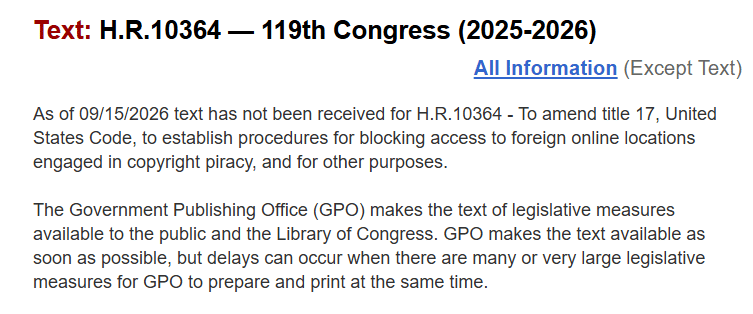
The landscape of American copyright enforcement is shifting dramatically. U.S. Representative Darrell Issa, serving as the chair of the House Intellectual Property subcommittee, has officially introduced a long-anticipated legislative proposal—designated in congressional records as H.R. 10364—designed to establish formal judicial procedures for blocking access to foreign online locations engaged in copyright piracy.
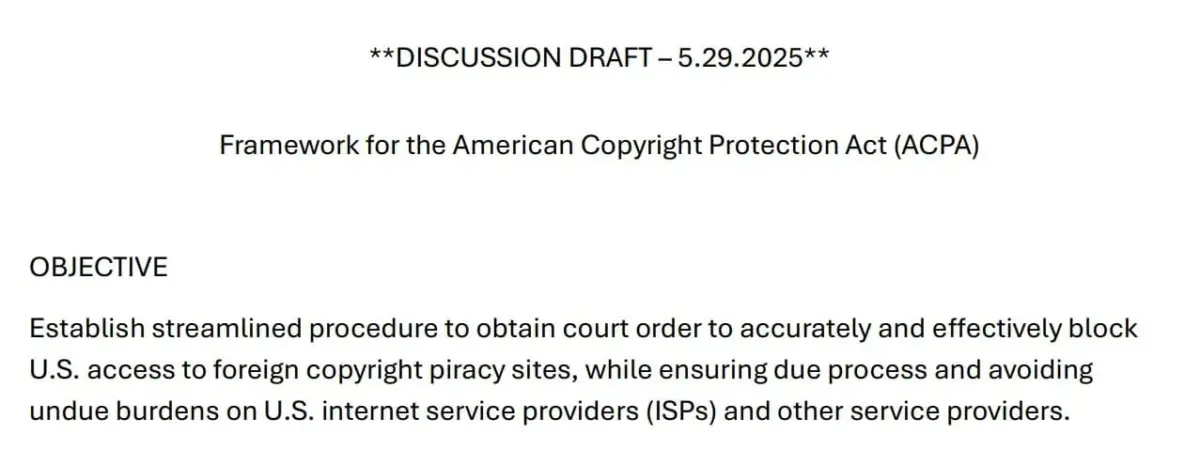
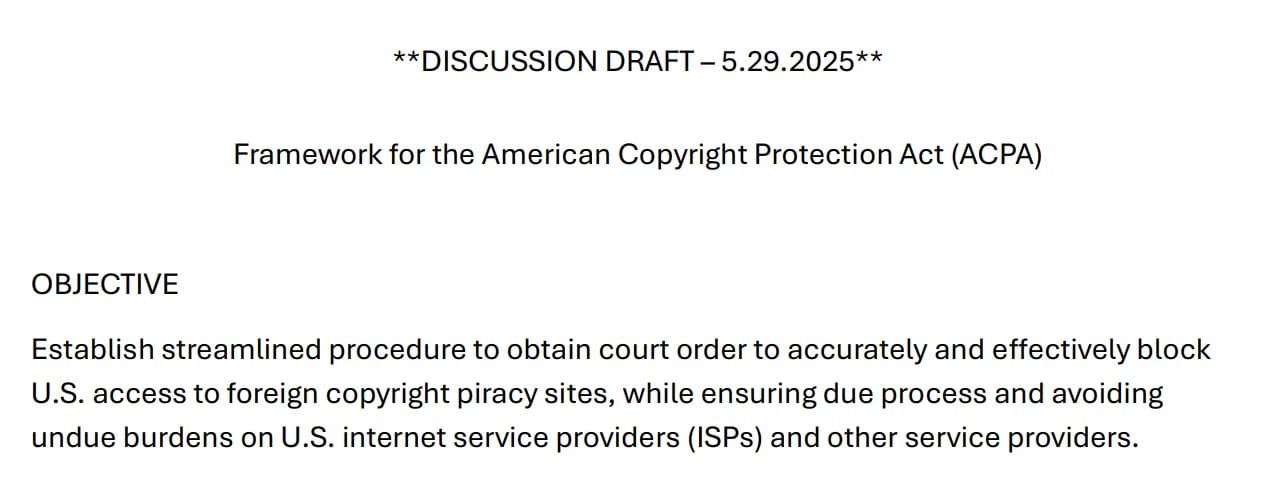
While the formal text of the bill had not yet been published by the Government Publishing Office (GPO) at the time of writing, historical drafts and policy frameworks associated with the effort—previously circulated under the working title of the American Copyright Protection Act (ACPA)—signal a seismic shift in U.S. internet policy. If enacted, the legislation would empower copyright holders to secure court orders compelling both Internet Service Providers (ISPs) and domain name system (DNS) resolvers to block domestic access to overseas-based pirate infrastructure.
This legislative maneuver shatters a multi-decade legislative stalemate that has persisted in the United States since the catastrophic collapse of the controversial Stop Online Piracy Act (SOPA) and the Protect IP Act (PIPA) in 2012. For over a decade, American internet infrastructure providers and telecommunications giants operated free from federal mandates to block user traffic based on intellectual property disputes. However, the modern surge in sophisticated, cross-border digital piracy has reinvigorated bipartisan efforts on Capitol Hill to implement dynamic, court-ordered site-blocking mechanisms.
Yet, Rep. Issa’s introduction of H.R. 10364 does not occur in a political vacuum. The bill arrives amid a tangled web of competing legislative initiatives, internal congressional friction, and looming political deadlines, compounded by the fact that Rep. Issa is retiring at the end of this congressional term. Civil liberties organizations have already mobilized in fierce opposition, warning of catastrophic "overblocking" risks that could inadvertently censor legitimate digital infrastructure, small businesses, and non-profit organizations on a global scale.
Detailed Chronology: From SOPA’s Ashes to H.R. 10364
To understand the weight of Rep. Issa’s legislative introduction, one must examine the arduous evolution of internet site-blocking policy in the United States over the past fifteen years.
The Post-SOPA Freeze (2012–2024)
In early 2012, the introduction of SOPA and PIPA triggered unprecedented digital activism. Millions of internet users, major technology platforms, and civil liberties groups united in opposition against what they characterized as censorship-heavy legislation that would destabilize the foundational architecture of the Domain Name System (DNS). The ensuing backlash forced congressional leadership to shelve both bills indefinitely. For more than ten years, "site blocking" at the ISP level was effectively treated as a political third rail in Washington, D.C., with lawmakers steering clear of any policy that could be construed as enabling state-sanctioned internet filtering.
The Reopening of the Debate (2025–Present)
The defensive wall surrounding U.S. internet architecture began to crack in January of last year, when Representative Zoe Lofgren introduced the Foreign Anti-Digital Piracy Act (FADPA). FADPA cautiously reintroduced the concept of targeted site blocking, specifically tailored to foreign entities beyond the direct jurisdiction of U.S. courts.
Following FADPA’s introduction, momentum accelerated rapidly:
Summer: A bipartisan group of Senators unveiled the Block BEARD Act draft, further normalizing the debate around network-level filtering.
Late 2024–Early 2025: Rep. Darrell Issa, utilizing his leverage as the head of the House IP subcommittee, quietly cultivated stakeholder consensus around his own alternative framework: the American Copyright Protection Act (ACPA). While stakeholder discussions dragged on for months, the text remained unsubmitted to the House floor.
The Present: Congressional records finally confirm that Rep. Issa formally introduced H.R. 10364, formally titled "To establish procedures for blocking access to foreign online locations engaged in copyright piracy, and for other purposes."
Despite the bill receiving a formal bill number, the sudden introduction caught many by surprise because the official legislative text was withheld from immediate public view. Congressional aides and legislative databases confirmed that the GPO had not yet received the final manuscript, and Rep. Issa’s personal office declined to immediately release a press statement or comment to investigative inquiries. Consequently, policy analysts must rely on the comprehensive 2025 ACPA discussion drafts to map out the bill’s likely operational mechanics.
Supporting Context & Operational Metrics: Inside the ACPA Framework
Based on comprehensive reviews of the 2025 ACPA discussion drafts, Rep. Issa’s legislative vision introduces several unique structural nuances designed to differentiate itself from rival Senate and House proposals.
1. Dual-Targeted Infrastructure: ISPs and DNS Resolvers
The core mechanism of H.R. 10364 targets the two critical choke points of internet navigation:
Traditional ISPs: Broadband and mobile network operators (such as Comcast, Charter, Verizon, and AT&T) who manage direct last-mile connections to consumers.
DNS Resolvers: Public and recursive DNS infrastructure (such as Cloudflare, Google Public DNS, and Quad9) which translate human-readable domain names into machine-readable IP addresses. By incorporating public DNS resolvers into the blocking mandate, the legislation attempts to neutralize sophisticated users who routinely bypass basic ISP-level DNS blocks.
2. Specialized Judicial Oversight and Transparency
Unlike broad administrative blocking frameworks seen in various European jurisdictions—which often rely on administrative bodies or copyright office tribunals—the ACPA framework demands judicial intervention.
Designated Judges: The early drafts stipulate that the Judicial Conference of the United States would maintain a specialized, vetted roster of designated federal judges to hear all incoming copyright site-blocking cases, ensuring judicial consistency and familiarity with complex networking technologies.
Centralized Registries: The U.S. Copyright Office would be tasked with publishing and maintaining a definitive, publicly accessible list of active site-blocking orders, ensuring that network operators have a single, verifiable source of truth when executing compliance measures.
3. The Anti-Overblocking Safeguard and Financial Penalties
One of the most heavily debated provisions of Issa’s draft is its attempt to mitigate collateral damage. Recognizing that automated or sloppy copyright enforcement frequently results in the accidental censorship of legal websites, the ACPA framework included a high-stakes penalty provision:
The $250,000 Remedy: Third parties whose websites, domains, or digital services are wrongfully blocked as a result of a rightsholder’s evidentiary error, overzealous interpretation, or bad-faith filing would be legally entitled to claim up to $250,000 in statutory compensation.
Whether this aggressive accountability mechanism survived the final negotiations leading up to H.R. 10364’s introduction remains one of the most pressing questions for legal scholars tracking the legislation.
Official Statements and Industry Reactions
The introduction of H.R. 10364 has immediately galvanized a deeply divided array of stakeholders, ranging from aggressive digital rights advocates to powerful entertainment industry conglomerates.
Public Knowledge and Civil Liberties Pushback
Civil society groups wasted no time in condemning the introduction of the bill, focusing heavily on the structural dangers of empowering private actors and courts to issue broad technical blocks.
Meredith Rose, Senior Policy Counsel at Public Knowledge, issued a blistering critique immediately following the bill’s drop:
"More importantly, applying blocking orders to global DNS resolvers causes global blocks. This means that one court can cut off access to a website globally, based on a single individual’s filing and an expedited procedure. Small businesses and nonprofits face the greatest risks for site blocking but have the fewest protections. In Europe, we’ve seen overblocking bring down digital infrastructure for hotels, car mechanics, retail shops, telehealth programs, and even a nunnery."
Public Knowledge contends that turning telecommunications providers and DNS operators into auxiliary copyright enforcement squads fundamentally compromises the open, decentralized nature of the internet. By leveraging global DNS resolvers, a single U.S. district court order could theoretically instantiate a de facto global blackout of a domain name, completely bypassing due process standards in foreign jurisdictions.
Major Rightsholders and Industry Silence
Conversely, major motion picture studios, record labels, and sports broadcasting coalitions have advocated for years for robust site-blocking tools, pointing to the immense economic damage inflicted by streaming piracy syndicates operating safely beyond U.S. borders.
However, major entertainment lobbying groups have maintained a surprisingly cautious stance. The Motion Picture Association (MPA)—which notably awarded Rep. Issa its prestigious Industry Champion Award earlier this year in recognition of his sustained anti-piracy advocacy—did not immediately issue an official statement following the bill’s introduction. Industry insiders suggest that rightsholders are carefully evaluating whether H.R. 10364 will align with, or disrupt, ongoing multi-party legislative compromises.
Future Outlook: The Legislative Maze and Clockwork Realities
As H.R. 10364 enters the turbulent ecosystem of the U.S. Congress, its path to becoming law is fraught with profound procedural and political hurdles.
1. Internal Congressional Competition
Rep. Issa’s bill is not operating in isolation; it is part of a crowded, multi-track legislative scramble. Observers on Capitol Hill have tracked at least three distinct site-blocking initiatives running concurrently:
The Bicameral Consensus Track: Earlier this year, Senator Thom Tillis and Rep. Zoe Lofgren engaged in intensive negotiations to merge FADPA and the Block BEARD Act into a single, unified bicameral bill.
The "Four Corners" Agreement: Rep. Lofgren previously confirmed that she was attempting to negotiate a comprehensive "four corners agreement" spanning both chambers, involving Rep. Issa alongside Senators Marsha Blackburn, Chris Coons, Adam Schiff, and Thom Tillis.
Congressional insiders remain deeply divided on whether H.R. 10364 represents the designated "House half" of a grand consensus deal—which would theoretically see Lofgren and other key lawmakers added as bipartisan cosponsors—or if it represents a rogue, unilateral effort that directly undercuts ongoing bicameral consensus-building.
2. The Ticking Clock of Retirement
Time is perhaps the most formidable opponent facing H.R. 10364. Rep. Darrell Issa is officially retiring at the conclusion of his current congressional term. This leaves an extraordinarily narrow window of just a few months for the IP subcommittee chair to shepherd a highly contentious, technically complex intellectual property bill through committee markups, floor debates, Senate reconciliation, and presidential signing.
While lame-duck sessions and rushed legislative packages have occasionally yielded major statutory overhauls in the past, the toxic combination of intense industry lobbying, fierce civil liberties opposition, and competing legislative drafts makes passing H.R. 10364 an uphill battle of monumental proportions.
As the text of H.R. 10364 is finally unsealed and scrutinized by legal scholars, tech platforms, and public interest groups, the coming weeks will determine whether Issa’s parting legislative salvo will serve as the foundation for a unified American anti-piracy regime—or simply fade into the legislative history books alongside the ghosts of SOPA past.
This is a developing story. Updates, textual breakdowns, and expert analyses will be provided as soon as the official text of H.R. 10364 is released by the Government Publishing Office.