










Executive Overview
The global ecommerce landscape is undergoing a profound structural evolution, driven by rapid advancements in artificial intelligence, shifting consumer behavior, and innovative logistics strategies. This week’s release cycle highlights a decisive pivot across the digital commerce ecosystem: merchants are no longer just adopting standalone software applications; they are integrating comprehensive, AI-first infrastructures capable of automating creative production, predicting consumer intent, orchestrating omnichannel marketing campaigns, and streamlining fulfillment.

From high-growth Shopify popup optimization tools and end-to-end AI site builders to real-time virtual try-ons and autonomous drone deliveries, the technological bar for online merchants has been raised significantly. Platforms are increasingly replacing fragmented workflows with unified agentic systems. These systems empower businesses of all sizes to scale operations rapidly, personalize customer touchpoints in real time, and navigate an increasingly complex media and AI-search landscape. This report provides a comprehensive, deep-dive analysis of this week’s most critical product releases, merchant tools, platform expansions, and strategic logistics partnerships shaping the future of global retail.
Detailed Chronology of New Merchant Tools and Platform Releases
1. Advanced Conversion and Popup Analytics
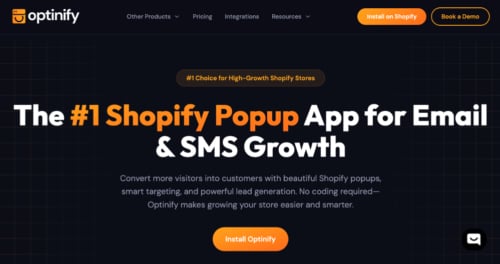
- Optinify Updates Popup App for Shopify: Optinify, a prominent Shopify popup application designed to capture email and SMS leads, has rolled out a ground-up rebuild focused on deep analytics. High-growth Shopify merchants can now precisely monitor popup views, conversion rates, and the specific revenue generated from campaign interactions. The updated system tracks every individual campaign with granular metrics linked to interactive popups, giving sellers the infrastructure needed to perform rigorous A/B testing on headlines, promotional offers, visual designs, and messaging frameworks.
2. Comprehensive Website and Web App Infrastructure
- Hostinger Launches AI Builder: Web hosting and domain registrar giant Hostinger has officially launched its AI Builder, consolidating its traditional website builder and horizons development tools into a single, unified platform. Going beyond basic site design and generation, the new AI Builder manages critical backend and operational tasks, including account sign-in, secure data storage, robust ecommerce functions, and automated email marketing. According to company disclosures, the system can autonomously spin up a fully functioning store, establish user accounts, provision a secure database, and integrate marketing tools within minutes.
3. Shoppable Short-Form Video and Livestreaming Innovations
- Tilt Introduces "Clips": Live-shopping platform Tilt has expanded its ecosystem with the launch of "Clips," a scrollable feed of short-form videos designed to facilitate buying and selling without requiring consumers to wait for a live broadcast. For merchants, unsold inventory can now be transformed into persistent video clips that continue to drive sales long after a livestream has ended—or even without hosting a live stream at all. Sellers simply hold an item up to their camera, describe it out loud, and Tilt’s proprietary AI handles the administrative backend by automatically logging the product category, brand, size, and condition.
4. Omnichannel Marketing and List Growth
- Attentive Launches AI Grow: Omnichannel marketing leader Attentive has introduced AI Grow, an advanced feature engineered to supercharge email and SMS subscriber acquisition. AI Grow analyzes real-time browsing patterns and shopping behavior across both identified users and logged-out site visitors to identify the exact, optimal moment to present list-building sign-up invitations. To ensure accountability, every deployment of AI Grow is measured via incremental A/B testing against a brand’s legacy capture setup.
5. Creative AI and Automated Content Production
- Designkit’s Photo-to-Video Engine: Creative tech portal Designkit has launched an AI platform that converts static product photographs into campaign-ready marketing videos optimized for TikTok, Instagram, YouTube, and native ecommerce storefronts.
- Sell The Trend’s AI Ads Blueprint: Dropshipping platform Sell The Trend has debuted AI Ads Blueprint, an end-to-end ad creator designed to help merchants transition from raw product ideas to fully realized, high-converting ad campaigns. Sellers can select ad formats, prompt AI to generate custom creative assets and ad copy, refine messaging layouts without rebuilding ads from scratch, and navigate a seamless single-workflow pipeline covering inspiration, generation, editing, resizing, and downloading.
- LibAI Lab Unveils "NewFace": LibAI Lab has released NewFace, an advanced AI image and video creation suite tailored for ecommerce sellers, digital agencies, and independent content creators. Users outline their creative vision using natural language prompts, and the NewFace agent constructs the project node by node on an interactive canvas. The system maintains context regarding the creative brief, reference assets, and prior decisions, allowing users to approve iterations, let the agent execute autonomously, or step in to take control at any node.
- Koozee Launches Visual Production Suite for Apparel: Developed by Australia-based Starii Tech Pty Ltd, Koozee has launched an all-in-one visual production platform specifically built for apparel ecommerce. The platform enables merchants to upload a single garment image to generate hyper-realistic AI model shots, dynamic lookbooks, and fitlog videos. Merchants can freely modify models, scenes, poses, and camera angles, as well as generate core product visuals, flat lays, detail shots, and ghost mannequin assets.
6. Retail Media Networks and Marketing Automation
- GrowthLoop Expands Composable Commerce Media Network: AI-powered marketing platform GrowthLoop announced a major expansion of its composable commerce media network, integrating advanced capabilities from premier adtech partners including The Trade Desk, Moloco, and Audience Acuity. Operating directly on top of leading data clouds such as Google BigQuery, Snowflake, and Databricks, GrowthLoop’s network enables retail and commerce teams to construct, manage, and scale their own retail media networks (RMNs) by combining onsite and offsite media activation, deep audience intelligence, and closed-loop performance measurement.
- Astute Raises $1.2 Million for B2B Creator Partnerships: B2B marketing platform Astute secured $1.2 million in a pre-seed funding round backed by Flyer One Ventures, Silicon Gardens, Marathon Fund, and the Entrepreneurs Roundtable Accelerator. Astute is designed to help businesses navigate and manage commercial partnerships with independent creators across newsletters, podcasts, and social media channels within a fragmented media landscape.
7. Strategic Fulfillment and Logistics Partnerships
- Uber and Zipline Scale Drone Delivery: Autonomous drone delivery provider Zipline and Uber Technologies have forged a major partnership to scale ultra-fast drone deliveries across the United States. As part of the agreement, Uber is making a strategic investment in Zipline. The partnership targets a milestone of 1 million daily drone deliveries by the end of 2029, with initial deployments scheduled for later this year. Uber Eats customers will soon receive food and retail orders in a matter of minutes via Zipline’s autonomous aircraft.
8. Marketplace Accelerators and Regional Discoverability
- BPMS Launches "Bloom": Marketing and media agency BPMS has launched Bloom, a dedicated marketplace growth accelerator designed to help consumer brands launch, scale, and dominate major ecommerce channels, including Amazon, Walmart Marketplace, Target Plus, and TikTok Shop. Bloom provides comprehensive lifecycle support—ranging from initial account setup and catalog migration to SKU management, category mapping, search engine optimization (SEO), and review management.
- Shoppa.ca Launches Canadian-Centric Marketplace: Buy Canadian Group Inc. has debuted Shoppa.ca, a specialized discovery engine and marketplace dedicated exclusively to Canada-based businesses. The platform prominently labels products as "Canadian-Owned" or "Made in Canada," providing domestic shoppers with a streamlined way to support local enterprise.
9. Agentic Commerce and AI Governance Platforms
- Alipay Launches Agentic Commerce Platform: Payment giant Alipay, a subsidiary of Alibaba Group, has introduced an agentic commerce platform equipped with modular AI tools for merchants. Businesses can transform standard web pages, products, and operational workflows into agent-ready skills and Model Context Protocol (MCP) tools. The platform supports end-to-end AI agent creation, complex skill orchestration, automated task execution, and daily operational management.
- ShouldEye Introduces AI Reputation Management: Verification and trust technology firm ShouldEye has launched a specialized B2B platform enabling companies to monitor, evaluate, and control their brand visibility and reputation across leading foundational AI models. The platform exposes how various AI systems describe, evaluate, and recommend a business, helping brands identify inconsistencies, missing data points, and perception gaps. Participating companies can also deploy ShouldEye trust badges and widgets across their digital properties.
- Remark Debuts Real-Time Virtual Try-On: Luxury commerce platform Remark has launched a high-definition, real-time virtual try-on tool that dynamically tracks and mimics user movement. Installed directly on product detail pages without requiring app downloads or external software, the tool renders garments instantly upon user interaction. It maintains real-time frame rates and full high definition as the consumer moves, building every rendering directly from the brand’s proprietary imagery and product catalog data.
Supporting Context & Metrics
The rapid proliferation of these tools reflects underlying shifts in consumer expectations and merchant operational budgets. Industry data indicates that global ecommerce sales continue to expand, driven heavily by mobile commerce, social selling, and hyper-personalized interactions.

- The Rise of Agentic Workflows: The transition from static software dashboards to autonomous AI agents—exemplified by releases from Alipay, Hostinger, and LibAI Lab—signifies a move toward operational self-sufficiency. Merchants are increasingly delegating repetitive tasks, such as multi-channel ad resizing, catalog management, and database provisioning, to AI models.
- Video Commerce Dominance: Short-form video continues to command consumer attention. Platforms like Tilt and Designkit are capitalizing on this trend by collapsing the distance between content consumption and transactional checkout, transforming passive video viewers into active buyers within seconds.
- The Logistics Frontier: Delivery speed remains a primary differentiator in retail. The multi-year partnership between Uber and Zipline signals that drone delivery is transitioning from experimental pilot programs to mainstream commercial infrastructure, with the ambitious target of 1 million daily deliveries underscoring the scalability of autonomous aviation.
Official Statements and Industry Insights
Industry executives and platform founders emphasized the transformative nature of this week’s technological advancements:

- On Omnichannel List Growth: Representatives from Attentive noted that “capturing consumer intent requires precision timing; AI Grow bridges the gap between anonymous browsing behavior and decisive conversion by engaging shoppers at the exact psychological moment of interest.”
- On Creative Automation: Development teams behind platforms like Koozee and Sell The Trend highlighted the democratization of high-end production: “Apparel brands and dropshippers no longer need massive photography studios or expensive agency retainers to produce campaign-ready visuals and dynamic lookbooks; generative AI provides infinite creative variability on demand.”
- On Autonomous Agent Ecosystems: Commenting on Alipay’s new merchant platform, digital commerce analysts observed that “the integration of Model Context Protocol (MCP) and agentic workflows marks the beginning of machine-to-machine commerce, where AI agents will independently negotiate, purchase, and manage operational tasks on behalf of merchants and consumers alike.”
Future Outlook
As the digital commerce sector looks toward the remainder of the decade, several clear trajectories emerge from this week’s product releases:

- Hyper-Personalization at Scale: Tools like Optinify, Attentive, and Remark demonstrate that real-time behavioral data will dictate the consumer journey. Future shopping experiences will dynamically alter visual presentation, promotional incentives, and communication channels based on micro-moments of user engagement.
- Decentralized and Autonomous Fulfillment: The integration of Uber and Zipline points toward an increasingly automated logistics network. As airspace regulations evolve and drone technology matures, urban and suburban delivery windows will shrink from hours to minutes, fundamentally altering customer expectations for instant gratification.
- AI Visibility and Brand Governance: Platforms such as ShouldEye indicate that a brand’s digital footprint is no longer evaluated solely by human search engines, but by large language models and autonomous AI agents. Managing brand perception, data integrity, and trust signals across diverse AI models will become a core competency for modern enterprise marketing teams.
In summary, the tools released this week underscore an industry moving decisively toward automation, visual immersion, and frictionless omnichannel engagement. Merchants who successfully integrate these next-generation platforms will be well-positioned to capture consumer mindshare and drive sustainable growth in an increasingly competitive global marketplace.