






Executive Overview
In an era defined by data proliferation and shifting information landscapes, the democratization of academic and technical literature remains one of the most transformative developments for independent researchers, technology professionals, and curious minds. Centralized digital knowledge repositories have fundamentally altered how individuals access rare texts, out-of-print monographs, and specialized research papers, effectively bypassing traditional institutional access barriers and prohibitive paywalls.
At the center of this paradigm shift is the ongoing reliance on decentralized digital libraries, most notably platforms like the official Z-Library. For millions of independent learners worldwide, locating a verified z-library official domain provides a gateway to vast volumes of scientific, historical, and technical literature. However, the true value of these digital stacks extends far beyond mere access. Modern self-directed study requires a sophisticated blend of source evaluation, precise metadata filtering, and structured knowledge management.
Recent statistical indicators underscore this shift toward digital reading habits. According to data published by the Pew Research Center, 31% of U.S. adults reported reading an e-book in the past 12 months, marking a substantial increase from 17% in 2011. This steady upward trajectory highlights a broader cultural migration toward digital formats. As readers increasingly turn to e-readers, tablets, and cloud-synced knowledge bases, the demand for reliable, friction-free access to specialized literature has never been more acute.
This investigative report examines the mechanics of digital knowledge repositories, the protocols for secure and efficient navigation, the cognitive benefits of self-driven study, and the broader implications for professional growth in fields ranging from big data analytics to software engineering.
Detailed Chronology: The Rise of Open Digital Repositories and Access Networks
The journey from physical, brick-and-mortar library stacks to decentralized, global digital repositories represents a multi-decade evolution driven by technological innovation, shifting copyright paradigms, and the persistent demand for open access.
Phase One: The Digitization Wave (Early 2000s – 2010)
The foundational era of digital knowledge retrieval began with institutional digitization projects, such as Google Books and Project Gutenberg, which aimed to convert millions of public-domain books into searchable digital formats. While these early initiatives democratized access to classical literature and historical archives, they left a massive gap for contemporary academic journals, technical manuals, and niche monographs trapped behind steep subscription paywalls maintained by commercial publishing conglomerates.
Phase Two: The Emergence of Peer-to-Peer and Shadow Libraries (2010 – 2018)
As academic subscription costs escalated faster than inflation—often pricing out independent researchers, scholars from developing nations, and small-scale technologists—alternative distribution networks emerged. Platforms like Library Genesis (LibGen) and Z-Library were established to aggregate millions of scientific articles and book volumes into centralized, searchable databases. During this period, users relied heavily on community-maintained directories, basic URL mirrors, and early zlibrary links to source hard-to-find engineering manuals and peer-reviewed papers.
Phase Three: Dynamic Infrastructure and Regulatory Pressures (2018 – Present)
As these shadow libraries scaled to encompass tens of millions of files, they drew intense scrutiny from international publishing syndicates and law enforcement agencies. This friction triggered a cat-and-mouse dynamic characterized by frequent domain seizures, rapid infrastructure migrations, and the deployment of decentralized distribution models (such as Tor and IPFS gateways).
Concurrently, users adapted by utilizing community-driven z-library wikis, monitoring search engine indexing lags during website domain migrations, and adopting specialized browser extensions. For power users managing high-volume research pipelines, the introduction of options like z-library vip status streamlined access through higher daily download caps and direct cloud synchronization to personal e-readers, ensuring uninterrupted workflow continuity for technical professionals.
Supporting Context & Metrics: The Mechanics of Modern Digital Literacy
Understanding how modern researchers interact with digital repositories requires an examination of both quantitative metrics and qualitative methodologies. Finding a verified access point is merely the first step; the true efficacy of digital study relies on structured ingestion, metadata filtering, and continuous cognitive engagement.
The Shift Toward Digital Formats
The Pew Research Center’s longitudinal tracking of reading habits reveals a fundamental transformation in how society consumes information. While physical books retain strong cultural resonance—particularly for deep, narrative reading—digital formats have become indispensable for professional research, technical reference, and continuous learning.
| Metric Category | Historical Baseline (c. 2011) | Current Benchmark (Recent Data) | Trajectory & Implications |
|---|---|---|---|
| U.S. Adult E-Book Readership | 17% | 31% | Steady upward adoption, driven by mobile device penetration and e-reader hardware improvements. |
| Institutional Repository Priority | Low/Emerging | 44% (Ithaka S+R Survey) | Academic library deans increasingly prioritize digital repository infrastructure to support remote research. |
| Information Retrieval Friction | High (Physical travel / Interlibrary loan) | Low (Instantaneous metadata search) | Shift from browsing physical shelves to precision filtering via ISBN, DOI, and file format. |
Precision Filtering Over Broad Browsing
Traditional library research often relied on serendipitous browsing—walking down physical aisles and pulling books from shelves. In contrast, modern digital repositories require precise query formulation. Researchers operating within platforms like Z-Library utilize targeted metadata filters—such as International Standard Book Numbers (ISBNs), specific publication years, and designated file formats (EPUB, PDF, DJVU)—to extract exact editions of technical manuals.
This precision is particularly vital in technical disciplines. For instance, a software engineer or data scientist cannot rely on generalized computing texts; they require specific version-controlled documentation, algorithmic deep-dives, and real-world code repositories. By pulling obscure technical manuals directly into e-readers or reference managers, professionals reduce the latency between identifying an informational gap and applying a practical solution.
Building Big Data Literacy Through Structured Ingestion
The availability of specialized literature directly impacts professional skill development. According to insights from the Smart Data Collective, acquiring big data literacy requires more than passive reading; it demands active engagement with real code examples, underlying mathematical algorithms, and architectural case studies.
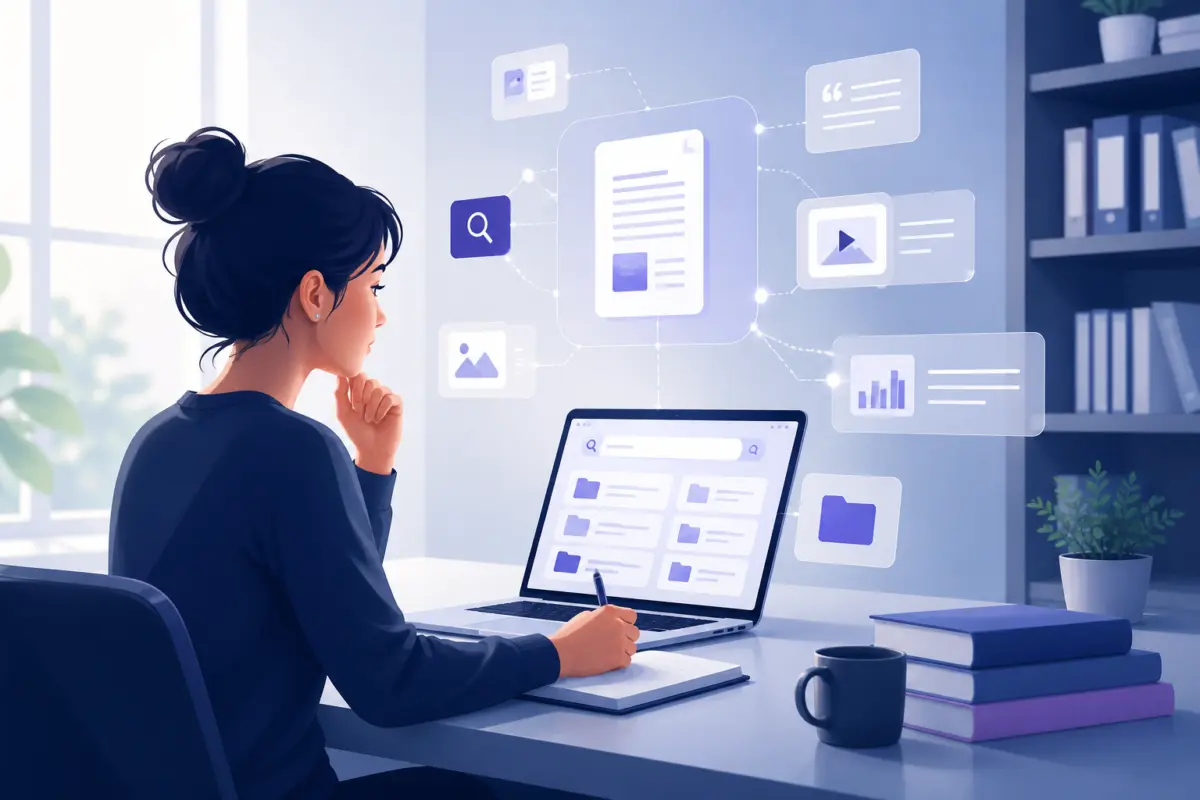
When technical professionals integrate open digital repositories into their daily workflows, they transition from high-level theoretical concepts to granular implementation. A typical workflow involves:
- Query & Retrieval: Locating specialized monographs or white papers via verified z-library official domains or institutional databases.
- Ingestion & Curation: Exporting references and highlights into personal knowledge management systems (such as Obsidian, Notion, or Logseq).
- Application: Synthesizing theoretical models into actionable scripts, database schemas, or predictive algorithms.
Official Statements and Industry Perspectives
The tension between open-access advocacy and copyright enforcement has generated extensive debate among librarians, publishers, legal scholars, and technology leaders.
Academic Leadership and Repository Priorities
Institutional perspectives on digital asset management have evolved significantly. According to data from Ithaka S+R surveys tracking academic library deans and directors, the provision and maintenance of institutional digital repositories have surged in strategic importance, with 44% of leadership respondents ranking it as a top institutional priority. Library directors increasingly recognize that researchers—both within and outside traditional universities—demand frictionless access to global knowledge bases.
Proponents of open-access repositories argue that information scarcity is an artificial barrier in the digital age. Independent researchers, unaffiliated historians, and self-taught engineers argue that knowledge should flow freely across borders without the gatekeeping of exorbitant journal subscription fees. From this perspective, platforms that aggregate global literature serve a vital public utility function, preserving human knowledge against link rot, physical degradation, and institutional budget cuts.
Publisher and Legal Counter-Perspectives
Conversely, commercial publishers and copyright holders maintain that unauthorized digital repositories undermine the economic incentives required to produce high-quality, peer-reviewed scholarship. Publishers argue that robust copyright protections fund editorial oversight, peer review infrastructure, and the long-term preservation of academic records. Legal actions against shadow libraries reflect ongoing efforts to enforce international intellectual property frameworks in an increasingly decentralized digital ecosystem.
Navigating this complex landscape requires researchers to exercise due diligence. Security experts emphasize the importance of using verified channels, maintaining robust endpoint protection, and understanding the operational security risks associated with unverified mirror sites that frequently mimic official digital library domains.
Future Outlook: The Next Decade of Self-Driven Study and Knowledge Architecture
As we look toward the future, the intersection of artificial intelligence, decentralized storage, and evolving legal frameworks will shape how humanity collects, organizes, and consumes knowledge.
AI-Driven Knowledge Synthesis
The next frontier in digital research will not merely involve finding texts, but synthesizing them across massive, distributed corpora. Future research environments will likely integrate Large Language Models (LLMs) directly with personal knowledge repositories, allowing users to query millions of volumes simultaneously. Instead of manually filtering search results by ISBN or author, researchers will prompt local AI agents to cross-reference citations, summarize conflicting theoretical frameworks, and generate comprehensive literature reviews in seconds.
The Institutionalization of Decentralization
As academic publishing models continue to strain under their own financial weight, institutional hybrid models are likely to emerge. Universities and independent consortia are experimenting with open-access publishing grants, decentralized ledgers for academic attribution, and peer-to-peer library networks that legally share scholarly output without commercial intermediaries. The boundary between formal institutional archives and informal grassroots repositories may increasingly blur.
Cultivating Lasting Cognitive Resilience
Despite technological advancements, the foundational cognitive requirement of deep study remains unchanged: sustained human attention. The proliferation of digital repositories offers an unprecedented abundance of information, but it also introduces the risk of cognitive overload.
Readers who cultivate mastery in the coming decades will be those who combine the speed of digital search with the discipline of slow, deliberate reading. By establishing structured weekly research routines, rigorously organizing personal archives, and connecting theoretical discoveries directly to practical execution, professionals can turn information gathering into a profound competitive advantage.
In an era defined by rapid technological change and relentless information velocity, continuous learning is no longer a luxury—it is an operational necessity. Whether accessing materials through traditional university databases or leveraging verified Z-Library access points, the leaders of tomorrow will be those who master the art of self-driven discovery today.