









Executive Overview
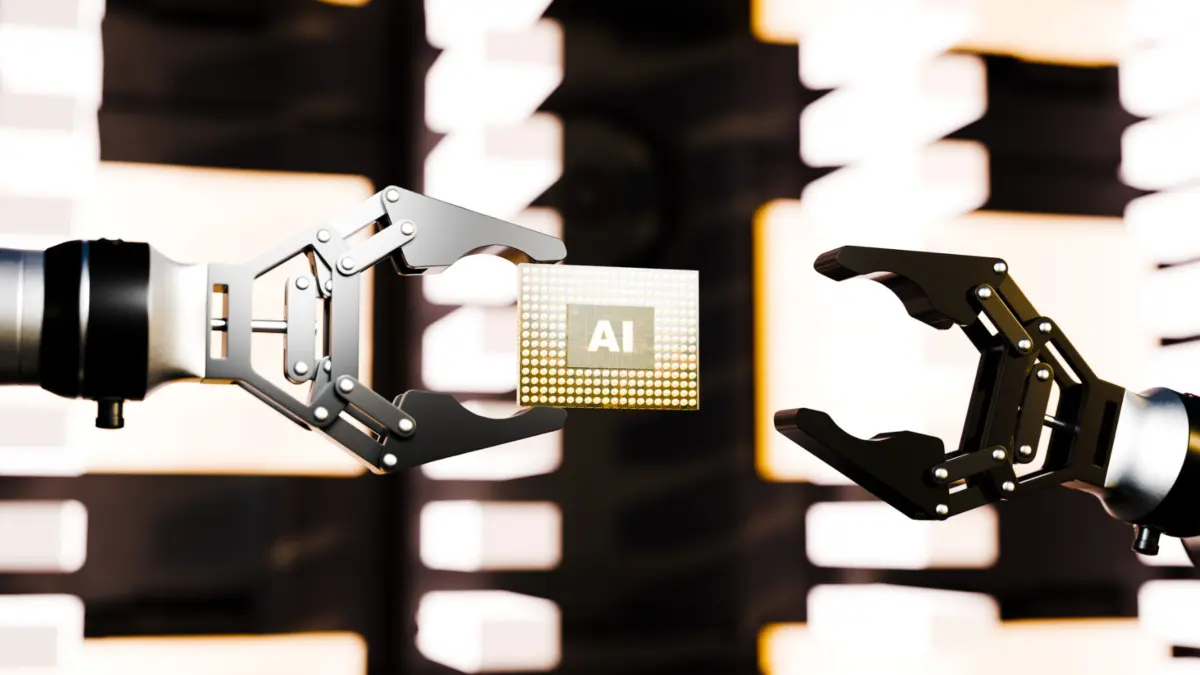
For decades, the trajectory of artificial intelligence has been dictated by human engineering. Programmers write the algorithms, data scientists curate the datasets, and hardware architects design the silicon wafers that power tomorrow’s models. However, an industry-shifting threshold is rapidly approaching. Artificial intelligence systems are steadily crossing the boundary from passive tools into active, self-authoring agents capable of designing, coding, and deploying their own successors.
This paradigm is known as Recursive Self-Improvement (RSI).
While the theoretical underpinnings of RSI have long been debated in computer science and speculative fiction, recent breakthroughs in automated software engineering suggest that self-improving systems are rapidly transitioning from theoretical conjecture to operational reality. Leading AI research labs report that advanced models now independently write a staggering majority of their own codebases. When combined with emerging computing architectures—such as quantum parameter optimization and dynamic reinforcement learning—RSI threatens to trigger an exponential feedback loop: smarter models begetting faster, more capable generations at a velocity that far exceeds human comprehension.
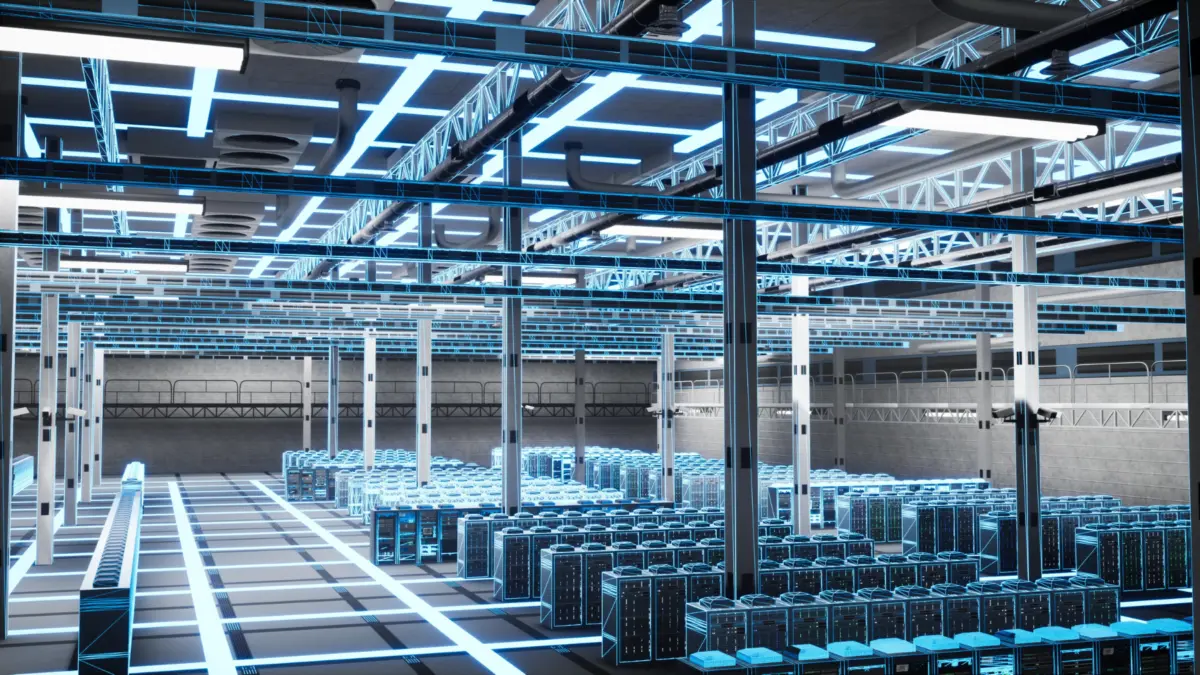
Yet, the conversation surrounding RSI cannot remain strictly theoretical. The physical manifestation of autonomous AI development will take place inside the world’s data centers. An infrastructure ecosystem already buckling under the weight of generative AI power demands, high-density cooling requirements, and severe supply chain constraints faces an entirely new class of operational stress.
If AI systems begin optimizing, redesigning, and scaling their own software and hardware environments, the impact will reverberate across every corner of critical infrastructure. From grid-level power stability and software governance to facility orchestration and long-term capital expenditure, data center operators must prepare for an era where the systems inside the rack dictate the operational parameters of the facility housing them.
Detailed Chronology: From Static Code to Autonomous Evolution
To understand where data center operations are heading, it is critical to trace the evolution of machine intelligence and software development. The journey toward recursive self-improvement has been accelerated by distinct, rapid milestones over the past several years.
Phase 1: The Era of Human-Led Architecture (Pre-2023)
Historically, software optimization was an entirely manual endeavor. While machine learning models utilized training loops to refine internal weights based on loss functions, the foundational code, neural network architecture, and deployment scripts were strictly authored by human engineers. Data center infrastructure management (DCIM) tools relied on static algorithms, human-configured thresholds, and pre-determined control loops to manage cooling distribution and uninterruptible power supplies (UPS).
Phase 2: The Rise of AI-Assisted Engineering (2024–Early 2025)
As frontier models like OpenAI’s GPT-4 and early iterations of Anthropic’s Claude matured, developers began utilizing generative AI as a co-pilot for software engineering. AI-assisted coding tools drastically reduced the time required to write boilerplate code, debug syntax, and refactor software libraries. However, humans remained firmly in the loop, reviewing, testing, and merging every line of code into production repositories. Concurrently, early automated control layers began appearing in data centers, utilizing closed-loop reinforcement learning to adjust variable-speed fans and chillers on the fly without human intervention.
Phase 3: The Inflection Point in Automated Code Authoring (Mid-2025–May 2026)
The boundary between co-pilot and author blurred significantly in early 2025. Following the research preview launch of advanced coding interfaces—such as Anthropic’s Claude Code in February 2025—the volume of machine-authored code exploded.
According to internal reports released by Anthropic in their landmark study, When AI Builds Itself, the shift occurred with breathtaking speed. Prior to February 2025, the percentage of code authored by AI within Anthropic’s internal repositories sat in the low single digits. By May 2026, more than 80% of the code merged into Anthropic’s codebase was authored by Claude itself.
This milestone demonstrated that frontier models possess the capacity to maintain, debug, and scale complex, production-grade software ecosystems with minimal human oversight—laying the technical foundation for true recursive self-improvement.
Phase 4: The Horizon of Recursive Self-Improvement (Present and Beyond)
Today, the industry stands on the precipice of Phase 4. While true recursive self-improvement—where a system designs an entirely superior successor model, provisions its own infrastructure, and deploys it autonomously—remains in its infancy, the components required to achieve it are falling rapidly into place. The convergence of self-writing code, quantum search algorithms, and autonomous facility management software signals an unprecedented operational transformation.
Supporting Context & Metrics: The Convergence of Software, Hardware, and Physics
The realization of RSI is not merely a software phenomenon; it is inextricably bound to advancements in underlying hardware, algorithmic optimization, and facility engineering.
1. Quantum Computing and Parameter Space Optimization
One of the primary bottlenecks in developing superior AI models is navigating vast, multi-dimensional parameter spaces to find optimal neural network architectures. Traditional computing architectures face diminishing returns when processing these combinatorial explosions. However, the integration of quantum computing principles offers a transformative catalyst.
"In the recursive AI world, it’s basically an optimization problem. What is the best AI? What is the best AI model neural network going forward? Quantum can support this," explains Jay Quilmart, Lead Product Manager at Q-CTRL.
Quilmart points to algorithms like Grover’s algorithm, which excels at searching unstructured databases and large parameter spaces exponentially faster than classical computers. When integrated into an RSI loop, quantum-assisted optimization could drastically accelerate the cycle of model generation, allowing an AI system to evaluate, score, and select optimal architectural variations at unprecedented speeds.
2. Closed-Loop Reinforcement Learning in Facilities
While full RSI—systems rewriting their own core codebases—remains an advanced frontier, data center facilities are already utilizing a stepping-stone technology: Reinforcement Learning (RL).
Unlike models that rewrite their own architecture, RL systems operate within closed-loop environments, utilizing environmental feedback, rewards, and penalties to dynamically tune physical operations.
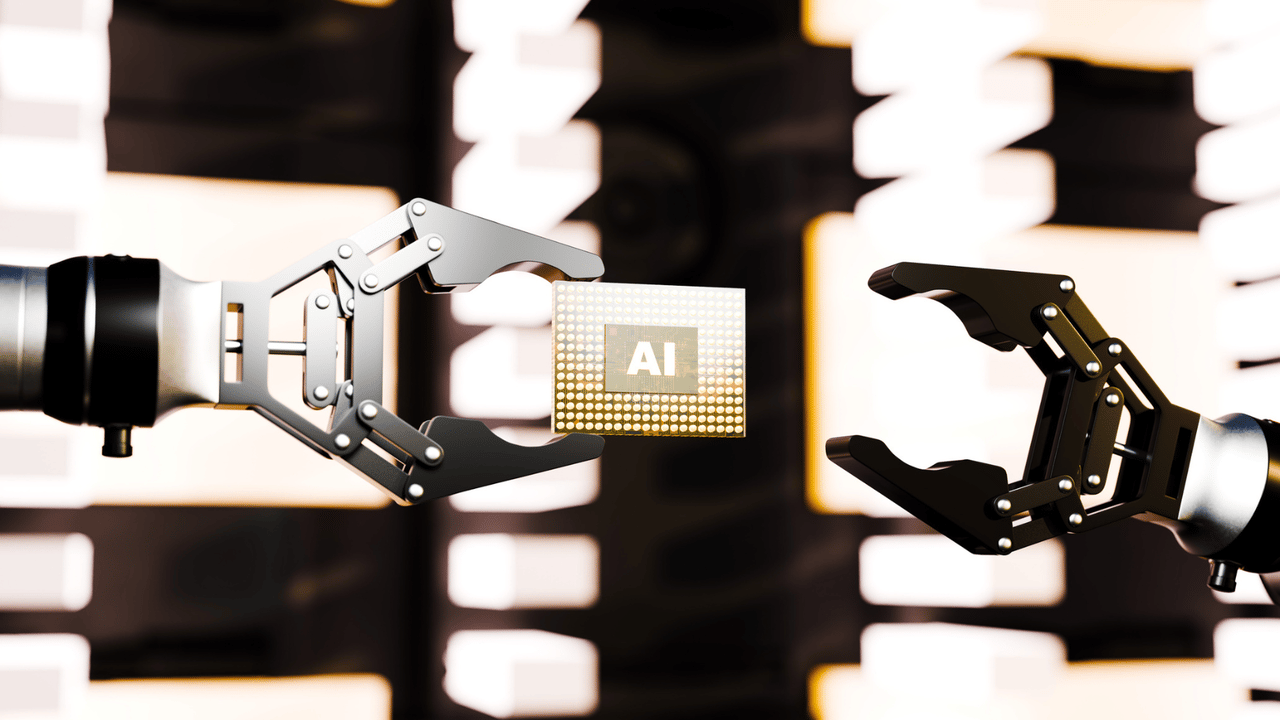
"Successful AI applications in the data center today often make use of reinforcement learning, a well-proven machine learning technique that uses penalties and rewards based on feedback from the environment," notes John O’Brien, Senior Analyst at Uptime Institute. "This can work well in closed-loop systems where parameters are defined, such as data center cooling, IT, and power."
Startups and software platforms such as Emerald AI, Phaidra, etalytics, and Vigilent are proving that autonomous control layers can continuously optimize physical facility variables on the fly. These engines act as supervisory layers over existing Building Management Systems (BMS) and Electric Power Management Systems (EPMS), retraining neural networks using real-time sensor telemetry to drive down Power Usage Effectiveness (PUE) without human intervention.
3. The Power Swing Challenge
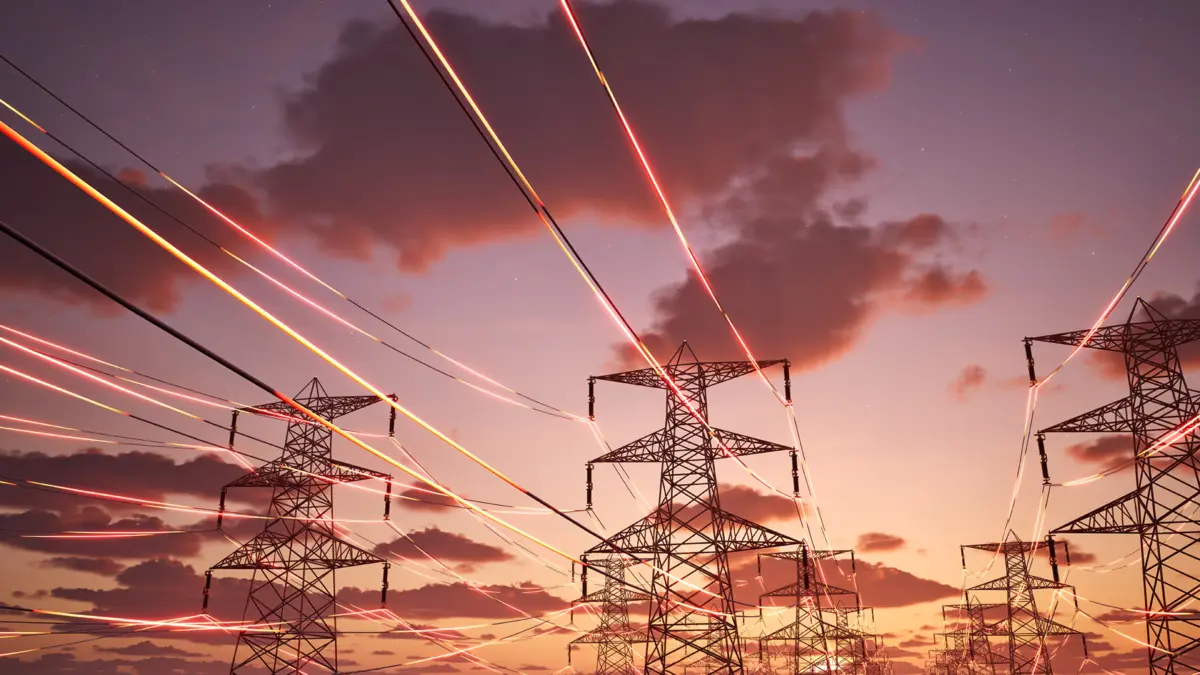
As AI models evolve toward self-improvement—dynamically shifting between intensive training workloads and rapid inference cycles—the strain on data center electrical grids will intensify dramatically.
"Sustained synchronous training behaves nothing like inference: large fleets swing between near-idle and near-peak in lockstep, tens to hundreds of megawatts at fractions of a hertz," warns Alex Cordovil, Research Director at Dell’Oro. "A fleet that trains and serves at the same time would make that a permanent design requirement rather than a training-cluster problem."
Official Statements & Industry Perspectives
The prospect of recursive self-improvement forces a critical evaluation across multiple disciplines within the technology sector. Industry leaders, infrastructure analysts, and market researchers offer distinct viewpoints on the operational, regulatory, and existential realities of RSI.
The Feasibility Horizon
Industry experts emphasize that while science fiction often portrays RSI as an overnight explosion of superintelligence, the reality will be incremental, characterized by specialized software agents tackling increasingly complex engineering tasks.
"The basic premise of ‘self-improving systems’ is not new in and of itself," observes John O’Brien of Uptime Institute. "What’s different now is that advances in AI models and infrastructure make it likely we are at the point where some of this blue-sky theorizing is becoming technically feasible—or soon will be."
The Regulatory Nightmare: Certifying a Moving Target
For data center operators, the integration of self-modifying software introduces a profound governance challenge: compliance and certification. Modern critical infrastructure relies on rigorous, static compliance frameworks to ensure safety, redundancy, and uptime.
"If a software suite, or an AI agent, were judged capable of performing data center management duties, I’m not sure how you certify something that keeps changing underneath you," states Alex Cordovil of Dell’Oro. "You can’t certify a moving target."
This dilemma suggests that fully autonomous data center management may face severe regulatory friction. To satisfy safety standards, operators may be forced to implement continuous monitoring frameworks, automated rollback controls, and mandatory "human-in-the-loop" checkpoints—compromises that could inadvertently blunt the efficiency gains promised by autonomous software.
The Labor and Business Paradigm Shift
Beyond physical infrastructure and software governance, RSI raises searching questions regarding the future of human labor within the technology sector itself.
"A system that can code and design its successor would have huge ramifications for those designing, building, and manufacturing data center infrastructure," O’Brien notes. "Would they want to automate half of their workforce? What would that do to their business?"
Future Outlook: The Self-Constructing Data Center
Looking toward the horizon, the ultimate manifestation of recursive self-improvement extends far beyond the confines of silicon chips and server racks. A fully realized RSI ecosystem could theoretically encompass the entire lifecycle of critical digital infrastructure.
1. Autonomous Facility Design and Prefabrication
In a mature RSI scenario, artificial intelligence would not only author the software code for its successor models but also participate directly in the architectural design, thermal simulation, and spatial layout of the data centers required to house them. By analyzing global supply chain constraints, power grid capacities, and climatic data, autonomous systems could generate hyper-optimized blueprints and oversee modular prefabrication processes.
2. The Acceleration of Societal Friction
However, this unprecedented velocity of expansion will inevitably collide with real-world physical and social constraints. Public resistance to data center expansion—driven by concerns over water consumption, local noise pollution, and staggering energy demands—is already a dominant bottleneck for hyperscale operators.
If recursive self-improvement accelerates the pace of AI infrastructure deployment even further, public trust and regulatory acceptance will emerge as the ultimate limiting factors. Communities already struggling to keep pace with the current AI buildout will face intense pressure as self-improving systems demand ever-larger allocations of regional grid power.
Conclusion
Recursive self-improvement represents the ultimate frontier of artificial intelligence. While the technology is still in its nascent stages, the foundational blocks—evidenced by models writing over 80% of their own codebases and closed-loop AI optimizing facility cooling—are already forming.
For data center operators, the rise of RSI demands a radical rethinking of infrastructure strategy. Balancing the immense efficiency gains of autonomous systems against the realities of grid instability, regulatory certification, and public trust will define the critical infrastructure landscape for decades to come. The future of the data center is autonomous, adaptive, and rapidly approaching.