Executive Overview
The golden age of unrestricted, all-you-can-consume cloud gaming is drawing to a formal close. In a landmark policy shift that marks a fundamental departure from half a decade of industry messaging, Microsoft has announced strict monthly limits on streaming times for its flagship Xbox Game Pass subscriptions.
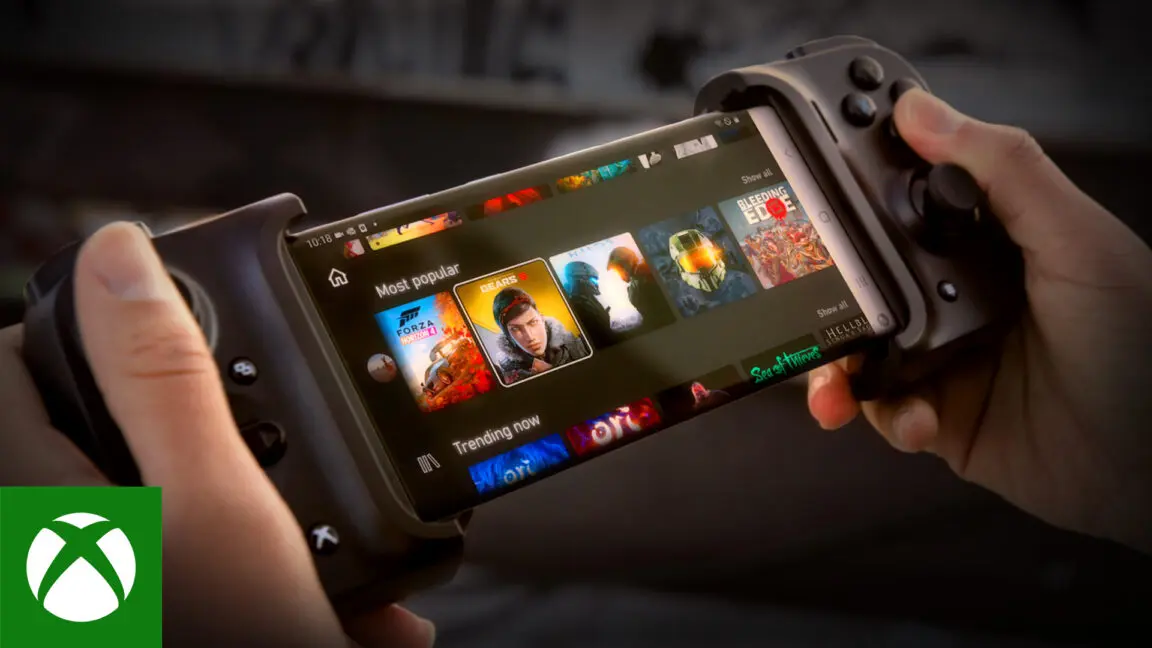
Back in 2020, Microsoft made waves across the entertainment and technology sectors by announcing that Xbox Game Pass Ultimate subscriptions would bundle unlimited access to its nascent cloud gaming service—then widely known by its development moniker, Project xCloud. Promoted as a revolutionary leap forward in consumer-centric flexibility, the value proposition was simple and immensely attractive: play your favorite console and PC titles anywhere, on almost any screen, without worrying about compute power, local installations, or metered time limits.
Now, that open-ended streaming buffet is reaching an abrupt termination. Microsoft has confirmed a restructuring of its cloud ecosystem, introducing rigid monthly caps on how much streaming time is included in its various Game Pass tiers. This pivot signals a mature—and perhaps sobering—economic reality for cloud gaming infrastructure. Operating massive data centers capable of rendering and streaming high-fidelity, low-latency video games at 60 frames per second or higher is profoundly expensive. By capping usage, Microsoft is attempting to balance the books on a technology that has proven remarkably resource-intensive.
While the company asserts that the vast majority of its subscriber base will remain completely unaffected by the new quotas, the psychological impact of rolling back an "unlimited" feature cannot be overstated. For power users, digital nomads, and families who rely heavily on cloud streaming as their primary mode of play, the era of frictionless, limitless gaming in the cloud is officially over. As subscriptions evolve to introduce metered packages, add-on time tokens, and alternative monetization models like ad-supported streaming, the broader video game industry watches closely. Microsoft’s gamble could redefine consumer expectations for cloud gaming, setting a precedent that competitors like Sony and Nvidia may soon feel emboldened to follow.
Detailed Chronology: From "Project xCloud" to Metered Realities
To understand the magnitude of Microsoft’s recent announcement, it is vital to retrace the trajectory of Xbox Cloud Gaming. The journey from an ambitious experimental technology to a core pillar of Microsoft’s gaming strategy is a tale of rapid expansion followed by necessary financial recalibration.
2018–2020: The Birth of the Streaming Dream
The seeds of Xbox Cloud Gaming were planted in October 2018, when Microsoft officially pulled back the curtain on Project xCloud. At the time, the concept of streaming console-quality titles directly to mobile phones, tablets, and low-spec laptops sounded like science fiction. Network latency, packet loss, and data compression presented massive technical hurdles. Yet, Microsoft’s engineering teams leveraged the company’s sprawling Azure cloud infrastructure to build custom blade servers populated with Xbox One hardware—and later, Xbox Series X architecture.
By September 2020, the service graduated from closed beta tests into a consumer-ready offering. In a masterstroke of marketing and ecosystem integration, Microsoft folded Project xCloud directly into the Xbox Game Pass Ultimate subscription at no additional cost. Subscribers paying roughly $15 a month suddenly found themselves with an unlimited cloud streaming library. You could jump out of a firefight on your living room television, pick up your smartphone on the bus, and resume the exact same session in the cloud without losing progress.
2021–2025: Expansion and Ecosystem Integration
Throughout the early 2020s, Microsoft aggressively expanded the footprint of Xbox Cloud Gaming. The service migrated from mobile-only devices to web browsers, smart TVs (notably partnerships with Samsung and Amazon Fire TV devices), and eventually directly to modern Xbox consoles, allowing users to trial games instantly without sitting through lengthy installation downloads.
During this expansion phase, Microsoft hammered home a consistent consumer message: cloud gaming was an inclusive, value-adding perk. It bridged the gap between high-end hardware ownership and casual accessibility. However, behind closed doors, the financial burden of scaling server farms capable of continuous, heavy-duty video encoding and rendering was mounting. Energy costs, hardware refresh cycles for server blades, and bandwidth fees created a relentless operational expenditure that flat monthly subscription fees struggled to offset.
2026: The Paradigm Shift
The turning point arrived in mid-2026. Following months of industry speculation regarding the economic sustainability of cloud-based gaming services, Microsoft initiated a phased pivot. In June 2026, the company began testing an experimental, ad-supported streaming tier for select Xbox Insiders, allowing users to access cloud libraries by viewing advertisements rather than paying upfront cash.
The other shoe dropped in September 2026, when official corporate announcements detailed the incoming structural changes. Pointing to rising operational costs and a desire to segment services more efficiently, Microsoft confirmed that starting in November, all Game Pass tiers featuring cloud streaming would be subjected to strict monthly caps. The open-ended, stream-all-you-want era was officially legislated out of existence.
Supporting Context & Metrics: Crunching the Numbers
When a massive tech conglomerate alters the terms of a service used by tens of millions of people, the metrics tell the real story. Microsoft’s transition to metered cloud streaming is fundamentally an exercise in risk management and resource allocation.
The Scale of the User Base
According to industry tracking and reports, Xbox Game Pass boasts an estimated 30 million subscribers globally across console, PC, and ultimate tiers. While not all of these subscribers actively utilize the cloud streaming functionality—many prefer traditional local downloads and installations—a significant portion of the user base relies on the cloud for convenience, storage management, or playing on non-traditional hardware.
Who is Affected? The "4% Rule"
In its official statements accompanying the policy change, Microsoft addressed the inevitable consumer backlash head-on. The company acknowledged that while the new limits will inevitably introduce a "higher cost" for certain high-frequency users, the structural change will directly impact only 4% of total Game Pass subscribers.
Simple mathematics reveals the scale of this demographic:
$$text30,000,000 total subscribers times 0.04 = text1,200,000 affected users$$
Approximately 1.2 million gamers are currently streaming games via the cloud frequently enough to exceed the forthcoming monthly limits. For the remaining 96% of subscribers, their usage patterns reportedly fall well within the newly established allotments, meaning their day-to-day experience will theoretically remain unchanged. However, the psychological friction of knowing a "cap" exists—and the fear of hitting it mid-month—remains a tangible concern for the community.
The Mechanics of Metered Access
For those 1.2 million power users who exhaust their monthly streaming allotment, Microsoft has outlined a fallback mechanism: the ability to purchase additional streaming time.
As of writing, Microsoft has remained tight-lipped regarding the exact pricing structure, token bundles, or regional availability of these additional streaming hours. This ambiguity has fueled anxiety among consumers, who fear that overage fees could quietly inflate the baseline cost of maintaining an active gaming habit.
Crucially, Microsoft has clarified that access to downloadable versions of games included within a Game Pass subscription remains entirely unaffected. Players who choose to download and install titles directly to their Xbox consoles or Windows PCs can play locally for as many hours as they desire, free from any artificial time constraints. The bottleneck applies strictly to the cloud-rendered, server-side streaming pipelines.
Non-Subscriber Options and Ad-Supported Tiers
In an interesting twist designed to capture casual or lapsed players, Microsoft is also opening up cloud streaming to non-subscribers. Individuals who do not pay for a Game Pass membership will soon be able to purchase timed access to streaming versions of eligible games they already own on supported devices.
This mirrors historical arcade-style models or modern digital rental systems, allowing users to pay strictly for the hours they consume on remote hardware without committing to a recurring monthly fee. Coupled with the ongoing tests of the "stream with ads" initiative—where users can trade their attention and time watching commercials for free cloud access—Microsoft is clearly diversifying its revenue streams, moving away from pure subscription models toward a hybridized monetization framework.
Official Statements and Industry Landscape
To fully grasp the gravity of Microsoft’s decision, one must examine how competing tech and gaming giants handle the notoriously thorny economics of cloud streaming. Microsoft is not operating in a vacuum; every company attempting to deliver remote gaming experiences faces the exact same economic friction.
Competitor Comparison: Sony and Nvidia
- Sony Interactive Entertainment: Sony currently offers streamable versions of select PlayStation titles exclusively to subscribers of its top-tier, $20-per-month PlayStation Plus Premium plan. Notably, Sony’s cloud streaming does not currently feature hard monthly time limits, but its catalog is far more restricted, focusing primarily on retro titles and select modern games, with strict device limitations (primarily PlayStation consoles and PC via specific applications, omitting mobile web browsers and smart TVs).
- Nvidia GeForce Now: As the gold standard for PC cloud gaming, Nvidia’s GeForce Now service operates on a session-length model rather than a monthly hour cap. Free, ad-supported tier users are limited to brief one-hour play sessions, after which they must re-queue. Meanwhile, Ultimate tier subscribers—paying $20 per month—enjoy extended eight-hour session limits. However, GeForce Now users can spin up as many sessions as they want in a single day, and Nvidia offers flexible single-day passes for gamers who want high-end RTX 4080-level cloud rendering on demand for over 2,000 supported titles.
The Industry Challenge: Infrastructure Costs
When Microsoft first launched Project xCloud, tech evangelists envisioned a future where local hardware would become entirely obsolete. Just as Netflix replaced physical DVDs and Spotify replaced MP3 collections, cloud gaming was supposed to make local GPUs irrelevant.
The reality of video game streaming, however, differs starkly from video or music streaming. Unlike passive media consumption, where a single compressed video file can be cached and served to millions of concurrent users simultaneously via cheap content delivery networks (CDNs), interactive gaming requires real-time, bidirectional rendering. Every single user streaming a game requires a dedicated, powerful graphics processing unit (GPU) in a server rack actively calculating physics, lighting, and user input with millisecond precision.
The energy consumption, hardware degradation, cooling requirements, and bandwidth overhead of maintaining this architecture are immense. For years, major corporations have subsidized these costs to drive user acquisition. As macroeconomic pressures shifted toward profitability over pure subscriber growth, the unsustainability of unlimited, unmetered cloud gaming became impossible to ignore.
Future Outlook: Where Does Cloud Gaming Go From Here?
The introduction of strict streaming limits on Xbox Game Pass marks the end of Microsoft’s honeymoon phase with cloud infrastructure. It forces a mature conversation about what cloud gaming is, who it is for, and how its true costs should be distributed.
A Watershed Moment for Consumer Trust
The immediate aftermath of Microsoft’s announcement will likely be characterized by vocal consumer skepticism. Gamers have long memories, and the erosion of a "free, unlimited" feature often breeds resentment. If the pricing for additional streaming time proves predatory or overly complex, Microsoft risks alienating its most dedicated digital advocates.
Conversely, if the rollout is handled smoothly and transparently, and if the 96% of users who remain unaffected genuinely notice no disruption, the policy shift may fade into the background noise of modern subscription management—much like data caps on mobile phone plans did a decade ago.
The Rise of À La Carte and Hybrid Monetization
Microsoft’s dual approach—metered caps for subscribers alongside ad-supported streaming options and per-use purchases for non-subscribers—hints at the future shape of digital entertainment. The rigid, monolithic subscription model ("pay one flat fee for everything forever") is buckling under the weight of content creation costs and inflation.
In the coming years, we are likely to see increasingly sophisticated, tiered monetization models across the entire gaming industry. Cloud streaming will no longer be pitched as a magical, borderless free-for-all; instead, it will be treated as a premium logistical utility—convenient, powerful, and priced accordingly.
Technological Advancements on the Horizon
Despite the economic headwinds, technological innovations will continue to push cloud gaming forward. Improvements in video compression algorithms (such as AV1 integration), advancements in edge computing, and reductions in server hardware latency mean that the quality of the stream will only improve.
As hardware becomes more efficient, the marginal cost of rendering a game in the cloud may eventually drop, potentially allowing companies to loosen caps or introduce more generous packages. Until that technological milestone is reached, however, gamers must adjust to a new reality: in the cloud, computing power is finite, bandwidth has a price, and the open bar has officially closed.