









Executive Overview
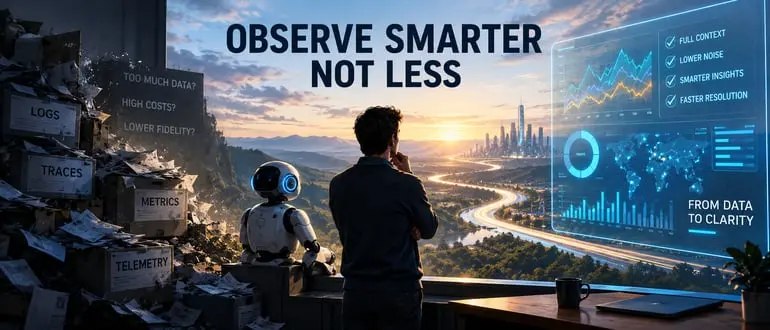
In the modern enterprise technology stack, a familiar and increasingly stressful narrative dominates engineering boardrooms. As distributed systems scale, microservices multiply, and cloud environments expand, telemetry volumes—logs, metrics, and traces—inevitably skyrocket. With this exponential data growth comes a painful spike in operational expenditure.
Faced with ballooning observability bills, the default recommendation from platform teams, finance departments, and vendors is almost always the same: collect less data.
Organizations are routinely advised to sample more aggressively, shorten retention periods, index selectively, filter out noise earlier, and ruthlessly reduce cardinality until the economics of their observability platforms become manageable. On paper, this sounds like sound fiscal discipline. No enterprise system benefits from the unlimited accumulation of raw, uncurated telemetry.
However, when "send less data" graduates from a tactical optimization tactic to the absolute center of an organization’s observability strategy, it spawns a much deeper, systemic problem. Engineering teams are increasingly pressured to prematurely reduce telemetry fidelity before they truly understand what level of data granularity is required to keep their systems healthy.
This article investigates the hidden costs of premature data reduction, the "gaslight problem" inflicted upon engineering teams by restrictive economic models, and the compounding complications introduced by the rise of AI-assisted and agentic software development. Furthermore, we explore why true architectural maturity requires decoupling cost management from visibility, drawing a sharp line between optimizing after understanding and guessing before comprehension.
Detailed Chronology: The Evolution of Observability Economics
To understand how the industry arrived at the current "send less data" reflex, it is necessary to examine how observability tooling and data ingestion models evolved over the past decade.
Phase 1: The Transition from Monitoring to Observability (2015–2019)
For years, traditional infrastructure monitoring relied on predictable, low-cardinality metrics (CPU usage, memory limits, network throughput) and static log files. As containerization, Kubernetes, and microservices architectures disrupted monolithic applications, these traditional tools broke down. Systems became too ephemeral and distributed for static thresholds to catch complex failures.
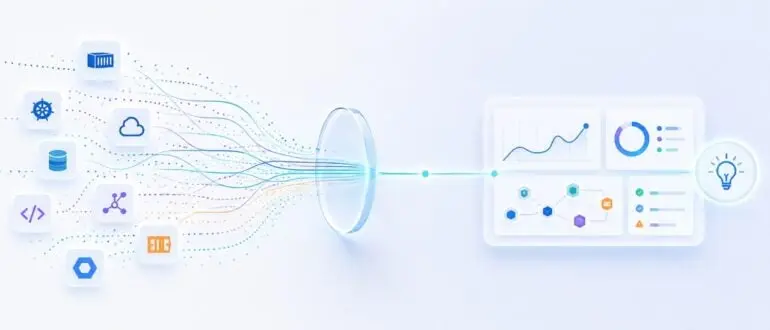
The industry responded by pivoting to "observability"—a paradigm centered on the three pillars: logs, metrics, and distributed traces. To debug distributed systems effectively, vendors encouraged developers to instrument everything. High-cardinality data (such as user IDs, specific error codes, and request payloads) became essential for tracking transactions across dozens of microservices.
Phase 2: The Ingestion-Based Pricing Shock (2020–2022)
As cloud-native architectures matured, data volumes exploded. Many observability platforms adopted usage-based pricing models tied directly to gigabytes (GB) or terabytes (TB) of ingested data, as well as the number of active seats and indexed spans.
For many enterprises, the monthly observability bill quickly rivaled or exceeded their primary cloud infrastructure hosting costs. Sticker shock set in. Rather than challenging the underlying economic and pricing models of their tooling, organizations began treating telemetry data as a liability rather than an asset.
Phase 3: The "Cost Optimization" Mandate (2023–Present)
Macroeconomic tightening forced enterprises to scrutinize every cloud expenditure. Platform engineering teams were handed strict mandates to cut software spend. Because observability tools are notoriously difficult to audit for ROI, they became primary targets for budget cuts.
This environment birthed the contemporary mantra of "cost-effective observability," which in practice often meant aggressive, blanket data suppression. Sampling rates were cranked up from 1% to 10%, log retention was slashed from 30 days to 7, and developers were discouraged from emitting custom traces.
Today, this cost-cutting reflex is colliding head-on with an unprecedented shift in software engineering: the proliferation of generative AI agents and AI-assisted coding tools.
Supporting Context & Metrics: The Hidden Cost of Reducing Fidelity Too Early
In psychological terms, pushing the burden of high costs back onto the victims of those costs is a form of gaslighting. In enterprise engineering, a similar dynamic occurs when organizations tell engineering teams that their systems are simply "emitting too much noise," when the real issue is that the economic model makes necessary data fidelity feel prohibitively expensive.
The Uncertainty Paradox
Observability is inherently most valuable during moments of acute uncertainty.
- During normal operations: A high-cardinality trace or a verbose log line may look entirely redundant—a waste of storage and compute.
- During an outage: That exact same piece of "noisy" data often becomes the solitary smoking gun required to diagnose a catastrophic failure.
When teams are forced to prune telemetry prematurely, they are essentially throwing away the safety net before walking the tightrope. A trace that seems redundant today may be the only mechanism available tomorrow to explain a rare, multi-hop dependency failure. A log line dismissed as disposable in one context may become the sole evidence of a subtle security regression in another.
[Normal Operation] ──> Telemetry looks noisy/redundant ──> Pruned for cost savings
                                                              │
[System Incident]   ──> Missing critical data signature  ──> Extended MTTR (Mean Time to Resolution)
Furthermore, deciding what data to drop is not a free or trivial operation. It demands significant engineering hours, deep operational context, and ongoing maintenance. As microservice topologies shift, ingestion filters and sampling rules must be constantly rewritten. Engineering talent is pulled away from building core product features and forced to manage complex data-routing pipelines just to keep observability software bills under control.
The AI Factor: Widening the Intent-Implementation Gap
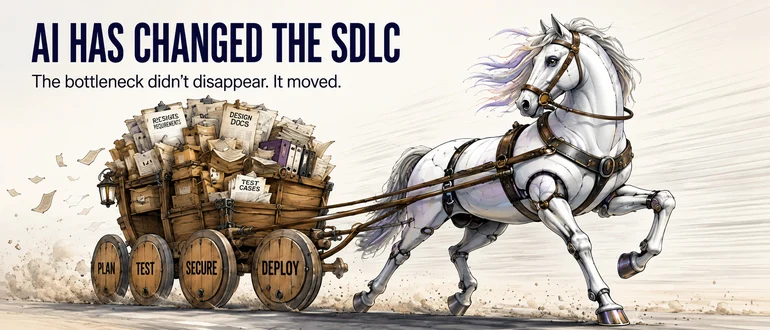
This tension between cost reduction and operational visibility is rapidly accelerating due to the adoption of AI-assisted development and autonomous software agents.
Historically, human engineers maintained a relatively direct relationship with their code. Even when working within large codebases, developers wrote the logic, understood the intended behavior, and possessed an intuitive sense of which system signals would matter most in production. That intuition was far from infallible, but it provided a baseline mental model.
AI agents, however, fundamentally alter this dynamic. Agents now write boilerplate code, generate complex data-flow logic, introduce third-party package dependencies, and automatically optimize execution paths at a velocity humans cannot match. While human engineers review and approve these changes, they rarely internalize every single line of generated implementation detail.
This creates a dangerous gap between intent and runtime behavior.
When an AI agent reshapes a service’s underlying execution flow, the resulting runtime behavior can drift far beyond the engineer’s initial intuition. Consequently, teams cannot reliably predict in advance which telemetry signals will be required to debug future failures in systems they did not handcraft from scratch. Implementing aggressive, early telemetry reduction in an AI-heavy codebase is an exercise in high-stakes guesswork.
Official Industry Perspectives & Architectural Insights
Industry thought leaders and systems architects are increasingly pushing back against the "send less data at all costs" orthodoxy, advocating instead for intelligent, architecture-first solutions.
"There is a fundamental difference between optimizing after understanding and optimizing before understanding. The first is a disciplined engineering practice; the second is pure guesswork."
— Enterprise Systems Architecture Review
The Trap of Ingestion-Driven Economics
Observability vendors have traditionally monetized the volume of data sent to their platforms. This creates a perverse incentive structure: the more complex and vulnerable your system is (which naturally generates more telemetry), the more heavily penalized you are by your observability bill.
Forward-thinking organizations are beginning to demand alternative economic models—such as value-based pricing, storage-tier separation, or decoupled processing—that do not punish teams for maintaining high visibility. When an organization’s financial health is directly pitted against its operational safety, safety usually loses until a major incident forces a reckoning.
The Engineering Consensus: Curation Over Suppression
Prominent DevOps and site reliability engineering (SRE) practitioners emphasize that managing observability costs should not mean operating blind.
- Retain Context, Drop Redundancy: Instead of blanket sampling, mature organizations use intelligent tail-based sampling. This ensures that anomalous traces (e.g., those returning 500 errors or experiencing high latency) are captured at a 100% rate, while routine, healthy transactions are sampled down.
- De-siloing Telemetry Storage: Moving cold logs and historical metrics to low-cost object storage (such as AWS S3 or Google Cloud Storage) while keeping hot, high-priority indices in active memory allows enterprises to retain fidelity without paying premium indexing rates for data they rarely query.
- Continuous Feedback Loops: Engineering teams should audit their observability pipelines quarterly—not based solely on finance department targets, but based on incident post-mortems. If an outage investigation was hindered by missing telemetry, that specific data stream must be restored, regardless of ingestion volume.
Future Outlook: The Next Frontier of Sustainable Observability
As we look toward the horizon of software engineering—where multi-agent AI systems will routinely orchestrate cloud infrastructure—the traditional approach to observability economics is destined for obsolescence.
1. Shift from Human-Curated to Agent-Driven Telemetry
Ironically, while AI agents complicate runtime behavior, they may also hold the key to solving observability’s data bloat. Future observability frameworks will likely leverage autonomous agents to dynamically adjust telemetry collection in real time.
- When an AI system detects an anomalous shift in system behavior, it can dynamically instruct telemetry collectors to ramp up fidelity, capturing 100% of traces and logs for specific services.
- Once the anomaly is isolated and resolved, the system can automatically throttle back ingestion without human intervention. This dynamic, adaptive telemetry replaces static, blunt-instrument sampling rules.
2. Decoupling Observability from Ingestion Penalties
The market is already signaling a shift away from punitive ingestion pricing. Enterprises are migrating toward open-source telemetry standards like OpenTelemetry (OTel) combined with flexible data-routing layers (such as FluentBit, Vector, or Logstash). By owning the data pipeline before it hits a proprietary vendor’s database, organizations retain the power to transform, route, and store data on their own terms.
3. Redefining Observability Success Metrics
In the future, the success of an observability strategy will not be measured by how many gigabytes were shaved off the monthly bill, but by how effectively the system maintains low Mean Time to Resolution (MTTR) alongside predictable financial overhead.
Conclusion
The knee-jerk reflex to "send less data" offers a seductive illusion of financial control. In the short term, it appeases finance teams and trims cloud line items. But in modern, highly distributed, AI-accelerated systems, it introduces unacceptable operational risk.
Organizations must stop treating observability cost management as an exercise in data starvation. By embracing intelligent, adaptive data pipelines, decoupling storage costs from ingestion volume, and recognizing that fidelity is the lifeblood of incident response, enterprises can achieve true sustainability without sacrificing the visibility required to keep their digital world running.