







Executive Overview
The modern software supply chain has evolved into a high-stakes geopolitical and criminal battlefield. As organizations worldwide race to integrate artificial intelligence into their development pipelines, threat actors have found fertile ground in the vast, interconnected ecosystems of open-source libraries. At the annual Fal.con 2026 conference in Las Vegas, cybersecurity giant CrowdStrike made a decisive move to address this escalating crisis. The company announced a major expansion of its security portfolio: Real-Time Supply Chain Attack Protection, an innovative endpoint offering engineered to intercept and block malicious open-source packages before their embedded code can execute.
For years, the software industry has relied on retrospective scanning tools, code repositories, and perimeter defenses to catch compromised dependencies. However, these legacy measures are proving dangerously inadequate. Cybercriminal syndicates and state-sponsored APTs (Advanced Persistent Threats) have mastered the art of "dependency poisoning," disguising malicious payloads as innocuous, highly sought-after open-source packages. Once downloaded by human developers—or increasingly, by automated AI coding agents—these packages execute silently during the build process, embedding malware deep within enterprise applications before legacy scanners even register a threat.
CrowdStrike’s new solution flips the security paradigm on its head. By leveraging its proven endpoint sensor architecture, the company is bringing real-time protection directly to the command line interface (CLI) where applications are built. This comprehensive capability not only stops malicious packages on Windows, macOS, and Linux endpoints in their tracks but also integrates tightly with automated agentic AI platforms to execute rapid remediation. As state-sponsored groups scale their attacks to industrial levels—poisoning hundreds of AI frameworks and software dependencies in single-day campaigns—CrowdStrike’s announcement marks a critical turning point in how the industry must defend the foundational layers of software development.
Detailed Chronology: Unveiling Real-Time Supply Chain Attack Protection at Fal.con 2026
The rollout of CrowdStrike’s Real-Time Supply Chain Attack Protection was the centerpiece of the Fal.con 2026 conference, capturing the attention of DevSecOps professionals, security architects, and enterprise leaders alike.
The Operational Mechanism
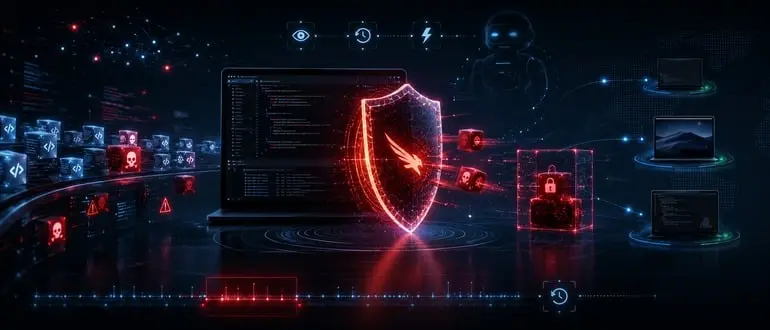
The architecture behind Real-Time Supply Chain Attack Protection is built directly upon CrowdStrike’s robust, low-level endpoint sensor infrastructure. Traditionally used to monitor process execution, network traffic, and file integrity on individual machines, this sensor is now being extended to intercept package manager transactions at the exact moment they occur.
When a developer or an automated system attempts to install an open-source package via standard package managers on Windows, macOS, or Linux, the CrowdStrike sensor intercepts the transaction. Before any embedded installation scripts can run—which is typically when malicious payloads execute—the system evaluates the package against real-time threat intelligence. If the package is flagged as malicious or suspicious, the transaction is immediately blocked.
This proactive intervention addresses a fatal flaw in traditional dependency management. In the past, security teams would scan repositories or analyze code after it had already been pulled into a local development environment. By then, the malicious script may have already executed system-level commands, stolen credentials, or established persistence within the local machine. By intercepting the transaction at the CLI on the endpoint, CrowdStrike ensures that the malicious code never gets the opportunity to run.
Complete Visibility and Agentic Remediation
Blocking the initial download is only half the battle; enterprise security teams require comprehensive visibility to manage organizational risk. CrowdStrike’s new offering provides DevSecOps teams with complete, real-time visibility into every software package installed across every endpoint in the enterprise fleet.
If a newly discovered threat is identified anywhere in the global threat landscape, CrowdStrike automatically initiates a historical lookback across every endpoint in the organization. This instantly reveals whether the compromised package exists anywhere else in the environment.
Once identified, remediation workflows are automatically triggered via Charlotte, CrowdStrike’s agentic AI automation platform. Instead of requiring manual intervention from overburdened security analysts, Charlotte can isolate affected endpoints, purge the malicious dependencies, and alert relevant development leads. Furthermore, every malicious package discovered feeds back into the security ecosystem, making Real-Time Supply Chain Attack Protection progressively smarter and more resilient against future, zero-day supply chain campaigns.
Supporting Context & Metrics: The Escalating Threat Landscape
To understand the urgency behind CrowdStrike’s latest innovation, one must examine the rapidly deteriorating state of software supply chain security. Threat actors are no longer just exploiting known vulnerabilities in software; they are actively infiltrating the upstream creation and distribution channels of code itself.
State-Sponsored Syndicates and Industrial-Scale Poisoning
According to CrowdStrike’s comprehensive 2026 Threat Hunting Report, software supply chain attacks have transitioned from opportunistic exploits to highly coordinated, industrial-scale operations orchestrated by sophisticated threat syndicates.
A prime example highlighted in the report is STARDUST CHOLLIMA, a notorious cyberespionage and financial-theft syndicate operating out of North Korea. STARDUST CHOLLIMA has aggressively targeted the artificial intelligence boom by poisoning no fewer than 131 trusted AI framework packages. By injecting malicious code into libraries commonly utilized by machine learning engineers, the group aims to compromise AI pipelines at their inception.
The velocity of these attacks is equally alarming. The report also details activities by an eCrime actor known as ALTERED SPIDER, which successfully compromised more than 300 software dependencies in a single day. This blitzkrieg approach overwhelms traditional security teams and highlights the sheer volume of malicious assets being injected into public repositories.
The Illusion of Ordinary Files
The fundamental challenge in securing the software supply chain is the chameleon-like nature of poisoned packages. To a human developer or a standard file integrity check, a malicious dependency looks identical to a legitimate, benign utility library.
Because open-source ecosystems rely heavily on trust and community curation, developers frequently download packages without performing deep static or dynamic code analysis on every single transitive dependency. Once installed, the package’s installation scripts automatically execute in the background. Legacy scanning tools often fail to catch these incursions for days, weeks, or even months—if they detect them at all.
By the time a poisoned package is identified, it has frequently moved downstream. Applications built with the compromised dependency are compiled, packaged, and deployed into production cloud environments, expanding the blast radius from a single developer’s workstation to millions of end-users.
The AI Multiplier Effect
Compounding this crisis is the rapid adoption of AI coding agents. As organizations increasingly deploy autonomous agents to write, test, and deploy code at scale, the attack surface expands exponentially.
AI coding agents do not possess human intuition regarding the reputational trustworthiness of an open-source maintainer; they rely on pattern matching, documentation, and prompt instructions. If an AI agent identifies a package that solves a coding problem, it will readily incorporate it into its workflow. Threat actors are well aware of this vulnerability, specifically tailoring poisoned packages to catch the attention of automated AI routines. Without endpoint-level interception like CrowdStrike’s, AI agents could inadvertently become super-spreaders of supply chain malware within enterprise codebases.
Official Statements and Industry Perspective
The introduction of Real-Time Supply Chain Attack Protection elicited strong commentary from CrowdStrike leadership regarding the philosophy of modern endpoint security and the changing nature of developer workflows.
Bartley Richardson on the Command Line Battlefield
Bartley Richardson, chief AI and autonomous systems officer for CrowdStrike, emphasized that the endpoint—specifically the command line interface—is the only viable battleground for stopping supply chain attacks.
"Real-Time Supply Chain Attack Protection is designed to prevent both human developers and artificial intelligence (AI) coding agents from downloading malicious software packages that have been poisoned by malicious actors," Richardson explained during the Fal.con 2026 briefings. "The only place to effectively thwart these types of attacks is at the command line interface (CLI) running on the endpoint used to build an application."
Richardson noted that as adversaries become more adept at weaponizing public code repositories, legacy defenses that rely on post-download scanning are fighting a losing battle. By moving detection and prevention to the point of transaction, CrowdStrike is effectively shifting left without placing an undue burden on developers.
Furthermore, Richardson highlighted the self-improving nature of the platform: "Every malicious package discovered serves to make Real-Time Supply Chain Attack Protection smarter about what to look for in the next attack." This feedback loop ensures that the system evolves in tandem with attacker methodologies.
Redefining the Developer’s Role
CrowdStrike’s strategic pivot raises profound questions about the future of DevSecOps. Historically, the security industry has preached a "shift-left" philosophy, tasking individual developers with writing secure code and vetting their own dependencies.
However, in an era where thousands of malicious packages are published daily, expecting human developers to maintain absolute vigilance has become unrealistic. Developers are judged by their velocity and feature delivery; expecting them to manually differentiate between a legitimate open-source library and a sophisticated, state-sponsored trojan in a sea of millions of files is an unfair and insecure burden.
CrowdStrike’s positioning suggests that endpoint security tools must absorb this defensive burden. Instead of relying on developers to manually inspect dependencies, the endpoint itself should act as an intelligent gatekeeper, neutralizing threats transparently before they can contaminate the codebase.
Future Outlook: Navigating Software Security in the AI Era
As the technology landscape moves deeper into the second half of the decade, the implications of CrowdStrike’s announcement extend far beyond the company’s immediate customer base. It signals a fundamental maturation in how the cybersecurity industry approaches application security and supply chain integrity.
The Evolution of DevSecOps Workflows
It remains to be seen how quickly organizations that build and maintain software will overhaul their DevSecOps pipelines to accommodate real-time endpoint supply chain protection. Many enterprise workflows are deeply entrenched in legacy continuous integration/continuous deployment (CI/CD) tooling that treats developer workstations as trusted zones.
However, the reality of state-sponsored dependency poisoning and autonomous AI agent integration makes the traditional "trusted workstation" model obsolete. Organizations will increasingly be forced to adopt native endpoint controls that monitor package management transactions across Windows, macOS, and Linux environments uniformly.
The Convergence of Endpoint and Application Security
Traditionally, endpoint detection and response (EDR) and application security testing (AST) have operated in separate silos. EDR solutions focused on runtime threats on servers and user endpoints, while AST tools focused on static code analysis, software composition analysis (SCA), and vulnerability management within source repositories.
CrowdStrike’s Real-Time Supply Chain Attack Protection represents a powerful convergence of these two disciplines. By utilizing foundational endpoint sensors to monitor software creation pipelines, CrowdStrike is bridging the gap between infrastructure security and application development. This holistic view is essential as modern enterprises increasingly blur the lines between development environments, cloud workloads, and production infrastructure.
Conclusion
The software supply chain will remain a primary vector for sophisticated cyberattacks for the foreseeable future. As threat groups like STARDUST CHOLLIMA and ALTERED SPIDER demonstrate an increasing capacity to industrialize dependency poisoning, the tools used to defend software development must evolve accordingly.
CrowdStrike’s introduction of Real-Time Supply Chain Attack Protection at Fal.con 2026 provides a glimpse into the future of proactive defense. By intercepting malicious packages at the CLI, empowering security teams with instant asset visibility, and leveraging agentic AI for rapid remediation, CrowdStrike is offering a compelling blueprint for securing the modern build process. In the AI era, where both human developers and autonomous agents are targeted by increasingly stealthy adversaries, stopping threats at the endpoint before code can execute is no longer just an innovative feature—it is an absolute necessity.