







By Shane Snider | Senior News Writer, Data Center Knowledge
August 27, 2026
Executive Overview
In the high-stakes, capital-intensive landscape of artificial intelligence infrastructure, agility has become the ultimate currency. QumulusAI, an Atlanta-based AI infrastructure and neocloud provider, dramatically underscored this reality in the second quarter of 2026 by more than tripling its deployed GPU fleet. Fueled by contracted computing capacity coming online and a massive influx of new customer agreements, the company is positioning itself at the bleeding edge of the "sub-hyperscaler build-out."
During the quarter ending June 30, QumulusAI expanded its active footprint to 3,088 high-performance graphics processing units (GPUs), a staggering leap from the 952 units deployed just three months prior. This hardware scale-up translated directly to the bottom line: revenue more than doubled year-over-year to $6.7 million. Crucially, compute revenue accounted for approximately 84% of that total—up dramatically from 43% a year earlier—demonstrating a sharp, successful pivot toward dedicated AI workloads.
Underpinning this explosive growth is a flurry of commercial activity. QumulusAI inked 21 new direct AI compute contracts in Q2 alone, pushing its cumulative signed customer contract value to $282.5 million across 40 multiyear agreements. The $169.7 million secured during the quarter represents aggregate expected take-or-pay value, highlighting the aggressive appetite among enterprise and AI-focused organizations to lock down predictable compute resources.
Yet, this hyper-growth arrives against a backdrop of fierce structural friction across the data center sector. As power grid constraints and massive lead times plague traditional hyperscale campus developments, QumulusAI is carving out a niche through a hyper-modular strategy. By hunting for smaller, pre-powered blocks of capacity—often ranging from 1 MW to 3 MW—the company bypasses years-long utility waitlists, deploying state-of-the-art infrastructure on timelines that modern AI labs and enterprises demand.
Detailed Chronology: Q2 2026 Operational Milestones
The second quarter of 2026 was a period of accelerated execution for QumulusAI, characterized by rapid hardware deployment, strategic real estate procurement, and significant capital outlays.
April–May 2026: Securing the Hardware and Initial Pockets of Power
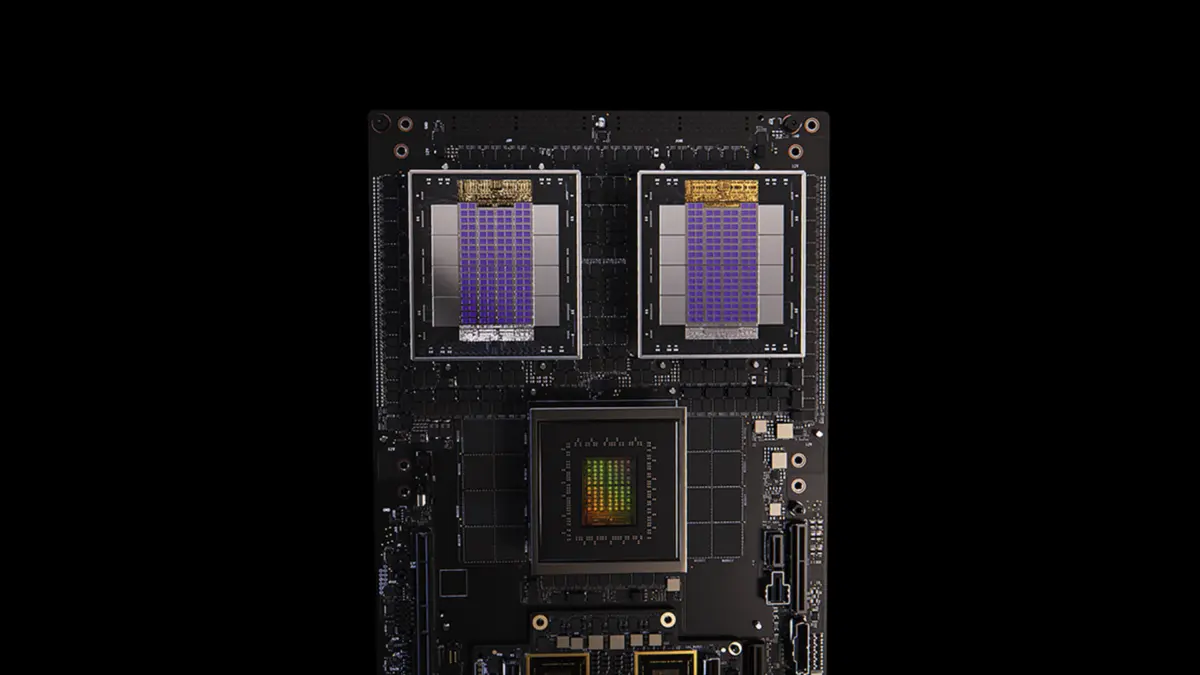
At the start of the quarter, QumulusAI’s operational fleet sat at a modest 952 GPUs. Recognizing that compute bottlenecks would dictate market winners and losers, management moved aggressively to procure advanced silicon. During Q2, the company purchased 1,632 Nvidia Blackwell B300 GPUs to meet escalating customer commitments.
Simultaneously, the operations team focused on securing localized power assets. Rather than waiting for greenfield multi-megawatt campuses to clear regulatory hurdles, QumulusAI targeted existing colocation and lease agreements capable of immediate or near-term power activation. By the end of May, the company had established 8 megawatts (MW) of high-performance computing (HPC) capacity under executed agreements, with 100% of it fully committed to incoming customer deployments.
June 2026: Reaching Scale and Expanding the Footprint
By June 30, the fruits of these operational maneuvers were fully realized. The deployed GPU fleet surged past the 3,000-unit threshold to reach 3,088 units.
To sustain this momentum, QumulusAI finalized a strategic regional expansion in metropolitan Atlanta toward the end of the quarter, contracting for up to 3.75 MW of capacity scheduled to come into service in the fourth quarter. Crucially, this agreement includes a right of first offer on an additional 7 MW at the same site, providing a clear runway for localized expansion without the friction of migrating to entirely new geographical markets.
Financial performance mirrored this physical expansion. Compute revenue surged to $5.6 million, up from just $1.3 million in the corresponding period of 2025. Furthermore, the company’s newest contracts—specifically those leveraging Nvidia’s Blackwell architecture—demonstrated exceptional revenue density, generating between $18 million and $20 million in annualized revenue per megawatt. This outpaces the installed base average of just over $16 million per MW, validating management’s hardware selection and aggressive pricing strategies.
Supporting Context & Metrics: The Neocloud Economy and Capital Stakes
QumulusAI’s trajectory mirrors a broader, gold-rush dynamic sweeping the neocloud market. Specialized AI infrastructure providers are scaling at breakneck speeds to feed the insatiable training and inference appetites of frontier model developers.
Industry heavyweights are operating on unprecedented financial scales. CoreWeave reported a staggering $2.6 billion in second-quarter revenue alongside $9.4 billion in capital expenditures, projecting full-year capex between $35 billion and $39 billion. Similarly, Nebius posted Q2 revenue of $582.3 million—a 454% year-over-year increase—while peers like Crusoe and Lambda aggressively expand their respective footprints.
The Financial Reality of Hyper-Growth
While QumulusAI’s revenue metrics point upward, the financial statements reveal the heavy capital expenditure required to play in the modern AI infrastructure arena.
- Property and Equipment: Property and equipment assets swelled to $44 million at the end of June, up sharply from $12.5 million at the close of 2025.
- Right-of-Use Assets: Finance right-of-use assets climbed to $47.9 million, reflecting long-term commitments to data center real estate.
- Operating Income/Loss: QumulusAI reported an operating loss of $7.7 million for Q2, widening from a $2.2 million loss a year prior. This was largely driven by an increase in depreciation and amortization—up $5.8 million year-over-year—stemming directly from the rapid capitalization and deployment of new HPC infrastructure.
- Cash Flow Dynamics: Highlighting the unique mechanics of the AI cloud market, QumulusAI generated $22.3 million in operating cash flow during the first half of 2026. This positive cash generation was significantly aided by $30.5 million in deferred revenue, as enterprise customers routinely prepay for compute capacity ahead of physical delivery.
These prepayments provide a vital financial cushion, helping to offset the staggering cost of procuring enterprise-grade GPUs and securing powered real estate. However, they also raise the stakes for operational execution: maintaining high asset utilization is non-negotiable to convert upfront capital investments into sustainable, long-term returns.
Official Statements and Industry Perspectives
The structural hurdles facing the data center industry—most notably the scarcity of grid capacity—have forced a fundamental rethinking of deployment methodologies.
In an interview with Data Center Knowledge, QumulusAI CEO Michael Maniscalco highlighted that the company’s growth pace is no longer limited by capital or customer demand, but strictly by the availability of deployable, powered square footage.
"It’s really the intersection of power and deployable data center capacity," Maniscalco explained. "The harder part is finding powered capacity that can be ready for service on the timelines our customers need."
Rather than entering the multi-year queue for massive, greenfield hyperscale data center campuses, QumulusAI has embraced a bite-sized deployment philosophy.
"Rather than waiting years for a massive new campus, we can secure smaller pockets of available power and capacity, often 1-3 MW initially, deploy quickly, and then expand from there," Maniscalco said.
The Rise of the Sub-Hyperscaler Build-Out
Industry analysts view QumulusAI’s model as a microcosm of a larger structural shift. Steven Dickens, CEO and principal analyst at HyperFRAME Research, classifies companies like QumulusAI as frontrunners in the emerging "sub-hyperscaler build-out."
"The model they have for more modular data center deployment is behind this, especially when it comes to power activation," Dickens noted. He emphasized that execution speed is rapidly eclipsing scale as the primary differentiator in the market: "Across the industry, success will be defined by AI providers who can execute, and at speed."
This sentiment is echoed across the broader market. Crusoe, for instance, is pursuing a parallel modular approach at scale via its prefabricated "Spark" units. While Crusoe manufactures its own modular data center containers—recently expanding a deployment with Redwood Materials from four to 24 units backed by a 12 MW, 63 MWh microgrid—QumulusAI focuses on integrating its hardware into existing third-party powered shell and colocation environments. Despite differing execution paths, both companies share a common objective: bypassing traditional, sluggish real estate pipelines to put compute online in a matter of months rather than years.
Future Outlook: Scaling Toward 2027
Looking ahead, QumulusAI’s roadmap is aggressively ambitious. The company has established a year-end 2026 target of 18 MW of total capacity, broken down into 8 MW of active HPC power and 10 MW actively under development.
Looking further down the horizon, management has signaled a line of sight to 2.5 gigawatts (GW) by the end of 2027. Industry observers note, however, that this 2.5 GW figure does not represent operational or legally contracted capacity today. Instead, it reflects management’s pipeline of prospective development opportunities, site conversions, and power access discussions.
Consequently, the coming 18 months will serve as a profound stress test for QumulusAI’s strategy. As Steven Dickens cautions, while a single quarter’s performance demonstrates clear commercial traction, the true test lies ahead:
"The larger test will be whether QumulusAI can turn its pipeline into financed, powered, and operational capacity quickly enough to sustain customer pricing, utilization, and returns."
If QumulusAI can successfully navigate the treacherous waters of power procurement, supply chain volatility, and capital deployment without sacrificing infrastructure efficiency, its "hyperspeed" modular playbook could very well serve as the blueprint for the next generation of specialized AI cloud providers. If grid bottlenecks or capital constraints tighten, however, the race to 2.5 GW will demand even greater structural innovation from a neocloud sector already running at maximum velocity.