









Executive Overview
The intersection of digital content creation, copyright law, and international entertainment media reached a critical flashpoint this July in a U.S. federal court. Japanese publishing juggernaut Kadokawa Corporation successfully defeated a motion to quash filed by three prominent South Korean YouTube creators. The decision allows Kadokawa to secure a Digital Millennium Copyright Act (DMCA) subpoena compelling Google-owned YouTube to unmask the real-world identities behind channels boasting hundreds of thousands of subscribers and millions of cumulative views.
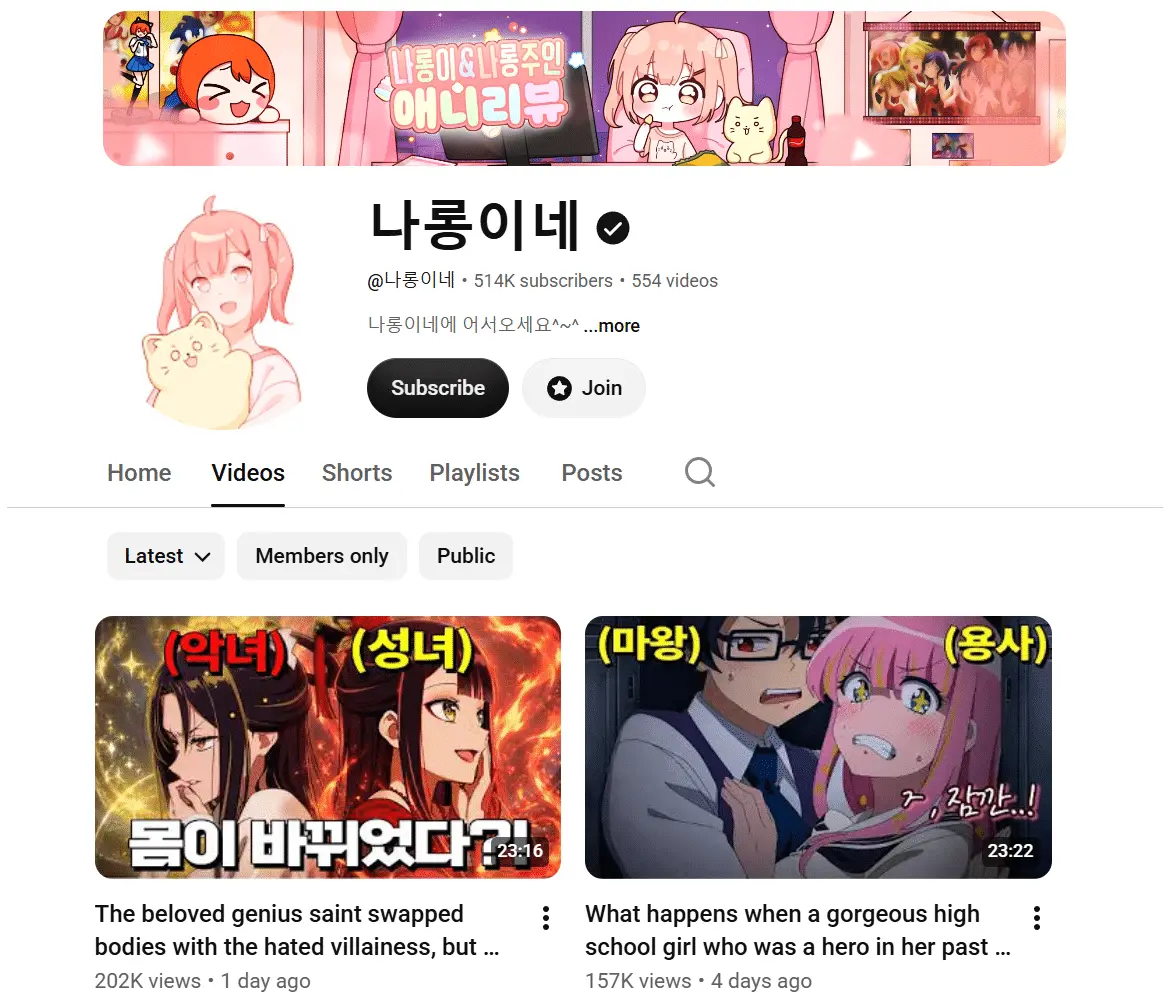
The dispute highlights a growing, global tension between traditional copyright holders and modern digital intermediaries. Kadokawa—a titan of Japanese manga, light novels, and anime production—has long maintained a zero-tolerance policy toward unauthorized derivative works. At the center of this legal clash are "anime recap and commentary" videos. These channels utilize clips from popular animated series, blending them with original voiceover narration, custom scripts, and visual edits.
While the creators behind the channels—Bongseop Kim, Woohyuk Yang, and Youngyoon Ko—argued that their commentary served a transformative, promotional purpose, the U.S. District Court disagreed. Presiding Judge Trina L. Thompson ruled that mere narration and summarization do not constitute fair use under U.S. copyright law. This landmark decision provides traditional entertainment enterprises with a powerful legal mechanism to pierce the veil of online anonymity, setting a dangerous precedent for thousands of commentary and recap channels worldwide.
Detailed Chronology of the Legal Battle
The Inception: January Inquiries and Subpoena Requests
The legal confrontation began in January, when Kadokawa Corporation initiated a U.S. federal court action aimed at unmasking three high-profile YouTubers. Leveraging Section 512(h) of the DMCA, Kadokawa requested a formal subpoena requiring YouTube to hand over the personally identifiable information (PII) associated with three specific accounts.
Typically, DMCA subpoenas function as administrative formalities requiring little more than a clerk’s signature. However, the routine nature of the process was disrupted when the targeted YouTubers banded together to fight the request, filing a joint motion to quash.
The Motion to Quash and the Defense
Representing themselves pro se initially, the three creators—Bongseop Kim, Woohyuk Yang, and Youngyoon Ko—argued that their channels were not pirate streaming operations. Instead, they framed their work as legitimate Korean-language commentary, review, and media analysis directed at audiences in South Korea.
The defendants detailed the creative labor invested in their videos. Rather than uploading raw, full-length episodes, they incorporated original mascot characters, text-to-speech (TTS) dialogue, bespoke scripts, custom Korean subtitles, sound effects, and structural plot commentary. Furthermore, they contended that Kadokawa’s subpoena was not driven by a genuine intent to pursue civil litigation, but rather served as a coercive overreach of the DMCA framework, noting that previous YouTube counter-notifications had successfully restored their content after publisher-initiated takedown requests.
Procedural Twists: The Fair Use Briefing
In April, the case veered into unusual territory. Judge Trina L. Thompson ordered both legal teams to submit supplemental briefs addressing the core tenets of fair use—a procedural requirement rarely enforced at the preliminary subpoena stage.

The creators doubled down on their defense. Bongseop Kim noted that his contested video, which focused on episode 4 of A Ninja and an Assassin Under One Roof, utilized approximately 15 percent of the underlying source material.
Kadokawa’s legal counsel countered aggressively, highlighting various procedural missteps by the defense. They noted that two of the three targeted videos had already been taken offline or made private, leaving the remaining content as little more than a summarized walkthrough of the plot. In a scathing critique of the creators’ legal arguments, Kadokawa’s attorneys dismissed portions of the defense as reading "like an AI hallucination, because it is wholly unsupported by the statute or case law."
The July 17 Ruling
On July 17, Judge Thompson issued an order officially denying the motion to quash. The court characterized the evidentiary record as "sparse," largely due to the defendants making their videos private during the litigation.
Judge Thompson concluded that the creators’ treatment of Kadokawa’s copyrighted material fell outside the protective umbrella of fair use. Drawing parallels to Barnes v. YouTube—a February ruling from the same court concerning the unauthorized narration of copyrighted book chapters—the judge reiterated that descriptive narration and plot summarization lack the requisite transformative qualities demanded by copyright jurisprudence. Consequently, the court ruled that Kadokawa’s exclusive reproduction rights outweighed any public or promotional utility claimed by the YouTubers.
Supporting Context & Metrics
The channels targeted by Kadokawa are not minor operations on the periphery of the platform; they are multi-faceted media businesses with substantial follower bases and significant audience engagement.
Channel Demographics and Content Formats
| Creator (Channel Name) | Subscriber Count | Targeted Anime Title | Content Format & Production Style |
|---|---|---|---|
| Bongseop Kim | ~500,000+ | A Ninja and an Assassin Under One Roof | Utilized an original mascot character ("Narong"), text-to-speech dialogue, and custom-written scripts. |
| Woohyuk Yang | ~500,000+ | Oshi no Ko | Korean-language anime review and structural media analysis featuring professional voiceover narration. |
| Youngyoon Ko | ~350,000 | Once Upon a Witch’s Death | Review/recap format featuring custom Korean subtitles, emotional reactions, sound effects, and analytical commentary. |
The Traffic-Driving Argument vs. Market Substitution
A central pillar of the YouTubers’ defense was the claim that their channels actively supported, rather than cannibalized, the official market for anime. They argued that their recap videos acted as top-of-funnel marketing, driving interested viewers toward legitimate, licensed streaming platforms.
To substantiate this, the creators pointed to direct outbound analytics. For instance, Bongseop Kim’s channel included direct tracking links to Laftel, South Korea’s premier licensed anime streaming service. According to analytics data provided in court filings, Kim’s channel generated an impressive 114,494 click-throughs to Laftel, boasting an 82 percent user engagement rate.
Despite these metrics, Judge Thompson held that market impact is only one factor in the fair use equation. Even if a derivative work generates positive downstream traffic for the copyright holder, the unauthorized reproduction of significant portions of the original work remains a violation of the publisher’s exclusive distribution and reproduction rights.

Official Statements & Legal Arguments
The collision between Kadokawa and the Korean YouTubers brings to light starkly contrasting philosophies regarding intellectual property in the digital age.
The Creators’ Perspective: Transformative Expression and Coercion
The defendants maintained that their channels represent a modern evolution of media criticism, arguing that digital-native audiences consume content differently than previous generations. By weaving narrative analysis with local cultural context, localized voice acting, and proprietary characters, they asserted their videos qualified as transformative works.
Furthermore, the creators highlighted what they perceived as bad-faith legal maneuvers:
"Such repeated conduct suggests that the present subpoena may not be directed toward a genuine intent to pursue litigation, but rather reflects an overbroad or coercive use of the DMCA process."
By repeatedly utilizing the DMCA subpoena process without subsequently filing formal copyright infringement lawsuits, Kadokawa was accused of weaponizing the legal system to intimidate creators into self-censorship.
Kadokawa’s Stance: Protecting Intellectual Property Integrity
Kadokawa Corporation, conversely, views recap and narration channels as a sophisticated form of economic parasitism. From the publisher’s perspective, summarizing an entire narrative arc or broadcasting substantial fragments of an episode under the guise of "review" deprives rights-holders of monetization opportunities.
In their legal memoranda, Kadokawa’s attorneys emphasized that copyright law does not grant commentators a blanket license to appropriate substantial portions of an audiovisual work simply because they append a voiceover track or a custom subtitle layer. The court ultimately validated this strict interpretation, noting that the defendants’ work "describes and narrates" rather than genuinely transforms the underlying art.
Future Outlook and Global Repercussions
The Immediate Legal Horizon
While Judge Thompson’s ruling is a major victory for Kadokawa, the legal battle is far from over. The three YouTubers have already filed a formal notice of appeal with the Ninth Circuit Court of Appeals. Additionally, they have filed a secondary motion seeking to stay the enforcement of the subpoena, thereby preventing YouTube from releasing their personal information while the appellate review is pending. A final decision on the stay has yet to be rendered.

Crucially, this U.S. proceeding remains purely a subpoena enforcement action. Kadokawa has not yet initiated a formal civil lawsuit for copyright infringement within American courts, meaning the ultimate liability of the creators remains undetermined.
Global Anti-Piracy Campaign
The California subpoena is just one front in Kadokawa’s aggressive, multi-national enforcement strategy against unauthorized digital summaries. The publisher’s efforts extend far beyond video platforms like YouTube into written media and text-based archives.
In April, a stark reminder of this global campaign unfolded in the Tokyo District Court. A 39-year-old Japanese national, Wataru Takeuchi, was convicted for operating a monetized website that published detailed, text-based plot summaries of major commercial properties, including the blockbuster film Godzilla Minus One and Kadokawa’s hit anime Overlord.
Takeuchi’s enterprise was remarkably lucrative, generating approximately 36 million yen (roughly $225,000 USD) in advertising revenue during 2023 alone. The Tokyo court handed down a suspended 18-month prison sentence alongside a 1 million yen fine, signaling that Japanese courts are equally intolerant of digital summarization models that monetize copyrighted intellectual property without authorization.
Implications for the Creator Economy
The convergence of the California federal ruling and the Tokyo District Court conviction signals a perilous era for the "recap and summary" genre. For years, creators operated under the assumption that adding commentary, transformative editing, or localized narration shielded them from copyright liability under doctrines like fair use.
However, recent judicial trends—exemplified by both Barnes v. YouTube and the Kadokawa subpoena ruling—demonstrate that federal courts are increasingly skeptical of content formats that rely primarily on recounting protected storylines. As entertainment conglomerates deploy automated monitoring tools and legal frameworks across international borders, digital creators must re-evaluate their production methods. Without formal licensing agreements or explicit permissions from rights-holders, creators who build audiences on the back of copyrighted anime and literature may find their channels—and their anonymity—rapidly disappearing.