









Executive Overview
In the fast-paced world of modern enterprise software development, the definition of a "production failure" is frequently misunderstood. Traditional engineering metrics often trace deployment failures back to incomplete unit testing, unhandled edge cases, or unforeseen bugs in the underlying code. However, a broader autopsy of high-impact enterprise outages reveals a more systemic vulnerability: the problem is rarely that software wasn’t tested enough; rather, it is that the definition of "production-ready" remains dangerously narrow.
Across modern corporate IT landscapes, mission-critical deployments routinely impact sensitive operational pillars—ranging from complex payroll processing and multi-tiered benefits administration to downstream business intelligence reporting, regulatory audits, and financial reconciliations. When a deployment falters in these environments, the fallout extends far beyond simple application errors. Organizations face payment processing halts, corrupted data feeds, severe audit compliance penalties, and widespread operational paralysis.
Despite heavy investments in automated CI/CD pipelines, continuous integration, and exhaustive staging environments, a critical missing layer persists in the enterprise release lifecycle: a disciplined, rigorous review process dedicated to validating business-critical data, exception handling, and operational readiness.
This article explores why traditional software testing, on its own, is no longer sufficient to safeguard modern enterprise systems. It outlines the operational mechanics of production validation—positioning it not merely as an extension of quality assurance (QA), but as an indispensable business-control framework. By examining practical validation models, operational changes, and the absolute necessity of compliance in regulated environments, we present a roadmap for transforming enterprise release management from a game of high-stakes guesswork into an ironclad practice of operational assurance.
Detailed Chronology: The Evolution of Enterprise Release Management
To understand why modern deployment strategies fail, one must trace the historical trajectory of software delivery methodologies and how they inadvertently created blind spots in enterprise governance.
The Era of Siloed Deployments and Slow Cycles
Decades ago, enterprise software updates were monumental, infrequent events. Systems like enterprise resource planning (ERP) suites or core banking mainframes underwent monolithic release cycles occurring semi-annually or annually. During this era, release management was synonymous with heavy governance. Change Advisory Boards (CABs) met for hours, exhaustive paper trails were generated, and manual validations were performed by teams of business analysts over weeks.
While these cycles were notoriously slow—stifling business agility—they inherently forced a high degree of manual, business-level review. Organizations rarely pushed code to live environments without deeply scrutinizing how the underlying data structures, reports, and financial balances would react.
The Agility Revolution and the Automation Gap
The advent of Agile development, DevOps philosophies, and continuous delivery transformed the software landscape. Driven by the need for speed, competitive differentiation, and rapid feature deployment, organizations compressed release cycles from months to days, hours, or even minutes.
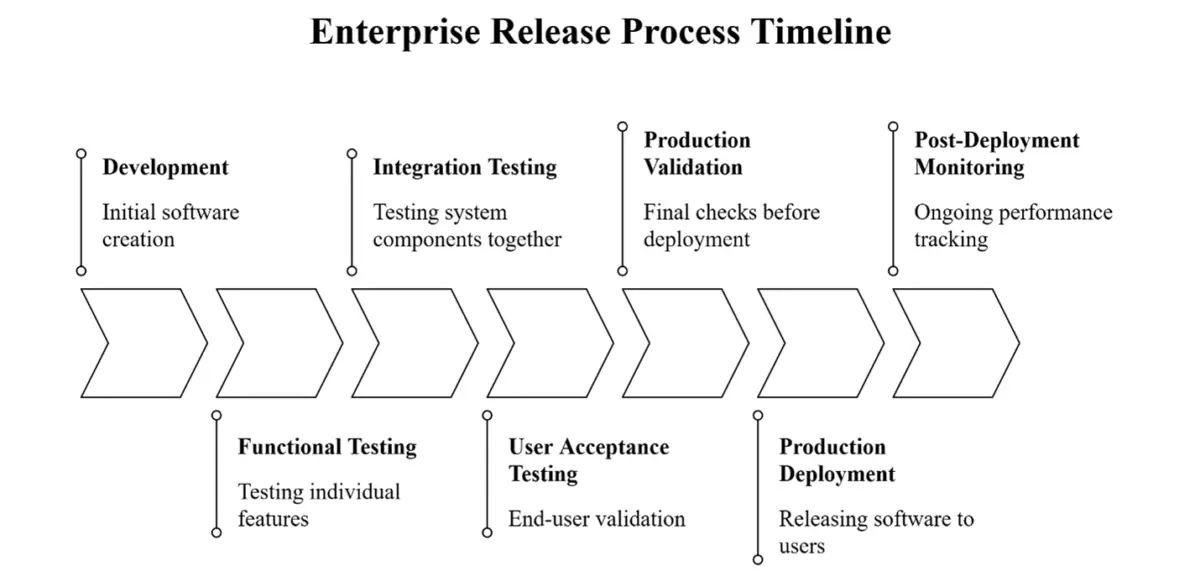
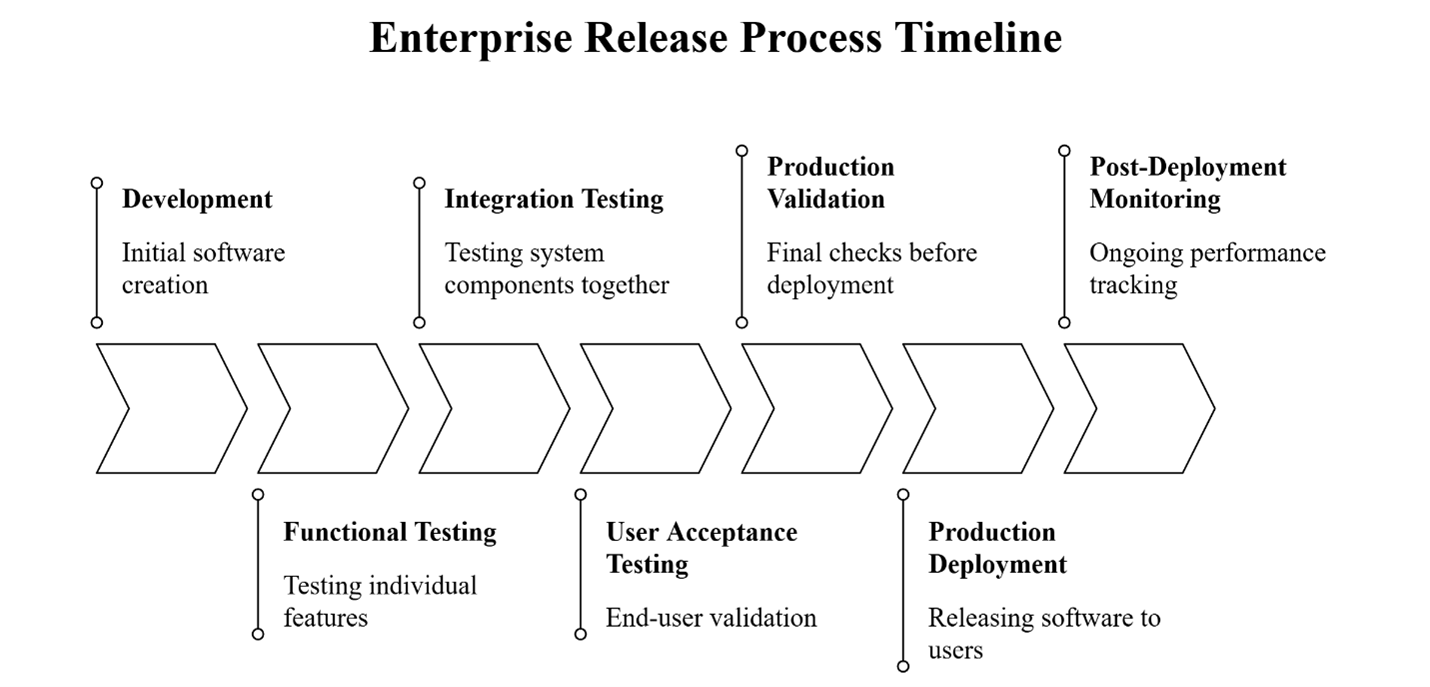
To achieve this velocity, enterprises heavily automated their testing pipelines. Unit tests, integration tests, regression suites, and user acceptance testing (UAT) became automated gates in CI/CD pipelines. While this revolution dramatically accelerated code delivery, it inadvertently created a dangerous psychological assumption: if the automated test suite passes, the release is safe.
This mindset ignored a fundamental reality of enterprise architectures: code correctness in a test environment does not guarantee business safety in a production environment.
The Modern Enterprise Complexity Crisis
As organizations embraced cloud-native architectures, microservices, and distributed data pipelines, the complexity of production environments skyrocketed. Modern enterprise deployments no longer just push compiled code; they orchestrate continuous data ingestion, real-time API integrations, complex downstream reporting models, and multi-tenant cloud storage.
In this ecosystem, a release can easily pass all technical tests while simultaneously introducing catastrophic operational failures due to timing dependencies, data-state discrepancies, unmapped database configurations, or misaligned business logic. Bugs are discovered too late—often after the code has hit a live running application processing thousands of transactions per second.
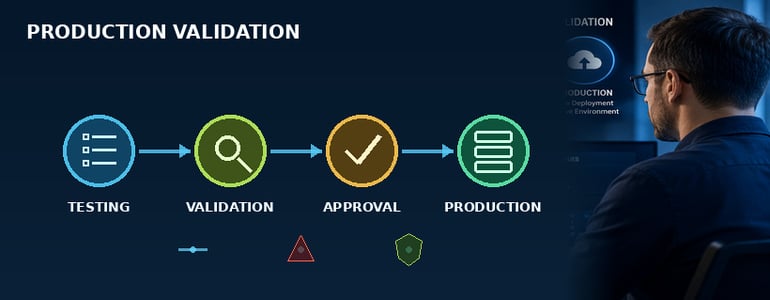
Recognizing this gap, forward-thinking enterprises are now formalizing production validation as an explicit operational discipline, bridging the chasm between raw software development and live business execution.
Supporting Context & Metrics: The Anatomy of Production Failures
To grasp the financial and operational stakes of inadequate release validation, one must look closely at how technical oversights translate directly into enterprise-wide disruption.
Why Standard Testing Falls Short
Standard software testing is fundamentally designed to verify software functionality. It answers questions like: Does the button trigger the correct function? Does the API return the expected JSON payload? Do error-handling blocks catch null values?
However, standard testing operates within sanitized boundaries—test environments, UAT staging boxes, or mock databases—that inherently fail to replicate the messy reality of production. Several critical variables are frequently absent from standard testing cycles:
- Timing Dependencies: Code that executes flawlessly in a staging environment with minimal latency may time out, deadlock, or fail under the heavy transactional concurrency of a live production peak.
- Data-State Differences: Test databases are typically scrubbed, anonymized, or artificially populated. They rarely capture the historical anomalies, corrupt records, legacy schemas, and edge-case data states found in live enterprise databases.
- Downstream Dependencies: A software update may alter a database schema or data format that downstream business intelligence platforms, third-party vendor APIs, or regulatory reporting engines rely upon, causing silent systemic failures long after the initial deployment.
- Business Control Integration: Standard testing ignores whether a release complies with internal financial controls, segregation of duties, or regulatory mandates.
Traditional Testing vs. Production Validation: A Direct Comparison
| Aspect | Traditional Software Testing | Production Validation |
|---|---|---|
| Primary Objective | Verify software functionality and detect code defects. | Verify operational, data, and business readiness. |
| Environment | Isolated Test, QA, or UAT environments. | Live Production or high-fidelity production-like environments. |
| Core Focus | Code correctness, syntax, and functional requirements. | Data integrity, release governance, and operational resilience. |
| Validation Scope | Functional and non-functional technical requirements. | Business rules, configurations, reconciliation sign-offs, and exception management. |
| Final Outcome | Software defects are identified and fixed by developers. | A release is approved and certified for safe operational deployment. |
The Real-World Impact on Enterprise Functions
When production validation is bypassed or treated as an afterthought, the consequences ripple across core enterprise functions:
- Payroll & Benefits: A minor data mapping error in a deployment can corrupt employee withholding calculations, resulting in delayed paychecks or inaccurate tax filings, triggering severe employee dissatisfaction and legal liabilities.
- Financial Reporting & Reconciliation: Discrepancies between general ledger feeds and operational systems can invalidate executive dashboards, lead to failed financial closes, and trigger mandatory restatements of public financial earnings.
- Audit & Compliance Concerns: Regulatory frameworks demand verifiable proof that system changes were authorized, reviewed, and controlled. Without a structured validation audit trail, organizations face regulatory fines and failed compliance audits.
Official Statements & Industry Perspectives
As enterprise architectures grow increasingly intricate, technology leaders and governance experts are increasingly vocal about the necessity of moving beyond traditional DevOps models.
"In modern enterprise environments, the greatest risk to stability is no longer whether code compiles, but whether the business context surrounding that code has been validated. We have built extraordinarily fast cars, but we have neglected to install dashboard warnings for the cliff ahead."
— Enterprise Systems Architect & Release Governance Specialist
Industry analysts emphasize that digital transformation initiatives often stall not because of technological limitations, but because operational controls fail to keep pace with deployment velocity.
"When organizations treat production readiness as a purely technical software-quality question rather than a fundamental business-control question, they invite operational catastrophe. Production validation is the missing bridge that connects developer intent with fiduciary responsibility."
— Director of Enterprise Risk Management
Furthermore, compliance experts point out that regulatory scrutiny in sectors such as financial services, healthcare, and telecommunications is shifting away from how software is written toward how changes are governed and validated before impacting consumer or financial data.
A Practical Model for Production Validation
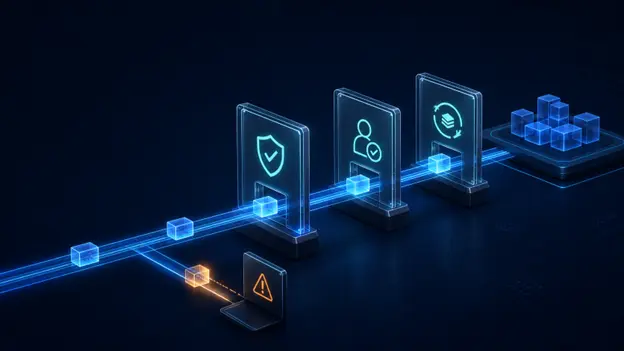
Implementing a robust production-validation framework requires establishing a structured, interrelated set of control practices that build unshakeable confidence before a release is rolled out to live environments.
[Release Preparation]
        ↓
[1. Structured Pre-Production Review] (Business Rule & Data Check)
        ↓
[2. Exception Review & Correction] (Discrepancy & Reconciliation Reports)
        ↓
[3. Workflow-Based Release Discipline] (Explicit Governance Gates)
        ↓
[4. Documentation & Repeatability] (Checklists & Runbooks)
        ↓
[5. Manual Business-Level Validation] (Subjective Judgment & Final Sign-Off)
        ↓
[Safe Live Production Deployment]
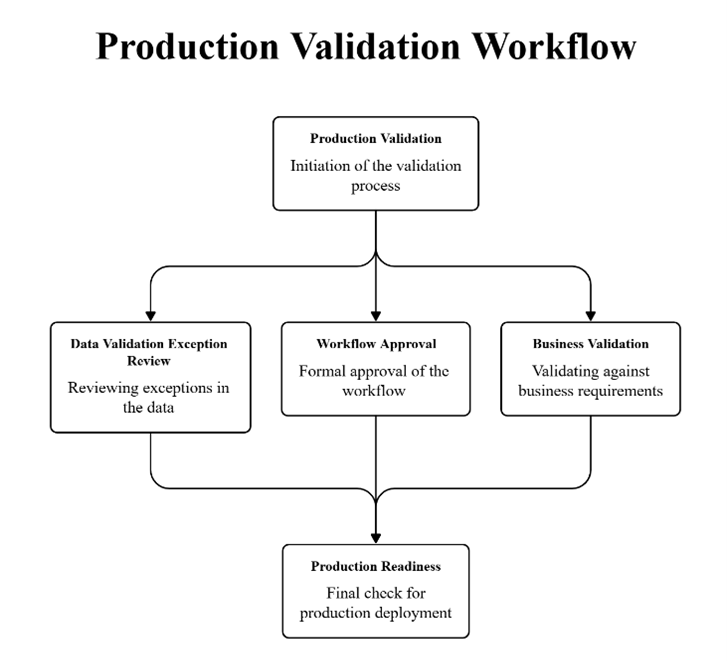
1. Structured Pre-Production Review
Before any release receives final approval, records and expected outputs must be systematically checked against established business rules and operational expectations. This review determines whether data changes are complete, required outputs are present, and the release is safe from a business-risk perspective. The goal is not merely to check technical correctness, but to assess whether the release commands sufficient trust for live operational use.
2. Exception Review and Correction
A mature validation model must possess the capability to automatically generate discrepancy reports, highlight affected records, and ensure that anomalies are resolved prior to deployment. Whether executed via exception summaries, discrepancy logs, or reconciliation reports, this practice prevents teams from treating exceptions as background noise. It firmly embeds exception handling into the core release governance workflow.
3. Workflow-Based Release Discipline
Integrating production validation directly into enterprise release workflows ensures that deployments occur only when clear criteria are met. The status of issues, validation checks, dependencies, and executive sign-offs must be explicit and traceable. This eliminates the dangerous practice of pushing code live simply because a project deadline demands it, ensuring that a release proceeds only when it has reached a certified, valid state.
4. Documentation and Repeatability
Relying on institutional memory or ad-hoc checklists during high-stress deployments is a recipe for human error. Standardized validation runbooks and documented procedures provide a disciplined approach to executing software releases consistently across teams and environments. Beyond operational consistency, this documentation provides crucial defensibility in high-risk environments, allowing teams to rigorously justify why a release was deemed safe for delivery.
5. Manual Business-Level Validation
In mission-critical scenarios, automated scripts and technical tests are not enough; human judgment remains indispensable. Certain production decisions are inherently subjective and require business acumen that automated tools cannot replicate. Conducting pre- and post-release reviews, comparing expected versus actual business results, and analyzing variances at a human level catches subtle flaws that pure technical verification overlooks. Manual validation is not a weakness or a bottleneck; it is often the ultimate safety net ensuring enterprise stability.
Future Outlook: The Maturation of Production Assurance
As we look toward the future of enterprise technology, several trends will shape the evolution of release management and production validation.
The Rise of Intelligent Production Assurance Platforms
The coming years will see the convergence of artificial intelligence (AI) and machine learning (ML) within the production validation layer. Rather than relying solely on static checklists and manual reconciliation reports, future platforms will autonomously analyze historical data states, predict downstream operational impacts, and flag anomalous business logic before code ever reaches a production pipeline. These AI-driven systems will learn normal enterprise data patterns, instantly highlighting deviations in financial feeds, inventory counts, and customer records.
Shift-Left Meets Shift-Right Governance
The traditional dichotomy between "shift-left" testing (testing earlier in the development cycle) and production monitoring is collapsing. The future belongs to continuous, end-to-end production assurance that spans the entire lifecycle—from the developer’s local integrated development environment (IDE) all the way to live production telemetry. Organizations will no longer view deployment as an endpoint, but as a continuously validated state where operational feedback loops instantly inform future development cycles.
Regulatory Convergence
As global regulations surrounding data privacy, financial transparency, and operational resilience (such as DORA in the European Union or increasingly stringent SEC requirements) tighten, production validation will transform from an internal best practice into a mandatory compliance standard. Auditors will no longer accept vague assertions that "tests passed"; they will demand immutable proof that a rigorous, documented production validation process governed every single code promotion.
Conclusion
Enterprise release failures rarely occur because teams failed to write or test code. Instead, they happen because the enterprise definition of "production-ready" remains dangerously narrow, focusing exclusively on software mechanics while ignoring the broader operational ecosystem.
In data-heavy, high-risk enterprise systems, safe release management requires an expansive operating model that encompasses structured pre-production reviews, meticulous exception handling, workflow governance, standardized documentation, and manual business-level validation.
By embracing production validation as a distinct, formal operational discipline rather than an afterthought of testing, organizations can bridge the gap between software development and business execution. Doing so eliminates the risk of silent data corruption, protects sensitive financial and operational workflows, and ensures that enterprise agility never comes at the expense of stability, trust, and regulatory compliance.
Frequently Asked Questions
What is production validation?
Production validation is the disciplined operational review of data integrity, exceptions, dependencies, business rules, and executive approvals that collectively determine whether a software release is operationally safe to deploy into a live environment.
How is production validation different from traditional software testing?
While traditional testing focuses narrowly on software correctness, code syntax, and defect detection within isolated staging environments, production validation looks broadly at business readiness, data quality, cross-system reconciliation, exception handling, and downstream operational impact.
Why is production validation particularly vital in regulated environments?
Regulated industries (such as finance, healthcare, and insurance) require verifiable proof of control. Production validation creates an immutable audit trail showing exactly how a release was reviewed, which exceptions were resolved, who approved the deployment, and why the organization deemed the change safe for live operations.