







Executive Overview
From the haunting, ambient underwater soundscapes of ThatGamecompany’s pioneering indie title flOw to the thunderous, brass-heavy orchestral warfare of Aliens: Fireteam Elite 2, composer Austin Wintory has spent nearly two decades reshaping the auditory landscape of interactive entertainment. Wintory is not merely a purveyor of high-quality scores; he is a vocal industry advocate who has consistently fought for deeper, more integrated collaboration between the artists, designers, and software engineers who collectively breathe life into video games.
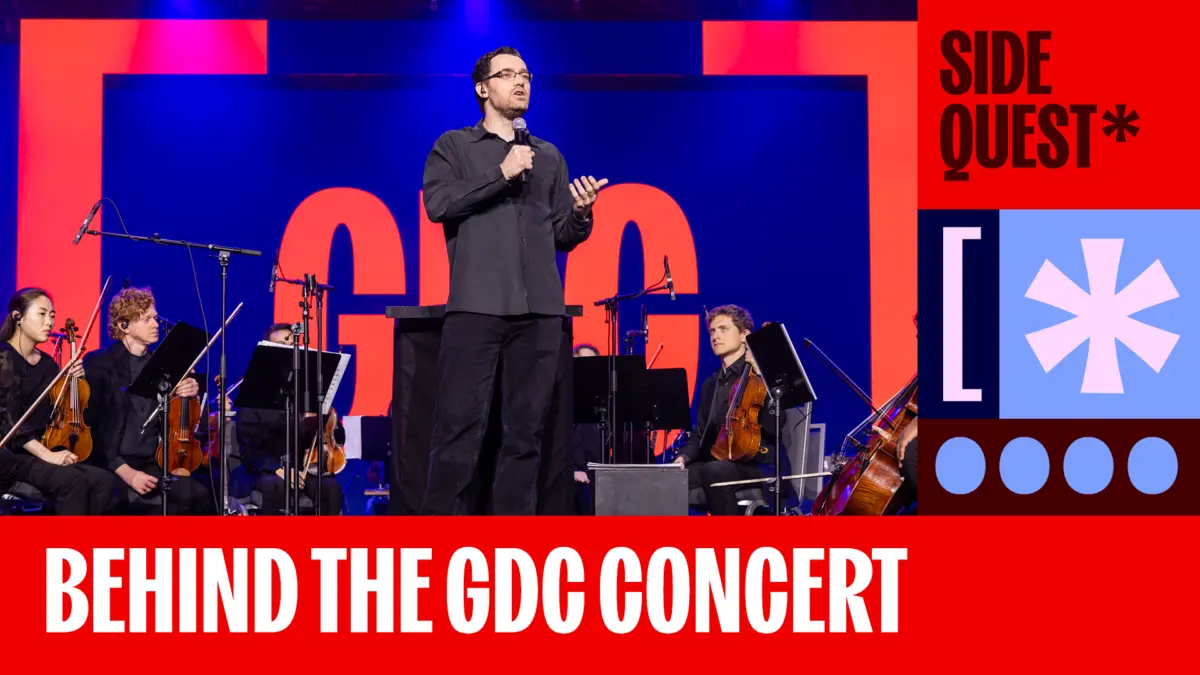
Now, as the global games industry converges for the annual Game Developers Conference (GDC) Festival of Gaming, Wintory has taken center stage to host what many are calling the musical event of the week: the Developer’s Concert. This singular performance experience transcends traditional symphonic showcases, blending spoken-word monologues by Wintory and a rotating cast of special guests with a sprawling journey across various genres of interactive music. It is a live-action celebration of the grueling, often invisible labor that goes into making games, bridging the gap between technical wizardry and emotional resonance.
To unpack the magnitude of this event, the mechanics of modern game scoring, and the precarious intersection of art and commerce in the industry, Content Marketing Manager Beth Elderkin sat down with Wintory for a comprehensive interview on the GDC Side Quest podcast. This feature explores that conversation, charting Wintory’s trajectory from independent darling to symphonic heavyweight, examining the philosophy behind his collaborative advocacy, and looking ahead to the future of music in an evolving digital medium.
Detailed Chronology: From Indie Soundscapes to Orchestral Titans
To understand Austin Wintory’s impact on the modern games industry, one must trace a career trajectory that mirrors the maturation of video games themselves—shifting from the fringes of experimental independent development to the sprawling budgets of AAA blockbusters.
The Early Years: The Indie Vanguard and flOw
Wintory’s breakthrough into the public consciousness began in the mid-2000s, an era when the indie game scene was just beginning to find its commercial and artistic footing. Collaborating with ThatGamecompany founders Jenova Chen and Kellee Santiago, Wintory composed the score for flOw (2006), initially a Flash-based browser game that later found massive success as a PlayStation Network launch title.
The score for flOw established a template that would define much of Wintory’s early career: dynamic, highly adaptive music that responded fluidly to the player’s movements. Rather than relying on rigid, looping tracks, Wintory crafted an interactive audio ecosystem where every consumption of a micro-organism triggered specific, harmonious acoustic ripples. This project proved that independent games could punch far above their weight classes emotionally if audio was treated as a core pillar of game design rather than a post-production afterthought.
The Critical Pinnacle: Journey
That foundational partnership with ThatGamecompany culminated in 2012 with Journey, a milestone title that forever altered the perception of video game art. Wintory’s score for Journey achieved a historic first: it became the first-ever video game soundtrack to be nominated for a Grammy Award in the category of Best Score Soundtrack for Visual Media.
The achievement sent shockwaves through both the classical music establishment and the gaming industry. It forced Hollywood and traditional media conglomerates to acknowledge that video game music was no longer confined to synthesized bleeps and bloops or generic background noise; it was complex, emotionally devastating contemporary classical composition capable of standing shoulder-to-shoulder with cinema’s greatest scores. The cello-driven motifs of Journey became a cultural touchstone, cementing Wintory’s status as a visionary composer who understood how to score a player’s psychological arc rather than just their physical actions on screen.
Scaling the Heights: AAA Blockbusters and Beyond
Following the global phenomenon of Journey, Wintory’s canvas expanded exponentially. He applied his rigorous compositional philosophy to vastly different genres, from the turn-based tactical strategy of Banner Saga—where he utilized a haunting blend of traditional Scandinavian folk instruments and massive orchestral arrangements—to high-octane action titles and immersive multi-player experiences.
His recent work on projects like Aliens: Fireteam Elite 2 demonstrates a remarkable versatility. Where Journey demanded delicate, introspective minimalism, survival horror and tactical shooter properties require immense sonic weight, driving rhythms, and brass arrangements capable of cutting through chaotic soundscapes of gunfire and alien screeches. Yet, across all these disparate sonic worlds, Wintory’s core philosophy remained unchanged: music must serve as an active participant in the game’s interactive loop, rather than a passive coat of paint.
Supporting Context & Metrics: The Mechanics of the Developer’s Concert
The crown jewel of Wintory’s current GDC engagement is the Developer’s Concert, an ambitious production designed to strip away the mystique of game development and celebrate the human beings behind the code, art assets, and musical staves.
Bridging the Divide Between Tech and Art
Speaking on GDC Side Quest, Wintory and Elderkin dissected the curation process behind the concert, emphasizing that the event was explicitly structured to highlight the multidisciplinary nature of game making. For decades, industry awards and public discourse have tended to compartmentalize disciplines—programmers live in one box, artists in another, and audio designers in a third.
The Developer’s Concert acts as a direct antidote to this siloed thinking. By combining live musical performances of diverse video game genres with spoken-word monologues, Wintory and his special guests narrate the chaotic, beautiful, and deeply collaborative reality of shipping a video game. The concert demonstrates how a single musical cue is often the result of hundreds of hours of logistical coordination between audio directors, middleware programmers, animators, and composers.
The Metrics of Impact: Why Live Audio Matters at GDC
To contextualize the importance of events like the Developer’s Concert, one must look at the shifting demographics and priorities of the Game Developers Conference. Over the past ten years, GDC has evolved from a purely technical conference for software engineers into a holistic summit encompassing narrative design, business strategy, emotional intelligence, and artistic direction.
- Audience Engagement: Live audio events at GDC consistently draw capacity crowds, reflecting a surging interest from developers across all disciplines in understanding how audio enhances player retention and emotional engagement.
- Cross-Disciplinary Collaboration: Industry surveys consistently show that games featuring deeply integrated audio pipelines—where sound designers and composers are brought into pre-production alongside narrative leads—report higher critical reception scores and stronger player emotional investment.
- The Cultural Footprint: Concerts like Wintory’s elevate the cultural capital of the entire medium, providing tangible proof to external stakeholders, investors, and mainstream media that video games are sophisticated cultural artifacts.
Official Insights: The GDC Side Quest Conversation
During their in-depth sit-down on GDC Side Quest, Beth Elderkin and Austin Wintory delved deep beneath the surface of the composer’s polished public persona to discuss the gritty realities of building a career in interactive media.
Advocacy for the Artist-Engineer Partnership
A recurring theme in Wintory’s career has been his tireless advocacy for improved relationships between artists and engineers. Too often in game development, technical constraints and artistic visions clash. Engineers view creative demands as performance killers, while artists view technical limitations as creative shackles.
Wintory champions a synthesis of these two worlds. In his conversation with Elderkin, he emphasized that the most profound breakthroughs in video game music occur when composers understand the underlying architecture of game engines—such as Wwise or FMOD—and when engineers appreciate the emotional cadence of a musical phrase. By learning to speak the language of code, Wintory has been able to push technical boundaries, designing adaptive music systems that respond to minute fluctuations in gameplay telemetry.
Curating the Ultimate Live Experience
When discussing the curation of the Developer’s Concert, Wintory noted the logistical hurdles of representing the staggering diversity of video game music in a single cohesive performance. Video game music is no longer a monolith; it spans chiptunes, hyper-stylized jazz, sweeping orchestral romanticism, heavy metal, industrial electronica, and avant-garde ambient soundscapes.
Rather than attempting an impossible, exhaustive chronological retrospective, Wintory curated the concert around thematic narratives. The performance uses music as a narrative vehicle to tell the story of the development cycle itself—capturing the euphoric highs of pre-production optimism, the crushing lows of crunch culture and bug-fixing panic, and the ultimate triumph of launch day. Through spoken-word monologues, Wintory guides the audience through these emotional beats, transforming a standard concert into an intimate shared catharsis for the entire development community.
Future Outlook: The Next Era of Interactive Audio
As the video game industry navigates a period of profound economic restructuring, technological disruption, and creative reinvention, the role of the composer is also undergoing a radical transformation. Looking toward the horizon, several key trends are set to define the future of game scoring and industry collaboration.
The Rise of Generative and Procedural Audio
One of the most pressing conversations in game audio centers on the integration of generative AI and advanced procedural audio systems. While these technologies spark intense debate regarding copyright, ethics, and labor rights, visionary composers like Wintory argue that the future lies in mastering these tools as extensions of the human creative will rather than replacements for it.
Adaptive and dynamic music systems are becoming increasingly sophisticated. Future games will not merely switch between pre-recorded stems based on player location; they will generate contextually aware, harmonically complex scores in real-time, reacting to the player’s heart rate, biometric feedback, and split-second tactical decisions. For composers, this means shifting from writing static linear tracks to authoring systems, rules, and musical vocabularies that the game engine can fluidly interpret.
Strengthening Industry Solidarity
Beyond technology, Wintory’s ongoing advocacy points toward a broader cultural shift within the games industry: the urgent need for solidarity across all craft disciplines. As game development budgets balloon and the pressure to deliver profitable live-service hits intensifies, the human cost on developers—manifested in widespread layoffs, unsustainable crunch, and corporate instability—has reached an inflection point.
Events like the Developer’s Concert serve a vital psychological and social function during these turbulent times. By gathering developers, musicians, and fans in a shared space to celebrate the sheer miracle of completed work, leaders like Wintory help sustain the morale of an industry battered by systemic pressures.
Conclusion: A Legacy Carved in Sound
Austin Wintory’s journey from scoring indie browser games to commanding global symphonic stages is a testament to the power of relentless artistic curiosity and unyielding collaborative ethos. Through his scores, his public advocacy, and landmark productions like the GDC Developer’s Concert, he continues to prove that video game music is one of the most vibrant, emotionally potent art forms of the twenty-first century.
As the industry looks toward the next generation of hardware, platforms, and interactive experiences, one thing remains certain: as long as developers continue to build wondrous virtual worlds, artists like Wintory will be there to give them a beating heart and a soul.
To hear the full, unedited conversation between Beth Elderkin and Austin Wintory, listen to the latest episode of GDC Side Quest embedded above. For more insights into the triumphs and trials of game development, tune into the bi-weekly Game Developer Podcast, hosted by Bryant Francis, edited by Pierre Landriau, and featuring original music by Mike Meehan.