





Executive Overview
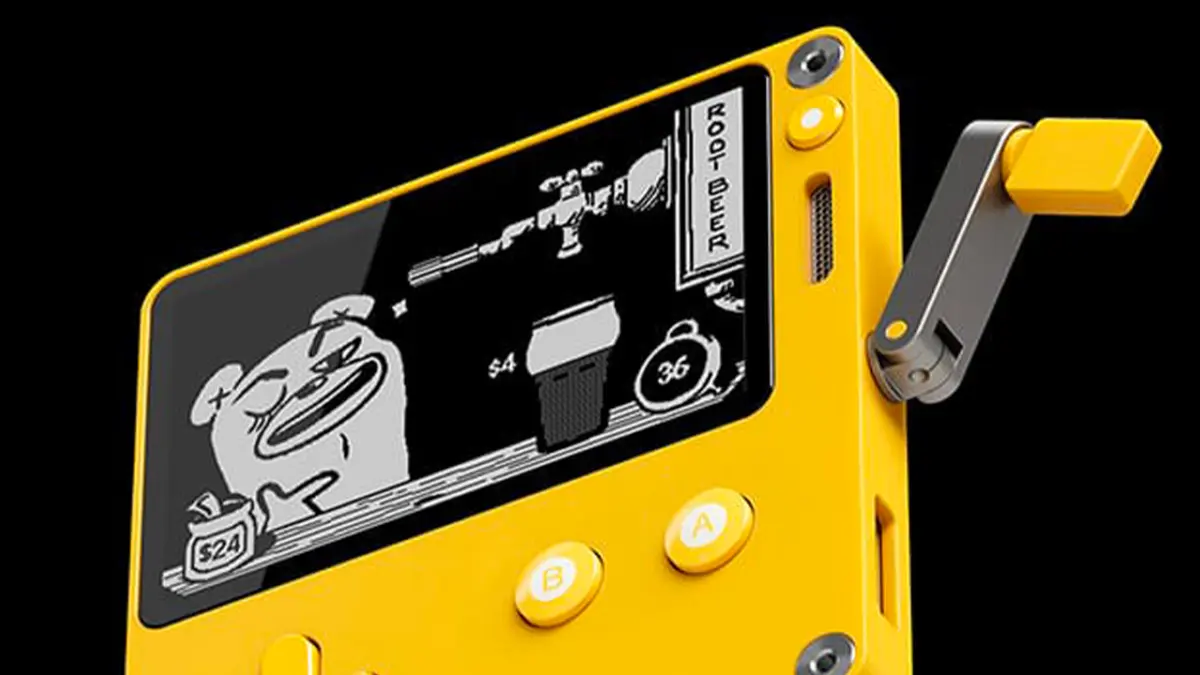
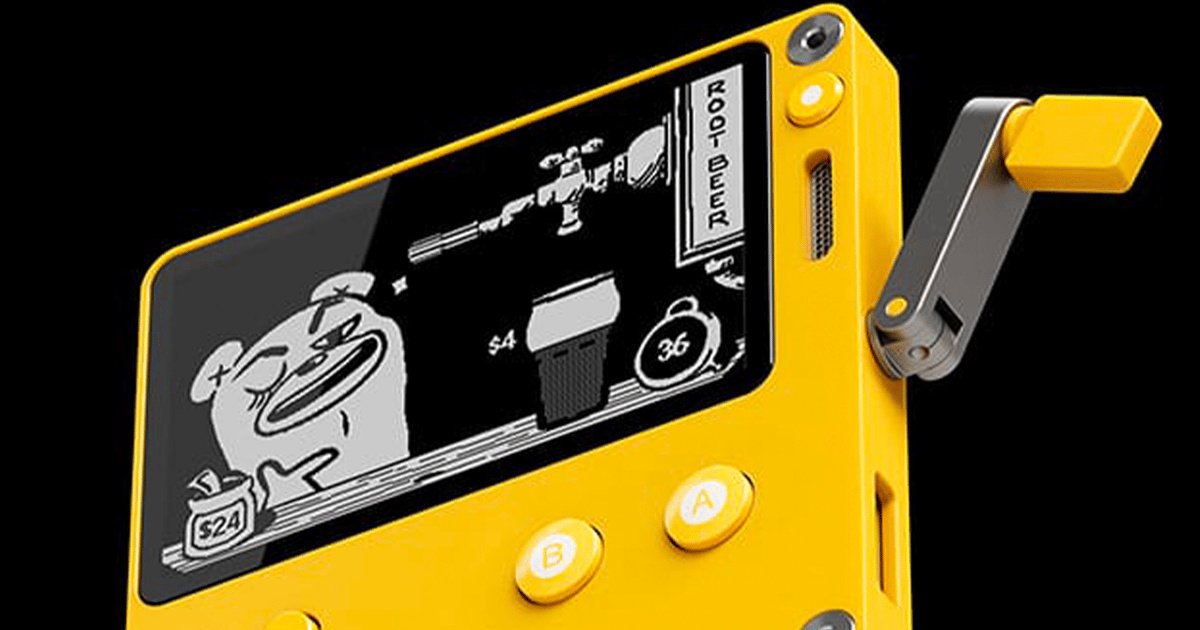
In an industry where corporate giants frequently absorb government-mandated financial windfalls as pure profit, indie darling Panic—the creator of the crank-driven handheld console Playdate—is charting a remarkably different course. Following a landmark United States Supreme Court ruling that struck down executive-ordered import duties as an illegal application of the International Emergency Economic Powers Act, the federal government has begun issuing billions of dollars in retroactive tariff refunds to affected companies.
While major international conglomerates and retail behemoths—including Nintendo, Walmart, Target, and Home Depot—have largely opted to pocket hundreds of millions of dollars in rebates, Panic is taking the honorable route. The publisher and hardware developer has announced that it is passing 100% of its tariff refunds directly back to the consumers who bore the brunt of the surcharge earlier this year.
This move stands in sharp contrast to the broader corporate landscape. Where massive multinationals are facing active consumer lawsuits for keeping rebates on items sold with clearly marked tariff surcharges, Panic’s co-founder Cabel Sasser firmly asserted that the money was simply "not our money to keep." Despite the administrative burden placed on a small team—navigating complex government paperwork and engineering custom internal processing systems—Panic’s decision highlights a rare commitment to consumer trust and ethical business practices in the modern video game ecosystem.
Detailed Chronology: From Executive Imposition to Supreme Court Reversal
The saga of these controversial import levies dates back to an administrative window earlier this year when a sweeping set of tariffs was enacted under the direction of former U.S. President Donald Trump. Designed to reshape international trade dynamics, the sweeping levies immediately targeted a vast array of imported consumer electronics, components, and hardware manufactured overseas—including the niche, yellow-shelled, crank-equipped Playdate console.
For a boutique hardware creator like Panic, the sudden imposition of a 19% tariff surcharge created an immediate and acute financial crisis. Initially, the company attempted to shield its customer base by absorbing the incoming costs. However, as independent developers and small publishers well know, operating margins are notoriously razor-thin. The prolonged financial strain proved unsustainable for a lean operation, forcing Panic to make the difficult decision to pass the cost directly to the consumer.
Rather than quietly hiking baseline prices or obscuring the increase, Panic took a transparent approach. The company itemized the levy as a distinct, clearly labeled 19% line item at checkout for any buyer affected during that specific timeframe, while also launching a dedicated informational web portal to explain why the extra fee was necessary.
The landscape shifted dramatically when the U.S. Supreme Court weighed in on the legality of the levies. In a definitive ruling, the nation’s highest court declared that the executive branch had overstepped its bounds, ruling that the tariffs were not a legal use of the International Emergency Economic Powers Act (IEEPA). With the import fees struck down as unlawful, the federal government opened a complex claims process, inviting impacted businesses to apply for retroactive refunds on the duties they had paid.
While logistics and shipping firms—such as UPS—have initiated partial consumer reimbursements, the vast majority of retail giants chose to retain the windfall. Panic, conversely, gathered its documentation, navigated the bureaucratic hurdles, and decided that every dollar recovered from the government rightfully belonged to the players who funded the purchase.
Supporting Context & Metrics: The Scale of the Tariff Windfall
To understand the magnitude of Panic’s decision, one must look at the staggering financial scale of the tariff refunds flowing through the U.S. economy. Billions of dollars in illegally collected duties are currently being returned to major American and international corporations.
Massive box-store retailers like Walmart, Target, and Home Depot have quietly absorbed billions in government payouts. Meanwhile, entertainment giants have similarly reaped massive fiscal windfalls. In its most recent quarterly financial filings, Nintendo disclosed that it received a staggering $300 million tariff refund from the U.S. government following the Supreme Court’s decision.
However, unlike standard corporate tax cuts or localized sales adjustments, these specific tariff rebates were tied directly to extra fees paid at the point of sale by individual citizens. This reality has sparked intense consumer backlash and legal warfare. Nintendo and several other multinational corporations are currently facing class-action lawsuits over their refusal to distribute the rebates. The primary legal defense mounted by these conglomerates is that consumers willingly purchased their respective items knowing the final price included the tariff surcharge, legally severing the transaction once the purchase was completed.
Amid this gold rush of corporate retention, Panic stands almost entirely alone in the gaming hardware space. While major corporations argue technicalities to justify keeping hundreds of millions of dollars, a tiny independent team in Portland and beyond chose to build a custom processing system simply to return modest sums to individual players. The exact refund amount varies for each Playdate owner, calculated precisely against what they were forced to pay during the contentious surcharge window.
Official Statements: Inside Panic’s Decision-Making Process
The philosophy driving Panic’s unprecedented move was detailed candidly by co-founder Cabel Sasser in correspondence with industry outlets. For Sasser and his team, the choice ultimately boiled down to a fundamental question of corporate integrity and basic fairness.
"It’s just not our money to keep, and it felt really good to give it back," Sasser explained. "That’s an easy way to know you made the right decision."
Yet, executing that decision was far from a frictionless process. While a tech titan like Nintendo or Walmart employs entire legal and accounting departments capable of navigating federal bureaucracy with ease, Panic had to roll up its sleeves and handle the heavy lifting manually.
"Still, it took a lot of work for us to file all the paperwork to get the refund from the government, and it took work to build a little system to process the refund," Sasser admitted. "And sometimes it felt like, wait, why are we seemingly doing more work than even gigantic companies are on this issue? That felt weird."

Ultimately, Sasser recognizes the inherent irony: because Panic is a small company, it felt the bite of the tariffs far more immediately and acutely than a multinational corporation with diversified revenue streams. Yet, that same intimate scale is precisely what allowed them to maintain a direct, empathetic connection to their customer base—a connection that corporate boardrooms often lose sight of in pursuit of quarterly earnings.
Looking back on the ordeal, Sasser expressed a sentiment shared by many small business owners caught in the crossfire of macroeconomic policy shifts: pure fatigue. "From start to finish on this whole tariff whim, all I could think about is all the cool stuff we could be working on instead," Sasser noted, adding a hopeful wish that Panic will never have to talk about or deal with import tariffs ever again.
Future Outlook: Setting a New Standard for Consumer Relations
Panic’s decision to return its tariff refunds sets a fascinating, albeit lonely, precedent in the consumer electronics and video game industries. In an era where digital storefronts phase out consumer ownership, subscription models dominate, and corporate transparency is frequently treated as an afterthought, Panic’s actions serve as a stark reminder of the value of goodwill.
As the class-action lawsuits against Nintendo and other non-refunding corporations slowly wind their way through the legal system, public scrutiny on how companies handle government rebates will only intensify. Consumers are increasingly paying attention to which brands prioritize community trust over opportunistic profit retention.
For the Playdate community, the refund is more than just a welcome financial surprise—it is validation of their support for an independent creator that treats its audience as partners rather than mere transactions. While Panic would undoubtedly prefer to channel 100% of its creative energy into software updates, hardware logistics, and innovative indie games rather than bureaucratic tax forms, the company has proven that integrity is worth the extra paperwork.
As the video game industry looks toward an unpredictable economic future, Panic has quietly demonstrated that doing the right thing, even when nobody is forcing you to do it, remains the ultimate hallmark of independent spirit.