Executive Overview
For decades, the primary bottleneck in software engineering was writing code. Developers spent hours manually building features, hunting down syntax errors, writing boilerplate logic, and managing tedious merges. Today, that paradigm has fundamentally inverted. The rise of autonomous coding agents—powered by advanced generative AI models—has unlocked unprecedented velocity. Development teams are no longer constrained by how fast code can be written; they are drowning in an ocean of machine-generated pull requests (PRs).
Every team that has turned coding agents loose on real-world enterprise software has run into the exact same wall. The agents write fast. They write a lot. And somewhere between the tenth and twentieth pull request of the day, the human engineers responsible for reviewing that code start falling hopelessly behind. Review quality drifts, burnout looms, and the software development lifecycle grinds to a halt under the weight of its own automated output.
This is not a hypothetical scenario or a distant future prediction. It is the urgent operational reality for engineering teams that have aggressively adopted agentic development workflows over the past year. Recognizing this widening chasm, Tessl has rolled out Tessl Code Review, a new tool designed to address the review crisis head-on. Currently available for free during its public beta period, the tool promises to automate the arduous first line of defense in code review without falling into the traps of traditional automated Linters or opaque, black-box AI reviewers.
By shifting review criteria into versioned, repository-owned files—a concept akin to "standards-as-code"—and granting the AI access to holistic repository context rather than isolated diffs, Tessl is trying to redefine how teams keep human judgment in the loop. However, as the software industry races to adopt agentic workflows, a deeper question remains: Can automated reviewers truly handle the nuance of production-grade code, or will they simply introduce another layer of noise to an already overwhelmed engineering pipeline?
Detailed Chronology & The Genesis of the Agentic Bottleneck
To understand why Tessl Code Review represents a pivotal shift in developer tooling, it is necessary to examine how the software engineering workflow evolved to this breaking point.
Phase 1: The Acceleration of Code Generation
Over the last several years, coding assistants evolved from simple autocomplete extensions into fully autonomous agentic systems. Tools capable of planning, writing, testing, and debugging multi-file features transitioned from experimental toys to core production drivers. Engineering organizations quickly realized that these agents could churn out routine bug fixes, refactoring scripts, and feature components at speeds humans could never hope to match.
Phase 2: The Reviewer Wall
As agent adoption scaled within enterprise environments, a secondary, unforeseen crisis emerged. While generating a pull request became a trivial, sub-five-minute task for an AI agent, reviewing that pull request remained a deeply cognitive, manual human endeavor.
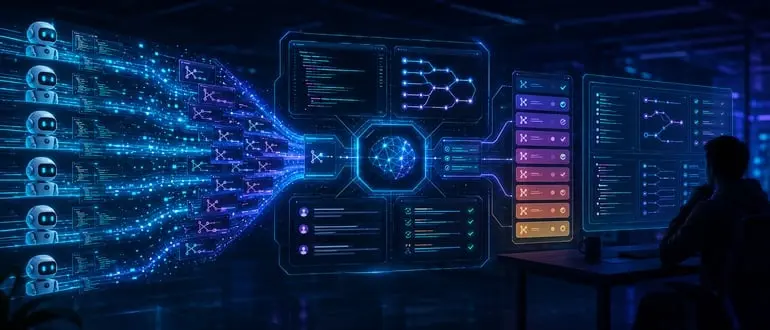
Teams quickly encountered what industry analysts describe as the "reviewer wall." An AI agent could easily open a dozen pull requests over the course of a single morning—exceeding the daily review capacity of a senior engineer. Human reviewers, already stretched thin managing architectural decisions and mentoring junior staff, found themselves buried beneath a relentless avalanche of AI-generated code.
Phase 3: The Introduction of Tessl Code Review
Entering this high-stakes environment this week, Tessl unveiled its Code Review tool during a strategic beta rollout. Rather than treating code review as a superficial check for formatting mistakes or naming conventions, Tessl designed the platform to act as an intelligent gatekeeper. The tool is engineered to filter out the noise, enforce custom organizational standards, and independently evaluate pull requests against the broader ecosystem of the codebase.
Crucially, Tessl structured the product’s release as a free beta, lowering the barrier to entry for DevOps leads, platform engineers, and engineering managers eager to test whether holistic context-aware review can relieve their choked CI/CD pipelines.
Technical Deep-Dive: How Tessl Code Review Works
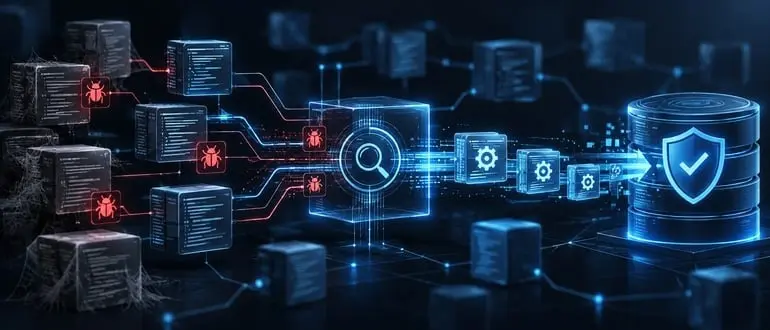
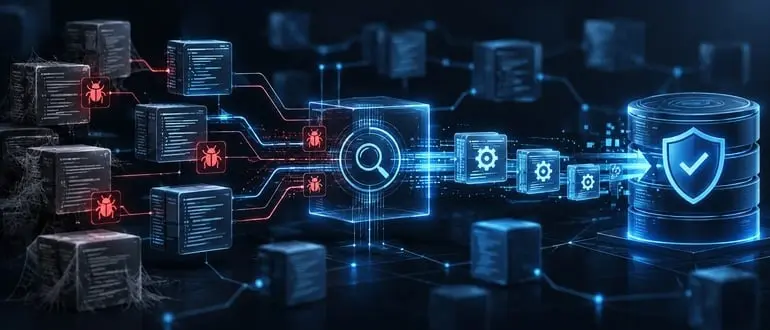
Most first-generation AI code review tools share a fatal flaw: they suffer from myopic vision. Traditional AI reviewers typically inspect only the "diff"—the specific lines of code added, modified, or deleted within a single pull request. Operating in this isolated vacuum, the AI frequently misses the broader architectural intent, leading to false positives, redundant commentary, and missed systemic bugs.
Tessl Code Review departs from this limited model through several distinct architectural innovations:
1. Whole-PR and Repository Context
Instead of looking solely at a narrow slice of changed code, Tessl Code Review ingests the entire pull request ecosystem. This includes:
- The surrounding codebase and dependent modules.
- The team’s explicitly defined coding standards.
- The complete history and context of previous discussions within the review thread.
By evaluating every finding against concrete, traceable context rather than statistical guesses derived from eight or nine changed lines, the tool aims to drastically reduce the rate of irrelevant or incorrect feedback.
2. Context-Aware Iteration and Thread Continuity
Anyone who has interacted with older automated review bots knows the frustration of a continuous loop: a developer pushes a new commit to fix an issue, only for the bot to re-flag the exact same problem or lose track of what was previously discussed.
Tessl’s review engine carries context forward across iterations. When a pull request is updated after a first round of review, subsequent passes instantly recognize what was fixed, what was deliberately explained by the developer, and what was declined. The system laser-focuses exclusively on open, unresolved items, sparing engineers from repetitive, redundant commentary.
3. Standards-as-Code: The Ownership Model
Perhaps the most significant differentiator of Tessl’s approach is its stance on review governance. Historically, AI code review tools have operated as black boxes. The evaluation criteria, style guides, and logic checks lived entirely within the vendor’s proprietary platform, rendering them invisible and uneditable to the teams being judged by them.
Tessl flips this script by treating review standards as versioned files living directly inside the repository, right alongside the source code.
- Teams can adopt Tessl’s default review skills out of the box.
- Alternatively, teams can fork, edit, and tailor these standards to meet their exact internal guidelines.
- Because the standards are versioned in the repo, if a team eventually decides to migrate to a different review tool, their custom criteria travel with them, completely eliminating vendor lock-in.
Supporting Context & Industry Metrics
The challenges Tessl is attempting to solve are validated by broader macroeconomic and technical shifts across the software development landscape.

The Volume Crisis
Data from modern software development telemetry indicates that agentic coding tools now account for a meaningful, rapidly expanding share of code merged into production repositories. As LLMs become more capable and cost-effective, this trajectory points toward a future where the vast majority of boilerplate and structural code is authored by non-human agents.
However, industry experts emphasize that raw output volume is a vanity metric if code sits stagnant in review queues. As development velocity climbs, the review bottleneck threatens to become the ultimate constraint on business agility.
Comparative Landscape
The market for AI code review tools has matured into a crowded and competitive category over the past year, featuring prominent players such as CodeRabbit and Qodo. While these competitors have successfully demonstrated the viability of automated feedback, Tessl’s strategic emphasis on data ownership and versioned standards-as-code targets a core pain point for enterprise platform teams: compliance and control.
By ensuring that review standards remain transparent, auditable, and firmly under team ownership, Tessl addresses compliance mandates that often restrict enterprises from adopting proprietary, black-box AI platforms.
Official Statements and Industry Analysis
Industry analysts tracking the evolution of agentic software development have been vocal about the structural shifts currently taking place within engineering departments.
Mitch Ashley, an analyst at The Futurum Group who closely follows software engineering trends, offered a blunt assessment of the modern development pipeline:
"Agent-written code now stalls at review. Agents open more pull requests in a morning than a reviewer clears in a day, so review quality drifts with whoever is on the hook. No one hires their way out of that."
Ashley highlighted why traditional scaling methods—such as hiring more human reviewers or relying on opaque vendor tools—fail to solve the underlying crisis:
"The fix is standards written once, versioned in the repo, and owned by the team, since reviewers cannot enforce criteria they cannot see."
Furthermore, Ashley underscored that the ultimate responsibility for resolving this pipeline constraint rests with engineering leadership rather than tool vendors:
"Review capacity now caps how fast agent code ships. Engineering leaders own closing that gap, not tool vendors."
Future Outlook: Sustaining Human Judgment in an Automated World
The rollout of Tessl Code Review and its adoption of "standards-as-code" point toward a profound philosophical question for the future of software engineering: How do engineering teams preserve rigorous human oversight and architectural integrity as the volume of machine-generated code scales exponentially?
Relying purely on manual code review is no longer mathematically viable. Conversely, surrendering the review process entirely to unverified, vendor-controlled AI bots introduces unacceptable security, compliance, and quality risks.
The middle path—exemplified by tools that integrate transparent, versioned, team-owned standards with deep repository context—represents a sustainable blueprint for the future. By lowering switching costs and keeping review rules visible within the codebase, tools like Tessl Code Review empower platform engineers to build review capacity that actually scales in lockstep with agent output.
Whether these systems will prove durable over the long term depends entirely on how effectively they earn the trust of engineering teams when managing mission-critical codebases. For now, as the industry navigates its first major agentic inflection point, one reality is indisputable: the era of manual code review is over, and the race to automate governance has officially begun.
Frequently Asked Questions (FAQ)
What is Tessl Code Review?
Tessl Code Review is an advanced, AI-powered pull request review platform engineered to help development teams keep pace with the massive volumes of code generated by autonomous coding agents.
How does Tessl Code Review differ from other AI code review tools?
Unlike traditional AI reviewers that rely on closed, vendor-controlled logic boxes, Tessl stores its review standards as versioned files directly within the repository. This allows engineering teams to view, edit, version, and retain full ownership of their review criteria, significantly reducing vendor lock-in.
What kind of context does Tessl Code Review analyze?
Rather than limiting its analysis to an isolated code diff, Tessl Code Review ingests comprehensive context, including the surrounding codebase, team-defined standards, the entire pull request, and the historical dialogue within the review thread.
Is Tessl Code Review currently available for use?
Yes, Tessl has rolled out the tool as a free public beta. Platform engineers and DevOps leads can utilize setup guides and quickstart documentation to configure their first review against custom standards within minutes.