Executive Overview
In an aggressive escalation of its global intellectual property enforcement campaign, Japanese media and publishing conglomerate KADOKAWA Corporation has secured a critical legal victory in a U.S. federal court. The ruling paves the way for Google-owned YouTube to surrender the real-world identities of three high-profile South Korean content creators.
These creators—operating massive channels specializing in anime narrative recaps, reviews, and commentary—command a combined audience of over 1.3 million subscribers. Generating millions of views by leveraging clips from popular Japanese animation, the channels have long been a thorn in the side of copyright holders. While KADOKAWA views these operations as sophisticated, unauthorized piracy rings masquerading as commentary, the YouTubers have staunchly defended their work as transformative fair use.
This high-stakes legal confrontation revolves around a routine mechanism: a Digital Millennium Copyright Act (DMCA) subpoena. Typically utilized as a straightforward administrative tool, the subpoena became a battleground when the targeted creators pushed back, forcing a federal judge to weigh in on the modern phenomenon of "anime recap" culture. With the court siding firmly with the publisher and ruling that plot narration and summary do not constitute transformative fair use, the case sets a significant precedent for digital copyright enforcement across international borders.
Detailed Chronology of the Legal Battle
The Inception: Targeting the Creators
The legal confrontation began in January, when KADOKAWA initiated legal proceedings in a U.S. federal court seeking to unmask three prominent South Korean YouTubers: Bongseop Kim, Woohyuk Yang, and Youngyoon Ko. Utilizing the DMCA subpoena process—which generally requires only a court clerk’s signature to compel internet service providers or platforms like YouTube to disclose identifying user information—KADOKAWA aimed to pierce the veil of anonymity protecting these creators.
However, the maneuver hit an unexpected roadblock. Rather than quietly complying, YouTube was barred from handing over the requested identifying data because the three targeted creators filed formal motions to quash the subpoenas.
The Defense Mounts: The Motion to Quash
In their joint and individual filings, the YouTubers argued that their channels were legitimate hubs of creative commentary, analysis, and cultural critique tailored specifically for Korean-speaking audiences. They emphasized that their content was distinct from traditional, wholesale piracy operations:
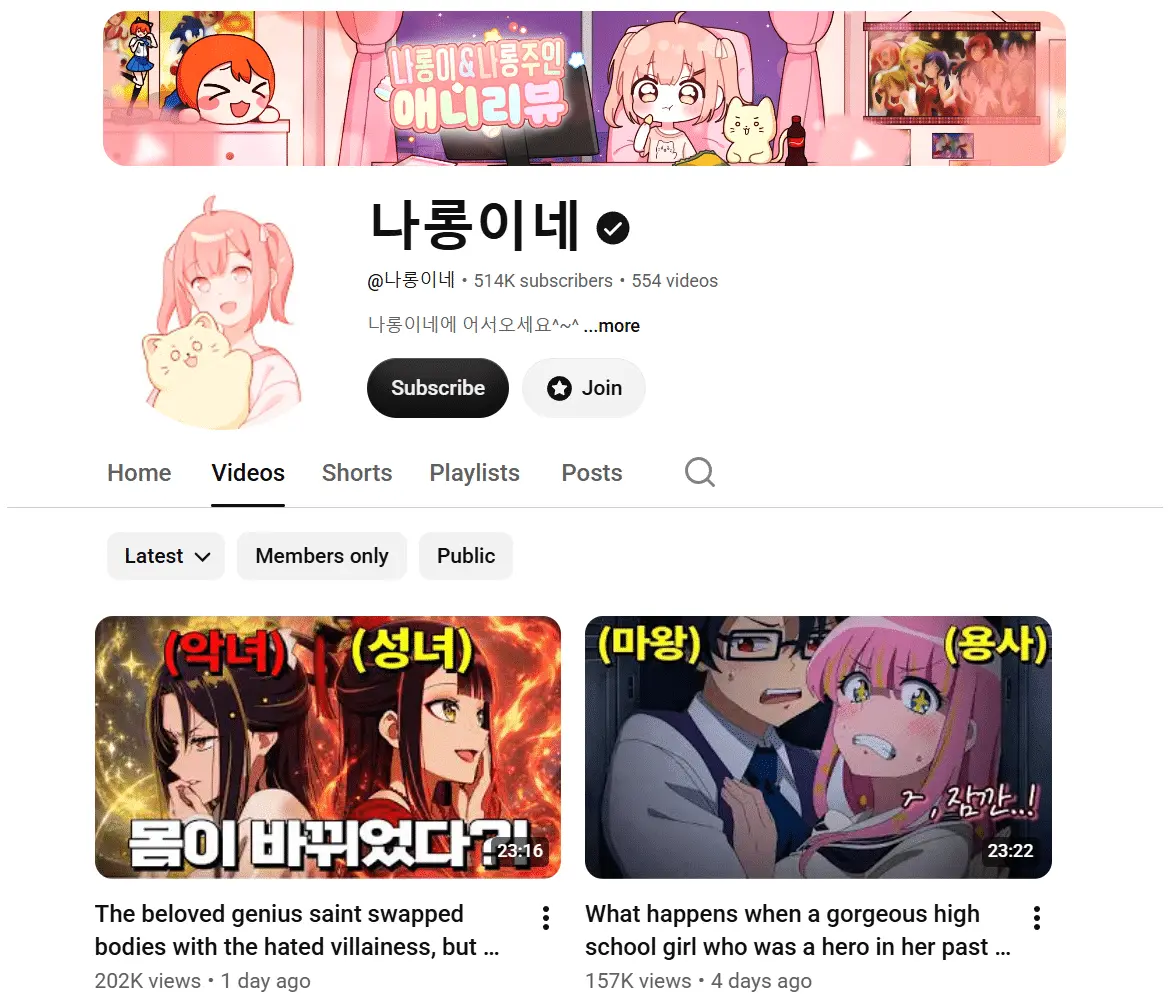
- Bongseop Kim operated a channel utilizing a custom-designed animated mascot ("Narong"), text-to-speech dialogue, and specialized scripts to review properties like A Ninja and an Assassin Under One Roof.
- Woohyuk Yang focused on deep-dive reviews and media analysis of major hits like Oshi no Ko.
- Youngyoon Ko integrated customized Korean subtitles, emotional reactions, sound effects, and localized plot commentary to dissect titles such as Once Upon a Witch’s Death.
Furthermore, the creators argued that KADOKAWA’s legal pressure was coercive rather than genuine. They noted that when KADOKAWA had previously issued standard DMCA takedowns against their videos, the creators had filed counter-notifications, leading YouTube to restore the content after the publisher failed to follow up with actual copyright lawsuits. They contended that the new subpoena was an overbroad scare tactic designed to bully them into submission rather than pursue legitimate litigation on the merits.

A Procedural Curveball: The Court Demands Fair Use Briefing
In April, U.S. District Judge Trina L. Thompson injected an unusual procedural step into the proceedings. Recognizing the broader legal weight of the dispute, she ordered both parties to submit supplemental briefings specifically addressing the doctrine of fair use—an uncommon requirement at the preliminary DMCA subpoena stage.
The creators doubled down on their arguments, highlighting the fractional nature of their media usage. Bongseop Kim pointed out that his video covering episode 4 of A Ninja and an Assassin Under One Roof utilized only about 15 percent of the original episode’s runtime.
KADOKAWA’s legal counsel countered aggressively. They pointed out various procedural deficiencies in the defense, noting that several of the contested videos had been taken offline or made private by the creators, leaving the remaining content to function as little more than a linear plot summary. Dismissing the creators’ pro se (self-represented) arguments regarding the intersection of DMCA subpoenas and disputed infringements, KADOKAWA’s attorneys went so far as to describe their logic as reading "like an AI hallucination, because it is wholly unsupported by the statute or case law."
The July 17 Ruling: A Blow to Narrative Recaps
On July 17, Judge Thompson issued a definitive order denying the motion to quash. The court found the evidentiary record "sparse"—largely due to the creators hiding or removing their videos—and concluded that the disputed content merely "describe[d] and narrate[d]" the copyrighted works instead of successfully criticizing, parodying, or otherwise transforming them.
Invoking Barnes v. YouTube—a recent February ruling from the same court concerning a channel that narrated copyrighted book chapters—Judge Thompson signaled a judicial hardening against narrative recap formats. The court held that reproducing significant portions of an original work for the purpose of summary, even when accompanied by voiceovers and localized subtitles, fails to clear the high bar of transformative fair use. Furthermore, the court noted that even if a video’s direct financial impact on the original publisher is difficult to quantify, a copyright owner’s exclusive statutory right of reproduction remains paramount.
Supporting Context & Metrics: Scale and Ecosystem
To understand why KADOKAWA is investing heavily in foreign legal maneuvers, one must examine the massive digital ecosystem supporting anime recap channels. These are not low-traffic hobbyist blogs; they are commercial media operations commanding massive international audiences.
Channel Statistics and Content Formats
- Bongseop Kim: Over 500,000 subscribers. Features original mascot integration and heavy scriptwriting focusing on niche and mainstream titles alike.
- Woohyuk Yang: Exceeds 500,000 subscribers. Specializes in analytical breakdowns of contemporary anime phenomena.
- Youngyoon Ko: Nearly 350,000 followers. Focuses on rapid-fire plot breakdowns and localized commentary.
The Traffic Paradox: Cannibalization vs. Promotion
A central pillar of the creators’ defense was the argument that their videos did not harm KADOKAWA’s bottom line; rather, they acted as a powerful marketing funnel. To support this, the creators pointed to direct outbound analytics linking their content to licensed streaming ecosystems.

For instance, analytics shared by Bongseop Kim demonstrated that his channel had successfully driven 114,494 click-throughs to Laftel, South Korea’s licensed anime streaming platform, maintaining an impressive 82 percent engagement rate.
Despite these metrics proving that recap channels can drive active consumers toward legal streaming platforms, copyright holders remain deeply skeptical. Publishers argue that exhaustive plot summaries satisfy consumer curiosity without requiring viewers to watch, read, or purchase the original media, thereby substituting the primary market experience.
Official Statements and Arguments
The legal arguments submitted by both parties highlight a profound philosophical divide over how modern digital culture interacts with traditional intellectual property frameworks.
"The videos used selected portions of the underlying works in connection with Korean narration, explanation, summary, commentary, and creator-specific presentation. They were not uploaded as full episodes or as raw reproductions of the copyrighted works."
— Excerpt from the Creators’ Motion to Quash
The defense framed their efforts as an artistic evolution of media critique—bridging language barriers and cultivating international fandoms for Japanese pop culture in markets that might otherwise remain inaccessible or unengaged.
Conversely, KADOKAWA’s legal representatives maintained that packaging another entity’s creative narrative with superficial voiceover work does not sanitize the underlying act of unauthorized reproduction. Their supplemental opposition emphasized that structural plot summaries strip away the artistic expression protected by copyright, reducing complex audiovisual works to mere commodities for third-party monetization.
Furthermore, KADOKAWA’s attorneys targeted the legal competency of the unrepresented creators, famously writing in their brief that the defense’s statutory interpretations read "like an AI hallucination, because it is wholly unsupported by the statute or case law."

Future Outlook and Global Implications
While Judge Thompson’s July 17 order represents a major victory for KADOKAWA, the legal saga is far from over.
The Appeal to the Ninth Circuit
Refusing to accept defeat, the three South Korean YouTubers have formally filed a notice of appeal with the U.S. Court of Appeals for the Ninth Circuit. Simultaneously, they have filed a motion seeking to stay the execution of the subpoena—effectively freezing YouTube’s ability to hand over their personal identifying information while the appellate process plays out. As of publication, the Ninth Circuit has yet to rule on the stay.
A Worldwide Crackdown on Narrative Piracy
This U.S. federal proceeding is just one front in KADOKAWA’s global crusade against narrative summarization. The publisher’s aggressive stance is mirrored in domestic Japanese courts.
In April, the Tokyo District Court handed down a severe sentence to 39-year-old Wataru Takeuchi for operating a monetized website that published detailed written text summaries of popular anime and cinematic releases, including major hits like Godzilla Minus One and the dark fantasy series Overlord. Takeuchi was convicted, receiving a suspended 18-month prison sentence alongside a 1 million yen fine. Financial disclosures revealed that Takeuchi’s text-summary operation had raked in an estimated 36 million yen (approximately $225,000 USD) in advertising revenue during 2023 alone.
What Lies Ahead for Digital Creators
The convergence of these rulings—spanning from Tokyo to a federal courtroom in California—signals an increasingly hostile legal climate for creators who build audiences on the back of someone else’s storytelling.
For now, the immediate question before the U.S. courts is narrow: will YouTube be forced to reveal the identities of Kim, Yang, and Ko? However, the broader implications are profound. If the Ninth Circuit upholds Judge Thompson’s reasoning, it will establish a potent nationwide precedent confirming that narration-and-recap channels enjoy little to no shelter under the umbrella of fair use. For millions of creators across YouTube, TikTok, and other platforms who rely on summarizing films, books, and anime, the golden age of the recap video may be drawing to a close.