Executive Overview
In a strategic consolidation shaking up the modern observability and application performance monitoring (APM) markets, cloud-native observability startup Dash0 has officially announced the acquisition of Berlin-based continuous profiling specialist Polar Signals.
The transaction—financial terms of which remain undisclosed—marks a significant milestone for Dash0, which was founded in 2023 and has rapidly scaled into a major market player, recently securing a staggering $110 million funding round in March at a landmark $1 billion unicorn valuation. With this acquisition, Dash0 absorbs not only Polar Signals’ cutting-edge continuous profiling technology, but also its foundational Great Lakes storage engine, its elite engineering team, and stewardship of the popular open-source continuous profiling project, Parca.
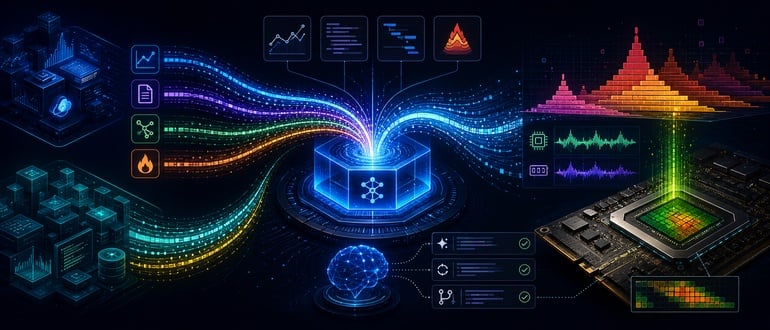
This high-stakes maneuver fundamentally alters Dash0’s value proposition. By integrating continuous profiling directly into SignalStore—its OpenTelemetry-native data platform—and intertwining it with Agent0, its proprietary AI operational agent, Dash0 is bridging the historical gap between static infrastructure metrics and dynamic, real-time code execution. Furthermore, Polar Signals brings deep expertise in profiling resource-heavy architectures, including specialized capabilities for monitoring NVIDIA CUDA workloads in production environments down to the individual GPU kernel level.
As enterprises increasingly demand unified telemetry pipelines—spanning metrics, logs, traces, and now profiles—this acquisition positions Dash0 to challenge legacy APM giants by leveraging an AI-first, OpenTelemetry-native architecture.
Detailed Chronology: From a Berlin Dinner to a Strategic Acquisition
The roots of this acquisition trace back to an organic, serendipitous encounter in the vibrant tech hub of Berlin. What began as a casual industry dinner between Dash0 CEO Mirko Novakovic and Polar Signals founder Frederic Branczyk quickly evolved into a technical convergence of visionaries.
During the dinner, Novakovic detailed the complex operational, performance, and scaling challenges Dash0 was encountering while utilizing ClickHouse as the underlying data store for SignalStore. Coincidentally, Polar Signals had spent years iterating on and building bespoke database architectures designed to handle precisely those types of high-cardinality, write-heavy profiling workloads.
As Branczyk recounted in a company blog post detailing the merger, the conversation illuminated a striking realization: both companies had been independently "working toward the same thing from opposite ends." While Dash0 was building an elite, OpenTelemetry-native observability platform looking for deeper runtime context, Polar Signals had mastered high-performance continuous profiling and specialized telemetry storage engines, but required a broader observability ecosystem to maximize its market impact.
This shared architectural philosophy catalyzed swift negotiations. Rather than treating the transaction as a simple software buyout, the agreement encompasses a holistic absorption of Polar Signals’ core assets:
- The Technology: Advanced continuous profiling algorithms, including rare capabilities for NVIDIA CUDA AI training and inference workloads.
- The Architecture: The custom-built Great Lakes storage engine, slated to eventually replace ClickHouse under the SignalStore umbrella.
- The Ecosystem: The continued open-source maintenance of Parca, ensuring the community-driven project remains active and robust.
- The Talent: The entire Polar Signals engineering team, bringing invaluable pedigree in profiling, database internals, and the OpenTelemetry specifications.
Technical Deep Dive: Profiling, AI Agents, and the Great Lakes Engine
To fully understand the weight of this acquisition, one must examine the technological synergies between Dash0 and Polar Signals across three major pillars: runtime visibility, AI-driven automation via Agent0, and underlying storage mechanics.
1. Continuous Profiling & NVIDIA CUDA Workloads
Continuous profiling has long been a staple in the advanced developer toolbox, offering deep, ongoing insights into where running software applications consume CPU cycles, allocate memory, and utilize network and I/O resources. While many modern observability platforms feature basic profiling extensions, Polar Signals carved out a specialized niche by developing production-grade profiling capable of tracking complex, resource-intensive architectures.
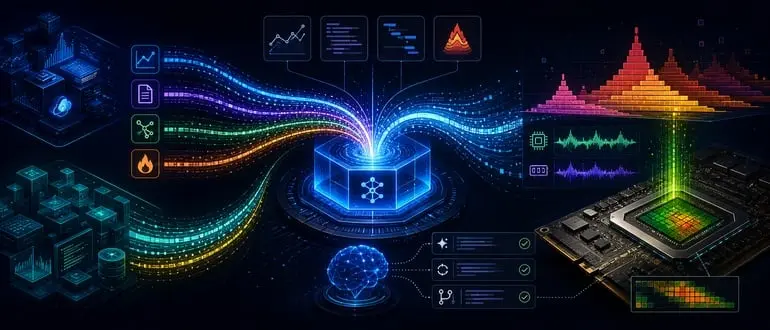
Notably, Polar Signals brings native capabilities for continuous profiling of NVIDIA CUDA workloads. In the current generative AI and machine learning boom, monitoring AI training and inference pipelines in production is a massive blind spot for most DevOps teams. The integrated technology provides visibility down to individual GPU kernels, allowing engineers to monitor real-time resource consumption and instantly pinpoint hardware-level performance bottlenecks.
2. Supercharging Agent0 and Introducing AutoTune
Dash0 previously made waves with the introduction of Agent0, an AI-powered agent designed to assist production operations. Agent0 already possessed the capability to correlate incoming telemetry data with source code repositories and automatically draft pull requests (PRs) to resolve bugs.
By integrating Polar Signals’ runtime profiling data into SignalStore and feeding it directly to Agent0, Dash0 has exponentially increased the agent’s contextual awareness. When investigating an anomaly, Agent0 can now draw upon hard runtime performance evidence—such as unexpected memory allocations or CPU spikes—when deciding what remedial changes to propose. Furthermore, Dash0 is exposing this profiling data through a Model Context Protocol (MCP) server, allowing external coding agents to leverage the same rich runtime context.
Building directly upon this integration, Dash0 is rolling out AutoTune, a new automated capability within Agent0. AutoTune is designed to continuously analyze profiling data on a recurring schedule, actively hunting for optimization opportunities regarding CPU and memory efficiency. When an optimization is discovered, AutoTune automatically drafts a pull request complete with the proposed code modification and the underlying profiling evidence.
Crucially, Dash0 has instituted strict guardrails: AutoTune is not authorized to merge these changes autonomously. Human developers retain total editorial control, required to review and approve every optimization proposed by the AI.
3. The Great Lakes Storage Engine vs. ClickHouse
One of the most consequential technical outcomes of the deal is the roadmap for data storage. Profiling inherently generates massive volumes of high-cardinality data that traditional logging or metrics databases struggle to index efficiently.
To solve this, Polar Signals originally engineered the Great Lakes storage engine. Dash0 has confirmed that over the long term, it plans to systematically phase out ClickHouse as the storage layer beneath SignalStore, replacing it entirely with Great Lakes. The ultimate architectural goal is to unify metrics, logs, traces, and continuous profiles into a single, cohesive storage engine. This consolidation promises to dramatically slash operational overhead, reduce query latency, and lower the infrastructure costs associated with maintaining massive observability pipelines.
Supporting Context, Metrics, and Market Impact
The timing of this acquisition is deeply aligned with the maturation of OpenTelemetry (OTel), the Cloud Native Computing Foundation’s (CNCF) open-source telemetry standard.
For years, OpenTelemetry standardized traces, metrics, and logs, but profiling remained an outlier governed by fragmented proprietary tools. However, this landscape shifted dramatically when OpenTelemetry Profiles—the project’s official profiling data specification—entered public alpha in March. This milestone extended the OTel data model to natively ingest and correlate profiles alongside traditional telemetry streams.
Polar Signals has been an active contributor to the OpenTelemetry Profiles specification. By absorbing the Polar Signals team, Dash0 has effectively acquired core architects of the emerging OTel profiling standard, ensuring that its platform remains at the bleeding edge of cloud-native observability standards.
Market Momentum & Growth Metrics
Dash0’s aggressive acquisition strategy is fully backed by institutional financial muscle. Founded in 2003, the company achieved hyper-growth, culminating in a $110 million funding round in March that valued the startup at $1 billion. At the time of the raise, leadership explicitly signaled that a portion of the capital would be deployed for strategic, capability-enhancing acquisitions.
Today, Dash0 boasts a rapidly expanding footprint, supporting over 750 enterprise customers who rely on its platform to manage complex cloud-native microservices. The addition of Polar Signals not only broadens Dash0’s technological moat but also signals to the broader software industry that the startup is positioning itself as an independent powerhouse capable of challenging established observability titans.
Official Statements and Industry Reception
Industry leaders on both sides of the acquisition have emphasized the philosophical alignment of the two teams, framing the merger not as a corporate takeover, but as the unification of complementary paths.
Mirko Novakovic, CEO and co-founder of Dash0, highlighted how the acquisition immediately accelerates the company’s product roadmap, particularly regarding AI-assisted remediation and data architecture. By bringing profiling into the core platform, Dash0 eliminates the friction enterprises face when trying to correlate slow application code with infrastructure metrics.
Frederic Branczyk, founder of Polar Signals, echoed these sentiments, emphasizing that joining forces with Dash0 provides the ideal vehicle to scale continuous profiling to a global audience. Branczyk also explicitly reassured the open-source community regarding Parca, confirming that the project will remain entirely open-source, with ongoing maintenance and community support fully secured under Dash0’s stewardship.
Independent analysts tracking the APM and observability sectors have pointed out that continuous profiling is rapidly transitioning from a "nice-to-have" developer tool into a mandatory enterprise capability. As microservices architectures grow increasingly distributed and AI workloads demand hyper-optimized GPU and CPU resource utilization, platforms that fail to unify profiling with standard telemetry risk obsolescence. Dash0’s move ensures it bypasses years of R&D, instantly equipping its user base with elite-tier profiling capabilities.
Future Outlook: What’s Next for Dash0 and Polar Signals?
As the dust settles on the acquisition paperwork, the combined engineering teams face a rigorous execution roadmap. The immediate priorities include:
- Platform Integration: Seamlessly weaving Polar Signals’ continuous profiling ingestion pipeline directly into Dash0’s SignalStore.
- Agent Evolution: Expanding Agent0 and AutoTune capabilities to fully leverage the newly acquired runtime evidence for automated code optimization.
- Storage Migration: Initiating the architectural transition from ClickHouse to the Great Lakes storage engine to unify all four pillars of observability (metrics, logs, traces, profiles).
- Open Source Stewardship: Maintaining active development and community engagement for the Parca project, ensuring open-source advocates feel secure in the transition.
For enterprise engineering teams, the acquisition signals a promising future. The friction of jumping between disparate profiling tools, APM dashboards, and code repositories is steadily being dissolved by AI-native platforms designed for the OpenTelemetry era.
Ultimately, Dash0’s acquisition of Polar Signals is more than a standard tech buyout—it is a clear indicator of where modern software engineering is headed: a world where runtime profiling, open-source standards, and autonomous AI agents converge to make high-performance, cost-efficient software the default standard.
Frequently Asked Questions
What did Dash0 acquire?
Dash0 acquired Polar Signals, a Berlin-based specialist company recognized for its leadership in continuous profiling and high-performance observability infrastructure.
What specific technologies does Polar Signals add to Dash0?
The acquisition introduces advanced continuous profiling capabilities, specialized NVIDIA CUDA workload profiling (for AI training and inference down to the GPU kernel level), the custom-built Great Lakes high-cardinality storage engine, and stewardship of the open-source Parca continuous profiling project.
How does Dash0 plan to use continuous profiling?
Dash0 will integrate profiling data directly into SignalStore and feed it into Agent0. This allows Dash0’s AI operational agent to utilize concrete runtime performance evidence when diagnosing complex performance issues and proposing targeted code fixes.
Will the open-source Parca project remain open source?
Yes. Dash0 and Polar Signals have confirmed that Parca will remain open-source and will continue to be actively maintained and supported.
What is AutoTune?
AutoTune is an upcoming capability within Agent0 that analyzes scheduling and profiling data to identify CPU and memory optimization opportunities. When an improvement is found, AutoTune automatically generates a pull request with the proposed changes and profiling evidence for developer review (though it cannot merge changes autonomously).