By the Editorial Science Desk
Special Report based on analysis by Eric Schmidt, Suhas Mahesh, and Maya Levin
Executive Overview
For over a century, recurring prophecies have signaled the impending completion of human scientific endeavor. In 1903, the celebrated physicist Albert Michelson declared with absolute confidence that the "facts of physical science have all been discovered." Decades later, during the 1980s, Stephen Hawking famously predicted that theoretical physics might run its course by the end of the twentieth century. Today, catalyzed by the explosive emergence of artificial intelligence—highlighted most recently by a Nobel Prize—that familiar cultural hum is back in the air.
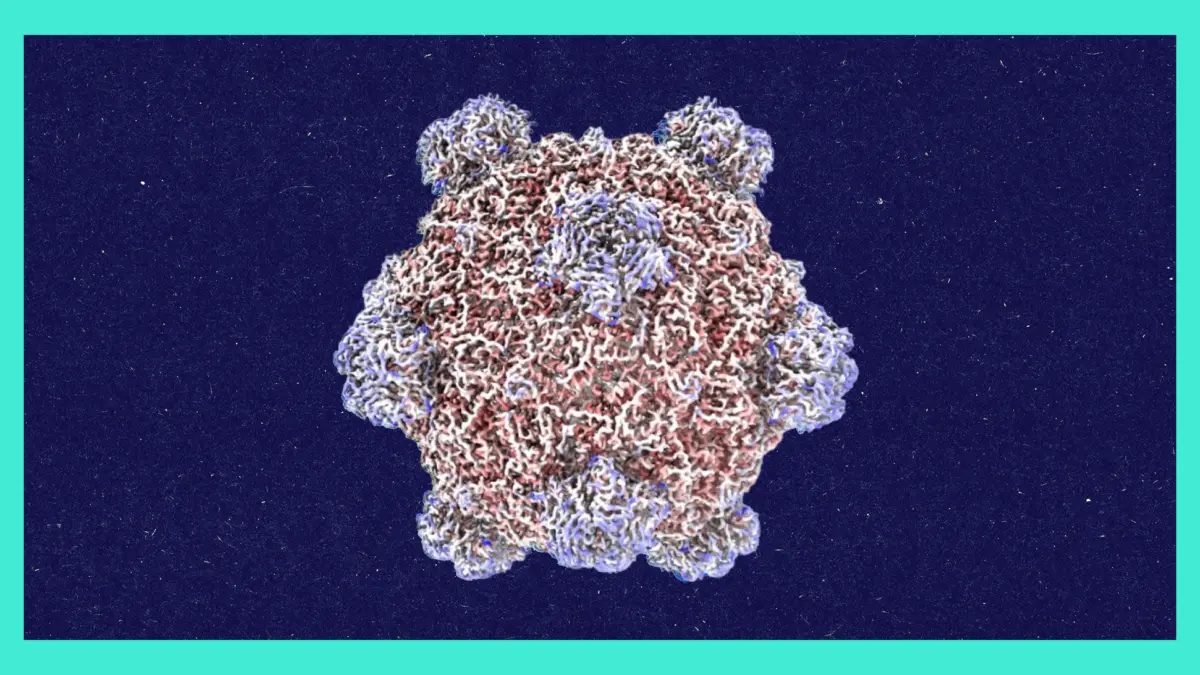
Yet, as we navigate this brave new digital frontier, a crucial distinction is being lost in the hype. While artificial intelligence will undoubtedly reshape the architecture of human knowledge, the prevailing template for this transformation—typified by deep-learning models like Google DeepMind’s AlphaFold—is fundamentally constrained. AlphaFold’s monumental success in predicting three-dimensional protein structures is an incredible achievement, but it relies on pristine, multi-decade datasets that are exceedingly rare across the broader scientific landscape.
The true acceleration of science will not come from monolithic prediction engines starving for standardized data. Instead, it will be driven by AI agents: reasoning engines equipped with digital and physical tools capable of mirroring the messy, iterative, and highly contingent process of actual human research. Representing a rare tier of historical breakthroughs akin to calculus, statistical inference, or the digital computer, agentic AI promises to redefine not just how we answer questions, but the very speed and velocity at which science itself is conducted.
Detailed Chronology: From Static Hubris to Autonomous Reasoning
To understand where artificial intelligence is taking the scientific method, we must trace how we arrived at the current paradigm of data-hungry machine learning and where the inflection point toward autonomous agents occurred.
- 1903: Physicist Albert Michelson publishes his assertions on the finality of physical facts, establishing an early historical baseline for human hubris regarding the limits of scientific exploration.
- 1970s–2020s: The slow, painstaking accumulation of biological data. Over 53 years of international cooperation, the scientific community builds the Protein Data Bank (PDB), pouring an estimated $21 billion worth of experimental work into assembling roughly 170,000 validated protein structures.
- 1980s: Stephen Hawking predicts the twilight of theoretical physics, assuming that a unified "Theory of Everything" is rapidly approaching completion.
- 2024: Demis Hassabis and John Jumper of Google DeepMind are awarded the Nobel Prize in Chemistry for AlphaFold. The neural network successfully cracks the 50-year-old protein-folding problem by training on the historical depths of the PDB. This triggers a gold rush of venture capital, with startups raising billions to build foundation models for biology and chemistry, under the assumption that "AlphaFold is the template for how AI can accelerate all of science."
- May 2025 (and onward): Google announces its AI Co-Scientist, shifting the industry’s focus away from static prediction models toward dynamic, multi-agent frameworks. Given a simple brief on how antibiotic resistance spreads, the Co-Scientist spins up sub-agents to draft hypotheses, play adversarial peer review, run tournaments, and refine winning models—independently reaching the same conclusions as human researchers at Imperial College London who spent a decade in wet labs.
Supporting Context & Metrics: The Bottlenecks of Traditional AI
The central paradox of applying machine learning to science lies in data availability. AlphaFold’s triumph was predicated on a singular historical anomaly: the Protein Data Bank. However, replicating that success across other scientific disciplines exposes severe structural roadblocks.
The Data Scarcity Wall
The PDB required over half a century of global collaboration and roughly $21 billion in funding. In modern science, such massive, cohesive experimental undertakings are exceptionally difficult to coordinate, chronically underfunded, and historically prone to failure.
[Decades of Lab Work] ➔ [$21 Billion Investment] ➔ [Protein Data Bank (~170k structures)] ➔ [AlphaFold Training Success]Even in well-funded fields, a deeper, rarely discussed barrier exists: the scientific impossibility of generating comparable data.
- Protein crystallography—the underlying technique of the PDB—is an uncommonly dependable methodology that has underpinned over 25 Nobel Prizes.
- In contrast, the vast majority of experimental science is notoriously noisy. Cell lines drift. Chemical compounds harbor trace contaminants. Laboratory humidity fluctuates wildly.
Producing measured datasets consistent, accurate, and scalable enough to train modern neural networks in general biology or organic chemistry would require entirely new classes of measurement and standardization. Outside of a few narrow domains—such as weather forecasting, genomics, and isolated niches of chemistry—these datasets simply do not exist and will not be ready for decades.
The Rise of the AI Generalist
Because we cannot wait fifty years for every scientific sub-discipline to curate pristine datasets, science requires a different paradigm. Historically, human researchers have always reasoned under uncertainty. Biologists identifying drug targets do not possess perfect data; instead, they combine computational docking calculations, known structures, molecular dynamics, and a handful of binding assays, using professional judgment to weigh the strengths and flaws of each approach.
Until recently, software could not replicate this holistic synthesis. Today, large language models (LLMs) have enabled a fundamental architectural shift: AI agents.
Unlike single-purpose models like AlphaFold, which apply extreme predictive power to a limited question, agents are generalists. They do not represent an entirely new way of doing science from scratch; rather, they digitally emulate the iterative, highly contingent cognitive processes of human researchers.
Official Statements & Industry Perspectives
The debate over the future of AI-driven research has drawn pointed commentary from technology leaders, institutional policy bodies, and scientific pioneers:
-
Google DeepMind (on AlphaFold’s legacy):
"AlphaFold is the template for how AI can accelerate all of science to digital speed."
(Reflecting the initial industry-wide conviction that foundation models trained on massive, curated archives represent the primary pathway for scientific discovery.) -
The US National Security Commission on Emerging Biotechnology:
Highlighting biological data as a critical national security asset, the commission has consistently urged federal bodies to step up support for the production, standardization, and coordination of large-scale scientific datasets where foundational model training remains viable.
-
Eric Schmidt (Co-founder, Schmidt Sciences & Former CEO of Google):
Emphasizing the transformative yet under-appreciated role of agentic systems over static models, Schmidt and his colleagues argue that agentic workflows bypass the multi-decade data-gathering bottlenecks that currently choke off progress in materials discovery, oncology, and beyond.
Future Outlook: The Agentic Era and the Transformation of Science
As AI agents mature, their compounding effects will ripple across academic and commercial research laboratories, solving long-standing systemic issues and opening doors to uncharted intellectual territory.
1. Solving the Reproducibility Crisis
For decades, the global scientific community has wrestled with the "reproducibility crisis"—the widespread inability of researchers to replicate peer-reviewed results. Despite endless pleas for data and code sharing, human scientists routinely resist tedious administrative documentation once the "exciting" part of the research is finished.
AI agents solve this structurally. By automatically logging every query, parameter adjustment, tool execution, and failure state, agents generate an immutable, exact record of the methodology behind a discovery, making precise replication effortless.
2. Amplifying Institutional Memory
In traditional academic settings, knowledge transfer is a murky, porous process. When graduate students enter a lab, they are left to decipher the cryptic, handwritten notebooks of decades of predecessors. As agents become entrenched in institutional research, a laboratory’s entire historical record, failed hypotheses, protocol adjustments, and troubleshooting steps will be unified into a centralized, standardized repository of organizational knowledge.
3. Hyper-Velocity Experimentation
The ultimate impact of agentic AI will be measured in raw speed. In any scientific field, when testing a hypothesis takes less time than arguing about it in a committee meeting, institutional inertia evaporates.
- An autonomous agent can review a thousand academic papers in sixty minutes.
- It can computationally design five hundred novel molecules by lunch.
- It can learn from its overnight failed assays before morning.
This compression of the experimental loop drastically lowers the cost of trial and error. More importantly, it grants human researchers the cognitive freedom to chase bold, unorthodox, and eccentric questions they would have previously avoided for fear of wasting their limited professional tenure.
Conclusion
The pursuit of scientific automation has reached a crucial crossroads. While the AlphaFold template will continue to yield breathtaking breakthroughs in domains blessed with decades of pristine data, it cannot serve as a universal blueprint for all scientific inquiry.
The true revolution lies in agentic AI. Historically, tools of such sweeping, cross-disciplinary scope—calculus, statistical inference, spectroscopy, the digital computer—arrive only a handful of times in human history. Each fundamental advancement revealed an entire universe of problems no one had previously thought to formulate, thereby redefining their respective fields. With autonomous AI agents entering our laboratories, another such transformative dawn is officially upon us.