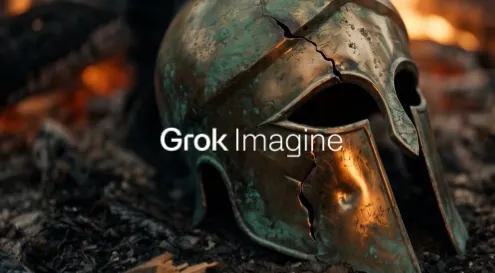
In a quintessential display of high-stakes, tech-bro personal grievance meeting generative artificial intelligence, social media platform X has announced a lucrative video generation contest centered around Homer’s ancient epic, The Odyssey. With a total prize pool of $175,000 up for grabs, the platform is inviting creators to leverage its latest Grok Imagine AI tools to craft competitive visual interpretations of the legendary Greek myth.
However, beneath the veneer of community engagement and technological showcasing lies a deeply personal crusade. The initiative has transparently sprouted from X owner Elon Musk’s vocal distaste for acclaimed filmmaker Christopher Nolan’s recent cinematic adaptation of the epic. Frustrated by casting choices and what he perceives as artistic sacrilege, Musk has vowed to prove that generative AI can produce a "better" version of the timeless story.
This multi-tiered cash-incentive campaign is the latest in a string of high-profile financial giveaways orchestrated by X to boost user engagement, drive long-form content creation, and stress-test its multimodal AI features. Yet, media analysts and cultural critics view the contest through a more cynical lens: an expensive, vanity-driven stunt designed to validate Musk’s personal artistic grievances at the expense of substantive platform strategy. As creators scramble to compile three-to-five-minute AI-generated epics complete with English dialogue before the August 31, 2026 deadline, the tech ecosystem watches closely to see whether this experiment will foster genuine creative innovation or merely flood social feeds with automated, derivative content.
Detailed Chronology
To understand how a classical Greek epic became the battleground for a clash between Hollywood filmmaking and Silicon Valley generative AI, it is essential to trace the sequence of events that brought X to this juncture.
The Spark: Creative Discontent and Public Outcry
The ideological roots of the Grok Odyssey contest extend back to late 2025 and early 2026, when director Christopher Nolan’s upcoming cinematic interpretation of The Odyssey began releasing early casting and production details. Musk, a frequent commentator on cultural touchstones and historical representations, took immediate and public exception to the project.
In a series of posts on X, Musk accused Nolan of "desecrating" the foundational text. The billionaire’s primary bone of contention centered on the film’s casting choices, specifically the inclusion of non-white actors in prominent roles within a Mediterranean mythical framework. Escalating his rhetoric, Musk publicly labeled Nolan an "anti-white racist" and asserted that the director "has shown total contempt for the Greek people."
While cultural historians and literature professors were quick to point out that both Homer’s The Odyssey and modern film adaptations are works of epic fiction rather than historical documentaries, Musk’s indignation was unyielding. True to his reputation for turning personal frustrations into corporate directives, the world’s richest man decided to let artificial intelligence settle the score.
The Rollout of the Grok Odyssey Contest
Capitalizing on his desire for an alternate cinematic vision, Musk directed his engineering teams to position X’s Grok Imagine toolset as the ultimate equalizer in Hollywood storytelling. On August 2026, X officially launched the contest parameters, throwing down the gauntlet to the platform’s creative community.
According to official posts from X and the Grok platform accounts, creators are tasked with building a compelling scene from The Odyssey that showcases the advanced text-to-video and voice generation capabilities of Grok Imagine. To filter out low-effort submissions and demand a semblance of narrative structure, X established strict structural criteria:
- Length: Winning videos must run between three and five minutes.
- Dialogue: Submissions must feature at least one minute of intelligible English dialogue generated by AI tools.
- Submission Protocol: Creators must quote the original announcement post to enter.
Prize Structure and Evaluation Metrics
To entice top-tier digital artists and prompt engineers, X structured a tiered financial incentive:
- First Place: $100,000
- Second Place: $50,000
- Third Place: $25,000
The evaluation process relies on a two-tier funnel. Initially, entries are heavily filtered and ranked based on "Verified Premium Home Timeline impressions"—a metric designed to force participants to game or optimize for X’s proprietary algorithm, thereby driving platform visibility. Subsequently, the highest-performing pool is judged on subjective standards of quality and creativity. Eligibility is strictly limited to U.S. users aged 18 and older, with the competition officially closing on August 31, 2026, followed by an immediate winner announcement.
Supporting Context & Metrics
The Grok Odyssey competition does not exist in a vacuum; it fits neatly into X’s broader, aggressive corporate strategy to buy engagement, revitalize its dwindling creator economy, and market its generative AI models against competitors like OpenAI’s Sora, Runway, and Google’s Veo.
A History of Seven-Figure Bounties
Over the past year, X has repeatedly turned to high-dollar cash incentives as a mechanical lever to force behavioral changes among its user base. These initiatives have historically yielded massive initial spikes in platform activity, followed by rapid plateaus and institutional amnesia:
- The Long-Form Article Bounty (January 2026): In a bid to compete with Substack and Medium, X awarded a $1 million prize for the most popular long-form article published directly on the platform. While it temporarily flooded timelines with essays, it failed to establish X as a permanent destination for serious journalism.
- The Grok Super Bowl Ad Competition: X offered another $1 million purse for the best Super Bowl commercial entirely generated by Grok. The winning outputs were subsequently deployed as promotional material for the company, serving as a dual-purpose marketing blitz.
- The "Certified Bangers" Experiment: Launched in November 2025, an official account named
@Bangerswas created to curate and highlight the best-performing posts on the platform each month. After publishing the inaugural round of winners, the account went entirely dormant—typifying X’s pattern of launching high-visibility hype campaigns only to abandon them weeks later.
The Economics of Algorithmic Amplification
By tying the first phase of the Grok Odyssey contest to "Verified Premium Home Timeline impressions," X is effectively weaponizing its own financial capital to stimulate subscription sales. Because only Verified Premium users can generate the necessary algorithmic weight, participants are strongly incentivized to pay for platform subscriptions or partner with accounts that already hold high-tier verification status.
This creates a closed-loop economic ecosystem: X distributes $175,000 in prize money while simultaneously capturing subscription revenue, driving ad impressions, and gathering invaluable reinforcement-learning data for its Grok video and voice models.
Official Statements & Industry Reactions
Public reception to the Grok Odyssey contest has been sharply polarized, dividing technologists, digital artists, and media critics.
The Corporate Narrative
From X’s perspective, the contest is a triumphant leap forward in democratizing Hollywood-grade digital production. Company representatives and algorithmic evangelists have framed the challenge as an empowerment milestone for everyday creators. By handing advanced multimedia tools directly to the masses, X argues that it is removing traditional gatekeepers, studio bureaucracies, and multimillion-dollar budgets from the filmmaking equation.
Supporters within the tech community point to the rapid evolution of transformer models, arguing that competitions like this accelerate the timeline for AI-generated long-form narrative cinema. To them, leveraging The Odyssey—a timeless, public-domain cornerstone of Western literature—is simply a poetic and ambitious stress test for cutting-edge multimodal intelligence.
The Critical Counter-Perspective
Conversely, cultural critics and independent filmmakers have slammed the initiative as an embarrassing vanity project. Critics argue that evaluating art via algorithmic impressions inevitably favors clickbait mechanics, meme culture, and shocking visual effects over genuine narrative depth.
Furthermore, many point out the ironic hypocrisy of Musk’s crusade against Nolan. While Nolan’s film utilizes human actors, historical costuming, and decades of auteur cinematic expertise—elements Musk dismisses as "contemptuous"—the alternative proposed by X relies on machine-learning algorithms trained on vast, often controversial datasets of human art.
Digital artists’ unions and creator advocates have expressed weariness over the influx of what they term "AI slop"—generic, hyper-smooth, derivative visual sequences set to melodramatic, copyright-free orchestral scores. As one prominent digital artist noted on a rival platform, "Musk is dropping nearly two hundred thousand dollars to prove a petty point about a movie he hasn’t even seen, using technology that copies everyone else’s homework. It’s an expensive temper tantrum masquerading as an arts festival."
Future Outlook
As the August 31, 2026 deadline approaches, the immediate future of the Grok Odyssey contest is clear: timelines across X will undoubtedly be flooded with three-to-five-minute AI-rendered cyclones, talking marble busts, mythological beasts, and heavily synthesized English dialogue.
What Comes After the Odyssey?
Looking beyond the closing of the contest, several critical questions remain regarding X’s long-term AI strategy:
- The Sustainability of Cash-Driven Engagement: Will X continue to rely on sporadic, high-stakes cash giveaways to keep its developer and creator communities active, or will organic utility eventually take over? History suggests these programs suffer from rapid user fatigue once the cash pools dry up.
- The Evolution of Grok Imagine: Whether or not the generated videos manage to surpass—or even rival—Nolan’s cinematic craftsmanship in the eyes of the public, the sheer volume of user prompts and feedback generated by this contest will provide xAI engineers with invaluable telemetry data to refine future iterations of their video and voice models.
- The Cultural Legacy: In the annals of tech industry history, the Grok Odyssey contest will likely be remembered not as a watershed moment for digital cinema, but as a fascinating case study in how personal ego can directly dictate corporate resource allocation.
Ultimately, Musk will almost certainly declare the winning Grok-generated submissions superior to Hollywood’s output, regardless of critical consensus. And for X, that insular validation may well be deemed worth every penny of the $175,000 price tag.