Executive Overview
The rapid democratization of software development—accelerated heavily by generative artificial intelligence and agentic code generation—has created an unprecedented bottleneck in enterprise technology: the Release Gap. While AI-driven tooling has made code cheap, fast, and remarkably abundant, the traditional mechanisms used to validate, regression-test, and deploy these applications have failed to keep pace. Enterprises find themselves trapped in sluggish 4-to-6-week testing cycles, heavily reliant on brittle manual verification, and facing rising deployment anxiety.
Enter platforms like UiPath Test Cloud, which recently took center stage at the UiPath Tech Field Day Showcase. Participating as a delegate on the expert panel, veteran network engineer and architect Scott Robohn explored how UiPath addresses this systemic challenge. By merging deterministic automation (traditional, reliable scripts) with non-deterministic AI agents (flexible reasoning models) under a single governance umbrella, the platform offers a blueprint for modern quality assurance.
More importantly, Robohn’s analysis extends far beyond traditional software development. Drawing parallels from his deep background in network engineering and NetDevOps, he argues that the foundational lessons of software testing—specifically, balancing predictability with adaptive reasoning—must be imported directly into broader IT infrastructure, network automation, and systems architecture. As organizations grapple with how to deploy AI without burning excessive compute tokens or introducing unmanageable variability, this cross-disciplinary "systems thinking" is rapidly becoming a vital survival skill for enterprise IT leaders.
Detailed Chronology: The Tech Field Day Showcase and the Evolution of Testing
The dialogue surrounding modern enterprise automation reached a focal point during the UiPath Tech Field Day Showcase, an event designed to bring external technology consultants and enterprise architects face-to-face with UiPath’s product and engineering leadership.
The Journey to Cross-Disciplinary Insights
For years, traditional network engineers viewed software development and network operations as fundamentally different worlds. Network operations historically relied on rigid, CLI-driven configuration management, custom Python scripts, and strict change-control windows. However, as the industry gradually shifted toward NetDevOps—adopting Git workflows, continuous integration/continuous deployment (CI/CD) pipelines, and software configuration control systems (SCCS)—the realization set in: network engineering is downstream from software engineering.
Recognizing this paradigm shift, Robohn positioned himself as an active learner, examining how elite software testing frameworks could solve long-standing bottlenecks in network device configuration testing and infrastructure script validation. When UiPath opened the floor to delegates, the intersection of software QA and enterprise automation quickly revealed deep, systemic lessons applicable to both domains.
Unpacking the "Release Gap"
During the showcase, a central theme of discussion between Robohn and UiPath’s Josh Duke was the accelerating phenomenon known as the Release Gap.
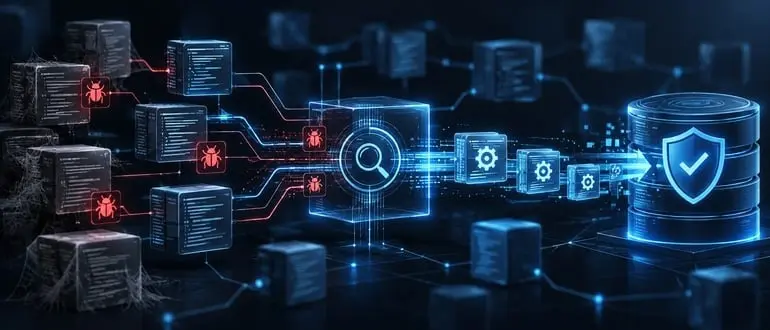
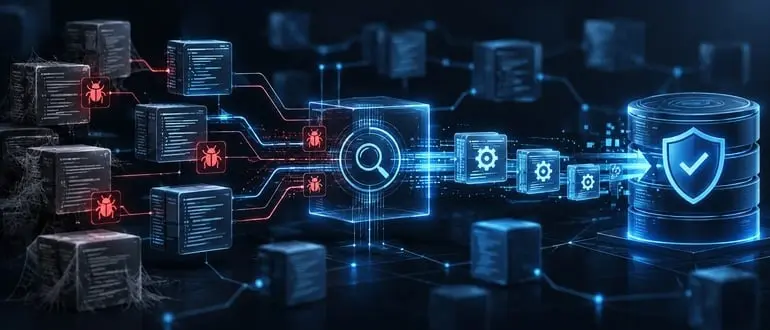
As developer velocity spikes due to AI coding assistants, pull requests arrive daily, if not hourly. Yet, enterprise quality assurance (QA) departments remain structurally isolated from the modern development lifecycle. This creates a dangerous divergence: code is written in days, but testing takes weeks. Enterprises are forced to choose between shipping code with insufficient validation or missing market windows entirely.
Duke confirmed during the panels that the release gap is compounding precisely because AI-generated app modifications occur at a weekly or daily cadence. Without integrated, scalable testing frameworks that can handle this velocity without sacrificing safety, enterprise confidence degrades.
Supporting Context & Metrics: The Tension Between Determinism and Non-Determinism
At the heart of modern automation architecture lies a fundamental philosophical and technical debate: Determinism versus Non-Determinism.
The Cost and Chaos of Unchecked AI
In the current rush to infuse enterprise workflows with artificial intelligence, many organizations make the mistake of applying Large Language Models (LLMs) and autonomous agents indiscriminately. However, as Robohn and the UiPath panel emphasized, thinking and architectural reasoning are expensive.
Running an LLM-based agent for a task that requires a simple, repeatable, binary check is inefficient, computationally expensive ("burning tokens" unnecessarily), and introduces dangerous variability. In mission-critical environments—whether executing a software regression test or deploying a Border Gateway Protocol (BGP) route change across a data center fabric—unpredictability is an unacceptable liability. When a deterministic outcome is required, a non-deterministic mechanism should not be tolerated.
The Hybrid Solution: Robots vs. Agents
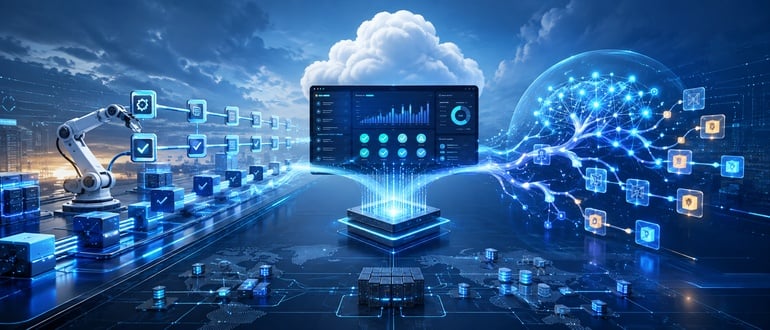
UiPath Test Cloud directly tackles this tension by cleanly separating its automation engine into two distinct operational paradigms:
- Deterministic "Robots": These function much like the Python scripts familiar to NetDevOps engineers. They execute predefined logic step-by-step, guaranteeing absolute consistency, high speed, and repeatable outcomes without requiring real-time LLM inference during execution. They are ideal for heavy-lifting regression tasks where the workflow is well-defined.
- Non-Deterministic "Agents": These introduce agentic reasoning capable of handling ambiguity and dynamic change. Analogous to a robotic vacuum cleaner navigating around unexpectedly moved furniture, AI agents excel where flexibility is paramount—such as adapting to subtle UI changes or interpreting unstructured inputs.
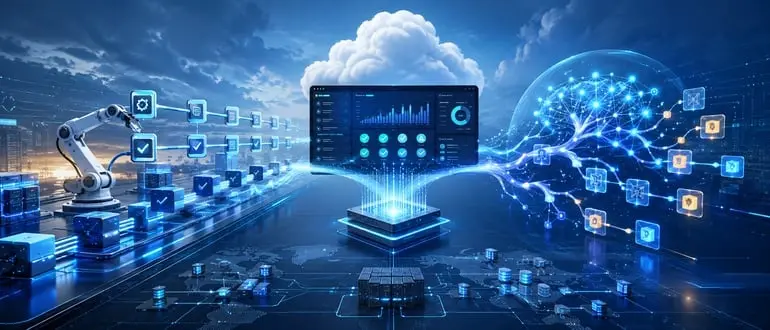
By allowing quality engineers and automation architects to select the right tool for the specific sub-task—deploying robots for heavy, reliable lifting and agents for complex, ambiguous reasoning—platforms like UiPath Test Cloud achieve an optimal balance of cost, speed, and reliability.
Official Statements and Expert Perspectives
The intersection of software quality assurance and infrastructure management prompted vital commentary during and after the showcase event.
Reflecting on the core philosophy of UiPath’s hybrid approach, Scott Robohn noted:
"There is significant pressure in many IT domains to automate with agents and LLMs, but we shouldn’t accept unnecessary variability or burn tokens on reasoning when a deterministic script or robot can execute a predefined procedure with greater predictability and repeatability."
Robohn emphasized that the true hallmark of an elite enterprise architecture platform is user control. Giving engineers the granularity to dictate where and how intelligence is applied prevents runaway cloud consumption costs and preserves operational integrity.
Echoing these operational realities, Josh Duke of UiPath addressed the structural friction faced by modern QA teams:
"The release gap is widening because the increasing frequency of AI-generated application changes occurs on daily or weekly cycles, placing unprecedented pressure on quality assurance teams that are, in most organizations, still not fully integrated into the modern development lifecycle."
Duke highlighted that closing this gap requires an ecosystem built not just for raw speed, but for intelligent, adaptable orchestration that bridges legacy operational silos.
Future Outlook: Systems Thinking and NetDevOps
As enterprise IT infrastructure grows increasingly complex, the divisions separating software development, network engineering, and cybersecurity are dissolving. The insights gained from the UiPath Test Cloud showcase point toward a broader industry evolution driven by systems thinking.
Cross-Pollination Across IT Disciplines
The greatest value of multi-domain technical forums—such as Tech Field Day—lies in cross-fertilization. By observing how software testing toolsets solve massive regression challenges, infrastructure engineers can reimagine how network configuration validation, disaster recovery simulations, and infrastructure-as-code (IaC) pipelines are managed.
Applying software testing principles to NetDevOps introduces a new level of resilience:
- Pre-deployment Simulation: Utilizing deterministic automated testing to validate network topologies and configuration templates before a single packet is routed in production.
- Intelligent Error Handling: Deploying agentic AI models to analyze anomalous network telemetry logs or traffic spikes, while relying on hard-coded scripts to execute automated remediation playbooks.
The Elevated Role of AI in Enterprise Strategy
Looking forward over the next several years, artificial intelligence will transition from a standalone novelty into an overarching architectural partner. Rather than simply serving as a code generator or a chatbot, AI will act as a system-wide coordinator.
By elevating our perspectives from isolated technical silos to holistic, cross-category systems thinkers, IT leaders can leverage AI to map the dependencies between application logic, cloud infrastructure, and underlying network fabrics.
Enterprise Actionable Takeaway
Organizations looking to future-proof their operations against the ever-expanding release gap must audit their automation strategies today. Avoid the trap of applying LLMs universally; instead, adopt a hybrid architecture that pairs rock-solid deterministic automation with targeted, high-value agentic reasoning.
For industry professionals eager to see these concepts translated into real-world enterprise deployments, UiPath is hosting its flagship annual event, FUSION, scheduled for September 22–25, 2026, at the Wynn Las Vegas. The event will feature customer case studies, deep-dive technical sessions, and live demonstrations of how hybrid automation is redefining the boundaries of modern IT operations.