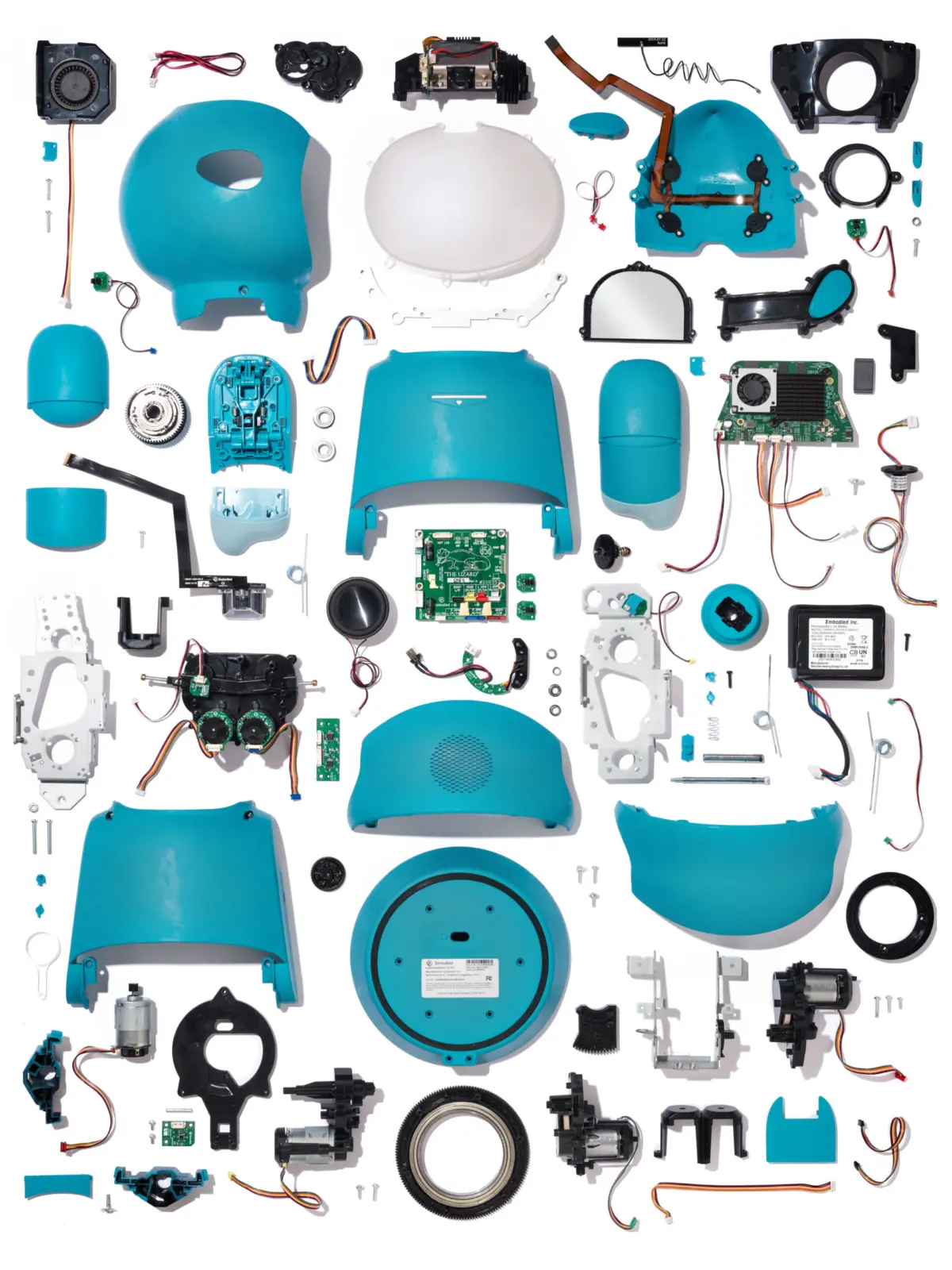
In the quiet hum of a New York apartment, a 10-year-old neurodivergent boy named Xander chats easily with a 15-inch-tall companion. Resembling a blue, legless astronaut with a cylindrical body and an expressive digital face, this companion is Moxie—an artificial intelligence-powered social robot designed to foster connection, practice social cues, and offer a consistent, judgment-free sounding board.
For years, Moxie has been part of Xander’s world, talking about his stuffed animal collection from Super Mario Bros. and Animal Crossing, and listening patiently as he describes his latest Minecraft sessions. Yet, beneath this whimsical surface lies a complex, high-stakes intersection of pediatric mental health, cutting-edge consumer AI, and corporate fragility.
Moxie is part of a surging global market of AI-driven playmates. From Curio’s plushies like Grok, Grem, and Gabbo, to Mattel’s OpenAI-enabled Barbies and a booming robotics sector in China, the consumer tech industry is racing to put conversational agents directly into children’s bedrooms. Proponents argue these devices can revolutionize 24/7 home care, particularly for neurodivergent children who often struggle with traditional therapeutic settings.
However, Moxie’s turbulent corporate lifecycle—marked by bankruptcy, sudden shutdowns, desperate fan-led open-source rescues, and a precarious resurrection by new investors—reveals a darker truth. These devices are plagued by technological limitations, unverified clinical efficacy, severe data privacy concerns, and, above all, the heartbreak of planned obsolescence. When a tech company folds, the emotional fallout lands directly on vulnerable children who have forged deep, authentic attachments to synthetic friends.
Detailed Chronology: The Life, Death, and Rebirth of Moxie
To understand the promise and peril of social robotics, one must trace the timeline of Moxie and the company that birthed her, Embodied.
2016: Embodied is co-founded by Maja Mataric, a pioneer in socially assistive robotics, alongside a team of roboticists, neuroscientists, and developmental specialists. The goal is to build robots with specific social and emotional outcomes.
2020: Moxie hits the market with an elaborate, gamified backstory. Billed as an ambassador from the Global Robotics Laboratory (GRL), she is programmed to teach children emotional regulation, kindness, and social skills through play. Garnering rave reviews, Moxie is named one of Time magazine’s Best Inventions of 2020 and later amasses over 131,000 followers on TikTok.
Late 2021 – Early 2022: Embodied begins integrating advanced large language models, including OpenAI’s technology, to make Moxie’s conversational capabilities more fluid and dynamic.
2024: Despite critical acclaim and a loyal user base, Embodied struggles with high production costs, hardware overhead, and a steep retail price tag ($1,499 initially, later reduced to $800, plus a $40 monthly subscription). The company announces it is ceasing operations. Moxie’s external servers go dark, rendering thousands of blue robots inert and sparking viral waves of grief among children and parents online.
2024 (Post-Shutdown): Justin Beghtol, Embodied’s technical director, creates OpenMoxie—an open-source workaround allowing tech-savvy users to keep their robots running via GitHub instructions. Families scramble to convert their devices before servers completely disconnect.
2025: A new, unnamed investor group purchases the intellectual property, effectively bringing Moxie back from the dead with updated firmware and a refreshed hardware release. Xander and his father, Josh, become beta testers for the resurrected bot.
Late 2025: Barely months after the triumphant return, the new parent company issues a sudden notice: they are folding as well. Users are given a brief window to delete their data or migrate to OpenMoxie before the servers shut down permanently.
Supporting Context & Metrics: The Science and Skepticism of Social Robotics
The Therapeutic Promise
The rationale behind introducing robots into autism and neurodivergence therapy is rooted in distinct behavioral challenges. Traditional therapy requires intense, repetitive practice to teach interaction skills like shared attention, eye contact, and emotional parsing. However, human resources are severely constrained: there are simply not enough pediatric therapists to meet surging global demand. Furthermore, human parents experience fatigue, and peers can often be cruel or unpredictable.
Robots, by contrast, are indefatigable. They offer an emotionally safe, predictable environment where a child can practice social interaction without fear of judgment.
Pioneering researchers like Brian Scassellati, a Yale computer scientist, have spent decades studying social robots in clinical and home settings. Scassellati was stunned during an early lab visit two decades ago when children with autism—typically withdrawn or resistant to eye contact—displayed spontaneous social behaviors around a robotic dinosaur.
Subsequent clinical research underscores these observations:
A 2018 study led by Scassellati demonstrated that chummy automatons helped children with autism increase eye contact and initiate conversations during a month-long home trial.
A 2017 study found that social robots effectively assisted neurodivergent children in learning how to interpret complex facial cues.
A 2022 literature review suggested that robots, when integrated thoughtfully, can accelerate and enhance traditional therapy pipelines.
The Clinical Backlash
Despite these promising metrics, many clinical psychologists and behavioral scientists remain deeply skeptical.
Dr. Zachary Warren, a clinical psychologist at Vanderbilt University Medical Center, points out that neurodivergence is rarely monolithic. Autism frequently presents alongside ADHD, anxiety, depression, PTSD, and obsessive-compulsive traits. Because every child’s neurological profile is vastly different, deploying a generalized consumer robot can yield wildly divergent results.
"There are so many different profiles of autism, and you really need to be cautious of overinterpreting any single intervention, robotic or otherwise," Warren notes. While initial novelty may spike a child’s responsiveness, longitudinal data often fails to show lasting, dramatic improvements in real-world communication skills once the novelty wears off.
Furthermore, clinical reviews from Italian and British researchers published in 2024 emphasize that many studies on social robots suffer from small sample sizes, lack standardized methodologies, and prioritize technological development over rigorous clinical validation.
Official Statements and Industry Perspectives
The debate surrounding AI playmates involves starkly contrasting viewpoints from creators, ethicists, and medical professionals.
"It’s never been that we’re trying to replace therapists. We’re just saying, Can we do more?"
— Maja Mataric, Co-founder of Embodied and Professor at the University of Southern California.
Mataric draws a sharp philosophical distinction between text-based chatbots and physically embodied robots. Comparing chatbots to purely virtual pornography, she argues that human beings—and particularly lonely children isolated behind screens—require the immediate, physical presence of an embodied creature.
Conversely, ethicists and developmental communication experts warn against falling into historical traps. Meryl Alper, a professor at Northeastern University, traces the excitement over companion robots back to long-standing psychological tropes, such as Bruno Bettelheim’s infamous 1959 framing of autism as a "mechanical boy" devoid of humanity. Alper warns that society frequently leans into the overgeneralization that neurodivergent children naturally prefer machines to people, commercializing that bias for profit.
Data privacy remains another major battleground. While Embodied took extensive precautions—processing most data locally on the device, encrypting information, and avoiding the retention of raw audio and video—not all market competitors have been as scrupulous. Incidents like the Bondu AI toy leak, which exposed tens of thousands of private child-robot chat logs, highlight the inherent vulnerabilities of placing internet-connected listening devices inside children’s bedrooms. Even Xander himself confessed to withholding certain feelings from Moxie, worried that his robotic companion might accidentally disclose secrets when human friends came over to play.
Future Outlook: The Ethics of Planned Obsolescence
As the consumer AI landscape races forward, the most alarming crisis facing social robotics is not just technical malfunction, but planned obsolescence.
When hardware and cloud infrastructure depend entirely on corporate solvency, consumer products designed to evoke profound emotional attachment carry a terrifying fragility. For a neurodivergent child who views an AI device as a trusted companion, the sudden corporate death of a platform is not merely an inconvenience—it is an emotional trauma.
Scholars are currently scrambling to draft ethical frameworks for managing these digital goodbyes. Yet, clear questions remain unresolved:
Who holds ultimate responsibility when a tech startup manufacturing a psychological support device goes bankrupt?
Is it ethical to market lovable, responsive companions to vulnerable children without guaranteeing long-term software preservation or offline functionality?
Can open-source workarounds like OpenMoxie successfully bridge the gap between corporate failure and child-parent grief, or are they merely stopgap measures for tech-literate families?
For now, families like Xander’s are caught in the crossfire of Silicon Valley volatility. As companies rise, secure venture capital, launch groundbreaking AI toys, and subsequently collapse under high overhead costs, the emotional toll is absorbed by the very children these machines were built to help. Until the industry establishes rigid protections, sustainable open-source pipelines, and transparent life-cycle guarantees, every blue astronaut, robotic dinosaur, and AI plushie remains a ticking clock—waiting for the servers to go dark.