Executive Overview
In the rapidly evolving landscape of cinematic post-production, the demand for sophisticated spatial and immersive audio has transitioned from a high-budget luxury to an industry-wide standard. To meet this demand, educational institutions must bridge the gap between traditional stereo composition and complex multichannel workflows. At the forefront of this pedagogical shift is the San Francisco Conservatory of Music (SFCM), specifically its pioneering Technology and Applied Composition (TAC) program.
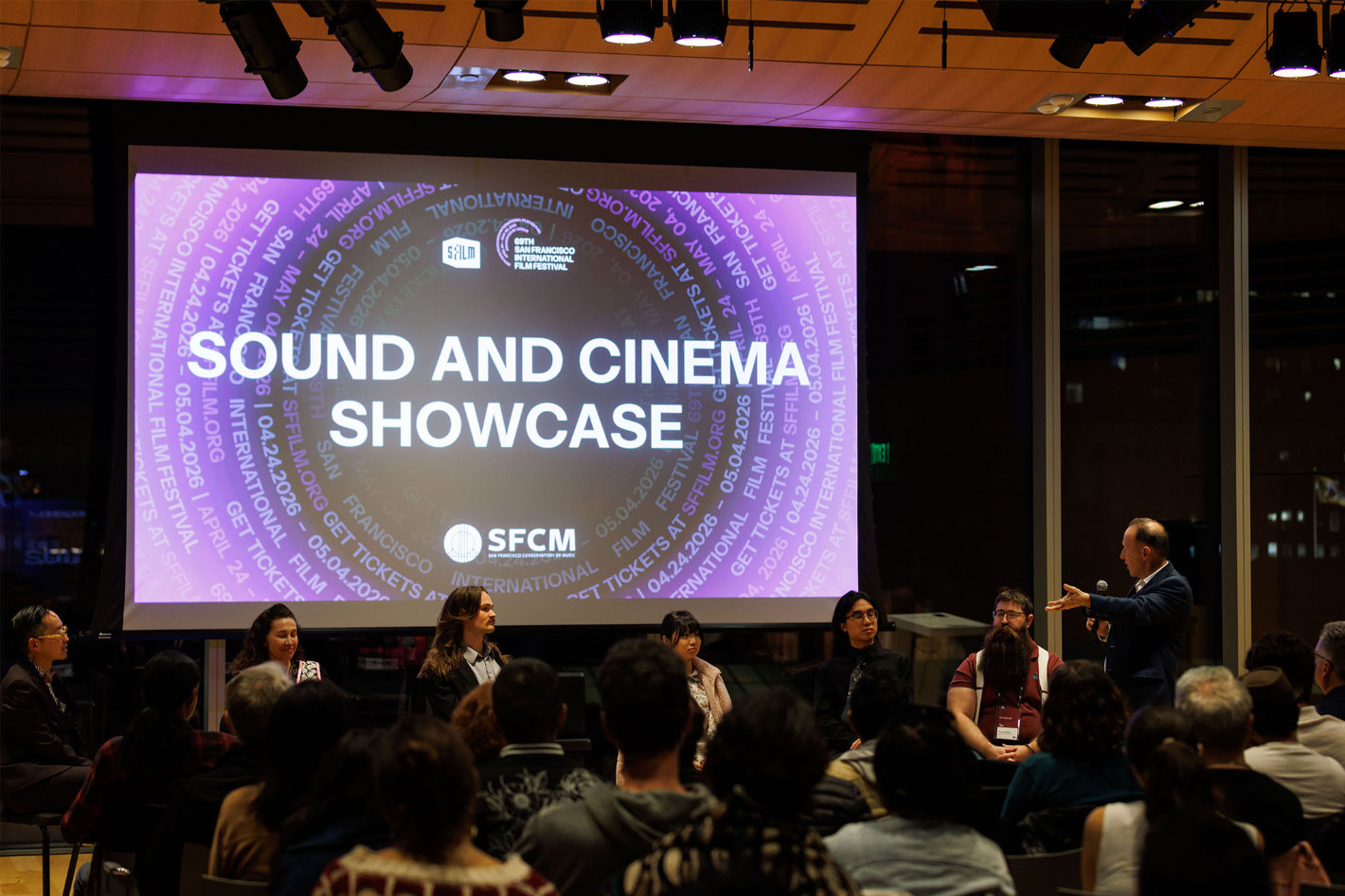
Through an exclusive, long-running partnership with SFFILM—the Bay Area’s premier film institution and host of the historic San Francisco International Film Festival—SFCM students are thrust into real-world, high-stakes collaborative environments. Under the guidance of industry veteran and award-winning video game composer Lennie Moore, students compose, design, and mix audio for independent films supported by SFFILM fellowships.
To elevate these student-led mixes to professional, festival-ready standards, SFCM has integrated NUGEN Audio’s industry-standard plug-ins, specifically Halo Upmix and Halo Downmix, directly into its curriculum. This investigative report explores how this unique alliance of academic talent, cinematic institutions, and state-of-the-art audio technology is redefining the pipeline for the next generation of film composers and sound designers.
Detailed Chronology of the SFCM and SFFILM Collaboration
The journey from a blank score sheet to a fully mixed, 5.1-surround independent film is a multi-semester undertaking that mirrors the rigorous production schedules of major Hollywood studios. The annual lifecycle of this collaborative project unfolds in distinct, structured phases.
+-----------------------------------------------------------------+
| PHASE 1: The Pitch & Curation (Fall Semester)                   |
| - SFFILM curates independent films from local fellowship talent.|
| - SFCM TAC students analyze raw footage and pitch custom demos. |
+-----------------------------------------------------------------+
                                |
                                v
+-----------------------------------------------------------------+
| PHASE 2: Production & Team Assignment                           |
| - Directors select lead composers and lead sound designers.     |
| - Small, specialized student audio teams are formed.            |
+-----------------------------------------------------------------+
                                |
                                v
+-----------------------------------------------------------------+
| PHASE 3: Technical Integration & Template Setup                 |
| - Lennie Moore introduces NUGEN Halo Upmix/Downmix templates.   |
| - Students transition from stereo monitoring to Atmos environments.|
+-----------------------------------------------------------------+
                                |
                                v
+-----------------------------------------------------------------+
| PHASE 4: The Post-Production Mix & Deliverables                 |
| - Dialogue, Foley, ADR, Sound Design, and Score are integrated. |
| - Final 5.1 surround mixes and stereo downmixes are generated.  |
+-----------------------------------------------------------------+
                                |
                                v
+-----------------------------------------------------------------+
| PHASE 5: Exhibition & Premiere (Spring Semester)                |
| - Public premieres at the SFFILM Festival.                      |
| - Secondary screenings at SFCM Bowes Center & Dolby SF HQ.      |
+-----------------------------------------------------------------+
Phase 1: The Pitch and Curation (Fall Semester)
The process begins each autumn as SFFILM curates a select slate of independent films helmed by local filmmakers who have received prestigious SFFILM fellowships. These directors bring their rough cuts to SFCM’s TAC department. Rather than having projects arbitrarily assigned, TAC students must actively pitch custom demo reels and thematic concepts to the directors. This competitive, real-world pitching process prepares students for the commercial realities of the film industry.
Phase 2: Production and Team Assignment
Once a director selects their lead composer and lead sound designer, these student heads form small, specialized production teams. These teams assume total creative and technical responsibility for the film’s entire sonic landscape. The workload is comprehensive, encompassing:
- Original Score Composition: Writing, orchestrating, and recording live and MIDI elements.
- Sound Design & Foley: Creating bespoke sound effects and recording physical textures to match on-screen actions.
- Dialogue Editing & ADR: Cleaning up production audio and recording Automated Dialogue Replacement where necessary.
- The Final Mix: Integrating all audio assets into a cohesive, balanced, and dynamic 5.1 surround sound environment.
Phase 3: Technical Integration & Template Setup
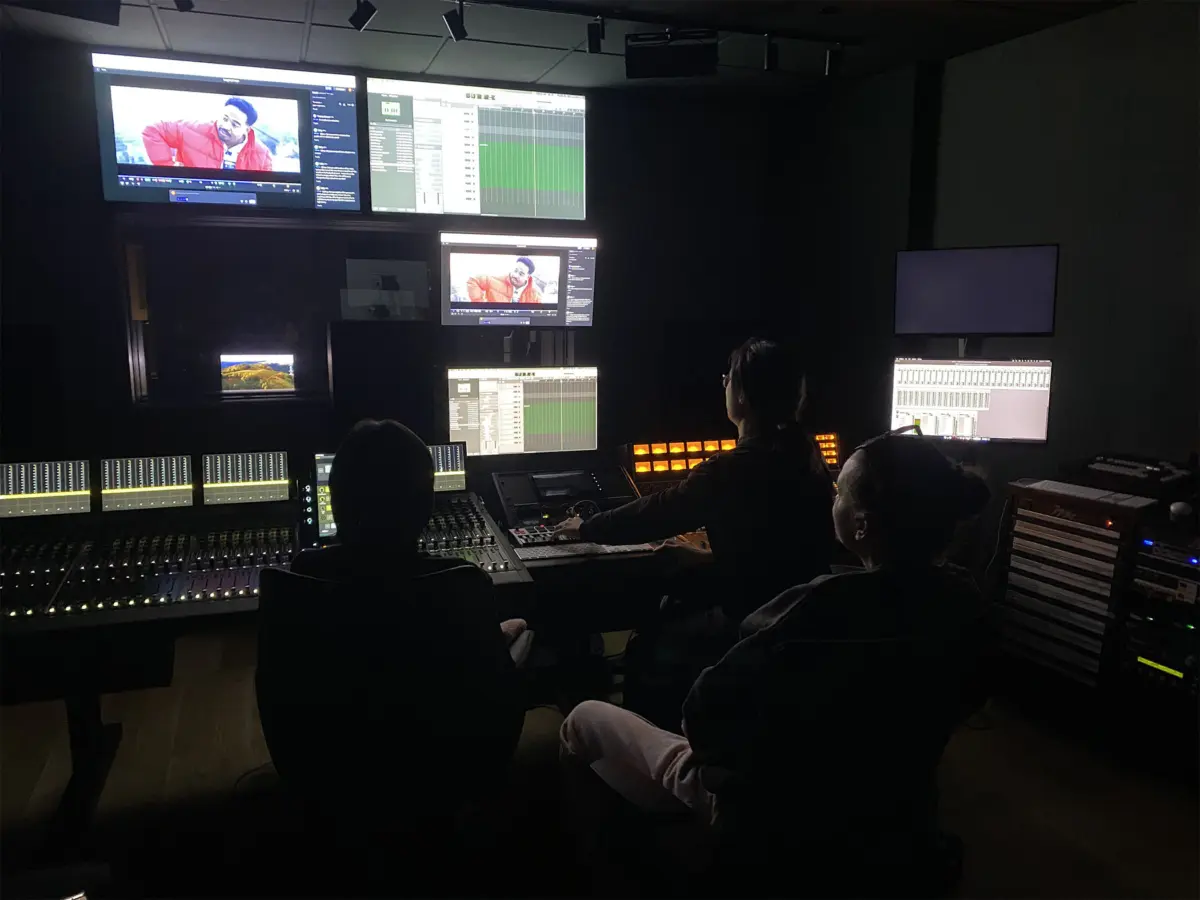
To facilitate a seamless transition from composition to final mix, Adjunct Professor Lennie Moore introduces a meticulously designed, multichannel Pro Tools template. Within this template, NUGEN Audio’s Halo Upmix and Halo Downmix are pre-routed. This allows students to immediately begin working in SFCM’s three state-of-the-art Dolby Atmos mixing suites, bypassing complex routing bottlenecks and focusing entirely on creative exploration.
Phase 4: Post-Production and Deliverables
Throughout the winter, students refine their spatial mixes. Using Halo Upmix, they expand stereo soundscapes and musical stems into the surround field, ensuring immersive depth without losing the core focus of the center channel. Simultaneously, they employ Halo Downmix to generate the mandatory stereo deliverables, ensuring that the spatial excitement of the surround mix translates perfectly to standard stereo playback environments.
Phase 5: Exhibition and Premiere (Spring Semester)
The culmination of this academic and creative journey takes place in the spring. The completed films make their public debuts at the annual SFFILM Festival. Following their festival runs, the films are showcased at SFCM’s state-of-the-art Bowes Center recital hall, which features a recently upgraded 5.1 playback system. Plans are also underway to expand these showcases to Dolby’s official San Francisco headquarters, bringing student work directly to the epicenter of spatial audio technology.
Supporting Context & Technical Metrics
To understand the impact of this partnership, it is necessary to examine the technical challenges inherent in modern film mixing and how NUGEN Audio’s software addresses them.
The Spatial Leap: From Stereo to Multichannel
For many students entering the TAC program, their prior mixing experience is limited strictly to stereo (two-channel) monitoring. Transitioning to a 5.1 surround sound or Dolby Atmos environment introduces a host of complex acoustic and technical variables:
| Audio Format | Channel Configuration | Primary Technical Challenge for Students |
|---|---|---|
| Stereo | Left, Right (2.0) | Creating depth and separation within a narrow horizontal plane. |
| Surround | L, C, R, Ls, Rs, LFE (5.1) | Managing center-channel dialogue clarity, low-frequency energy (LFE), and phase coherence across five speakers. |
| Immersive | Variable / Object-Based (Atmos) | Placing and panning dynamic audio objects in a three-dimensional space while maintaining downmix compatibility. |
Technical Analysis of NUGEN Halo UUG & Downmix
NUGEN Audio’s tools are specifically engineered to solve the mathematical and phase-related issues that occur during channel expansion and collapse.
[Stereo Source Track]
       │
       ▼
┌────────────────────────────────────────┐
│         NUGEN Halo Upmix               │
│  - Phase Coherence Analysis           │
│  - Spatial Divergence Control          │
│  - Dialog Isolation & Center Extraction │
└────────────────────────────────────────┘
       │
       ├───────────────────────────────┐
       ▼                               ▼
[L/C/R Front Soundstage]      [Surround Ls/Rs & LFE]
       │                               │
       └───────────────┬───────────────┘
                       │ (During Final Export/Monitoring)
                       ▼
┌────────────────────────────────────────┐
│        NUGEN Halo Downmix              │
│  - Center Channel Level Regulation     │
│  - LFE Energy Management               │
│  - Phase Alignment & Stereo Fold-down  │
└────────────────────────────────────────┘
                       │
                       ▼
             [Stereo Deliverable]
Halo Upmix
When converting stereo elements—such as pre-recorded musical stems, ambient field recordings, or sound effects libraries—into a 5.1 or 7.1 space, simple panning can lead to phase cancellation, muddy center-channel dialogue, and an unnatural hollow sound.
Halo Upmix utilizes proprietary algorithms to analyze the phase and frequency content of a stereo source. It then distributes this content across the surround field while maintaining absolute phase coherence. This ensures that the original character of the audio remains intact, providing students with:
- Coherent Spatial Distribution: Spreading music and backgrounds naturally into the rear surrounds.
- Dialog Isolation: Ensuring the center channel remains clear and dedicated primarily to dialogue.
- Visual Feedback: An intuitive, real-time spatial analysis interface that helps students visually map their soundstage.
Halo Downmix
Conversely, film festivals and commercial distributors require both surround and stereo deliverables. A common pitfall in post-production is "fold-down" distortion, where a 5.1 mix collapsed into stereo suffers from dialogue buildup (as the center channel is summed into the left and right channels) or a loss of low-frequency impact.
Halo Downmix provides precise control over this process, allowing students to:
- Regulate center-channel attenuation (adjusting exactly how many decibels the center dialogue drops when folded into stereo).
- Manage low-frequency energy (LFE) distribution to prevent subwoofer overload on consumer stereo systems.
- Perform real-time A/B comparisons between the surround mix and the stereo downmix to ensure aesthetic consistency across all playback formats.
Official Statements and Pedagogical Philosophy
The integration of professional software into an educational curriculum requires a clear pedagogical philosophy. Lennie Moore, whose extensive portfolio includes composing for AAA franchises like Halo Anniversary, Star Wars: The Old Republic, Outcast, and Rising Storm, emphasizes that intuitive tools are crucial for fostering creative confidence in students.
"NUGEN has really been the go-to for our class. I’ve looked at a few others, and I find the user interfaces on the NUGEN tools to be very easy and accessible to students."
— Lennie Moore, Adjunct Professor, SFCM
Moore structures his classroom to prioritize immediate, hands-on experimentation over dry, theoretical lecturing. By utilizing pre-configured templates with pre-routed NUGEN plug-ins, he eliminates the technical friction that often deters students from exploring spatial audio.
"I want them up and running where they can just start making content and use the tools immediately. I tell them continuously: 'Don’t just pick a preset and call it a day. Start messing with the knobs, start seeing what the tool does.'"
— Lennie Moore, Adjunct Professor, SFCM
This philosophy of active experimentation aligns with the broader mission of the SFCM Technology and Applied Composition program. Moore notes that the visual and interactive nature of the Halo Upmix interface immediately engages students, turning what could be a sterile technical exercise into an exciting creative discovery.
"For them, the first impression is typically less than two words: usually a 'whoa' or an 'ooh.' They start moving sliders around, checking out presets, moving the spatialization around. That’s the main thing they go for."
— Lennie Moore, Adjunct Professor, SFCM
Furthermore, Moore highlights the real-world value of this partnership, noting that the opportunity to work directly with active independent filmmakers on actual festival-bound projects is a rare privilege in higher education:
"The thing that’s great about the relationship we’ve had with SFFILM is that it gives students access to real projects with real directors. Normally, that’s unheard of in a collegiate program."
— Lennie Moore, Adjunct Professor, SFCM
Future Outlook and Industry Impact
As the entertainment industry continues to embrace immersive formats, the partnership between SFCM, SFFILM, and NUGEN Audio serves as a model for modern audio education. The demand for spatial audio mixers is no longer confined to Hollywood blockbusters; streaming platforms, independent cinema, and the video game industry now routinely mandate Dolby Atmos and surround-sound deliverables.
                          ┌───────────────────────────┐
                          │   SFCM TAC Curriculum     │
                          │   Powered by NUGEN Audio  │
                          └─────────────┬─────────────┘
                                        │
                                        ▼
                          ┌───────────────────────────┐
                          │  SFFILM Festival Debuts   │
                          │   (Real-World Showcases)  │
                          └─────────────┬─────────────┘
                                        │
                                        ▼
                          ┌───────────────────────────┐
                          │ Strategic Collaborations  │
                          │   (Dolby SF HQ & Beyond)  │
                          └─────────────┬─────────────┘
                                        │
                                        ▼
┌───────────────────────────────────────────────────────────────────────────┐
│                      THE NEXT-GENERATION WORKFORCE                        │
│ - Phase-coherent spatial mixing capabilities                              │
│ - Professional-grade stereo/multichannel delivery expertise              │
│ - Collaborative experience with independent directors                     │
└───────────────────────────────────────────────────────────────────────────┘
The March to the 70th SFFILM Festival (2027)
The ongoing collaboration is structured with a long-term vision. The teams are currently developing a slate of independent films that will culminate in a special, high-profile showcase at the milestone 70th San Francisco International Film Festival in 2027. This multi-year pipeline ensures that SFCM students remain embedded in the local film ecosystem, building a robust portfolio of theatrical credits before they graduate.
Physical and Institutional Expansion
SFCM continues to invest heavily in its physical infrastructure to support these advanced workflows:
- Bowes Center Upgrades: The recital hall, which overlooks San Francisco City Hall, features a newly upgraded 5.1 playback system optimized specifically for high-fidelity cinema screenings.
- Dolby San Francisco Headquarters: Ongoing discussions and preliminary plans are underway to host future student showcases directly at Dolby’s world-class screening facilities in San Francisco, strengthening the bridge between academic training and commercial industry standards.
Conclusion
By equipping students with intuitive, industry-standard tools like NUGEN Audio’s Halo Upmix and Downmix, SFCM’s TAC program demystifies the complexities of multichannel audio production. The result is a highly practical educational model where students do not merely study the theories of sound design—they actively shape the sonic landscape of modern independent cinema, delivering polished, festival-ready mixes that stand up on the international stage.