






Executive Overview
The intersection of artificial intelligence and the entertainment industry is no longer a distant theoretical frontier; it is an active, high-stakes battleground. As the blistering heat of Las Vegas bakes the desert outside, the inside of the Venetian Las Vegas is radiating an entirely different kind of thermal energy. On this latest episode of the Daily Variety podcast, Variety’s dedicated Artificial Intelligence beat reporter, Corbin Bolies, phones in directly from the bustling floor of the high-profile AI4 conference. Surrounded by industry leaders, technologists, and staunch digital evangelists, Bolies provides a boots-on-the-ground assessment of a paradox defining modern entertainment: the boundless, feverish excitement over generative AI’s potential is matched only by the profound polarization it triggers across the creative landscape.
For Hollywood, the debate over artificial intelligence is existential. Studios, guilds, showrunners, and below-the-line artists are locked in a tense dialogue about what the future holds as machine learning algorithms increasingly infiltrate the pipeline of content creation. On one side are the tech optimists who view generative AI as the ultimate force multiplier—a suite of tools designed to democratize production, slash bloated post-production budgets, and seamlessly bridge linguistic divides through advanced localization. On the other side stand legions of creatives haunted by the specter of "AI slop," copyright infringement through non-consensual data scraping, and the ultimate economic displacement of human talent by algorithms engineered to mimic human emotion and artistry.
Bolies made the journey to Sin City not merely to observe the macro-trends of the broader tech sector, but to moderate a pivotal discussion with filmmaker Scott Mann, CEO of the AI tech firm Flawless. Mann and a vanguard of forward-thinking creators are attempting to chart a middle course through this cultural minefield—one that prioritizes human authorship while leveraging technological efficiency. Yet, as the AI4 conference demonstrates, the implications of this technological revolution stretch far beyond the silver screen, bleeding into hardware developments, humanoid robotics, and a complete reimagining of physical labor. As Hollywood grapples with the dawn of this new era, the industry stands at a definitive crossroads: it can either proactively shape the tools of tomorrow or fall victim to them.
Detailed Chronology: From the Digital Beat to the Las Vegas Floor
To understand how Variety is covering the seismic shifts reshaping the entertainment industry, one must trace the timeline of the publication’s strategic adaptations. Earlier this year, in a move that signaled a watershed moment for trade journalism, Variety appointed Corbin Bolies as its inaugural AI beat reporter. The creation of the role underscored a stark reality: artificial intelligence is no longer a niche subsection of the technology desk; it is the dominant economic, legal, and creative story of the decade for film, television, digital media, and music.
Bolies’s deployment to the AI4 conference in Las Vegas represents the natural evolution of this reporting mandate. The annual conference draws thousands of enterprise leaders, software engineers, ethicists, and venture capitalists, serving as a barometer for how fast emerging technologies are moving from research laboratories into commercial markets. For an entertainment journalist, embedding within AI4 is essential for tracking how Silicon Valley’s rapid-fire innovations inevitably crash against the shores of Los Angeles’s traditional studio system.
The physical journey to Las Vegas culminated in a high-profile moderation engagement: a session alongside filmmaker and Flawless co-founder Scott Mann. Mann has spent recent years attempting to demystify generative AI for a skeptical Hollywood community that views technological intervention with deep suspicion. The chronology of Mann’s work—moving from traditional feature directing (Fall, Heist) into pioneering neural video technology—mirrors Hollywood’s broader trajectory. It is a transition born out of necessity, driven by the mounting economic pressures facing independent and studio-backed productions alike, yet complicated by the trauma of recent labor strikes and ongoing anxieties over intellectual property theft.
As Bolies navigated the expansive exhibition halls of the Venetian, he documented a dual reality. In private boardrooms and packed keynote arenas, the gospel of generative AI was preached with religious fervor. Executives detailed efficiency gains, predictive modeling for box office success, and hyper-personalized content delivery systems. But step away from the corporate optimism, and the undercurrents of apprehension were palpable. Every conversation regarding algorithmic efficiency inevitably pivoted to the elephant in the room: the protection of human livelihoods, the ethics of model training, and the preservation of authentic cultural expression in an era increasingly saturated by synthetic media.
Supporting Context & Metrics: The Promise and Peril of Generative AI in Production
To contextualize the tensions on display at AI4, one must examine the specific mechanics of where generative AI is currently making inroads within the entertainment supply chain. The industry’s apprehension is not unfounded; it is rooted in tangible anxieties regarding copyright, economic displacement, and creative dilution.
The Threat Matrix: Scraping, Slop, and Displacement
For traditional Hollywood creatives, the primary grievances against generative AI fall into three distinct categories:
- Model Training and Copyright Infringement: Major tech companies and specialized AI startups have historically trained their foundational models on vast corpuses of internet data, frequently including copyrighted screenplays, cinematic imagery, musical scores, and performances without the explicit consent or compensation of the original creators. This practice has triggered massive class-action lawsuits and fierce resistance from writers, actors, and visual artists.
- The Rise of "AI Slop": As generative video, audio, and text models flood the digital ecosystem, industry veterans express deep concern over the degradation of artistic standards. The proliferation of low-effort, algorithmically generated content—colloquially termed "AI slop"—threatens to drown out nuanced human storytelling, cheapening the consumer experience and devaluing the arduous craft of professional filmmaking.
- Economic Displacement: The fear that studios will utilize generative AI to replace human labor—ranging from background actors and concept artists to writers’ room assistants and post-production crews—remains an open wound following the historic 2023 WAG and SAG-AFTRA strikes.
The Utility Argument: Targeted Post-Production Solutions
Conversely, firms like Scott Mann’s Flawless are positioning their technology not as a replacement for human creativity, but as a specialized, additive toolkit designed to solve intractable logistical and financial hurdles in post-production. Flawless specializes in tools that revolutionize visual localization and dubbing. Traditionally, translating a motion picture for international markets required costly, time-consuming re-shoots or awkward dubbing that compromised the integrity of the original actor’s performance.
By utilizing advanced neural rendering and AI-driven facial modification, Flawless’s technology allows films to be accurately dubbed into foreign languages while synchronizing the original actors’ lip movements and facial expressions to match the new audio track seamlessly. Proponents argue that such technology democratizes global distribution, allowing independent filmmakers to compete on a global scale without incurring multimillion-dollar post-production expenses.
Furthermore, generative AI tools are increasingly being deployed to streamline mundane, repetitive tasks—such as rotoscoping, wire removal, and audio cleanup—freeing human artists to focus on higher-level narrative and aesthetic choices. The friction in Hollywood today is not necessarily over these hyper-specific, efficiency-driven utilities, but over the slippery slope connecting benign post-production tools to fully autonomous content generation.
Official Statements and Industry Insights
The discourse at AI4, as captured by Corbin Bolies, highlights a desperate need for effective communication between the technology sector and the creative community. The chasm between Silicon Valley’s techno-optimism and Hollywood’s protective insularism remains wide, making the voices of bridge-builders crucial.
Bridging the Divide: Scott Mann on Intentional Integration
During their moderated session at the conference, filmmaker Scott Mann emphasized that the primary obstacle facing AI integration in Hollywood is an emotional and perceptual one.
"When people hear the word AI, their first thoughts are the extremes," Bolies reported from the event, summarizing Mann’s core thesis. "Scott’s hoping that Flawless and other filmmakers who are working in the same space as him can break through that noise and show that AI can be additive to Hollywood and helpful while keeping humans and creatives working in partnership with them."
Mann’s mission focuses on educating the creative community on how to navigate the technological conversation constructively. By framing AI as an instrument of amplification rather than a mechanism of erasure, innovators hope to steer the industry toward a collaborative framework. This approach requires unprecedented transparency from tech developers—including verifiable commitments to ethical data sourcing, fair compensation models, and ironclad guarantees of artist control.
The Hardware Horizon: Stepping Beyond Software
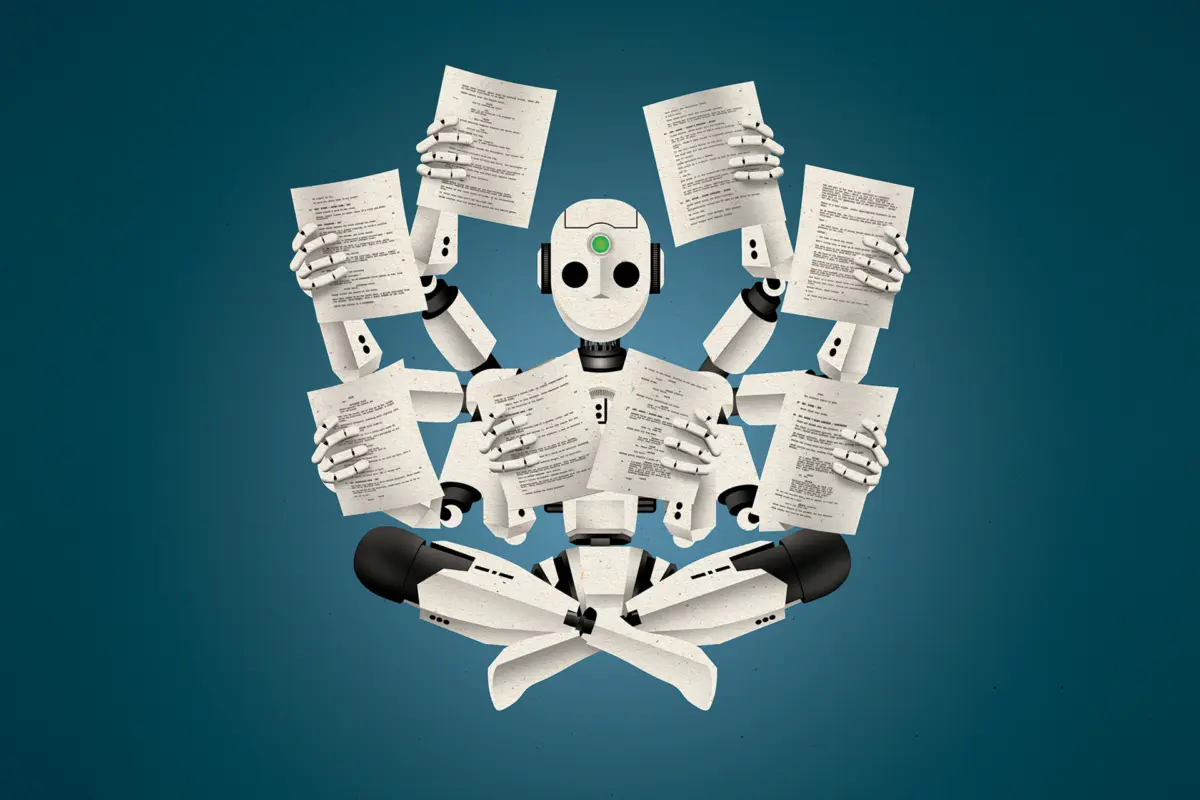
While much of the media’s attention has justifiably focused on generative software applications like large language models and neural video generators, the AI4 conference served as a stark reminder that the artificial intelligence revolution is aggressively expanding into the physical world. Bolies noted that the scope of the conference extended far beyond digital media into robotics and physical hardware, offering a glimpse into a future that feels plucked straight from science fiction.
"I’ve seen at least three different types of humanoid robots today alone — one that looks straight out of Will Smith’s [2004 thriller] I, Robot," Bolies observed during his dispatch. "They looked a little freaky to me, but it just shows what the mobility of these robotics are. We’ve seen AI on a software level, but on a hardware level, that’s going to be a big impact."
This convergence of artificial intelligence and physical robotics signals that the disruption currently rattling Hollywood is merely a precursor to a total restructuring of global labor and industrial infrastructure. The implications for entertainment production—ranging from automated grip and lighting hardware on studio backlots to robotic camera operators—are profound and largely unexplored.
Future Outlook: Navigating the Uncharted Territory of AI in Entertainment
As the dust settles on the AI4 conference and Corbin Bolies returns to Variety’s newsroom, the trajectory for artificial intelligence in entertainment is crystallizing into a complex, high-stakes narrative defined by several key trajectories:
- Regulatory and Legal Reckoning: The coming years will witness landmark legal battles that establish definitive precedents regarding copyright law, fair use, and generative data scraping. How courts and international legislative bodies rule on these matters will fundamentally dictate the economic viability of generative AI business models in Hollywood.
- The Evolution of Collective Bargaining: With studio contracts regularly coming up for renewal, labor unions will continue to demand stringent guardrails against algorithmic displacement. Future negotiations will likely focus on ownership rights, mandatory disclosure of AI tools in production pipelines, and enforceable protections for the likenesses and intellectual property of performers and writers.
- Redefining the Human Element: Ultimately, the long-term survival of traditional entertainment will depend on its ability to lean into what algorithms cannot replicate: authentic human lived experience, cultural nuance, and emotional resonance. While AI can optimize pixels and synthesize syntax, the appetite for genuinely human-authored storytelling remains resilient.
The task ahead for Variety’s dedicated AI beat reporter—and for the industry at large—is to maintain rigorous oversight as these technologies mature. The excitement humming through the halls of the Venetian Las Vegas proves that the future is arriving at breakneck speed. Whether that future serves to enrich human creativity or dilute it into algorithmic homogeneity will depend entirely on the choices Hollywood makes today.
To dive deeper into these issues, listen to the full conversation on Daily Variety, available now on iHeartPodcasts, Apple Podcasts, Variety’s YouTube Podcast channel, Amazon Music, Spotify, and all major podcast platforms.