By Chris Kerr | Senior Editor, News
Published: August 18, 2026
Executive Overview
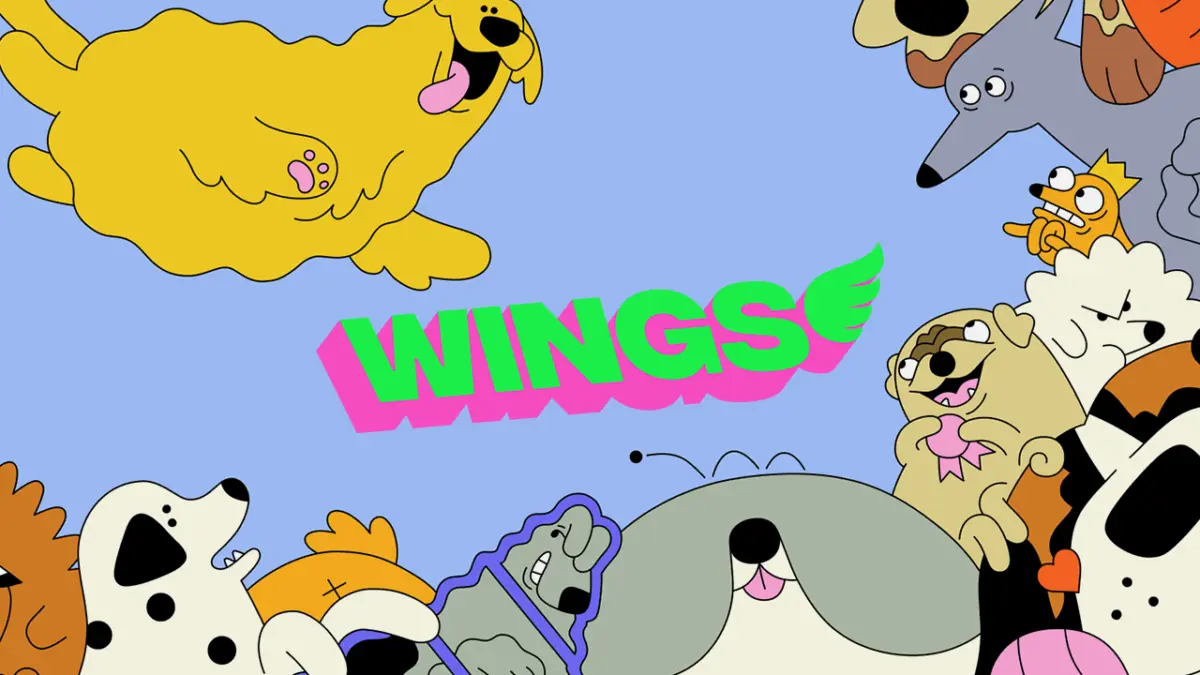
In an ongoing effort to adapt to a volatile and increasingly restrictive video game funding landscape, WINGS—the prominent investment fund dedicated to backing women and gender-marginalized game developers—has officially announced a comprehensive rebrand alongside a restructured suite of financing pathways. Designed to offer greater flexibility, transparency, and operational adaptability to indie teams, the overhauled strategy introduces three distinct models: white-label publishing, self-publishing partnerships, and targeted finishing funds.
As the games industry continues to weather a prolonged contraction marked by risk-averse venture capital, tightening publisher budgets, and frequent studio closures, WINGS’ pivot aims to demystify the capital acquisition process. By shifting away from rigid grant-style application cycles and toward rolling, commercial-first investments, the organization is positioning itself as both an ethical champion of underrepresented talent and a pragmatic commercial enterprise. Crucially, regardless of the investment pathway chosen, partner studios retain full creative and business control over their intellectual properties.
This article explores the mechanics of WINGS’ new funding structures, the economic realities of the modern games investment climate, and insights from CEO Astrid Refstrup on how sustainable, profit-driven investments can foster a more inclusive future for game development.
Detailed Chronology and Structural Shift
The path to WINGS’ 2026 rebrand and operational overhaul has been shaped by years of shifting developer needs and market turbulence. Since its inception, the organization has functioned as a vital financial lifeline for creators historically sidelined by traditional, homogeneous venture capital networks. However, as the economics of indie game development shifted dramatically through the mid-2020s, leadership recognized that a one-size-fits-all approach to funding was no longer sufficient.
Moving Away from Fixed Grant Windows
Historically, many equity-free funds, regional grants, and specialized incubators have operated on strict, periodic application rounds. While these windows provide structural convenience for administrators, they often leave developers stranded if a financial emergency arises mid-production outside of a submission window.
Under its newly unveiled framework, WINGS has codified a rolling submission policy. Developers can pitch their projects via the fund’s online portal at any time of the year, removing artificial bottlenecks and allowing for agile financial deployment.
The Financial Thresholds
To ensure that projects align with the fund’s portfolio management strategy, WINGS has established clear baseline parameters regarding budgets:
- Under $500,000: The fund ideally solicits pitches for projects where the total budget—including marketing and production expenses—does not exceed half a million dollars.
- Over $500,000: For larger, more ambitious undertakings, pitching teams must present a confirmed, viable supplementary finance plan before WINGS will consider moving forward with an investment.
The Three New Investment Pathways
To accommodate varying degrees of team experience, internal bandwidth, and production timelines, WINGS has formally categorized its financial backing into three distinct models. Every pathway guarantees that developers maintain total ownership of their creative and business vision.
+-----------------------------------------------------------------+
|                       WINGS INVESTMENT SUITE                    |
+------------------+---------------------+------------------------+
|   WHITE LABEL    |   SELF-PUBLISHING   |    FINISHING FUNDS     |
|    PUBLISHING    |     PARTNERSHIPS    |                        |
+------------------+---------------------+------------------------+
| For teams not    | WINGS covers dev &  | Cash injection for     |
| ready to self-   | marketing costs;    | games close to launch  |
| publish. Offers  | developers execute  | Budgets under $100k;   |
| GTM strategy,    | marketing, QA, &    | Release window in      |
| ads, & biz dev.  | localization.       | 3 to 6 months.         |
+------------------+---------------------+------------------------+
1. White-Label Publishing
The white-label model is specifically tailored for development teams that either lack the desire or the operational infrastructure to self-publish their titles. In this arrangement, WINGS steps in to shoulder the complex, often daunting external business operations.
- Scope of Support: Comprehensive go-to-market strategies, paid advertising campaigns, content creation pipelines, and targeted business development initiatives.
- Strategic Value: This allows developers to remain laser-focused on core game creation and engineering while WINGS handles the commercial scaffolding required to launch a product into a crowded marketplace.
2. Self-Publishing Partnerships
For studios possessing the internal capabilities—or the ambition—to manage localized execution, WINGS offers a robust self-publishing partnership.
- Scope of Support: WINGS provides the capital required to cover development, marketing, and associated launch costs, alongside a complete overarching go-to-market strategy.
- Developer Responsibilities: In exchange for this financial backing, the studio must be prepared to actively execute vital production tasks, including localized quality assurance (QA), regional localization, and day-to-day marketing operations.
3. Finishing Funds
Recognizing that the final stretch of game development is frequently where projects stall due to depleted budgets, WINGS has introduced a dedicated finishing fund tier.
- Scope of Support: A rapid cash injection designed to help teams cross the finish line without compromising quality.
- Eligibility Criteria: According to WINGS CEO Astrid Refstrup, this option is strictly intended for teams working with a remaining budget of $100,000 or less who possess the capability to commercially launch their game within a strict three-to-six-month window.
Supporting Context & Metrics: Navigating a Fraught Funding Climate
The restructuring of WINGS arrives against a complex backdrop for the global games industry. The post-pandemic correction has severely contracted venture capital availability. Investors who were once eager to write blank checks for early-stage indie concepts have pivoted toward risk-mitigation, demanding proven metrics, hyper-specific genre expertise, or immediate monetization loops.
The Paradox of Capital Availability
Refstrup notes a strange dichotomy in the current financial ecosystem: while there may technically be substantial pools of capital floating within the broader tech and entertainment sectors, accessing that money has become remarkably difficult for independent creators.

"That can feel frustrating and be tricky to navigate, even if there’s more money in general floating around now than previously," Refstrup observes.
Many contemporary investors have hyper-focused their criteria around specific micro-genres, proven live-service models, or rigid production timelines. Consequently, developers whose creative visions fall outside these narrow boxes find themselves repeatedly turned away, hearing "no" from institutional backers who lack the appetite for artistic risk.
Fostering a Healthy Portfolio Ecosystem
Despite these hurdles, Refstrup welcomes the emergence of new, transparent publishing initiatives that champion niche experiences—such as indie labels focused on intimate storytelling or "curiosity games." However, she stresses that investors must exercise deliberate thoughtfulness regarding the projects they select to guarantee long-term organizational survival.
WINGS’ own portfolio demonstrates a deliberate embrace of tonal and mechanical diversity. The fund supports everything from relaxing, cozy simulation titles like Book Nook to nostalgic, gritty, atmospheric souls-likes such as Prison of Husks. Balancing such wildly different creative outputs requires rigorous quality filtering. As Refstrup notes:
"We love looking for unique, wonderful, weird games—but they have to be high quality and have high potential, or we risk that sustainability."
Official Statements and Strategic Vision
To understand the core philosophy guiding WINGS’ evolution, one must examine the fundamental distinction between charitable grants and commercial investments.
Profit-Driven, Mission-Aligned
A common misconception within the indie community is that WINGS operates akin to a non-profit arts grant foundation. Refstrup is quick to correct this narrative, emphasizing that the organization functions explicitly as a commercial investor.
"The easiest way [to pitch] is through our online pitch form. It’s a common misunderstanding that we have application rounds, similar to grants," Refstrup explains. "But it’s important to us to make clear that WINGS makes investments for profit—we invest in the best games that we believe have commercial potential. Our mission is, as always, to invest in women and gender-marginalized developers."
Tailored Flexibility Over Rigid Models
Because no two video game productions share the exact same trajectory, WINGS has explicitly built adaptability into its DNA. The fund’s official documentation underscores this philosophy:
"Every game is different and requires different support, so we prioritize flexibility and the right deal for everyone above fitting perfectly into one of our models. We like to be creative to find the best plan for everyone involved… No matter what, all teams get a full go-to-market plan covering production, business development, marketing, post-release strategies and more."
Future Outlook
The long-term implications of WINGS’ rebrand and structural refinement extend far beyond individual game launches. By creating a sustainable, profit-generating pipeline that deliberately channels capital toward women and gender-marginalized creators, the organization is actively working to dismantle structural inequities that have historically plagued the games industry’s talent pipeline.
By offering tiered options—ranging from white-label publishing oversight to emergency finishing funds—WINGS is mitigating the attrition rate of indie studios. When underrepresented developers are equipped with not just money, but comprehensive commercial strategies, go-to-market roadmaps, and uncompromised creative freedom, the entire medium benefits from richer, more diverse perspectives.
As the industry continues to navigate its post-contraction reality, WINGS stands as a model for how specialized investment funds can remain financially viable while staying resolutely true to their foundational social mission. For developers seeking a partner capable of navigating today’s treacherous economic waters, the door is open, the pitch form is live, and the path forward is clearer than ever.