In the rapidly evolving landscape of artificial intelligence, text has long reigned supreme. Web-crawling agents, large language models (LLMs), and automated market-research platforms have spent years consuming billions of webpages, articles, and research papers, building a comprehensive understanding of human knowledge encoded in writing. Yet, a vast, deeply influential ocean of human discourse has remained fundamentally blind to these systems: spoken conversation.
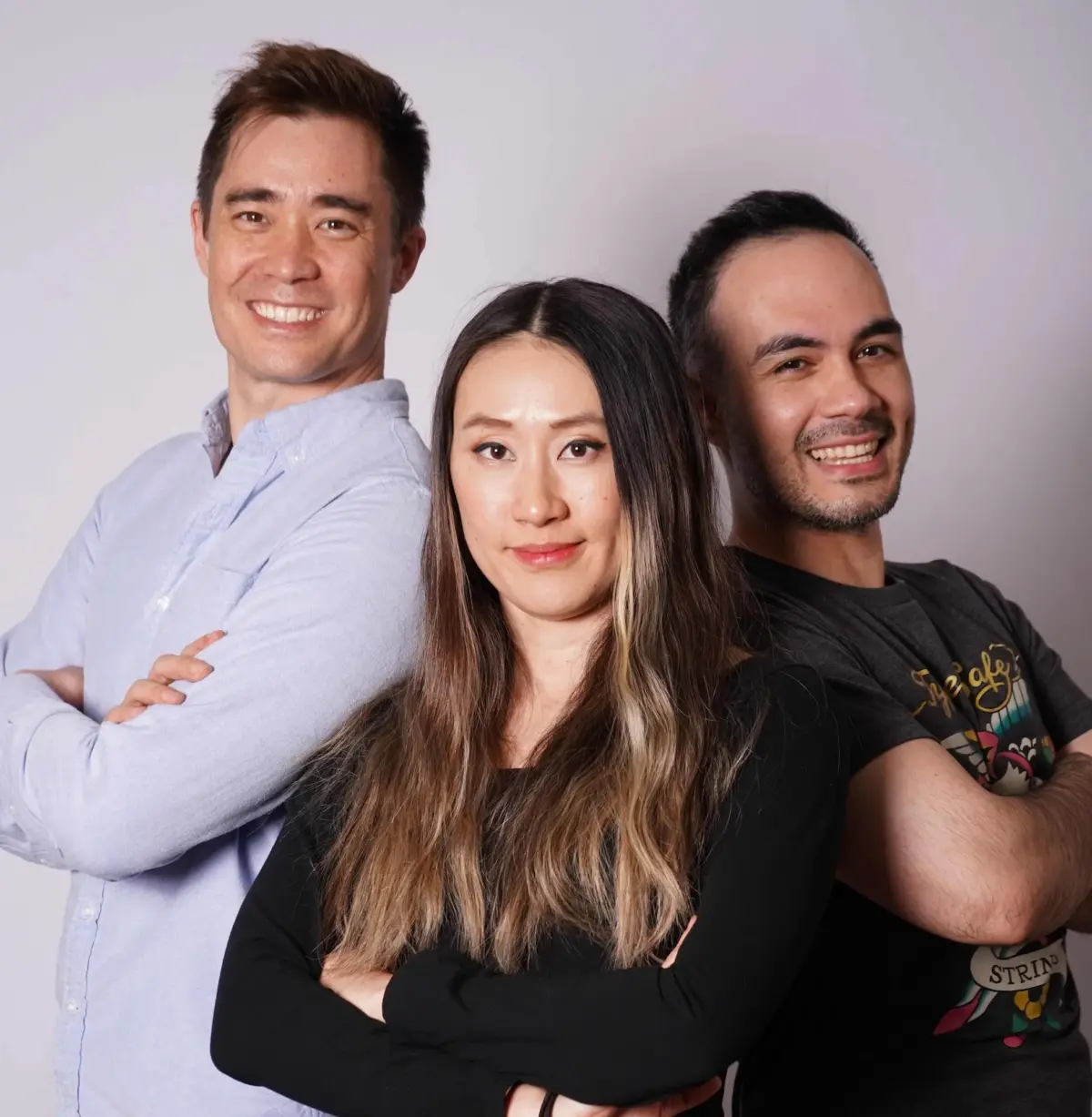
Enter Particle, an AI-powered newsreader startup founded by a cohort of former Twitter engineers. Recognizing a profound technological blind spot, the company has executed a strategic pivot from consumer-facing news aggregation to enterprise-grade audio intelligence. On Wednesday, Particle officially introduced Radar, a groundbreaking podcast search engine and API platform designed to index, transcribe, and contextually comprehend spoken conversations buried deep within audio files.
By bridging the gap between unstructured audio and programmatic AI consumption, Radar is transforming spoken media into a structured, queryable asset. More than just a transcription tool, Radar understands the semantic meaning of audio, identifying specific entities, tracking brand mentions, parsing political bias, evaluating sponsorships, and extracting self-contained, timestamped highlight clips.
While the technology has broad applications for journalists and researchers, it has already found an unexpectedly voracious market among high-volume enterprise buyers. Most notably, hedge funds—desperate for alternative datasets and proprietary insights invisible to standard web-crawling tools—have rushed to integrate Radar’s API. As autonomous AI agents and automated decision-making engines redefine enterprise operations, Particle’s new venture positions the startup at the vanguard of a multi-billion-dollar shift toward total media intelligence.
Detailed Chronology: From Newsreader Feature to Enterprise Powerhouse
The genesis of Radar traces back to the iterative development of Particle’s core consumer application. Launched earlier by the team of former Twitter engineers, the Particle AI newsreader was designed to synthesize current events by pulling context from various media formats. Among its most beloved features was a capability powered by the company’s internal API: hunting down interesting, highly relevant podcast clips and embedding them directly alongside related written news stories in the user’s daily feed.
For months, this function served as a value-add, enriching the user experience within the confines of the news-reading app. However, as the broader tech industry experienced an explosive awakening around the capabilities of autonomous AI agents, Particle’s leadership team had a realization. They recognized that while their podcast-listening technology was exceptionally powerful, it was artificially restricted, trapped inside a consumer news interface.
The market demand for structured, real-time audio data was palpable. While text scrapers and search engines were saturated, the spoken word remained an untapped frontier. Seizing this market opportunity, Particle made a calculated pivot. The engineering team decoupled the underlying audio intelligence architecture from the newsreader app, refactoring it into a robust, developer-first API and Model Context Protocol (MCP) platform.
This development cycle culminated on Wednesday with the public launch of Radar. Moving away from the saturated consumer news market, Particle positioned Radar as a heavy-duty infrastructure play. By shifting its focus to API-first architecture, the startup ensured that businesses, automated agents, and data resellers could seamlessly plug spoken audio intelligence directly into their own proprietary workflows.
Supporting Context & Metrics: Scaling Audio Comprehension at Unprecedented Levels
To understand the magnitude of Radar’s technical achievement, one must examine the sheer volume of content it processes daily. Transcribing audio is no longer a novel feat in the age of advanced speech-to-text models; however, comprehending, contextualizing, and indexing audio at internet scale represents a monumental engineering challenge.
At launch, Radar has established itself as the largest transcribed podcast service in existence, systematically indexing more than 130,000 podcasts. This comprehensive net captures all Apple Top 200 podcasts across an expansive taxonomy of 135 distinct verticals. To maintain this massive index, the platform ingests and processes an astounding 20,000 new episodes daily.
This scale requires more than brute-force transcription. Radar employs advanced natural language processing (NLP) to parse audio files with human-level contextual awareness:
Speaker Diarization & Labeling: The system accurately distinguishes between multiple speakers in a conversation, attributing dialogue to the correct individuals.
Entity Recognition: Radar natively understands and categorizes entities discussed in the audio, mapping out people, companies, brands, products, and nuanced topics.
Cross-Podcast Tracking: The engine tracks how specific entities are discussed across disparate shows, compiling longitudinal data on sentiment and frequency.
Automated Alerting & Digests: Users can configure custom alerts delivered via email, Slack, or webhooks. These filters can be hyper-targeted—for example, alerting an enterprise client only when a specific guest appears on a top-tier podcast to discuss a designated niche topic.
Dedicated Ad Search Engine: Radar features a specialized indexing system capable of tracking corporate sponsorships and advertisements. It can pinpoint every episode where a given company advertises, tracking how brand spend and messaging trend over time.
This rich metadata layer transforms hours of ambient chatter into structured JSON payloads that AI agents can effortlessly read, query, and analyze.
Official Statements: The Vision Behind the Audio Pivot
The strategic rationale behind Radar’s launch centers on solving a fundamental limitation of contemporary artificial intelligence. According to Particle co-founder and CEO Sara Beykpour, the AI revolution has created a massive blind spot regarding spoken media.
"Our vision is really to have all new media intelligence and all audio intelligence in that API," Beykpour explained in an interview with TechCrunch. "One of the reasons why it’s an interesting space is that most API agents and services crawl the web and they’re focused on text. We are providing that layer with audio. Agents are generally blind to audio; they can’t see it unless something or someone has transcribed it."
While journalists, podcasters, and academic researchers form a natural user base for the tool, the commercial reality of Radar’s customer acquisition has leaned heavily toward high-stakes financial and technological sectors. Beykpour revealed that financial institutions have quickly become the platform’s primary economic engine.
"Hedge funds have been the highest-volume customers that are directly integrating with the API," Beykpour noted.
In modern quantitative and qualitative finance, alternative data is the ultimate competitive advantage. While public filings, news articles, and social media sentiment are picked clean by algorithmic traders, industry leaders, founders, and subject-matter experts often drop critical, market-moving insights casually during long-form podcast interviews weeks before formal announcements. Radar gives quantitative funds an automated mechanism to capture these hidden signals.
Furthermore, partnerships with infrastructure providers like Exa—a prominent search API provider for AI agents—demonstrate Radar’s role as a foundational utility. By feeding structured audio insights into Exa and similar platforms, Particle is ensuring that autonomous agents across the web finally gain the gift of "hearing."
Elaborating on the platform’s user-facing utility, Beykpour highlighted Radar’s ability to distill hours of audio into digestible components:
"We’ve pre-chosen notable clips, so if you can’t listen to the whole podcast and you don’t want to read a summary, this is the best way to just get an idea of what’s happening in that podcast."
Monetization, Pricing, and the Competitive Landscape
Particle has constructed a multi-tiered monetization strategy designed to capture value across both human-driven workflows and fully automated enterprise systems.
For individual power users, researchers, and boutique teams, Radar offers a self-serve web interface priced at $29 per month per seat. For small-to-medium businesses requiring collaborative access, a $399-per-month enterprise plan includes up to 20 user seats. However, the crown jewel of Particle’s revenue model lies in its custom-priced API and MCP access, where high-volume enterprise clients—such as hedge funds, data resellers, and AI agent developers—pay according to their specific consumption and integration metrics.
Beyond standard search and transcription fees, Particle has unlocked several lucrative auxiliary revenue streams:
Sponsorship & Ad Intelligence: Brands and marketing agencies can monitor competitor ad spend, sponsorship placement frequency, and audience demographic shifts across thousands of podcasts.
Brand Suitability & Political Bias Analysis: Enterprise communications teams can audit podcasts for brand safety, tracking sentiment and political leaning to prevent misaligned marketing investments.
Audience Size & Chart Ranking Analytics: Media buyers gain granular visibility into listenership trends, independent of self-reported network metrics.
Despite the crowded landscape of audio transcription tools—ranging from Otter.ai to enterprise speech APIs offered by hyper-scalers like AWS and Google Cloud—Particle differentiates itself through curation and intelligence. Competitors typically transcribe audio files uploaded by users; Radar acts as an active, continuously crawling discovery engine that understands the macro-narrative of the global podcast ecosystem.
Future Outlook: Beyond Podcasts into Total Audio Intelligence
The debut of Radar marks a critical turning point for Particle, successfully transitioning the startup from a clever consumer-facing novelty into indispensable enterprise infrastructure. By successfully tapping into the high-volume demand from hedge funds and AI agent developers, the company has validated the commercial viability of automated audio intelligence.
Yet, Particle’s roadmap extends far beyond the 130,000 podcasts currently indexed in its database. Company leadership has confirmed that future development phases will scale the underlying architecture to ingest and comprehend entirely new modalities of spoken media.
In the near future, Radar plans to expand its indexing engine to capture YouTube videos, live-streamed broadcasts, conference keynotes, and breaking news audio clips. As video and audio increasingly dominate the consumption habits of the global population, the ability to programmatically index, query, and derive actionable intelligence from spoken words will no longer be a luxury—it will be a core requirement for any serious AI system or financial enterprise.
By teaching AI agents how to listen, Particle is not merely expanding its own business horizons; it is permanently altering how human knowledge is discovered, processed, and monetized across the digital economy.