By Game Developer News Desk
Published August 28, 2026 • 5-Minute Read
Executive Overview
Labor tensions within the European video game development sector have reached a critical boiling point. The Spanish video game trade union Coordinadora Sindical del Videojuego (CSV)—operating as a specialized branch of the broader Confederación General del Trabajo (CGT)—has officially announced a rolling schedule of industrial action targeting Ubisoft Mobile Barcelona.
Beginning in September 2026, workers at the studio, best known for developing Invincible: Guarding the Globe, are being called upon to execute a series of targeted three-day walkouts every two weeks. The primary catalyst for this escalating labor dispute is Ubisoft’s aggressive, company-wide return-to-office (RTO) mandate, which labor organizers argue has been imposed through unilateral decision-making, systemic coercion, and a total refusal by corporate leadership to engage in collective bargaining.
The strike dates are scheduled for September 1, 2, 3, 16, 17, and 18, with an initial public demonstration slated for Tuesday, September 1, directly outside the studio’s Barcelona facility. This unfolding conflict highlights a wider, increasingly bitter ideological fracture between major multinational game publishers attempting to rapidly restructure their operations and a newly unionized, highly mobilized workforce demanding professional autonomy, workplace flexibility, and respect for labor rights.
Detailed Chronology of the Dispute
The roots of the current labor standoff at Ubisoft Mobile Barcelona run deep, characterized by a steady erosion of remote-work privileges and a progressive breakdown in communication between executive management and employee representatives.
The Escalation of Workplace Mandates
According to statements released by CSV and union coordinators, the friction between staff and corporate leadership did not happen overnight. Rather, it represents the culmination of years of incremental policy shifts designed to phase out flexible working arrangements.
Union representatives point to a troubling precedent set in 2025, when management allegedly introduced an additional mandatory in-office day through what workers have described as coercive, individual negotiations. Employees claim they were presented with a heavy-handed ultimatum: voluntarily accept an extra day on-site, or face the total revocation of all remote work privileges. This divide-and-conquer strategy reportedly left workers feeling isolated and stripped of collective leverage.
The 2026 Ultimatum and the Breakdown of Dialogue
The situation deteriorated further in mid-2026 as Ubisoft rolled out comprehensive structural changes. Early in August, union organizers formally notified company leadership of their intent to strike if the rigid return-to-office policies were not reconsidered. However, according to CSVI spokespersons, this outreach was met with institutional silence.
"The strike was communicated to the company in early August; however, the workers’ representatives are still awaiting a response," a union spokesperson revealed to Game Developer.
Instead of opening a dialogue with labor representatives, management’s sole concession has been a minor timeline adjustment—shifting the enforcement date of the strict RTO policy from October 2026 to January 2027. Crucially, the union notes that even this postponement was communicated unilaterally, entirely bypassing staff representatives and demonstrating a persistent unwillingness to negotiate in good faith.
Supporting Context & Metrics: Ubisoft’s Global Restructuring
To fully understand the severity of the standoff in Barcelona, the dispute must be viewed within the broader framework of Ubisoft’s ongoing, sweeping corporate reorganization.
Financial Pressures and the Tencent Investment
Earlier in 2026, Ubisoft initiated a massive operational overhaul aimed at accelerating aggressive cost-reduction initiatives and pivoting its development focus toward reliable open-world experiences and games-as-a-service (GaaS) projects. This radical strategic pivot followed closely on the heels of a massive $1.25 billion investment secured from Chinese multinational technology conglomerate Tencent.
Despite acquiring this substantial financial lifeline, executive leadership maintained that the publisher remained bloated and inefficient. Consequently, Ubisoft declared an urgent need to "rightsize" its global footprint.
Studio Closures and Studio Ecosystem Disintegration
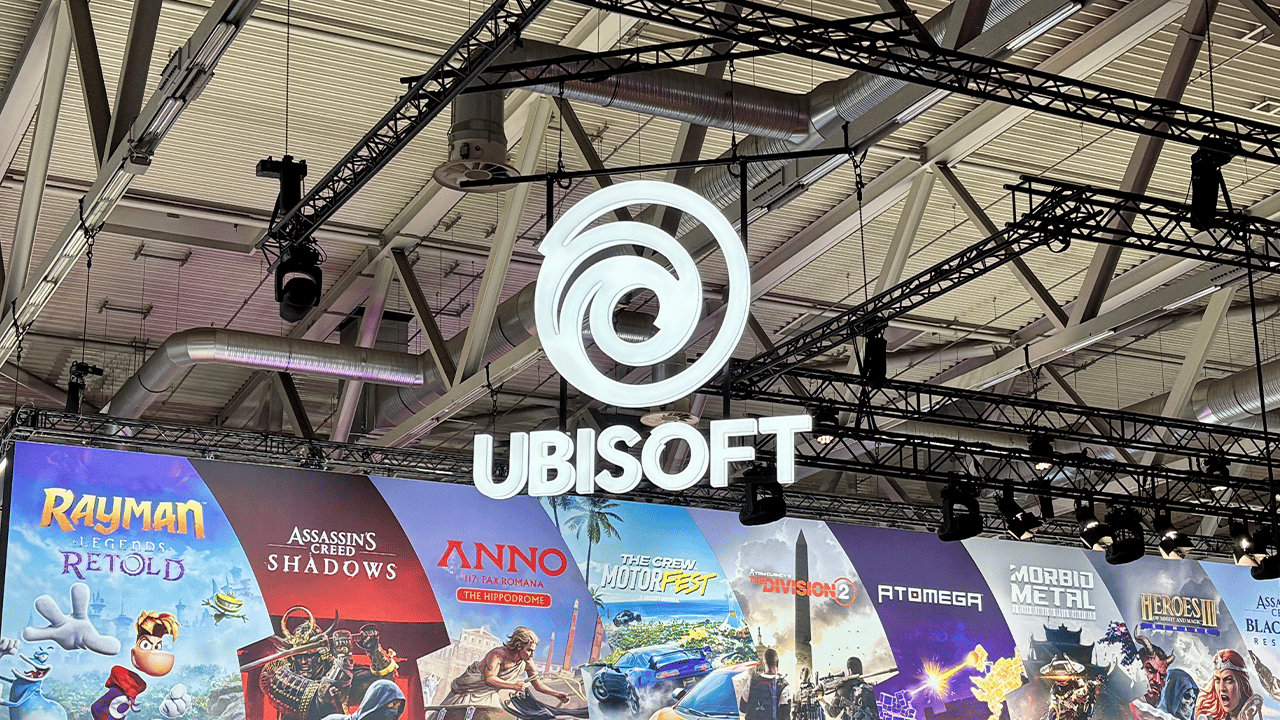
The corporate restructuring has manifested in severe, destabilizing ways across Ubisoft’s international network. The company has systematically downscaled or entirely shuttered multiple internal facilities—notably closing studios in Winnipeg and Belgrade—while simultaneously dismantling its traditional studio ecosystem.
In place of its previous decentralized structure, Ubisoft has instituted a new model centered around five distinct "Creative Houses." These centralized entities are now given total authority over the publisher’s key intellectual properties, such as the Assassin’s Creed franchise.
As part of this top-down standardization, Ubisoft mandated that all remaining international teams transition to mandatory five-day-a-week on-site work schedules. For the developers at Ubisoft Mobile Barcelona, this meant the abrupt dismantling of hybrid work models that had become standard industry practice and a vital component of employee well-being.
Official Statements and Perspectives
The conflict at Ubisoft Mobile Barcelona has brought competing philosophies regarding corporate efficiency versus labor rights into sharp relief.
The Union’s Stand: Demanding Collective Rights
For the Coordinadora Sindical del Videojuego and the CGT, the strikes are not merely about commute times or office desks; they represent a fundamental defense of collective bargaining rights. CSV argues that multinational corporations cannot be allowed to bypass legally recognized worker representatives through individual coercion and top-down decrees.
By organizing the September walkouts and planning the high-visibility protest outside the studio doors, the union aims to demonstrate that the workforce is organized, resilient, and unwilling to accept corporate mandates that ignore local labor concerns. The choice of targeting the studio behind Invincible: Guarding the Globe also serves to spotlight the operational vulnerability of active live-service games when developer relations sour.
Management’s Silence and Corporate Posture
Ubisoft corporate leadership has thus far maintained a defensive posture regarding the Barcelona protests. While management demonstrated a willingness to push the RTO enforcement date back to January 2027, their refusal to formally engage with CSV or address the core grievances regarding remote work highlights a rigid adherence to their global restructuring blueprint.
Industry analysts note that Ubisoft views the five-day in-office mandate as a cornerstone of its new, streamlined "gamer-centric" strategy under the Creative Houses framework. Consequently, leadership appears willing to weather regional labor friction—even at the risk of project disruptions—to ensure uniformity across its remaining studio network.
Future Outlook: What Lies Ahead for Ubisoft and the European Games Industry?
As the calendar turns toward September 2026, all eyes are on the Barcelona studio to gauge the immediate impact of the impending walkouts.
Immediate Disruptions to Live-Service Development
The scheduled strike dates—September 1-3 and September 16-18—will test the resilience of Ubisoft Mobile Barcelona’s ongoing production pipelines, particularly updates, patches, and live events for titles like Invincible: Guarding the Globe. If the strikes achieve high participation rates, they could force management back to the negotiating table or, conversely, harden executive resolve.
A Watershed Moment for Unionization in European Gaming
Beyond the immediate operational consequences, the labor dispute at Ubisoft Mobile Barcelona serves as a bellwether for the European video game industry. As major publishers continue to navigate post-pandemic economic corrections through aggressive restructuring, cost-cutting, and forced office returns, unionization efforts are proving to be the primary defensive mechanism for developers.
Whether Ubisoft chooses to alter its course or double down on its mandates, the outcome of the Barcelona strikes will likely resonate far beyond Spain. It will set a critical precedent for how European game developers organize, resist unilateral corporate policies, and demand a seat at the table in an increasingly volatile global market.