Executive Overview
As the global battle for digital wallet supremacy and in-app commerce intensifies, TikTok is reportedly eyeing a major financial expansion in the United States. According to recent reports from Bloomberg, the short-form video giant is actively exploring the rollout of TikTok Pay to U.S. users. This prospective feature would allow American consumers to seamlessly send and receive money directly through Direct Messages (DMs), mirroring a strategy that has already transformed its Chinese sibling app, Douyin, into a juggernaut of social commerce.
This potential U.S. financial integration arrives at a pivotal moment for the platform. As competitor X (formerly Twitter) continues to roll out its own proprietary "X Money" payment processes, TikTok is capitalizing on an unprecedented surge in domestic e-commerce activity. Recent data from market intelligence firm Momentum Works estimates that TikTok generated a staggering $50 billion in Gross Merchandise Value (GMV) globally in the first half of 2026 alone—a massive 92% year-over-year increase. Within that total, the U.S. market accounted for $11.8 billion, representing a staggering doubling of sales compared to the previous year.
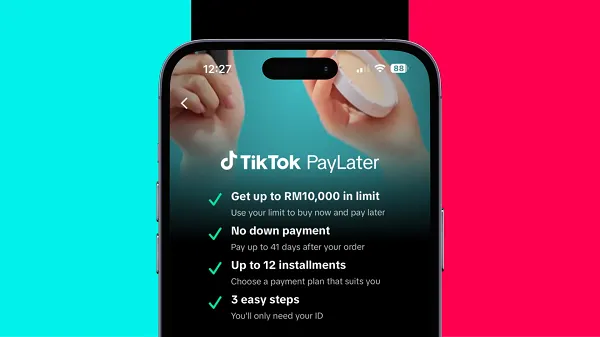
By introducing a streamlined, native payment infrastructure like TikTok Pay—and potentially expanding features like "TikTok PayLater," which allows users to split purchases into structured installments—the platform aims to capture the elusive phenomenon of impulse shopping. Particularly during live-streamed shopping events, reducing friction at checkout is the holy grail of digital retail.
However, scaling this ambitious fintech play in the U.S. will not be without hurdles. Beyond navigating a complex web of state-by-state money transmitter licenses and regulatory scrutiny, TikTok must prove to Western consumers that its platform is as trustworthy for their hard-earned cash as it is for entertainment. This article explores the mechanics of TikTok Pay, the blueprint provided by Douyin in China, the staggering metrics driving this U.S. expansion, and the broader outlook for the future of social commerce.
Detailed Chronology: From Regional Rollouts to U.S. Ambitions
To understand TikTok’s current financial maneuvers, one must trace the evolution of its payment ecosystem across international markets over the past several years. While Western users have traditionally viewed TikTok as an entertainment hub, its international iterations have long functioned as robust financial super-apps.
The International Blueprint: Southeast Asia and Beyond
Long before American users began speculating about native money transfers, TikTok rolled out foundational payment mechanisms in select international regions. In markets such as Vietnam, Malaysia, and Thailand, TikTok Pay has already established a operational footprint. These regional deployments were designed to test how seamlessly users would adopt in-app transactions without being redirected to third-party gateways like PayPal, Apple Pay, or standard credit card processors.
Building upon these basic payment rails, TikTok subsequently introduced TikTok PayLater in targeted regions. This buy-now-pay-later (BNPL) solution allows consumers to parse the cost of high-ticket items into manageable installments, mirroring services like Klarna or Afterpay. By embedding credit options directly into the browsing experience, TikTok successfully lowered the barrier to entry for everyday shoppers, laying the groundwork for higher average order values (AOV).

The Chinese Precedent: The Douyin Model
To truly grasp where TikTok’s financial ambitions are heading, industry analysts frequently look to Douyin, the domestic Chinese version of the app operated by parent company ByteDance. In China, the convergence of social media and fintech is practically ubiquitous, and Douyin has positioned Douyin Pay as the linchpin of its multi-billion-dollar shopping ecosystem.
According to insights from digital consultancy Walk the Chat, Douyin systematically elevated Douyin Pay to a core in-app transaction option, shifting reliance away from legacy Chinese wallets like Alipay and WeChat Pay where possible. By keeping transactions within the ecosystem, Douyin captured richer consumer data, reduced transaction drop-offs, and optimized the user journey from discovery to checkout.
The results of this integration have been monumental. Academic and industry research published via ScienceDirect indicates that live-streamed shopping events on Douyin accounted for an astonishing 40% of the platform’s total e-commerce sales in 2024. This statistic serves as a flashing neon sign for TikTok executives: when consumers can watch a host showcase a product and purchase it via a native, one-tap payment option within seconds, conversion rates skyrocket.
The Pivot to the United States
The latest chapter in this chronology began to unfold when Bloomberg broke the news that ByteDance is actively investigating bringing a peer-to-peer (P2P) money transfer and merchant payment feature to U.S. DMs. This move represents a strategic evolution from passive advertising and external checkout links to an active, closed-loop financial ecosystem.
As X aggressively pushes forward with its X Money initiatives under Elon Musk, TikTok cannot afford to be left behind in the race to become a comprehensive lifestyle and financial app. By marrying its explosive shopping data with native payment infrastructure, TikTok is setting the stage for the next major paradigm shift in Western digital retail.
Supporting Context & Metrics: The Numbers Driving the Shift
TikTok’s financial ambitions are not built on speculation; they are firmly rooted in an undeniable, hyper-accelerated growth curve in global and domestic social commerce.
The $50 Billion Global Milestone
A comprehensive H1 2026 report published by Momentum Works highlights the sheer scale of TikTok’s e-commerce enterprise. In the first six months of 2026 alone, TikTok generated approximately $50 billion in global GMV. This represents a meteoric 92% year-over-year increase, signaling that social commerce has officially transitioned from a niche marketing experiment into a dominant global retail channel.

The U.S. Market Explosion
While Southeast Asian markets have traditionally served as test beds for TikTok’s e-commerce features, the United States has quickly emerged as its most lucrative battleground. According to the Momentum Works data:
- U.S. GMV Generation: The U.S. market accounted for $11.8 billion of the total global GMV in H1 2026.
- Year-Over-Year Growth: This U.S. figure represents a phenomenal more than 100% year-over-year increase, outpacing the platform’s global average growth rate.
These metrics demonstrate that American consumers are increasingly comfortable purchasing apparel, beauty products, electronics, and home goods directly within the TikTok interface via TikTok Shop. However, the checkout process in the U.S. still relies heavily on traditional credit card inputs and third-party digital wallets. Introducing a native option like TikTok Pay—complete with saved payment tokens and peer-to-peer capabilities—could drastically reduce cart abandonment rates.
The Power of Live-Stream and Impulse Purchases
The financial psychology behind in-stream payments centers heavily on impulse buying. Traditional online shopping requires a user to find an item, navigate away from their content feed, open a browser or separate app, enter shipping details, and input credit card numbers. Each step in this journey introduces friction, giving the consumer time to second-guess their purchase.
By contrast, an in-stream payment system integrated directly into a live stream or Direct Message collapses this journey into a matter of seconds. As demonstrated by Douyin’s 40% live-stream sales share in China, when a charismatic creator recommends a product and viewers can instantly execute a payment via a secure, pre-loaded digital wallet, impulse buying surges. Bringing this capability to U.S. DMs—allowing friends to split bills, send monetary gifts, or pay micro-influencers directly—creates an interconnected web of financial and social engagement that few traditional retailers can replicate.
Regulatory Hurdles and Official Perspectives
While the financial upside of introducing TikTok Pay to the U.S. market is immense, the path forward is paved with complex regulatory, legal, and consumer-trust challenges.
The Regulatory Landscape: Money Transmitter Licenses
Before ByteDance can operationalize a peer-to-peer money transfer and merchant payment system in the United States, it must clear significant regulatory hurdles. Chief among these is the requirement to obtain Money Transmitter Licenses (MTLs) in individual U.S. states.
Unlike a standard software-as-a-service application, any entity that handles, holds, or transfers funds on behalf of consumers is classified as a money services business (MSB) under federal law governed by the Financial Crimes Enforcement Network (FinCEN). Furthermore, state-level banking departments require individual licenses, compliance audits, anti-money laundering (AML) frameworks, and substantial surety bonds.
Acquiring these licenses is notoriously time-consuming, expensive, and subject to intense scrutiny—particularly for a platform with foreign ownership ties. U.S. lawmakers have repeatedly scrutinized TikTok over data security and national security concerns, meaning that any fintech expansion into American financial infrastructure will undoubtedly face rigorous oversight from federal regulators like the Committee on Foreign Investment in the United States (CFIUS) and the Consumer Financial Protection Bureau (CFPB).
Data Privacy and Consumer Trust
Beyond regulatory compliance, TikTok faces the formidable task of convincing American consumers to entrust the platform with their financial data. While users readily share their viewing habits, preferences, and credit card numbers for e-commerce checkouts, peer-to-peer money transfers require a deeper level of financial integration.
To succeed, TikTok will need to implement bank-grade encryption, multi-factor authentication (MFA), and robust fraud-detection mechanisms. Establishing clear, transparent privacy policies regarding how financial data is stored and utilized will be essential to building and maintaining consumer trust in a competitive fintech landscape populated by established giants like Apple Pay, Venmo, PayPal, and Zelle.
Future Outlook: What Next for Social Commerce and Fintech?
As we look toward the horizon of digital media and finance, the convergence of social networking and banking is no longer a distant theoretical concept—it is the defining trend of the decade.
The Super-App Race
TikTok’s exploration of U.S. in-stream payments underscores a broader industry-wide race toward the "super-app" model, popularized in Asia by platforms like WeChat. Western tech companies have long coveted this ecosystem model, where a user can consume media, communicate with peers, hail a ride, book travel, and execute financial transactions without ever leaving a single application.
- Competitor Movements: X’s aggressive pursuit of X Money highlights the urgency felt across social platforms to diversify revenue streams beyond traditional digital advertising. By owning the transaction layer, platforms can capture transaction fees, retain user attention longer, and provide targeted financial services like lending and insurance.
- The Creator Economy Impact: For creators, the integration of TikTok Pay and DM money transfers could revolutionize monetization. Direct tipping, digital product sales, and brand collaborations could be settled instantly within the app, empowering creators to build sustainable micro-businesses directly on the platform.
Conclusion: A High-Stakes Gamble
TikTok’s potential expansion of TikTok Pay into the United States represents a high-stakes, high-reward strategic maneuver. Backed by explosive domestic growth—including nearly $12 billion in U.S. GMV in H1 2026—the platform possesses the user base and cultural momentum required to challenge traditional fintech players.
However, the success of this initiative will ultimately hinge on ByteDance’s ability to navigate America’s complex regulatory maze, satisfy stringent licensing requirements, and secure the unwavering trust of consumers. If TikTok can successfully bridge the gap between social entertainment and seamless financial transactions, it will not only solidify its dominance in social commerce—it will fundamentally reshape how a generation of Americans spends, sends, and manages money.