Executive Overview
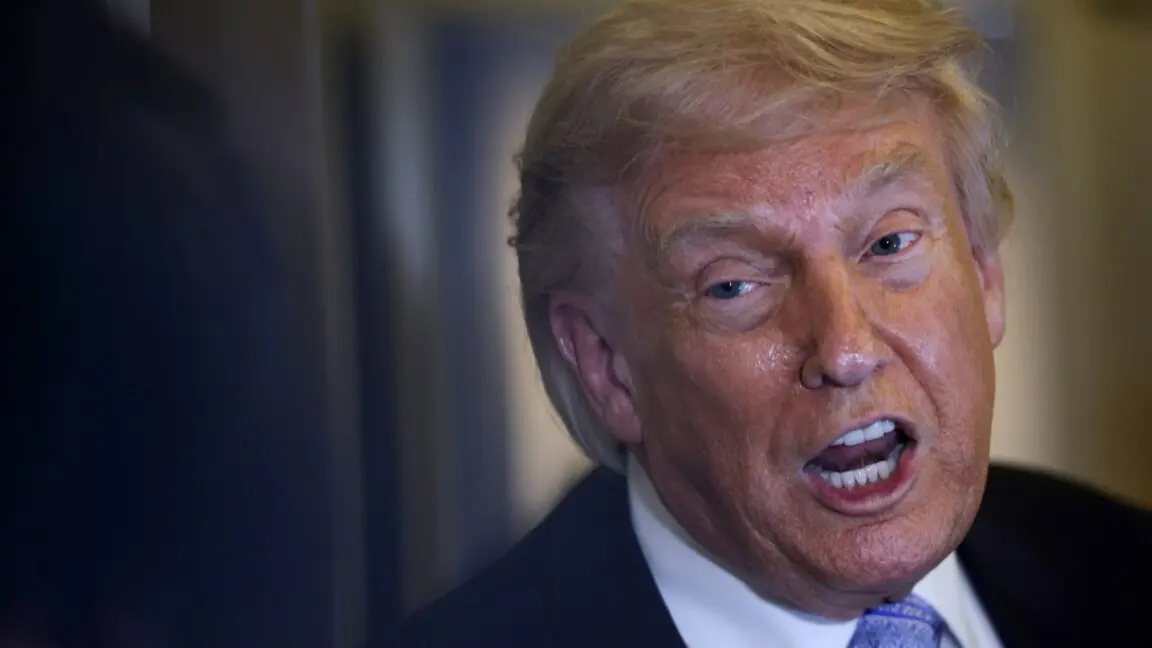
In an extraordinary escalation of tensions between the White House and the American news media, President Donald Trump has publicly demanded that the Federal Communications Commission (FCC) rebuke or penalize NBC News journalist Kristen Welker. The president’s fury was triggered by an analysis delivered by the Meet the Press moderator describing his recent primary election endorsements as having yielded “mixed results.”
Rather than engaging in political debate or standard media criticism, the administration’s response signals a profound shift: the overt use of federal regulatory machinery to police journalistic interpretation and penalize broadcast organizations over editorial framing. This latest maneuver underscores a broader, systemic campaign by the administration and FCC Chairman Brendan Carr to reshape the American media landscape. By aggressively weaponizing policies originally designed to prevent technical interference and deliberate broadcast fraud, the regulatory body is attempting to enforce compliance and compel positive coverage, a strategy that legal experts and press freedom advocates warn poses an unprecedented threat to the First Amendment.
Detailed Chronology: From Primary Analysis to Regulatory Retaliation
The latest clash began when Kristen Welker appeared on NBC 4 Washington, offering standard analytical commentary regarding the electoral landscape. Discussing the primary cycle, Welker noted that while the president had enjoyed notable victories—such as the high-profile success of Senator Darline Graham in South Carolina—his broader slate of primary endorsements had encountered "mixed results."
Within hours, the analysis drew a sharp public backlash from the president across social media platforms. Writing on Truth Social, Trump denounced Welker as the "Unpopular ‘Hostess’ of the once great Meet the Press," and accused her of peddling a "purposeful inaccuracy." Pointing to selected primary races in the House and Senate, Trump argued that his success rate was near-perfect and asserted that such analysis on "freely given Public Airwaves" warranted administrative sanction.
"How can anyone be allowed to say this, working for freely given Public Airwaves? Results are attached. Because of this purposeful inaccuracy, she will be reported to the FCC for rebuke or punishment," Trump wrote.
The attack on Welker was not an isolated incident. Just days prior, Trump trained his sights on New York Times journalist Maggie Haberman, unleashing a barrage of personal insults and demanding that she be forced to forfeit financial earnings derived from her reporting. In a separate post addressing broader media polling, Trump wrote: "THE FAKE POLLS USED BY OUR CROOKED MEDIA ARE OUT OF CONTROL, AND SOMETHING MUST BE DONE ABOUT IT. FCC TO THE RESCUE!"
When questioned by media outlets regarding the escalating pressure campaign, NBC News issued a steadfast defense of its lead anchor. "Kristen is one of the best in the business and we stand by her," an NBC News spokesperson stated. Despite the network’s backing, the threat of regulatory retaliation remains hanging over the network as Carr’s FCC evaluates potential avenues for intervention.
Supporting Context & Metrics: Analyzing the Primary Record
To substantiate his claims of total electoral dominance, Trump’s social media posts included graphic data purporting to show a nearly flawless endorsement record for the current primary cycle. However, independent election analysts and media watchdogs point out that the definition of "mixed results" accurately reflects the nuanced reality of primary politics.
While high-profile victories—such as Darline Graham’s primary win in South Carolina—bolstered the administration’s narrative, other marquee races told a different story. Political commentators noted several notable setbacks for Trump-backed candidates across the country, including primary defeats for gubernatorial hopefuls Burt Jones in Georgia and Randy Feenstra in Iowa, alongside the failed re-election bid of Representative Cory Mills in Florida.
Tom Jones, Senior Media Writer at Poynter, succinctly addressed the controversy: "What Welker said about Trump’s endorsements having mixed results was true. Trump just didn’t like it."
Similarly, major news organizations have routinely echoed these observations. CNN White House correspondent Alayna Treene noted earlier in the month that multiple endorsed candidates had stumbled in primary contests, naturally giving rise to analytical discussions concerning the practical limits and shifting leverage of presidential endorsements. Welker’s commentary was merely a reflection of this standard journalistic observation—making the administration’s demand for federal punishment all the more alarming to media ethics experts.
Official Statements and Institutional Rebuttal
The unfolding confrontation has drawn sharp lines between the executive branch’s regulatory appointees and defenders of constitutional free speech.
Under established statutory interpretations and decades of administrative precedent, the FCC possesses no legal authority to intervene in subjective journalistic assessments. The official FCC policy guidelines explicitly state that the commission "cannot prevent the broadcast of any particular point of view" and generally declines to adjudicate complaints regarding "one-sided news reports," noting that doing so would directly violate the First Amendment by substituting government judgment for that of licensed broadcasters.
These legal boundaries were upheld even during Trump’s first term in office. Then-FCC Chairman Ajit Pai explicitly clarified that "the FCC does not have the authority to revoke a license of a broadcast station based on the content of a particular newscast."
However, under the leadership of current Chairman Brendan Carr, the agency has charted a fundamentally different course. Carr has readily abandoned the traditional doctrine of agency independence, aligning himself explicitly with White House directives.
The lone Democratic commissioner on the panel, Anna Gomez, issued an immediate and unequivocal rebuke of the administration’s latest threat:

"As I’ve said many times, the FCC has no authority to punish journalists this administration doesn’t like," Gomez wrote on social media. "These threats to press freedom are dangerous. They undermine the foundation of our democracy, and they have no place in it."
Future Outlook: Reshaping the Media Landscape Through Regulation
The demand for disciplinary action against Welker is merely one tactical maneuver within a broader, multi-pronged campaign to restructure the American media ecosystem. Rather than relying solely on rhetorical intimidation, the administration and Carr’s FCC have systematically deployed regulatory instruments to pressure corporate media entities.
The Weaponization of the "News Distortion" Policy
Historically, the FCC’s news distortion policy was invoked under exceptionally strict evidentiary standards—effectively rendering it a dormant rule. Under Carr, however, the policy has been weaponized as a constant threat against perceived ideological adversaries. Last year, Carr threatened to target Comcast’s NBC station licenses over deportation coverage narratives, and later warned ABC station operators over late-night broadcast content.
This intimidation tactic escalated from rhetoric to administrative action when the FCC ordered ABC to undergo early license-renewal reviews for its owned-and-operated stations, leveraging diversity, equity, and inclusion (DEI) compliance as a pretext. In response, ABC’s parent company, Disney, filed a landmark lawsuit against Carr and the agency, accusing the commission of orchestrating a coordinated censorship campaign in retaliation for protected journalistic speech.
Corporate Consolidation and Compliance
Beyond direct content policing, the administration has utilized corporate merger approvals to exert indirect influence over editorial independence. When Paramount sought regulatory approval to acquire Skydance, the green light was granted only after the company agreed to install an ideological "bias monitor" at CBS. Months later, Paramount secured Department of Justice clearance for its acquisition of Warner Bros. Discovery—a transaction that progressed following reports that corporate leadership committed to implementing sweeping leadership and structural changes at CNN.
Similarly, in March, the administration and the FCC publicly demanded more favorable broadcast framing of foreign conflicts, specifically calling for positive coverage regarding military actions involving Iran, while Carr leveled unsubstantiated accusations of "hoaxes and news distortions" against networks that failed to align with official messaging.
The Constitutional Horizon
As the FCC weighs whether to formalize an investigation into Kristen Welker, the implications extend far beyond a single news anchor or a specific network. The systematic erosion of agency independence threatens to transform an independent communications regulator into an ideological enforcement arm of the executive branch.
With major media corporations fighting back through the federal judiciary and constitutional watchdogs sounding continuous alarms, the ultimate resolution of these legal battles will determine whether the foundational protections of the First Amendment can withstand aggressive governmental overreach in the modern digital and broadcast era.