Executive Overview
For decades, the unwritten commandment of the global venture capital ecosystem was absolute: if an international startup wanted serious institutional backing, its founders had to pack their bags, move stateside, and plant their flag squarely in Silicon Valley. The logic was deeply entrenched—proximity to Tier-1 capital, an insular networking culture, and the mythical aura of the Bay Area were viewed as non-negotiable prerequisites for hyper-growth.
Today, that dogma is fracturing.
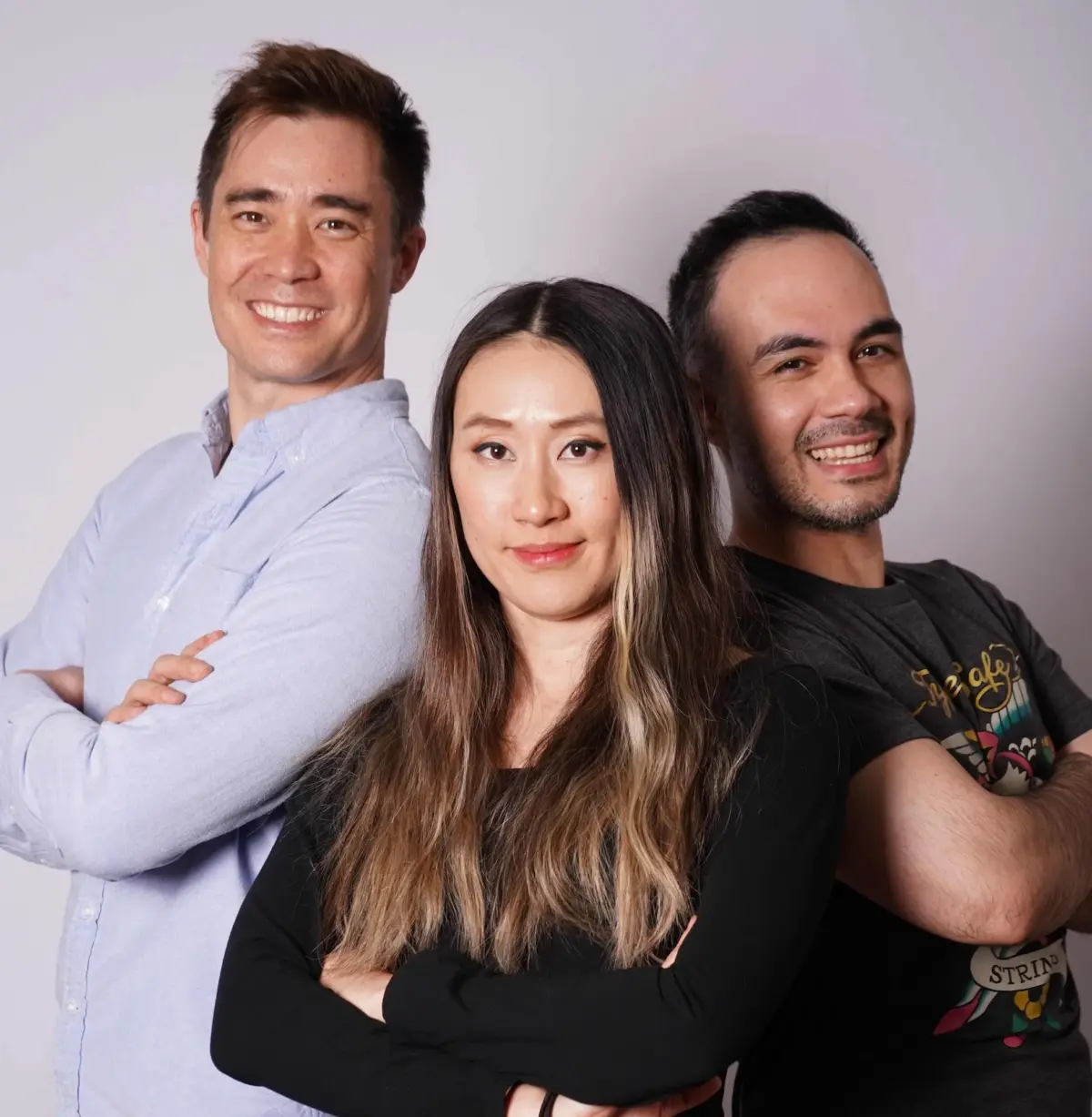
A new breed of borderless entrepreneurs is proving that you can build a Delaware C Corp., secure millions in U.S. venture capital, and deliberately head back to your home continent to scale. A prime case study in this shifting paradigm is Furo, an industrial software startup founded by three 28-year-old innovators: Lena Sophia Voß, Leonie Wagner, and Simon Wittner.
Instead of remaining in the U.S. after stints at tech juggernauts like Apple, Google X, and various elite AI ventures, the trio made the conscious choice to return to Germany. Far from penalizing them, Silicon Valley investors responded with enthusiasm, writing a $4 million check led by TQ Ventures, with participation from Neo and Sheryl Sandberg’s fund, Sandberg Bernthal Venture Partners. Just one year after inception, Furo has not only captured vital venture backing but has also locked in marquee enterprise clients, including German rail giant Deutsche Bahn.
Furo’s trajectory mirrors a growing observation across the venture capital landscape—most notably articulated by a16z (Andreessen Horowitz)—that modern technology startups now possess a distinct strategic edge by maintaining "one foot in your home country, and one foot in Silicon Valley." This deep-dive report examines Furo’s strategic pivot, the macroeconomic realities of building in Europe versus the U.S., and what this trans-Atlantic blueprint means for the future of global tech entrepreneurship.
Detailed Chronology: From the Bay Area to Munich and Back
The Silicon Valley Roots and the CDTM Connection
The story of Furo begins in Munich, Germany, specifically within the prestigious Center for Digital Technology and Management (CDTM). Jointly run by Ludwig Maximilian University (LMU) and the Technical University of Munich (TUM), CDTM is an elite, interdisciplinary honors program renowned for producing some of Europe’s top tech talent and startup founders.
It was through this academic incubator that Voß, Wagner, and Wittner first crossed paths. The program served as their initial launchpad, eventually propelling them to the United States, where they studied and conducted research at elite institutions including Stanford University and UC Berkeley.
Armed with world-class technical foundations, the trio embedded themselves deep within the Silicon Valley ecosystem. They took on high-level engineering and product roles at companies like Apple, Google X, and various cutting-edge artificial intelligence startups. By all accounts, their American chapter was flourishing. Each founder had full-time return or continuation offers waiting for them, coupled with the requisite visa sponsorships to build long-term lives and careers in the Bay Area.
The Awakening: Recognizing a Continental Crisis
Yet, as they looked toward the horizon of their entrepreneurial ambitions, a stark realization began to take shape. The trio wanted to build a company dedicated to helping heavy industrial corporations dramatically reduce their staggering electricity costs.
As they analyzed the global energy landscape, they realized that the problem was fundamentally more urgent, volatile, and deeply pressing in Europe than in the United States. Germany, in particular, had spent the preceding half-decade lurching from one severe energy crisis to another, driven by geopolitical shifts, the rapid decommissioning of nuclear energy, and an aggressive, complex transition to renewables.
For industrial enterprises—factories, logistics hubs, and national infrastructure operators—energy consumption was no longer just an operational expense; it was an existential threat to their bottom line.
Initially, Furo attempted to tackle this market remotely from the United States. During this exploratory phase, the startup briefly joined Neo’s prestigious accelerator program under its former moniker, Lumera Energy. However, the physical and cultural distance quickly revealed its limitations. Managing a complex, highly regulated European industrial software market from thousands of miles away proved profoundly inefficient.
"If you are an early-stage company, very often it’s mostly about your network, and also about being close to your customers," co-founder Lena Sophia Voß reflected.
The Deliberate Homecoming
Faced with a choice between staying comfortable in California or diving headfirst into the eye of the European energy storm, the founders made a calculated gamble. They walked away from their safe, lucrative Big Tech trajectories in the U.S. and moved back to Munich to formally launch Furo.
Crucially, this was not a forced retreat triggered by immigration crackdowns, visa denials, or systemic employment roadblocks—though the broader tech landscape was increasingly plagued by such anxieties. Rather, it was a proactive, highly strategic maneuver.
"So it was a decision to go back to Europe not because we needed to, but because we see that right now, it’s a better time to build an energy startup in Europe instead of the U.S.," Voß emphasized.
Supporting Context & Metrics: Arbitrage, Talent, and Economics
Furo’s homecoming unlocked a series of structural, financial, and operational advantages that would have been vastly more difficult—if not entirely impossible—to replicate under the hyper-competitive constraints of Silicon Valley.
Capital Efficiency and Salary Arbitrage
One of the most immediate windfalls of building an industrial software startup in Munich rather than San Francisco is macroeconomic arbitrage. The cost of running an early-stage engineering-heavy operation in Germany is fundamentally lower, stretching seed capital significantly further.
"If you compare the salary of an engineer in the U.S. versus Germany, it is just way cheaper," Voß noted.
She recounted humorous early interactions with Furo’s skeptical U.S. investors, who frequently questioned whether the startup could possibly source top-tier engineering talent with the lean budgets they had allocated. In reality, Furo’s budgeted compensation packages were positioned at the very top end of the German market standard.
This financial reality creates an extraordinary runway advantage. European startups can achieve product-market fit, build robust software architecture, and iterate rapidly through multiple product cycles with a fraction of the capital burn required in the Bay Area.
Talent Quality and Lower Competition
Beyond raw salary metrics, the quality of technical talent emerging from German institutions like TUM is world-class. However, unlike Silicon Valley—where early-stage startups must engage in an exhausting, expensive bidding war against trillion-dollar conglomerates like Google, Meta, and Apple for every available engineer—the European ecosystem offers a more fertile, less congested recruiting pool.
Furthermore, Furo leveraged its deep-rooted ties to the CDTM network. In a tightly knit ecosystem like Munich’s tech corridor, personal reputation, alumni networks, and institutional trust carry immense weight. "It’s such a great network in Germany and in Europe that people somehow start to know you," Voß explained. When Furo encounters technical or operational hurdles, the founders rarely have to search far for answers: "Every time we have a challenge, we know exactly whom to call."
Enterprise Traction in Record Time
The proof of this localized strategy is in the execution. Within just twelve months of its official incorporation, Furo developed sophisticated software designed to optimize industrial battery storage systems and successfully locked in major enterprise clients. Among them is Deutsche Bahn, Germany’s national railway system—a notoriously rigorous enterprise customer with complex infrastructure demands. Securing a logo of this magnitude so early in a company’s lifecycle stands as a testament to the hyper-local credibility the founders were able to command by being physically present in the market they serve.
Official Statements & Structural Architecture
To the casual observer, Furo’s corporate structure might appear traditional: on paper, it is legally established as a Delaware C Corporation. This legal architecture is deliberate, designed to ensure seamless interaction with U.S. venture capital governance, intellectual property protection, and future financing rounds.
The $4 million funding round itself bridges two worlds. It was led by New York-based TQ Ventures, with active participation from Neo and Sheryl Sandberg’s fund, Sandberg Bernthal Venture Partners, alongside institutional anchors like the CDTM fund.
This hybrid model operationalizes what a16z recently theorized: global founders no longer need to sever ties with their homelands to win the confidence of American investors, nor do they need to surrender their local advantages to chase foreign capital.
+-----------------------------------------------------------------+
                 THE TRANSATLANTIC PLAYBOOK (FURO)
+-----------------------------------------------------------------+
|                                                                 |
|   [ DELAWARE C CORP ] <--- Legal & Venture Capital Bridge       |
|          |                                                      |
|          v                                                      |
|   [ U.S. BACKERS ]    <--- $4M Funding (TQ Ventures, Neo, etc.) |
|          |                                                      |
|          v                                                      |
|   [ MUNICH HQ ]       <--- R&D, Talent, & Local Enterprise      |
|          |                  (Deutsche Bahn, TUM, CDTM)          |
|          v                                                      |
|   [ EUROPEAN ENERGY ] <--- Primary Market & Problem Space       |
|                                                                 |
+-----------------------------------------------------------------+
Despite anchoring their daily operations, engineering teams, and primary customer base in Germany, the founders maintain active, continuous engagement with their U.S. stakeholders.
"We’re back in the U.S. three or four times a year for admin stuff, but also to catch up with our investors and maybe see new investors," Voß stated.
This regular physical presence ensures that the bridge to Silicon Valley remains wide open, allowing Furo to tap into American strategic networks, mentorship circles, and follow-on financing pipelines without sacrificing the localized operational agility that is driving its rapid European growth.
Future Outlook: The New Borderless Venture Paradigm
Furo’s journey from Munich to Berkeley, through Silicon Valley boardrooms, and back to the heart of industrial Europe highlights a profound structural shift in the global technology startup ecosystem.
For decades, the brain drain from Europe to the United States was treated as an inevitable law of nature. Ambitious young engineers and founders felt compelled to abandon their home countries if they harbored global ambitions. Today, that narrative is breaking down under the weight of economic reality and shifting geopolitical currents.
As European industrial sectors grapple with massive structural transitions—ranging from energy grid overhauls and green electrification to supply chain localization—localized software solutions developed by founders who deeply understand regional nuances are winning out. At the same time, institutional investors in the United States are increasingly casting a wider net, recognizing that world-class founding teams operating in low-burn, high-talent international markets often present vastly superior capital efficiency compared to their hyper-inflated Silicon Valley counterparts.
For Furo, the immediate future centers on scaling its industrial battery storage software across the broader European market, deepening its relationship with enterprise clients, and leveraging its elite academic networks to pull in engineering talent.
As other international founders watch Furo’s playbook unfold, the lesson is clear: you no longer have to choose between the deep pockets of Silicon Valley and the strategic advantages of your home soil. By building a Delaware structure while anchoring operations where your customers and cost structures thrive, the modern tech startup can truly have the best of both worlds.