Executive Overview
India’s digital retail ecosystem is undergoing a seismic structural transformation. For years, the country’s tech-savvy consumers were courted with promises of next-day or same-day deliveries for groceries, electronics, and daily essentials. Today, that paradigm has shifted entirely to the beat of a much faster clock. The expectation of ultra-fast convenience—often measured in single-digit minutes—has evolved from an experimental novelty into an essential baseline of modern Indian commerce.
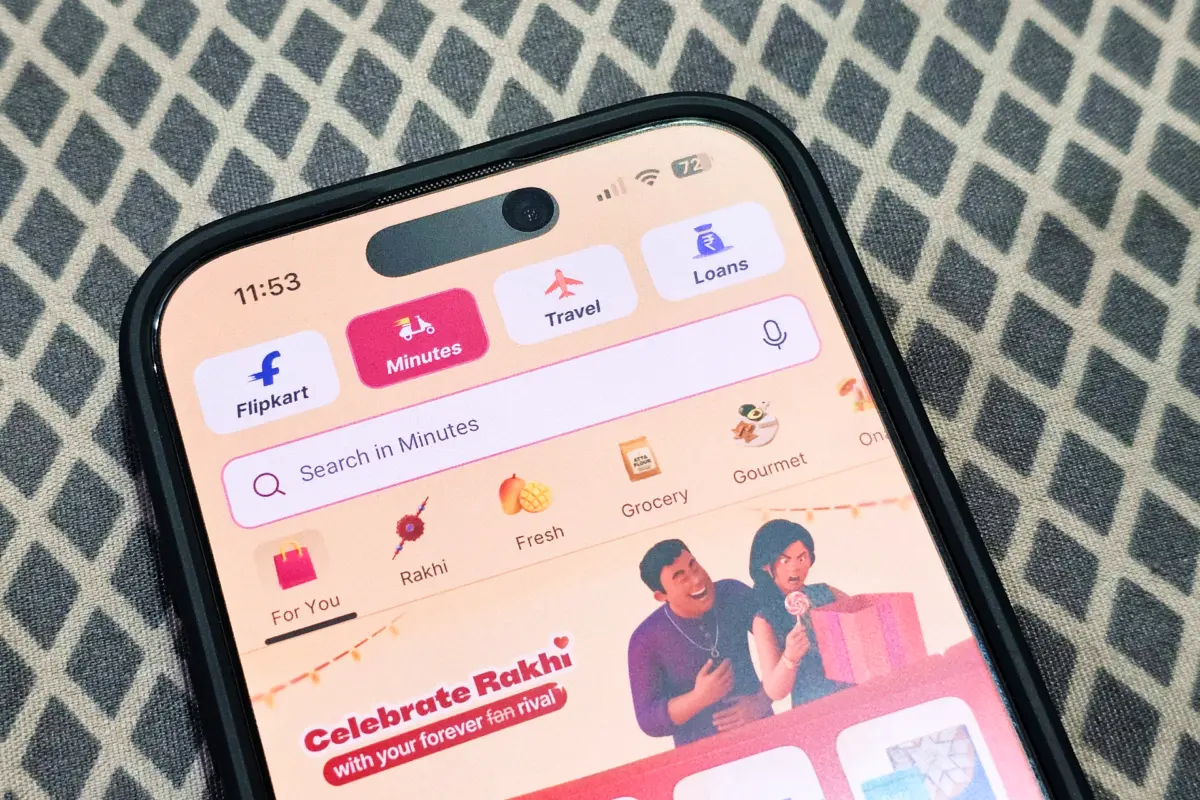
At the vanguard of this revolution are home-grown pioneers like Blinkit, Zepto, and Swiggy Instamart, who successfully re-engineered urban logistics to build a multi-billion-dollar quick-commerce industry. But the landscape is rapidly shifting. In a high-stakes challenge to these incumbents, Walmart-backed e-commerce titan Flipkart has launched an aggressive, capital-heavy ascent with its quick-delivery service, Flipkart Minutes.
Having debuted only in August 2024, Flipkart Minutes has achieved staggering growth velocity, surging to over 1.1 million to 1.2 million daily orders. This performance rapidly closes the gap on established heavyweights like Swiggy’s Instamart. Simultaneously, global e-commerce leviathan Amazon is ramping up its own instant-delivery infrastructure through Amazon Now, signaling an all-out war for the future of Indian retail wallet share.
As e-commerce giants and hyper-local startups collide, this report investigates the mechanics behind Flipkart’s rapid ascent, the shifting market dynamics among India’s top quick-commerce players, and the existential imperatives driving traditional retail behemoths into the hyper-local delivery arena.
Detailed Chronology: From Pandemic Experiments to the 10-Minute Economy
To understand the gravity of Flipkart’s recent charge, it is necessary to examine how India’s quick-commerce market matured. The sector was largely forged in the crucible of the COVID-19 pandemic, a period when traditional supply chains fractured and urban populations grew heavily reliant on rapid, contactless home deliveries for survival essentials.
[2013] Grofers Founded
  │
  ▼
[2020] Swiggy Launches Instamart (45-min)
  │
  ▼
[2021] Zepto Launches 10-Min Model; Grofers Rebrands to Blinkit
  │
  ▼
[Aug 2024] Flipkart Debuts "Minutes"
  │
  ▼
[Current] Flipkart Reaches ~1.2M Daily Orders; Amazon Scales "Amazon Now"
1. The Genesis of Hyper-Local Logistics (2013–2021)
- 2013: Long before the era of 10-minute deliveries, Grofers was founded as an online grocery platform. It would later serve as the institutional foundation for what is now the market leader, Blinkit.
- 2020: Food-delivery colossus Swiggy officially launched Instamart, initially promising grocery deliveries within a 45-minute window in select micro-markets like Gurugram. This move laid the groundwork for integrating quick logistics into everyday food-delivery app ecosystems.
- 2021: The true "instant" era arrived when Zepto burst onto the scene with a bold proposition: grocery and everyday essentials delivered in 10 minutes, powered by a dense network of hyper-local dark stores. Recognizing the writing on the wall, Grofers aggressively pivoted its entire business model, rebranding itself as Blinkit to focus exclusively on quick commerce. Zomato subsequently acquired Blinkit in 2022, injecting massive capital into its rapid expansion.
2. The Incumbent Dominance (2022–2024)
For nearly three years, Blinkit, Zepto, and Swiggy Instamart operated as an unassailable triumvirate. They systematically educated urban Indian consumers to abandon traditional corner grocery stores (kirana shops) and weekly supermarket runs in favor of instant gratification. Even as broader discretionary spending flickered due to macroeconomic pressures, quick-commerce transaction volumes soared, cementing structural changes in consumer behavior.
3. Flipkart’s Blitz and the Amazon Counter-Offensive (Late 2024–Present)
Recognizing that inaction meant slow obsolescence, Walmart-backed Flipkart entered the fray in August 2024 with the launch of Flipkart Minutes. What began as a cautious market test has rapidly evolved into a full-scale operational blitz. By leveraging its multi-billion-dollar supply chain, proprietary routing algorithms, and massive existing customer database, Flipkart has accelerated past historical growth curves.
Concurrently, Amazon has accelerated the rollout of Amazon Now, laying the groundwork for a massive infrastructure push across more than 300 Indian cities. The traditional e-commerce duopoly is no longer watching from the sidelines; they are actively reshaping the quick-commerce battlefield.
Supporting Context & Metrics: Inside the Numbers
The hyper-growth of Flipkart Minutes is not merely a matter of marketing; it is backed by staggering capital expenditure, rapid real estate acquisition, and highly optimized micro-warehousing logistics.
Order Volume Dynamics: Closing the Gap
Recent market research and operational estimates from intelligence firms paint a clear picture of India’s current quick-commerce hierarchy:
- Blinkit: Continues to command the market throne, processing between 3.4 million and 3.6 million daily orders.
- Zepto: Holds a strong second position, logging roughly 2.4 million to 2.6 million daily orders.
- Swiggy Instamart: Operates at approximately 1.4 million daily orders, supported by a massive operational footprint spanning over 130 cities and more than 1,4 million monthly transacting users.
- Flipkart Minutes: Has rocketed from 390,000–400,000 daily orders in November to an impressive 1.1 million to 1.2 million daily orders, closing rapidly on Instamart’s third-place standing.
Infrastructure Expansion: The Dark Store Race
The backbone of quick commerce is the micro-fulfillment center (commonly known as a "dark store")—compact, strategically located urban warehouses designed for rapid picking, packing, and dispatch.
Flipkart has systematically weaponized its balance sheet to scale this real estate footprint:
- January: ~600 micro-fulfillment centers.
- One Year Ago: ~340 facilities.
- Current Operations: Roughly 1,020 to 1,050 micro-fulfillment centers.
- Expansion Pace: Adding approximately 100 new facilities per month, with a firm strategic target of reaching 1,500 dark stores by the end of 2026.
This dense urban grid enables Flipkart Minutes to slash its average fulfillment time down to 11 minutes, an improvement from 13 minutes the previous year, despite handling triple the order volume.
+--------------------+-----------------------+-----------------------------+
| Quick-Commerce     | Estimated Daily       | Approximate Dark Store/     |
| Platform           | Orders                | Fulfillment Footprint       |
+--------------------+-----------------------+-----------------------------+
| Blinkit            | 3.4M – 3.6M           | Market Leader Network       |
| Zepto              | 2.4M – 2.6M           | High-Density Urban Grid     |
| Swiggy Instamart   | 1.4M                  | 1,200+ Stores / 130+ Cities |
| Flipkart Minutes   | 1.1M – 1.2M           | ~1,020 – 1,050 Stores       |
+--------------------+-----------------------+-----------------------------+
Unit Economics and Basket Metrics
While early quick-commerce days were characterized by unsustainable cash burn, market leaders are increasingly optimizing their unit economics. Flipkart Minutes is benefiting from highly engaged cohorts:
- Repeat Buyer Retention: Roughly 65% to 70% of monthly transacting customers are repeat buyers.
- Frequency Growth: Transactions per customer have surged by 50% to 60% year-over-year.
- Average Order Value (AOV): Customers spend an average of ₹400 to ₹500 ($4.20–$5.20) per order.
- Category Expansion: While high-velocity staples, fresh fruits, vegetables, dairy, and meat form the core volume drivers, Flipkart has successfully integrated higher-end gourmet selections, organic produce, and artisanal goods to expand profit margins.
Satish Meena, an adviser at Datum Intelligence, highlights the unique structural advantage Flipkart possesses:
"Flipkart is already a serious player. Once you open 1,000 dark stores and are doing a million orders per day, it’s serious enough. The company can tap an enormous pool of existing e-commerce customers it has already spent years and billions of dollars acquiring, giving Minutes a ready audience for faster deliveries."
Official Statements and Industry Perspectives
The rapid escalation of quick commerce has prompted commentary from top-tier analysts, financial institutions, and retail executives.
The Macroeconomic Shift: Bernstein Analysis
In a recent comprehensive report, equity analysts at Bernstein noted that while India’s broader consumer discretionary demand showed signs of softening in July, the migration toward digital retail channels remained resilient. Quick-commerce platforms continue to register robust growth in monthly active users, proving that convenience is insulated from broader economic headwinds.
Swiggy’s Strategic Outlook
Swiggy has doubled down on making its quick-commerce arm economically sustainable. Earlier this month, the food-delivery giant reiterated its corporate roadmap, targeting ₹10,000 crore in adjusted EBITDA by FY31. Swiggy noted that more than 45% of its Instamart dark-store network is now contribution-margin positive, proving that hyper-local delivery can transition from a cash-burning acquisition tool into a profitable business line.
Amazon’s Aggressive Regional Play
Amazon’s leadership has recognized that sitting out the instant-delivery revolution is not an option. During a high-profile visit to India, global CEO Andy Jassy highlighted that Amazon Now has emerged as the company’s fastest-growing business segment in the country, with order volumes doubling every quarter since inception.
Amazon’s operational roadmap includes:
- Scaling Amazon Now to over 300 cities.
- Constructing a proprietary network of more than 1,000 micro-fulfillment centers.
- Integrating larger fulfillment hubs to support an expanded catalog capable of instant delivery.
The Existential Necessity of Speed
Industry experts emphasize that quick-commerce expansion is driven as much by defense as it is by offense. As urban consumers become accustomed to receiving household essentials, groceries, and electronics within minutes, the psychological threshold for shopping changes permanently.
As Satish Meena succinctly puts it:
"Can you go back to scheduled delivery now in grocery? No. You will not go back."
Future Outlook: The Next Frontier of Indian Retail
As Flipkart Minutes races toward its target of 1,500 dark stores by 2026, and as Amazon aggressively scales Amazon Now across 300 cities, the battle for India’s digital consumer enters a hyper-competitive phase.
┌─────────────────────────────────────────────────────────────┐
│                 THE QUICK-COMMERCE TRIFECTA                 │
├──────────────────────────┬──────────────────────────────────┤
│ Incumbent Pioneers       │ Blinkit, Zepto, Swiggy Instamart │
├──────────────────────────┼──────────────────────────────────┤
│ E-Commerce Giants        │ Flipkart Minutes, Amazon Now     │
├──────────────────────────┼──────────────────────────────────┤
│ Core Strategic Focus     │ Sub-15 Min Delivery, Dark-Store  │
│                          │ Density, Gourmet/Electronics     │
└──────────────────────────┴──────────────────────────────────┘
Several key trends will define the trajectory of the market over the next 24 to 36 months:
- Category Blurring: Quick commerce is no longer confined to milk, bread, and vegetables. Platforms are increasingly fulfilling instant orders for consumer electronics, beauty supplies, over-the-counter pharmaceuticals, and high-end festive gifts. E-commerce giants like Flipkart and Amazon possess a distinct structural advantage here, given their deep supplier relationships across non-grocery verticals.
- Margin Optimization and Consolidation: As customer acquisition costs rise and logistics networks expand, smaller regional players may find it difficult to survive against the deep pockets of Walmart, Amazon, and Zomato. We are likely to see increased pressure on unit economics, pushing platforms toward private-label expansion and higher-margin non-grocery categories to achieve sustained profitability.
- Logistics Innovation and Automation: With labor costs and dark-store real estate expenses climbing in tier-1 Indian cities, future winners will rely heavily on predictive AI routing, automated pick-and-pack robotics, and advanced demand-forecasting models to shave precious seconds off delivery windows.
The era of waiting days—or even hours—for everyday goods is drawing to a close in urban India. With Flipkart closing in on the market leaders and Amazon mobilizing its global might, the 10-minute delivery battleground has become the definitive arena for the future of retail dominance.