Executive Overview
In the high-stakes ecosystem of Silicon Valley, autonomous artificial intelligence agents have quickly become the defining technological obsession of the decade. From software engineers deploying coding assistants to enterprises automating complex CRM workflows, the race to build agents that execute tasks on behalf of humans is moving at a breakneck pace. Yet, while much of the tech industry fixates on corporate productivity and developer velocity, an untapped frontier is emerging in the most complex operating system of all: the modern family household.
Enter Fambot, an innovative startup designed to bridge the gap between high-powered consumer AI and the chaotic, multi-threaded reality of domestic life. Billed as an “AI chief of staff” for parents, Fambot aims to alleviate the crushing cognitive burden of modern parenting—from school newsletters and sports schedules to medical appointments, birthday parties, and the invisible logistics of raising children.
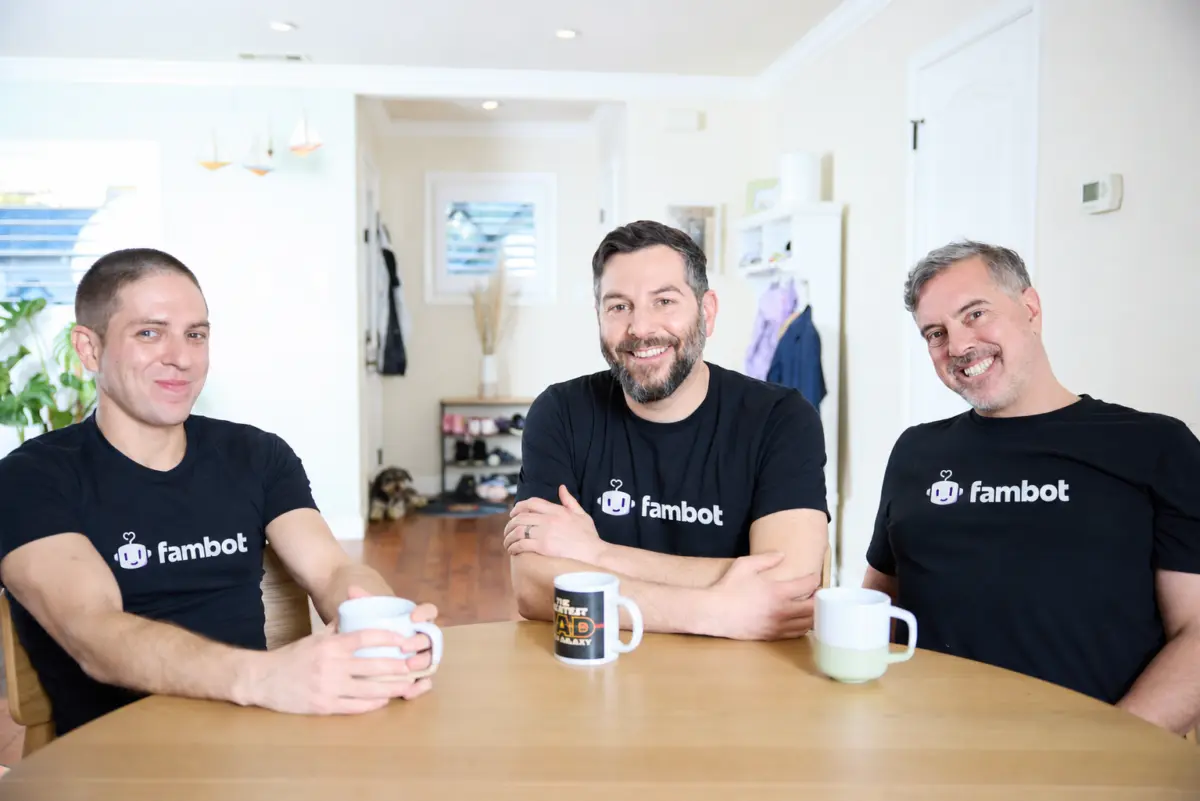
Founded by a seasoned trio of tech veterans—CEO David Reich (former president at UnitedMasters and Uber Transit team lead), CTO Greg Karlin (former Instagram engineer), and Jason Morrow (previously of Google and LinkedIn)—Fambot has secured $3.5 million in pre-seed funding. Co-led by NextView Ventures and Baukunst, with additional participation from Correlation Ventures, Karman Ventures, and Founders Network, the company enters the market with a clear thesis: while corporate workers have access to dedicated tools and executive assistants, the 43 million families in the United States with children under 16 have been fundamentally underserved by modern software.
Currently available in beta on iOS, Android, and the web, Fambot operates on a hybrid model of multi-model AI integration wrapped in a dedicated software suite. Eschewing the purely text-message-bound interfaces favored by many conversational AI upstarts, Fambot leverages full-fledged applications across web and mobile platforms. By syncing with calendars, email accounts, and messaging threads like WhatsApp, the startup aspires to become the central operating hub for household management. As Fambot moves out of its private testing phase—which saw rigorous evaluation across more than 1,000 diverse family units—it signals a broader evolution in how artificial intelligence will integrate into everyday human existence: moving from office desks directly into the family kitchen.
Detailed Chronology: From Personal Pain Point to Venture-Backed Startup
The genesis of Fambot did not begin in a sterile corporate accelerator or an academic computer science lab; it was born out of sheer exhaustion in a suburban home.
The Breaking Point (2022–2023)
David Reich, a father of three, found himself trapped in a familiar contemporary paradox. By day, he operated as an executive, steering large teams and managing complex organizational structures at high-profile companies like Uber and UnitedMasters. By evening, he returned home with a singular, deeply human objective: to unplug, be present for his children, help with homework, and enjoy family life.
Instead, Reich routinely found himself losing an hour or more of his evening to the invisible administrative drag of modern parenthood. Sorting through an avalanche of unread emails, reconciling disparate school calendars, deciphering permission slips, and responding to a barrage of WhatsApp group chats had transformed his post-work hours into a second, unpaid shift.
Reich was hardly alone. His co-founder, Greg Karlin, a veteran Instagram engineer, recognized the same structural friction in daily family communication. The traditional tools available to parents—spreadsheets, shared family calendars, sticky notes, and endless text threads—were reactive, fragmented, and fundamentally broken. They required constant manual entry and vigilance, acting as chores in their own right rather than solutions to chores.
Forming the Core Team (Late 2023)
Recognizing the magnitude of the problem, Reich and Karlin began conceptualizing a technological intervention. They envisioned an AI system that would not merely wait for prompts, but would proactively anticipate needs, aggregate disparate data streams, and act as a digital chief of staff.
Approximately a year and a half prior to their public launch, the founding duo recruited Jason Morrow, an alumnus of Google and LinkedIn. With Morrow rounding out the product and engineering strategy, the founding trio solidified their core mission: to build an intelligence layer capable of restoring time and mental bandwidth to working and non-working parents alike.
Beta Testing and Validation (2024–2025)
Before opening its doors to the broader public, the startup initiated a closed beta program, testing its software across more than 1,000 families. This rigorous validation phase yielded critical strategic insights that reshaped the company’s understanding of its target market.
Initially, the founders hypothesized that their primary user base would consist strictly of dual-income, high-stress, two-parent households with multiple children. However, beta data revealed a much broader appeal. Fambot proved equally valuable to single-parent households, families with only children, households where parents do not work outside the home, and diverse family structures of all configurations. The mental load of managing a child’s life, it turned out, was universally burdensome regardless of household structure or employment status.
Funding and Public Debut (Late 2025/2026)
Bolstered by positive beta metrics and a clear product-market fit, Fambot closed a $3.5 million pre-seed funding round co-led by NextView Ventures and Baukunst. With capital secured and a hardened product architecture, the company stepped out of stealth mode, launching its multi-platform application suite on iOS, Android, and web browsers.
Supporting Context & Metrics: The Mechanics of the "Mental Load"
To understand why a tool like Fambot commands venture capital interest, one must examine the staggering volume of information and administrative labor required to raise a child in the 21st century.

The Anatomy of Family Information Overload
The "mental load"—a sociological term traditionally used to describe the psychological burden of organizing household and family labor—has expanded exponentially in the digital age. A generation ago, family logistics were largely confined to paper notes sent home in backpacks and announcements pinned to refrigerators. Today, communication is hyper-fragmented across an array of digital silos:
- Email Subscriptions: Weekly newsletters from school principals, individual teachers, after-school care programs, pediatricians, and local libraries.
- Dedicated School & Club Apps: Proprietary portals for attendance, grades, lunch accounts, and extracurricular sign-ups.
- Messaging Platforms: Countless WhatsApp, iMessage, and Slack groups for soccer teams, class parents, birthday party coordination, and neighborhood carpools.
- Physical Ephemera: Flyers, permission slips, and event calendars that still manage to slip past digital filters.
According to demographic data cited by Fambot’s leadership, there are approximately 43 million families in the United States with children under the age of 16. Despite representing a massive, economically vital segment of the population, these families have historically been forced to patch together ad-hoc software solutions designed for enterprise productivity—such as Slack, Google Calendar, or Todoist—none of which are optimized for the unique, multi-stakeholder dynamic of parenting.
Financial and Operational Structure
Fambot’s business model reflects a consumer-first SaaS (Software-as-a-Service) approach:
- Current Phase: Free beta testing period across iOS, Android, and web.
- Projected Pricing: The company anticipates pricing the subscription model around the cost of a standard streaming service (such as Netflix), aligning with accessible household discretionary budgets.
- Privacy and Data Security: Addressing a primary concern for modern consumers utilizing AI, Fambot has instituted strict data governance protocols. The underlying multi-model AI architecture is strictly partitioned: none of the underlying models are permitted to train on user data, ensuring that sensitive family schedules, communications, and children’s information remain private and secure.
Official Statements and Industry Perspective
The founding team has been vocal about the philosophical and psychological underpinnings of their platform. In interviews surrounding the public launch, CEO David Reich emphasized that Fambot is designed to give parents back what technology so often steals: uninterrupted, high-quality human presence.
"I have three kids and am constantly struggling between doing all these executive jobs — as my wife is doing as well," Reich explained in a recent company statement. "And then, getting home at the end of the day, I just want to unplug, spend some time with my kids, be present, do some homework together… kick the ball around, and instead I find myself just spending an hour, literally, catching up on 40 emails."
Reich notes that the core value proposition of Fambot lies in its proactive intelligence rather than passive search or text retrieval.
"There’s 43 million families in the U.S. with kids under 16, and they just haven’t gotten the support that they need," Reich said. "We know what you’re going to face before you do sometimes, so that you can be prepared for it."
Industry analysts watching the consumer AI space have noted that Fambot’s departure from pure text-based interfaces represents a maturation in how developers approach agentic software. While many hyped consumer AI startups position themselves as SMS bots or simple chat widgets, Fambot’s insistence on building a native multi-platform application suite (spanning mobile and desktop web) allows it to handle complex file parsing, calendar synchronization, and rich visual dashboards that text messaging simply cannot support.
Future Outlook: Beyond the Chatbot
As Fambot scales its operations following its pre-seed funding round, the startup’s roadmap points toward a future where autonomous agents function less like novelty chatbots and more like indispensable civic infrastructure for the home.
1. Deep App Integrations
While Fambot currently aggregates data from user email, calendars, and designated WhatsApp channels, the company is actively engineering deeper API integrations with the fragmented software ecosystem used by schools, youth sports leagues, and local community clubs. Over time, these integrations will allow Fambot to automatically register children for events, pay fees, sync permission forms, and update family calendars without requiring manual human data entry.
2. Conversational Flexibility
Fambot does not abandon text-based interaction entirely; users retain the ability to text the bot on the go to ask quick scheduling questions, check to-do lists, or log sudden updates. However, the text interface operates as an auxiliary input method rather than the sole bottleneck of the software, combining the immediacy of messaging with the robust capabilities of a dedicated web and mobile application.
3. The Broader Consumer AI Landscape
Fambot’s trajectory offers a compelling glimpse into the next wave of consumer technology. As foundational AI models become commoditized and cheaper to run, the competitive advantage is shifting rapidly toward verticalized software products that understand specific human workflows. Just as vertical SaaS transformed enterprise software in the 2010s by catering to specific industries (like real estate or restaurant management), vertical AI agents are poised to transform consumer life by catering to specific demographic rituals—none more complex, universal, or emotionally resonant than raising a family.
For the millions of parents drowning in administrative tasks, startups like Fambot represent a promising counter-narrative to tech-induced burnout: an era where artificial intelligence is finally deployed not to keep people glued to their screens, but to help them put their phones down and return to the physical world.