Executive Overview
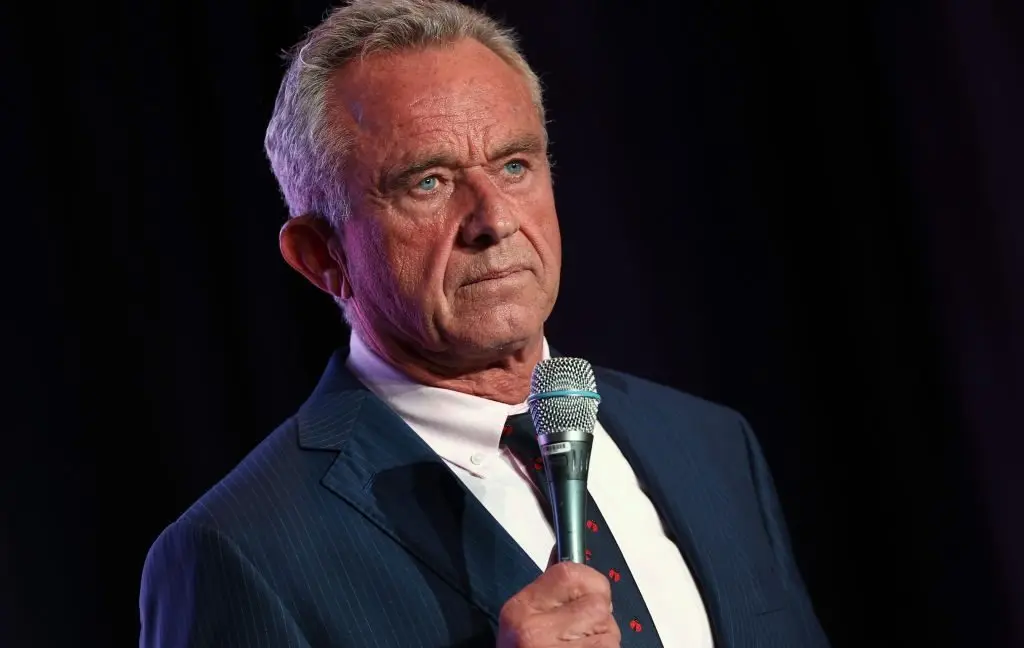
The intersection of public health policy and fringe political advocacy has reached a critical juncture. Robert F. Kennedy Jr., following his transition into a prominent federal health leadership role in early 2025, has long attempted to project an image of moderation to the broader public and legislative bodies. Yet, recent developments signal a profound regression to the foundational roots of his decades-long activism. Most notably, Kennedy’s decision to headline an upcoming conference hosted by Children’s Health Defense (CHD)—an organization he formerly led—lays bare the persistent ideological tensions defining contemporary American health politics.
Billed under the innocuous banner of the "pursuit of a more perfect future," the CHD conference serves as a focal point for the modern "health freedom movement," a euphemism for a loose coalition of vaccine skeptics, alternative health proponents, and political contrarians. While in-person tickets priced at $250 have officially sold out, organizers continue to monetize the event through discounted overflow seating and global livestream access. The agenda reads like a who’s who of vaccine skepticism, featuring prominent political figures such as Senator Ron Johnson (R-Wis.) and Senator Rand Paul (R-Ky.), alongside institutional figures from aligned think tanks and media outlets.
This high-profile return to the CHD stage occurs against a backdrop of intense political pressure from the executive branch. Recent investigative reports indicate that President Donald Trump has actively urged Kennedy to adopt a more aggressive posture regarding long-debunked falsehoods, specifically demanding intensified efforts to link routine childhood immunizations to autism. This confluence of events highlights a deepening schism between mainstream epidemiological consensus and the ideological goals of political appointees who wield significant authority over the nation’s public health infrastructure.
Detailed Chronology: From Activist Roots to Federal Appointee
To understand the gravity of Kennedy’s headline appearance at the CHD conference, one must trace the chronological arc of his career from an environmental lawyer to the standard-bearer of the modern anti-vaccine movement, and ultimately, to his controversial ascension within the federal government.
The Formative Decades of Activism (2005–2020)
For over fifteen years, Robert F. Kennedy Jr. systematically built an empire of skepticism around the safety and efficacy of vaccines. Through his leadership at Children’s Health Defense (originally founded as World Mercury Project), Kennedy amplified discredited claims regarding thimerosal, aluminum adjuvants, and the triple-antigen MMR vaccine. Despite an overwhelming body of peer-reviewed, global scientific literature refuting any causal link between vaccines and autism, Kennedy’s organization served as a primary clearinghouse for medical misinformation. The rhetoric deployed by CHD during this era successfully leveraged institutional distrust, transforming public health measures into cultural flashpoints.
The Presidential Bid and the Shift in Rhetoric (2023–2024)
As Kennedy launched his independent bid for the presidency in the 2024 election cycle, his public messaging underwent a strategic recalibration. Recognizing that wholesale rejection of vaccines could alienate moderate voters essential for a viable national campaign, Kennedy frequently attempted to soften his public posture. He claimed he was not "anti-vaccine" per se, but rather "pro-safety," a linguistic maneuver designed to launder fringe positions into mainstream political discourse. However, his campaign events and private donor calls consistently reassured his core base of alternative health supporters that his underlying skepticism remained entirely intact.
The Confirmation Hearings and Formal Separation (Early 2025)
The friction between Kennedy’s past and his ambitions culminated in his nomination and subsequent confirmation hearings for a top federal health post at the beginning of 2025. During these high-stakes congressional hearings, Kennedy formally severed his operational ties with Children’s Health Defense to clear ethical hurdles and appease moderate senators. Under intense questioning, Kennedy made repeated, unequivocal assertions that he was "pro-vaccine," explicitly attempting to distance himself from his decades-long public record. These performances were widely characterized by watchdogs as reality-bending exercises in political survival, designed to satisfy confirmation requirements while leaving his true ideological intentions ambiguous.
The Post-Confirmation Realignment (Mid-2025 to Present)
The illusion of separation between Kennedy and the anti-vaccine apparatus was short-lived. Following his entry into the federal health administration, internal friction quickly emerged regarding the pace and aggressiveness of his proposed policy changes. Reports surfaced detailing White House frustration that Kennedy had not moved fast enough to purge specific vaccine recommendations or manufacture the requested pseudo-scientific linkages to neurological disorders. By choosing to headline the upcoming CHD conference, Kennedy has discarded any remaining pretense of institutional neutrality, signaling an unmistakable return to the ideological fold that nurtured his rise to prominence.
Supporting Context & Metrics: The Architecture of the Conference
The upcoming Children’s Health Defense conference is far more than a routine gathering of ideological sympathizers; it is a meticulously organized logistical operation designed to reinforce alternative health networks and generate revenue for ongoing legal and lobbying efforts.
Financial and Logistical Metrics
- Ticket Pricing Tiers: General in-person admission was established at a premium price of $250, reflecting high demand among core supporters. Despite this cost, the primary allocation sold out well in advance. To capture residual demand, organizers introduced secondary seating tiers inside the main conference room for $125, alongside global livestream access passes priced at $100.
- Event Timeline: The primary sessions, panel discussions, and keynote addresses are scheduled for a single intensive day on September 17, preceded by an exclusive VIP opening reception on the evening of September 16.
- Organizational Footprint: The event relies heavily on the administrative and media infrastructure of CHD, which has expanded its operational budget significantly over the past five years through digital fundraising and high-net-worth donor contributions.
The Speaker Roster: A Convergence of Political and Ideological Power
The composition of the speaker lineup underscores the institutionalization of vaccine skepticism within a specific faction of American politics. The presence of sitting United States Senators demonstrates how deeply anti-establishment health narratives have penetrated mainstream legislative bodies:
- Sen. Ron Johnson (R-Wisc.): A long-standing ally of alternative health movements, Johnson has repeatedly used his congressional platform to elevate fringe medical claims, host panels questioning pandemic-era interventions, and challenge federal health agencies.
- Sen. Rand Paul (R-Ky.): An ophthalmologist by training, Paul has frequently clashed with federal health officials, leveraging his legislative authority to critique public health mandates and amplify skepticism regarding institutional consensus on virology and immunology.
- Mark Gorton: Serving as the president of the MAHA (Make America Healthy Again) Institute, Gorton represents the financial and strategic alignment between Kennedy-aligned policy groups and broader political infrastructure.
- Jan Jekielek: Representing the Epoch Times, Jekielek’s inclusion highlights the symbiotic relationship between conservative media outlets and the alternative health movement, where fringe narratives find an eager and expansive audience.
- Mary Holland and CHD Staff: As the current CEO of Children’s Health Defense, Holland represents the institutional continuity of the organization, ensuring that the day-to-day advocacy mirrors the foundational vision established by Kennedy.
Official Statements and Institutional Reactions
The revelation that a senior federal health official is slated to headline an unapologetically anti-vaccine conference has triggered alarm across the medical, scientific, and public health communities, while eliciting defensive postures from political allies.
The Scientific and Medical Consensus
Leading medical associations, including the American Academy of Pediatrics (AAP), the American Medical Association (AMA), and the Infectious Diseases Society of America (IDSA), have issued stern rebukes regarding the event. Public health advocates point out that the normalization of vaccine hesitancy by individuals occupying high-ranking government positions poses an immediate and measurable threat to herd immunity.
Dr. Elena Vance, a prominent epidemiologist tracking the resurgence of vaccine-preventable illnesses, noted in a recent brief:
"When individuals tasked with safeguarding the public health apparatus choose to validate organizations dedicated to dismantling vaccination programs, the consequences are not merely theoretical. We see immediate drops in immunization rates, followed inevitably by outbreaks of measles, pertussis, and other pathogens that modern medicine successfully conquered decades ago."
Congressional and Political Fallout
Democratic lawmakers on relevant oversight committees have demanded transparency regarding Kennedy’s ongoing financial and ideological entanglements with CHD. In a joint statement, several ranking members emphasized that Kennedy’s public commitments made during his confirmation hearings—where he swore allegiance to scientific rigor and distanced himself from anti-vaccine advocacy—appear to have been made in bad faith.
Conversely, defenders of the conference within libertarian and populist political circles argue that the event represents the purest expression of "health freedom." Proponents claim that censoring or criticizing public figures for engaging with alternative health groups infringes upon First Amendment protections and stifles necessary debates regarding pharmaceutical industry influence and regulatory capture.
Future Outlook: Implications for American Public Health
As the date of the Children’s Health Defense conference approaches, the broader implications for the United States health system are profound and troubling. The event serves as a bellwether for the trajectory of federal health policy under an administration increasingly influenced by populist skepticism of institutional expertise.
1. Erosion of Institutional Trust
The willingness of a high-ranking health official to actively participate in and headline events hosted by an organization historically hostile to routine immunizations accelerates the erosion of public trust in agencies such as the CDC, FDA, and NIH. When citizens can no longer distinguish between evidence-based public health guidance and politically motivated fringe theories, compliance with critical vaccination schedules plummets.
2. Policy Shifts and Regulatory Interference
Beyond rhetoric, the ideological alignment between the executive branch’s private demands—such as pushing for manufactured links between autism and vaccines—and Kennedy’s institutional positioning signals potential interference in grant funding, advisory committee appointments, and vaccine approval processes. The traditional wall separating rigorous scientific peer review from political ideology is visibly cracking.
3. Public Health Vulnerabilities
Ultimately, the most tangible outcome of this political trajectory will be measured in epidemiological data. As immunization rates stall or decline in specific geographic and demographic clusters, public health departments must prepare for localized resurgences of vaccine-preventable diseases. The institutional embrace of the "health freedom" movement at the highest levels of government guarantees that combating medical misinformation will remain one of the most formidable challenges facing the global scientific community for the foreseeable future.