The global ecommerce landscape is undergoing a structural paradigm shift, driven by rapid advancements in artificial intelligence, real-time visual technology, and decentralized logistics infrastructure. This week’s ecosystem developments highlight a definitive movement away from fragmented point solutions toward holistic, AI-native platforms capable of automating end-to-end merchant operations.
From advanced popup analytics and unified site builders to real-time virtual try-ons and autonomous drone delivery networks, technology providers are aggressively equipping online retailers with tools designed to reduce operational friction, optimize customer acquisition, and maximize conversion rates.
As consumer expectations for hyper-personalization, immediate fulfillment, and immersive visual discovery continue to accelerate, merchants face both unprecedented opportunities and operational complexities. Artificial intelligence is no longer merely a feature—it has become the foundational infrastructure underpinning site creation, digital marketing, visual asset generation, and marketplace optimization.
This comprehensive report examines the most critical product releases, strategic partnerships, and platform updates shaping the digital commerce ecosystem, providing merchants, enterprise strategists, and technology leaders with an authoritative analysis of the current market trajectory.
1. Storefront Optimization and Conversion Technology
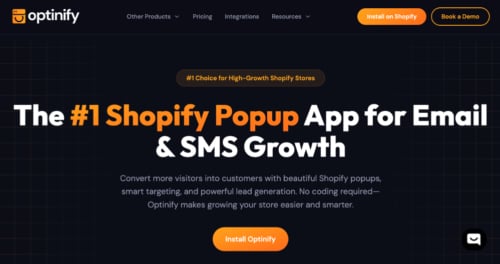
Optinify Updates Popup Analytics for Shopify Stores
Optinify, a prominent Shopify popup application engineered for email and SMS lead capture, has rolled out a ground-up system redesign aimed at delivering granular analytics. The updated framework empowers high-growth merchants to monitor real-time popup views, direct conversions, and the precise revenue generated from individual campaign interactions. By linking specific campaign metrics to user behavior, Optinify enables merchants to execute rigorous A/B testing across headlines, promotional offers, visual designs, and copy variations.
Hostinger Debuts AI Builder for Web Apps and Sites
Web hosting and domain registration giant Hostinger has officially launched its unified AI Builder, consolidating its core website generation and horizons toolsets into a singular ecosystem. Beyond standard site design and automated code generation, the platform orchestrates complex backend processes, including user account authentication, database provisioning, secure data storage, ecommerce catalog management, and automated email marketing setup.
Attentive Introduces AI Grow for Omnichannel List Building
Omnichannel marketing pioneer Attentive has unveiled AI Grow, a machine-learning solution built to optimize email and SMS subscriber acquisition. By analyzing real-time browsing patterns and intent signals across both logged-in users and anonymous site visitors, AI Grow dynamically determines the optimal micro-moment to present opt-in invitations. Each deployment is validated via continuous, automated A/B testing against legacy capture methods.
2. Next-Generation Visual Content and Advertising Tech
Tilt Launches "Clips" for Shoppable Short-Form Video
Live-shopping application Tilt has expanded its social commerce capabilities with the release of Clips, a continuous, scrollable feed of short-form shoppable videos. The system allows merchants to monetize unsold inventory post-livestream or operate entirely asynchronously. Sellers simply hold up an item on camera and describe it verbally; proprietary AI algorithms automatically categorize, brand, size, and assess the condition of the merchandise to instantly generate a buyable asset.
Designkit Releases AI Video Platform for Product Photography
Creative portal Designkit has deployed a specialized AI video engine that transforms static product photographs into production-ready marketing assets. Tailored for multichannel distribution, the platform formats content natively for TikTok, Instagram Reels, YouTube Shorts, and storefront product display pages.
Sell The Trend Deploys AI Ads Blueprint
Dropshipping platform Sell The Trend has introduced AI Ads Blueprint, an automated ad creation suite designed to accelerate campaign deployment. The platform streamlines the journey from product ideation to finalized advertisement by allowing merchants to select preferred ad formats while AI generates creative assets and persuasive ad copy. Sellers can iteratively refine individual elements—such as layouts, messaging frameworks, and visual directions—without rebuilding entire campaigns from scratch.
LibAI Lab Launches NewFace for Agentic Creative Production
LibAI Lab has rolled out NewFace, an advanced AI creation platform targeting ecommerce brands, digital agencies, and creator economies. Operating on a node-based canvas, NewFace allows users to articulate creative direction in natural language. The autonomous agent builds projects step-by-step while retaining contextual data, brand briefs, and prior iterations, giving operators the flexibility to approve changes automatically, intervene manually, or take control of specific production nodes.
Koozee Unveils AI Visual Production Suite for Apparel Retailers
Australia-based Starii Tech has introduced Koozee, an all-in-one visual production ecosystem dedicated to apparel ecommerce. The platform enables fashion merchants to upload a single garment image to generate hyper-realistic model photography, dynamic lookbooks, flat lays, detail shots, ghost mannequin assets, and fit-log videos. Retailers can effortlessly alter model demographics, environmental scenes, dynamic poses, and camera angles to scale their visual catalogs efficiently.
3. Enterprise Marketing, Media Networks, and B2B Networks
Meta Rolls Out Expanded AI Tools for Small Businesses
Meta has integrated advanced AI capabilities across its small business tool suite, bridging Facebook, Instagram, ad campaign managers, and Google Workspace environments. Business owners can prompt Meta AI to synthesize company data and real-time web intelligence to autonomously generate comprehensive presentation decks, operational documents, and financial spreadsheets.
GrowthLoop Scales Composable Commerce Media Network (CMN)
AI-driven marketing leader GrowthLoop has expanded its enterprise commerce media network architecture through native integrations with prominent adtech partners The Trade Desk, Moloco, and Audience Acuity. Operating directly atop modern cloud data warehouses like Google BigQuery, Snowflake, and Databricks, the expanded platform enables retailers to unify onsite and offsite media activation, leverage deep audience intelligence, and execute closed-loop performance measurement.
Astute Secures $1.2M Funding and Launches B2B Creator Platform
B2B creator management startup Astute has closed a $1.2 million pre-seed funding round supported by Flyer One Ventures, Silicon Gardens, Marathon Fund, and Entrepreneurs Roundtable Accelerator. The platform is designed to help B2B enterprises navigate, identify, and manage strategic partnerships across a fragmented digital landscape spanning newsletters, podcasts, and social media channels.
4. Logistics, Fintech, and Marketplace Expansions
Uber and Zipline Form Strategic Partnership for Autonomous Drone Delivery
Drone delivery pioneer Zipline has forged a high-profile alliance with Uber Technologies to scale autonomous aerial delivery across the United States. Backed by a strategic corporate investment from Uber, the initiative sets an ambitious target of achieving one million daily drone deliveries by the end of 2029, with initial commercial rollouts scheduled for later this year. Uber Eats consumers will soon have the option to receive qualifying orders via Zipline’s autonomous delivery drones within minutes.
BPMS Launches "Bloom" Marketplace Growth Accelerator
Agency network BPMS has announced the launch of Bloom, an institutional marketplace accelerator designed to help consumer brands scale across major digital channels, including Amazon, Walmart Marketplace, Target Plus, and TikTok Shop. Bloom provides comprehensive lifecycle support, ranging from initial storefront setup and category mapping to catalog management, search engine optimization (SEO), and reputation monitoring.
Alipay Unveils Agentic Commerce Platform for Merchants
Alipay, the flagship payment ecosystem of Alibaba Group, has introduced an agentic commerce architecture for merchants. The platform allows businesses to convert legacy web pages, product catalogs, and transactional workflows into agent-ready skills and Model Context Protocol (MCP) tools, facilitating advanced task execution, skill orchestration, and automated operational management.
ShouldEye Debuts AI Visibility and Reputation Control Platform
Trust and verification platform ShouldEye has launched a B2B SaaS tool enabling companies to monitor, evaluate, and manage their brand reputation and visibility across leading artificial intelligence models. The platform audits how major AI models perceive and recommend a brand, flags informational inconsistencies, and provides embeddable trust badges for digital storefronts.
Remark Introduces Real-Time High-Definition Virtual Try-On Technology
Luxury-focused commerce platform Remark has launched a real-time virtual try-on solution that dynamically tracks user movement. Requiring no consumer application downloads, the widget embeds directly into product pages, rendering garments instantly in high definition at natural frame rates based entirely on the brand’s proprietary product imagery and metadata.
Shoppa.ca Launches Dedicated Marketplace for Canadian Businesses
Buy Canadian Group Inc. has debuted Shoppa.ca, a specialized discovery engine and online marketplace exclusively reserved for Canadian-owned enterprises and locally manufactured goods. Sellers benefit from dedicated "Canadian-Owned" and "Made in Canada" product badging to transparently highlight domestic provenance to conscious consumers.
Supporting Context & Strategic Metrics
The clustering of these diverse technology releases underscores a broader macroeconomic trend: merchants are aggressively trimming software bloat in favor of consolidated, intelligent platforms. According to recent ecommerce sector analyses, marketing acquisition costs (CAC) continue to face upward pressure across traditional paid search and social channels, forcing brands to optimize onsite conversion rates and build owned media assets.
The Rise of Agentic Workflows: The introduction of agentic commerce frameworks by giants like Alipay and creative platforms like LibAI Lab signals a transition from passive AI chat interfaces to active, autonomous digital workers capable of multi-step task execution.
The Visual Commerce Imperative: With solutions from Koozee, Designkit, and Remark, the industry is addressing the high cost of traditional photo and video production. Automated asset generation and real-time virtual try-ons directly address cart abandonment by bridging the imagination gap inherent in online shopping.
Logistics as a Differentiator: The Uber-Zipline partnership emphasizes that fulfillment speed remains a primary competitive moat. Autonomous drone delivery moves past the experimental phase into mass commercial scaling, promising dramatic reductions in last-mile delivery times.
Official Industry Statements
Industry leaders emphasized the transformative nature of these latest platform deployments:
"The modern consumer expects seamless, personalized experiences across every digital touchpoint. By unifying site building, backend data architecture, and AI-driven marketing into a single ecosystem, we are eliminating the technical friction that holds growing merchants back."
— Hostinger Product Development Team
"Autonomous delivery is no longer a futuristic concept; it is an economic necessity for modern urban and suburban logistics. Our partnership with Uber represents a quantum leap toward scaling high-speed, zero-emission fulfillment to millions of households daily."
— Zipline Executive Leadership
"Real-time visual rendering changes the fundamental physics of online apparel and luxury retail. When a shopper can see a garment adapt instantly to their own movement without downloading an app, conversion metrics shift dramatically."
— Remark Product Strategy Group
Future Outlook: What Merchants Must Anticipate
As the digital commerce ecosystem absorbs these innovations over the next 12 to 36 months, several strategic imperatives will define market leaders:
Consolidation of Tech Stacks: Merchants will increasingly abandon fragmented point solutions in favor of modular, AI-native platforms (such as those offered by Hostinger, GrowthLoop, and Alipay) that handle data storage, marketing automation, and storefront operations natively.
Generative AI as Baseline Infrastructure: Static product photography and manual ad copywriting will become obsolete. Retailers must adopt automated asset generation pipelines (like Koozee, Sell The Trend, and NewFace) to maintain the velocity required for modern social commerce and performance marketing.
Optimization for AI Discovery (AIO): With platforms like ShouldEye entering the market, optimizing how large language models and autonomous agents perceive, evaluate, and recommend a brand will become as critical as traditional search engine optimization (SEO).
Omnichannel Fulfillment Evolution: As drone delivery networks expand through partnerships like Uber and Zipline, consumer expectations for ultra-fast fulfillment will force regional merchants to rethink their inventory positioning and last-mile logistics strategies.
Ultimately, brands that successfully integrate autonomous AI agents, immersive visual technologies, and unified data architectures into their operations will be best positioned to capture market share in an increasingly competitive global economy.