The global ecommerce landscape is undergoing a structural paradigm shift. As online retail matures into an ecosystem dominated by autonomous agents, predictive data analytics, and hyper-integrated logistics, merchants face an increasingly complex set of demands. The old playbook—relying on static website builders, manual keyword optimization, and siloed marketplace management—is rapidly losing efficacy.
This week’s roundup of product releases, platform updates, and strategic acquisitions highlights a definitive turning point for the industry: the mainstream operationalization of agentic commerce.
From Shopify’s AI-driven visual design surface and Amazon Ads’ multi-channel autonomous campaign manager to TikTok’s in-app purchasing agents and advanced supply-chain risk mitigation suites from legacy carriers like UPS, technology providers are racing to build the invisible infrastructure of tomorrow. Artificial intelligence is no longer restricted to chat-based copilots answering basic customer service inquiries. Today, AI agents are actively writing code, designing user interfaces, reviewing screenshots, managing cross-border supply chains, and executing high-level multi-channel marketing campaigns.
At the same time, physical fulfillment and reverse logistics are evolving to meet the heightened velocity of modern consumer expectations. Breakthroughs in same-day delivery pilots, no-box/no-label returns, and international export infrastructures are compressing geographical boundaries, allowing micro-merchants and enterprise giants alike to scale globally with unprecedented agility.
This comprehensive analysis examines the major product rollouts, platform integrations, and infrastructural shifts impacting merchants globally, breaking down how these developments will shape competitive dynamics in the quarters ahead.
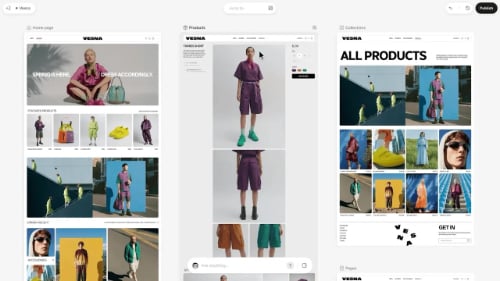
Shopify Introduces Canvas for Store Design: Shopify has officially rolled out Canvas, a revolutionary visual design surface that deeply integrates Sidekick, the platform’s proprietary AI agent. Canvas fundamentally re-architects how merchants approach storefront creation. Instead of navigating rigid template settings or writing complex code, merchants can view macro-level page layouts to evaluate the store’s overall aesthetic and user journey, then seamlessly zoom in to refine granular details. Sidekick works in tandem with the user: merchants can interact via natural-language chat prompts or click directly on on-screen elements to execute instant changes. Crucially, as the AI builds out the interface, Sidekick performs automated validations and reviews live screenshots directly on the Canvas surface to ensure design integrity and responsiveness.
2. Marketplace Integrations & Fulfillment
ShipStation Launches "Ship with Walmart": Small and mid-sized businesses leveraging ShipStation can now access discounted carrier rates and robust seller protections directly through a native integration with Walmart Marketplace. Entitled Ship with Walmart, the tool eliminates the friction of managing external marketplace shipping protocols by centralizing domestic U.S. label purchases, order tracking, and marketplace compliance within the core ShipStation workflow.
USPS and Amazon Partner on Same-Day Delivery Pilot: In a move calculated to compress final-mile delivery windows, the U.S. Postal Service (USPS) and Amazon have launched a localized same-day delivery pilot program. Under this operational model, Amazon packages arriving at designated USPS hubs between 12:00 p.m. and 1:00 p.m. local time are rapidly sorted and assigned to mail carriers for final delivery between 2:00 p.m. and 8:00 p.m. the same day. To ensure operational stability, the pilot caps participating USPS locations at 200 packages and three dedicated delivery routes daily.
uParcel Launches Complete Marketplace Outsource Solutions (CMOS): Singapore-based fulfillment and last-mile logistics provider uParcel has debuted a comprehensive end-to-end management service designed to run entire ecommerce operations on behalf of brands. Dubbed Complete Marketplace Outsource Solutions, the offering covers storefront construction and optimization across major regional platforms (Shopee, Lazada, and TikTok Shop), exhaustive catalog and inventory management, promotional execution, on-platform advertising, customer service, and physical warehousing/dispatch.
3. Agentic Commerce & AI-Powered Discovery
TikTok Unveils Agentic Commerce Suites: Capitalizing on the convergence of social media and transactional intent, TikTok has introduced a suite of agentic shopping tools designed to streamline discovery and conversion. The newly launched Buy Direct feature enables friction-free in-app checkouts, while Shopping Assistant acts as a conversational AI agent providing real-time consumer guidance regarding product specifications, sizing, availability, and shipping timelines. Additionally, TikTok introduced a specialized AI Agent dedicated to optimizing B2C lead generation.
Amazon Ads Introduces Ads Agent:Amazon has entered the agentic marketing space with the rollout of Ads Agent, an AI platform that unifies previously fragmented advertising formats. Spanning sponsored listings, full-funnel marketing strategies, display, video, and audio campaigns, Ads Agent serves as a centralized decision-support and execution engine. Advertisers retain the flexibility to manually configure campaigns, lean entirely on Amazon’s algorithmic optimization, or adopt a hybrid approach.
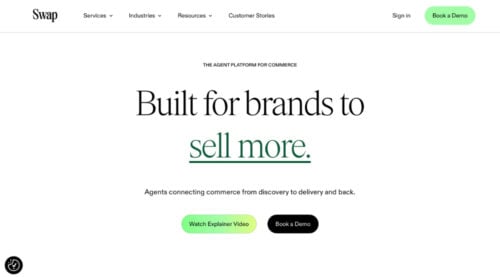
Swap Acquires Vizby: Discovery-to-delivery ecommerce platform Swap has completed the acquisition of Vizby, a Shopify-native AI visibility optimization tool. The acquisition supercharges Swap’s existing agentic infrastructure—specifically its Storefront and Checkout+ systems—by embedding advanced AI-driven discovery capabilities into its foundational software stack.
Contentstack Launches Canoe: Digital platform innovator Contentstack has released Canoe, an AI visibility analytics tool that audits how generative search engines describe brands and their industry competitors. By scanning a brand’s URL, Canoe automatically identifies core business offerings, product lines, target buyer personas, and up to 10 key competitors. Following human review and refinement, the system generates predictive buyer queries tagged by shopping journey stage, ranging from top-of-funnel awareness to final-stage purchase consideration.
4. Customer Service, Engagement, & Governance
Helppli Launches HelppliX Agent: Product-launch and customer journey platform Helppli has expanded its ecosystem with the launch of HelppliX Agent, a highly configurable conversational AI agent. Engineered to operate seamlessly across voice, WhatsApp, SMS, web chat, and email, the agent can be customized to fulfill specific enterprise roles, functioning variously as a digital receptionist, inbound sales assistant, or tier-1 support specialist.
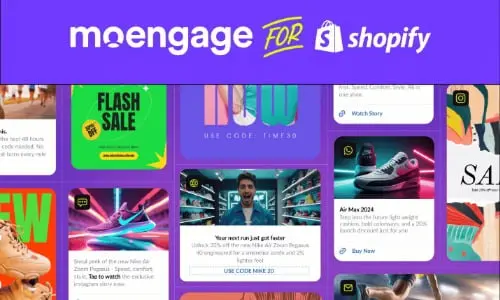
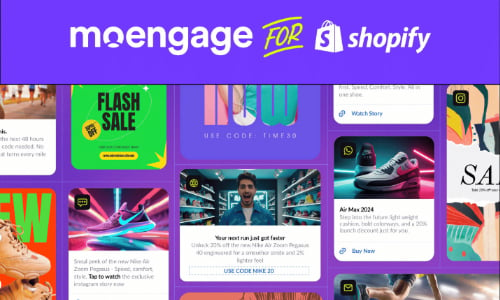
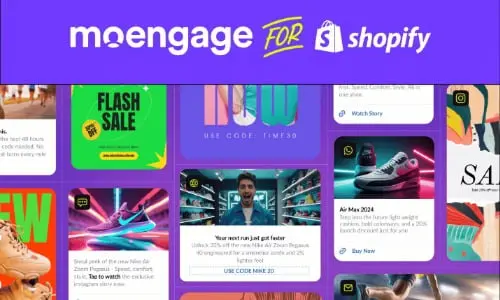
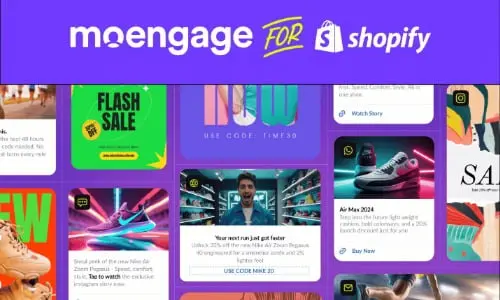
MoEngage Launches MoEngage for Shopify: Customer engagement platform MoEngage has rolled out a native integration tailored for Shopify merchants. Unlocking built-in agentic AI capabilities, the platform unifies siloed Shopify consumer data across email, SMS, push notifications, WhatsApp, and on-site personalization feeds. Marketing teams can deploy intelligent automated workflows to draft dynamic campaigns, synthesize performance analytics, and localize multi-region messaging structures.
miniOrange Introduces Secure MCP Server for WordPress: To address mounting enterprise concerns regarding autonomous AI security, miniOrange has released its Secure MCP Server for WordPress. The governance tool allows organizations to safely connect external AI assistants and agents to WordPress backends without sacrificing control. Administrators can explicitly define which platform capabilities agents are permitted to access, enforce role-based permission frameworks, mandate human-in-the-loop reviews for sensitive actions, and continuously monitor real-time agent activity via a centralized dashboard.
5. Product Data Enrichment & Multi-Channel Syndication
Commerce Introduces Data Enrichment for BigCommerce and Feedonomics:Commerce—the parent holding company encompassing Feedonomics, BigCommerce, and Makeswift—has announced sweeping data enrichment features designed to prepare merchant product catalogs for the age of AI search. Both Feedonomics Enrichment and BigCommerce Catalog Enrichment automatically generate high-converting product titles, rich descriptions, persuasive feature bullets, FAQs, and optimized search-engine metadata, alongside structured schema data and Q&A fields at enterprise scale.
partnrUP Expands Agentic Creator Commerce Platform: Influencer and creator marketing platform partnrUP has introduced a robust suite of add-ons designed to bridge creator relationship management with direct-to-consumer sales. New capabilities include automated affiliate commission payouts via CJ, Rakuten, and Impact; Shopify-powered product fulfillment for seeding and gifting campaigns; automated syndication of creator video content directly onto Amazon product detail pages; and cross-retailer sales tracking.
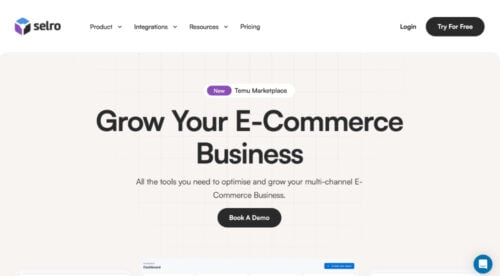
Selro Integrates Claude AI: Multi-channel inventory and order management platform Selro has integrated Anthropic’s Claude AI directly into its interface. The integration empowers multi-channel merchants to instantly generate optimized, platform-compliant product titles, rich descriptions, and summary bullet points across multiple marketplaces from a single dashboard.
6. Live Commerce, Influencer Marketing, & Global Logistics
ThredUp Expands Live Shopping on Whatnot: Recommerce giant ThredUp has announced a major expansion of its live-shopping operations via Whatnot, scaling interactive retail broadcasts across the United States, United Kingdom, and Europe. ThredUp will anchor its live broadcasts directly within its massive distribution hubs in Atlanta and Dallas, while simultaneously exploring avenues to support the broader Whatnot seller community.
Nexa Launches Creator Marketplace:Nexa has officially launched its dedicated creator marketplace, bridging the gap between brands and user-generated content (UGC) creators. The platform provides free access to comprehensive creator profiles, portfolios, and rate cards, operating on a transparent brand-side platform fee model that takes zero percentage deductions from creator earnings.
Easyship Expands Export Infrastructure for U.K. eBay: Global shipping software provider Easyship has significantly scaled its international export infrastructure to support eBay U.K. sellers. Providing automated hub processing, bulk label generation, stringent compliance screening, carrier integrations, and customs documentation, the infrastructure enables U.K. sellers to seamlessly ship to 195 countries and territories with full export clearance managed via fulfillment hubs in the U.K., Canada, and the United States.
UPS Unveils UPS Secure Commerce: Logistics giant UPS has launched Secure Commerce, an integrated suite of supply chain tools engineered to mitigate fraud, prevent revenue loss, and safeguard shipments. Combining InsureShield Shipping Insurance for streamlined claims recovery, Parcel Pro for high-value and specialty asset transit, and CommerceShield technology for holistic risk mitigation, the suite delivers end-to-end supply chain visibility, enabling merchants to make proactive, data-driven decisions at every stage of the fulfillment lifecycle.
UPS Partners with TikTok Shop for No-Box, No-Label Returns: In a vital development for social commerce reverse logistics, UPS subsidiary Happy Returns has forged a strategic partnership with TikTok Shop. The collaboration introduces a frictionless, no-box, no-label return service for participating U.S. merchants and consumers, streamlining returns regardless of whether sellers manage fulfillment in-house or utilize TikTok’s outsourced logistics network.
Supporting Context & Industry Metrics
The convergence of these announcements highlights several underlying economic and technological realities currently driving the ecommerce sector:
The Proliferation of Agentic Workflows: Gartner and industry analysts estimate that by 2027, over 40% of all digital commerce interactions will be mediated by conversational and autonomous AI agents. Tools like Shopify Canvas, Amazon Ads Agent, and HelppliX Agent represent early iterations of this transition, moving AI from an auxiliary advisory role to the core operational driver of digital storefronts.
Data Enrichment as an SEO Imperative: With generative engine optimization (GEO) and AI search tools (such as Contentstack Canoe) rapidly overtaking traditional keyword search, merchant catalogs must evolve. Unstructured, sparse product descriptions are invisible to AI discovery engines. Solutions from Commerce (BigCommerce/Feedonomics) and Selro are addressing this existential threat by automating the ingestion and transformation of raw catalog data into rich, schema-compliant product intelligence.
The Compression of Reverse Logistics Friction: Return rates remain one of the most persistent profit drains in online retail, often averaging 20% to 30% for apparel and general merchandise. The integration of Happy Returns with TikTok Shop—coupled with UPS Secure Commerce—signals an industry-wide push to neutralize return friction through localized, consumer-friendly drop-off networks that eliminate packaging hurdles.
Official Industry Statements
Industry leaders emphasized the transformative nature of these recent rollouts:
"As generative AI redefines how consumers discover, evaluate, and purchase products online, brands can no longer rely on manual catalog management and static SEO. Our expanded data enrichment capabilities with Feedonomics and BigCommerce transform raw merchant data into rich, AI-ready product intelligence, ensuring our clients remain visible wherever autonomous buyers search."
— Spokesperson, Commerce Holding Company
"Managing multi-channel inventory and marketplace syndication has historically bogged down growing merchants with repetitive administrative tasks. By integrating Claude AI directly into Selro, we are giving multichannel sellers the power to instantly generate high-converting, localized product listings across platforms in a fraction of the time."
— Product Team, Selro
"Supply chain resilience requires end-to-end visibility and proactive risk mitigation. With the launch of UPS Secure Commerce and our expanded operational partnerships—including our no-box returns collaboration with TikTok Shop—we are providing merchants the foundational security and logistical agility needed to scale fearlessly in a global marketplace."
— Logistics Strategy Division, UPS
Future Outlook: What Merchants Must Do Next
As the ecommerce industry charges deeper into the era of agentic commerce, merchants must proactively adapt their operational strategies to avoid obsolescence. Based on this week’s developments, digital retailers should focus on three core strategic imperatives over the next 12 to 18 months:
Audit and Enrich Product Data for AI Readliness: Traditional search engine optimization is no longer sufficient. Merchants must adopt automated data enrichment solutions (such as those offered by Feedonomics, BigCommerce, and Selro) to ensure product catalogs are densely populated with structured data facts, comprehensive Q&A fields, and rich schema markup readable by autonomous shopping assistants.
Embrace Autonomous Workflow Tools: Platform integrations like Shopify Canvas and MoEngage for Shopify demonstrate that manual, time-consuming administrative tasks are increasingly handled by AI agents. Merchants should gradually integrate secure agentic tools—while enforcing strict governance frameworks via servers like miniOrange’s MCP—to streamline visual design, multi-channel marketing automation, and customer support.
Optimize Reverse Logistics and Omnichannel Fulfillment: With shipping giants like UPS and the USPS aggressively rolling out same-day pilot programs and no-box return infrastructures, consumer expectations for speed and convenience will only accelerate. Integrating frictionless return options and leveraging multi-channel fulfillment platforms will be critical to protecting margins and securing customer loyalty in an increasingly crowded digital marketplace.