Executive Overview
The breathless expansion of artificial intelligence infrastructure is reshaping physical landscapes across the globe, bringing massive capital investments, unprecedented electricity demands, and a dizzying web of corporate partnerships. Yet beneath the promise of technological revolution lies a profound structural vacuum: accountability.
When a multi-billion-dollar infrastructure project involves a complex matrix of parent companies, overseas operators, tech giants holding equity warrants, and end-use model developers, assigning responsibility when things go wrong becomes nearly impossible.
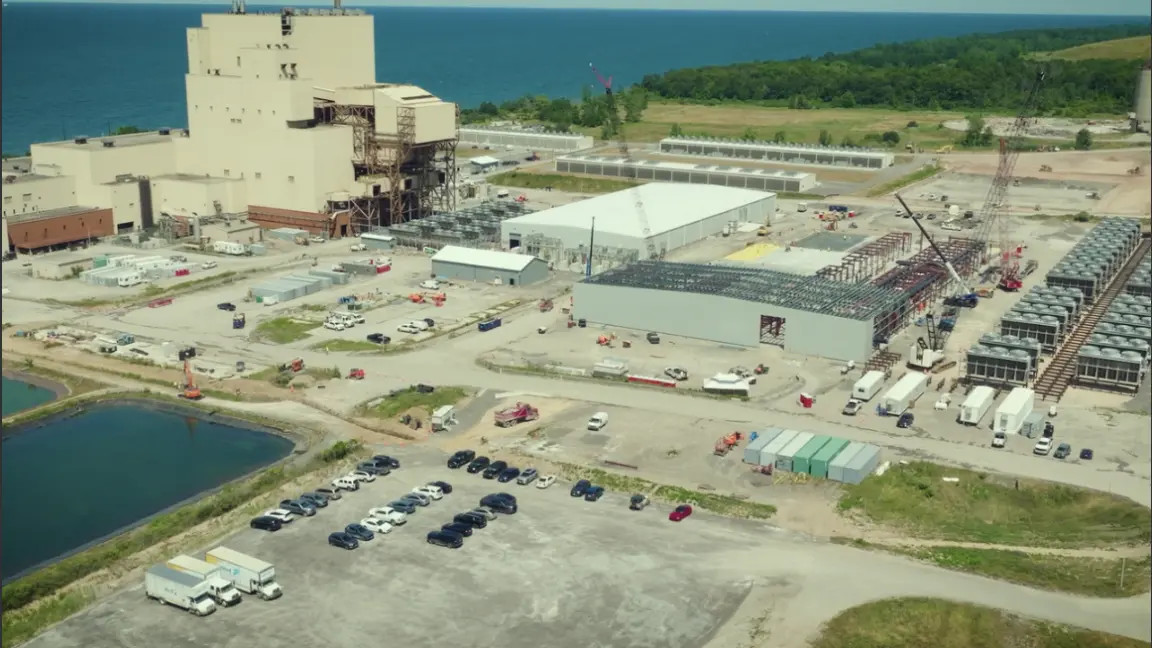
This governance crisis was thrown into sharp relief in early June, when an unannounced fire ripped through an unfinished structure at the Lake Mariner Data Center in Somerset, New York. The incident exposed a litany of alarming safety failures—from inoperable fire hydrants to missing safety data sheets that burned up in the blaze—and triggered fierce resistance from local officials and residents.
As communities grapple with the realities of hosting massive, energy-intensive hyperscale campuses, Lake Mariner serves as a cautionary tale. It exposes a fragmented modern industrial model where legal, operational, financial, and environmental liabilities are deliberately diffused, leaving local communities to bear the risks while corporate stakeholders reap the rewards.
Detailed Chronology: The Lake Mariner Fire and Regulatory Blind Spots
The June Blaze: Walking Into the Dark
In the early days of June, emergency dispatchers received reports of a fire at an unfinished building within the sprawling $3.2 billion Lake Mariner Data Center campus situated along the shores of Lake Ontario in Somerset, New York. What should have been a routine industrial response quickly escalated into a dangerous ordeal for the local Barker Fire Department.
Upon arrival, firefighters encountered a thick, toxic pall of heavy black smoke originating from industrial chemicals they could not immediately identify. Compounding the danger, the crew discovered that the building lacked a working fire alarm system and an operational fire suppression setup. Worst of all, the site’s infrastructure failed completely: three nearby fire hydrants were entirely dry, and the legally mandated safety data sheets meant to inform first responders had reportedly been consumed by the flames.
"We went into the building kind of blind," recalled Steve Matisz, chief of the Barker Fire Department. "It’s been a difficult situation."
Matisz expressed profound frustration regarding the claim that essential safety documents had been incinerated during the fire. Even months later, as construction on the campus continued unabated, remediation efforts fell short. When contacted in mid-August, Matisz confirmed that while discussions surrounding a Knox box emergency access program had begun, the critical infrastructure issue remained unresolved. "As far as I know, [the hydrants] are still dry," Matisz stated bluntly. "I haven’t seen work done on them."
A Web of Stakeholders and Shared Obscurity
The Lake Mariner facility is not managed by a single local entity; rather, it is a masterclass in corporate layering.
- TeraWulf: The publicly traded firm that owns and operates the data center on land leased from a separate real estate entity controlled by its own CEO, Paul Prager.
- Fluidstack: A UK-based artificial intelligence infrastructure firm contracted to run the technical operations of the data center.
- Google: A major tech stakeholder holding financial warrants for a prospective 14 percent equity stake in the venture, while also backing lease payment guarantees.
- Anthropic: A premier AI model developer whose colossal compute demands justify the center’s existence.
Following the June fire, TeraWulf’s Chief Strategy Officer, Kerri Langlais, asserted that her company maintained absolute responsibility "for operational safety and emergency preparedness at the Lake Mariner Data Campus, including required safety systems and coordinating with local first responders." Langlais pointed to subsequent after-action reviews conducted with county officials, noting the implementation of Knox boxes, additional hydrants, and safety data sheet "go-bags."
However, the disconnect between corporate assurances and ground-level realities underscores a systemic challenge: when operations are parceled out among multiple corporate entities, local authorities are left chasing ghosts when accountability is demanded.
Supporting Context & Metrics: Promises versus Reality
The Employment Discrepancy
The friction between Lake Mariner’s corporate architects and the town of Somerset extends far beyond emergency preparedness. Local leaders have repeatedly sought public meetings to question the socioeconomic trade-offs of hosting one of New York’s largest AI infrastructure buildouts, only to be met with corporate silence.
Community skepticism is rooted in a stark disparity between initial economic promises and projected job creation. When Somerset Operating Company—the landlord entity owned by TeraWulf CEO Paul Prager—initially applied for power discounts for the site, projections touted 165 permanent jobs and an $85 million capital investment.
However, planning board presentations delivered by TeraWulf project managers revealed a vastly different reality: upon full buildout, the 500-megawatt facility would employ a mere 35 to 40 people. Paul Prager declined multiple requests to comment on this massive downward revision.
This phenomenon is hardly unique to Somerset. Pilar Thomas, a former deputy solicitor at the Department of the Interior and an expert in energy law, highlighted the transient nature of data center economics:
"You have to be honest that it’s 600 people building the project for six, 12, 18 months, depending on how big it is. And then after that, it’s three guys and a bottle of Windex… unless there’s a commitment to train up people in the local communities to take on the operations and maintenance of these data centers, which I have yet to see a data center agree to do."
The Grid Strain and Socialized Costs
The operational footprint of artificial intelligence extends well beyond local employment figures. Power-hungry data centers draw immense, continuous loads—often demanding hundreds of megawatts 24 hours a day, 365 days a year.
Dr. Leah Stokes, a political scientist at the University of California, Santa Barbara, specializing in energy and climate policy, emphasizes the systemic economic toll:
"When you have a really big load, especially if it’s 24/7, 365, the whole system gets more expensive."
These expenses—ranging from managing severe grid congestion to spinning up costly, polluting backup generation plants during peak demand periods—are rarely shouldered entirely by the tech firms driving the demand. Instead, the costs are socialized, trickling down into the monthly electricity bills of everyday residential and commercial ratepayers who derive no direct benefit from the data centers.
Environmental Footprints: Noise and Emissions
In addition to grid strains, local residents like Beth Staples have voiced intense frustration over relentless environmental disruptions. In letters submitted to the Somerset town board, Staples detailed the psychological toll of the facility’s auditory footprint:
"Hum is 24/7. Our 2-story home has been here since 1850. It is fully insulated and has been updated throughout with new drywall and windows. I should not be hearing the constant hum to the degree I am in the house."
Simultaneously, corporate narratives regarding sustainability have grown increasingly opaque. TeraWulf’s initial 2024 Corporate Social Responsibility (CSR) report proudly branded Lake Mariner as being powered by "95 percent zero-carbon energy." Yet, by April 2026, the company’s board-approved Sustainability Policy pivoted noticeably. The standalone term "zero-carbon" was systematically paired down with "low-carbon," defining site selection simply as regions "with abundant power resources and a meaningful contribution from low- and zero-carbon energy sources."
When probed on these metrics, Kerri Langlais admitted that TeraWulf’s green claims rely entirely on the broader regional generation mix rather than dedicated green-energy procurement contracts. Lake Mariner draws power from the New York Independent System Operator (NYISO) Zone A grid. While this Upstate region boasts an 87 percent zero-emission profile driven largely by nuclear and hydroelectric generation (such as the Niagara Power Project), roughly 90 megawatts—about 18 percent of Lake Mariner’s capacity—is pulled via the New York Power Authority’s (NYPA) High Load Factor Program.
Crucially, NYPA spokesperson Alex Chiaravalle confirmed that this program is an economic development rate for large industrial users, not a renewable energy product.
"Just because an electron may be produced at a NYPA hydro facility, that doesn’t really mean that it’s NYPA hydropower," Chiaravalle explained. "Electricity is sort of a fungible resource. To claim something is renewable energy… it would either have to be a customer of the Power Authority or there would have to be that market attribute tied to it."
TeraWulf openly acknowledges that it purchases zero Renewable Energy Certificates (RECs) to certify its consumption, noting that electrons drawn from an interconnected grid cannot be traced to specific generators. Consequently, major stakeholders like Anthropic and Google—despite their stringent internal corporate sustainability targets—have no transparent, verifiable mechanism to prove that their computing operations at Lake Mariner strictly adhere to their proclaimed clean-energy standards.
Official Statements and Regulatory Vacuum
The opacity observed in Somerset mirrors broader regulatory challenges across the energy sector. Federal and state oversight bodies are struggling to adapt to corporate structures designed to insulate major technology firms from direct liabilities.
A prime example involves Google’s warrant-based financial stake in TeraWulf. When federal regulators at the Federal Energy Regulatory Commission (FERC) were asked to evaluate whether Google’s unexercised warrants constituted reportable control during TeraWulf’s acquisition of a Maryland power plant, TeraWulf argued that unexercised warrants confer no operational control and therefore required no public disclosure. Regulators concurred, creating a loophole that critics argue shields real corporate influence from public scrutiny.
Tyson Slocum, energy program director for the public interest watchdog group Public Citizen, criticized the decision:
"They’ve got this deal on the books where a company has a right to acquire your shares to the point where they would control 14 percent of your company, and you don’t disclose that. That seems like a pretty big loophole."
Furthermore, when Public Citizen urged TeraWulf to engage directly in public town halls concerning its Maryland facilities, the company flatly refused, citing a lack of legal obligation under FERC rules. Slocum noted: "We’ve got them on record saying FERC rules don’t obligate us to meet in person with the community, so we’re not going to."
This defensive posture mirrors the community relations strategy deployed in Somerset, where local elected officials like Town Supervisor Jeffrey Dewart have been stonewalled by corporate communications teams.
Future Outlook: Legislation, Moratoriums, and the Road Ahead
Legislators are increasingly attempting to rein in the runaway expansion of unregulated digital infrastructure. In early June, the New York State Legislature passed the Responsible Data Center Development Act (S10642). This comprehensive omnibus bill aims to establish rigorous environmental impact analyses via the Department of Environmental Conservation, mandate strict energy-efficiency thresholds, enforce prevailing wage labor standards for construction, establish a definitive pathway toward a 100 percent renewable grid by 2040, and guarantee tangible community investments. Crucially, the bill also proposed a one-year moratorium on new permits for large-scale data centers drawing 20 megawatts or more.
Despite passing the legislature, the bill languished unsigned. In July, New York Governor Kathy Hochul issued a narrower executive order imposing a one-year moratorium on hyperscale data center permits exceeding 50 megawatts, while leaving the legislature’s broader framework pending.
However, these policy interventions arrive too late for Somerset. Because Lake Mariner’s massive 500-megawatt buildout was fully permitted prior to the executive order taking effect, the facility is effectively grandfathered in, remaining untouched by new regulatory pauses.
Assemblyman Patrick Carroll, a co-sponsor of the stalled legislative package, voiced ongoing frustration during a rally in Rockland County: "I think the executive order is a good start and a step in the right direction, but I think the legislation is more comprehensive."
Conclusion
As the AI boom marches forward, the Lake Mariner incident stands as a glaring symptom of a deeper systemic failure. When accountability is fractured across shell corporations, complex leasing agreements, and unverified green claims, local municipalities are left holding an uncompensated bag of environmental, infrastructural, and safety risks.
Months after a fire exposed dry hydrants and missing safety plans, construction at Lake Mariner continues at a breakneck pace, unfettered by local appeals or regulatory constraints. As Chief Barker Fire Department’s Steve Matisz ominously warned regarding the unresolved water supply issues:
"If there’s no hydrant for me, that fire is going to burn under their asses."
Until lawmakers bridge the accountability gap between big tech ambitions and local realities, communities across the country will continue to navigate an infrastructure boom built on dangerous ambiguity.