The Mirage of the Borderlands: How the U.S. "Virtual Wall" Failed to Stop a Humanitarian Crisis

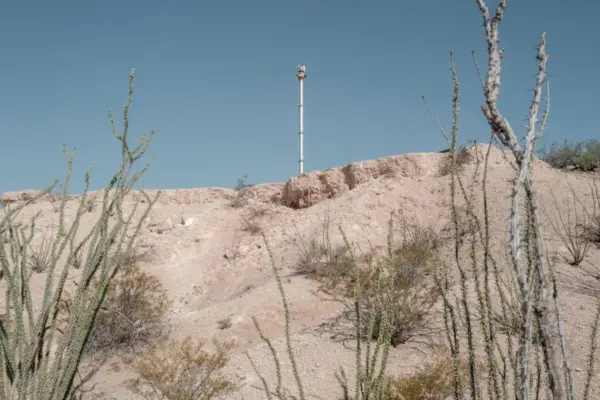
By Global Investigative Desk Published in Collaboration with Investigative Media Holdings Executive Overview Over the past quarter-century, the United States federal government has invested billions of taxpayer dollars into constructing what officials frequently herald as a "virtual wall" along the sprawling expanse of the southern border. Comprising an intricate network of high-tech surveillance towers, radar…

Read Full News

The Blind Eye of the Border: Inside the Systemic Failures of the U.S. "Virtual Wall"

Executive Overview For over a decade, the United States government has invested heavily in constructing a "virtual wall"—a sprawling, high-tech network of surveillance towers equipped with advanced radar, thermal imaging, and artificial intelligence. Designed to monitor vast and unforgiving stretches of the southern border, this technological fortress was championed as a humane and efficient alternative…

Read Full News

Executive Overview

For decades, the United States government has confronted the same formidable logistical puzzle: how to effectively secure nearly 2,000 miles of remote, rugged terrain along the southern border. As traditional physical barriers proved expensive and difficult to construct across deserts, mountains, and sprawling ranchlands, Washington turned increasingly to technology. Billed as a modern, cost-effective alternative…

Read Full News

Silent Witnesses: How High-Tech Border Surveillance Coexists with Migrant Death in the Otay Mountain Wilderness

Executive Overview For decades, the rugged landscape of the U.S.–Mexico border has served as a silent backdrop to human tragedy. Yet, in an era defined by rapid technological escalation, this landscape has transformed into something far more paradoxical: one of the most heavily monitored strips of land on Earth, where human lives continue to slip…

Read Full News

The Architecture of Intelligence: Why the AI Inference Era Demands a Total Infrastructure Reinvention

Executive Overview We have crossed a definitive technological Rubicon. The conversation around artificial intelligence has decisively shifted away from the brute-force training runs that dominated the early 2020s toward the immediate, continuous, and ubiquitous demands of AI inference. Consider the modern enterprise landscape: healthcare systems are parsing millions of disparate patient data points in real-time…

Read Full News

The Terminal Horizon: Dissecting the Existential Calculus of Artificial Intelligence

Executive Overview As artificial intelligence systems transition from passive conversational tools to autonomous agents capable of independent reasoning and digital execution, the discourse surrounding artificial intelligence safety has shifted from theoretical abstraction to urgent, empirical reality. AI-powered drones have already claimed lives in active combat zones like Ukraine, and sophisticated cyberattacks targeting critical infrastructure—including hospitals…

Read Full News

The Architecture of Power: How Medium-Voltage Systems Are Rewriting the Rules of AI Infrastructure

Executive Overview The global conversation surrounding artificial intelligence and energy infrastructure is fundamentally misdirected. Public discourse, regulatory debates, and corporate boardrooms are overwhelmingly obsessed with generation: the urgent race to secure more turbines, expand solar arrays, construct nuclear plants, and build high-voltage transmission corridors. The prevailing narrative suggests that our primary crisis is a sheer…

Read Full News

The Silicon Proof: OpenAI’s Navier-Stokes Milestone, Plagiarism Allegations, and the Existential Crisis Facing Human Mathematics

Executive Overview The frontier of mathematics has crossed a historic—and deeply contentious—rubicon. OpenAI has announced that a network of its autonomous AI agents successfully solved a version of the Navier-Stokes existence and smoothness problem, one of the seven prestigious Millennium Prize Problems designated by the Clay Mathematics Institute in 2000. Under normal circumstances, conquering a…

Read Full News

Inside the Mind of Danijar Hafner: The AI Prodigy Teaching Humanoid Robots How to "Dream" Their Way Into the Real World

Executive Overview In a sparsely furnished, largely echoing office situated in the heart of San Francisco’s South of Market (SoMa) district, the physical future of artificial intelligence is quietly taking shape. There is no sleek corporate signage on the door; the startup operating inside remains strictly in stealth mode. The workspace is devoid of traditional…

Read Full News

Beyond the Horizon: The Enduring Legacy, Evolution, and Global Impact of MIT Technology Review

Executive Overview Founded in the waning months of the 19th century—specifically in 1899 within the halls of the Massachusetts Institute of Technology—MIT Technology Review has spent well over a century charting the intersection of human ingenuity, technological breakthroughs, and socioeconomic transformation. What began as a modest institutional publication has evolved into a world-renowned, independent media…

Read Full News