By Shane Snider | Senior News Writer, Data Center Knowledge
Published: August 31, 2026
5 Min Read
Executive Overview
In a landmark transaction that underscores the compounding infrastructural pressures of the artificial intelligence boom, global technology and energy services heavyweight SLB has announced a definitive agreement to acquire thermal management specialist Kelvion for $4.1 billion. The all-cash and debt-assumption deal comprises $3.4 billion in cash alongside the assumption of approximately $700 million in Kelvion debt.
This strategic maneuver radically expands SLB’s data center footprint, transforming the company from a niche modular builder and third-party integrator into a dominant Original Equipment Manufacturer (OEM) sitting squarely within the most aggressively repriced segment of the digital infrastructure supply chain: heat rejection.
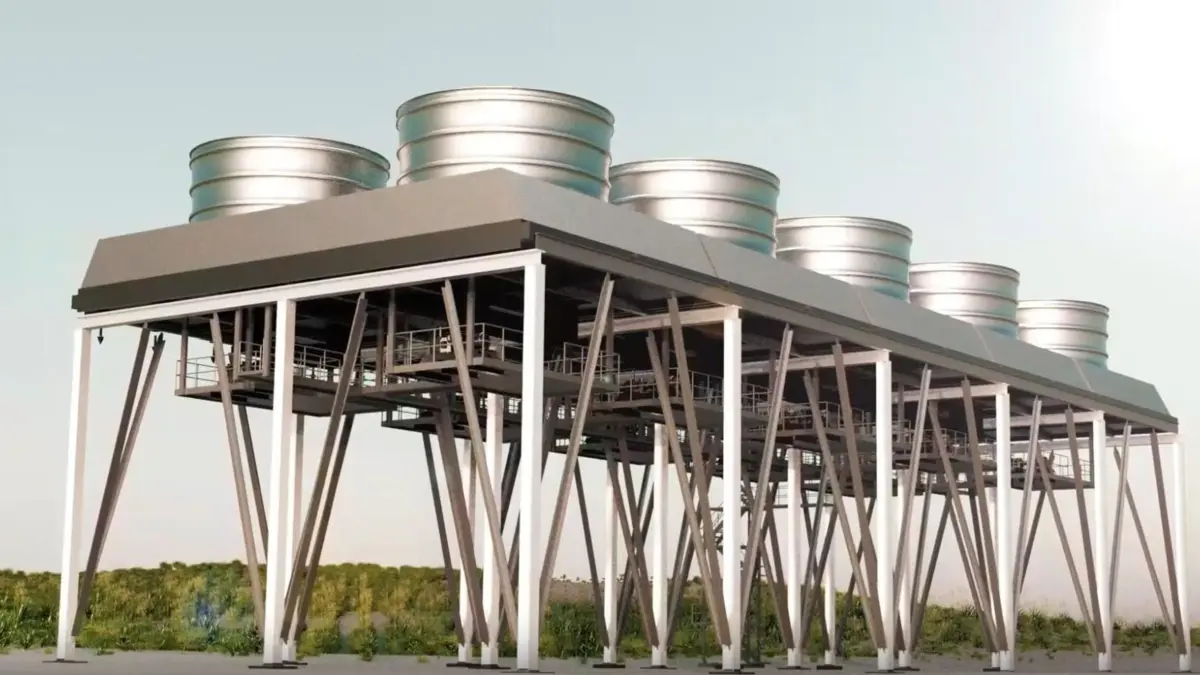
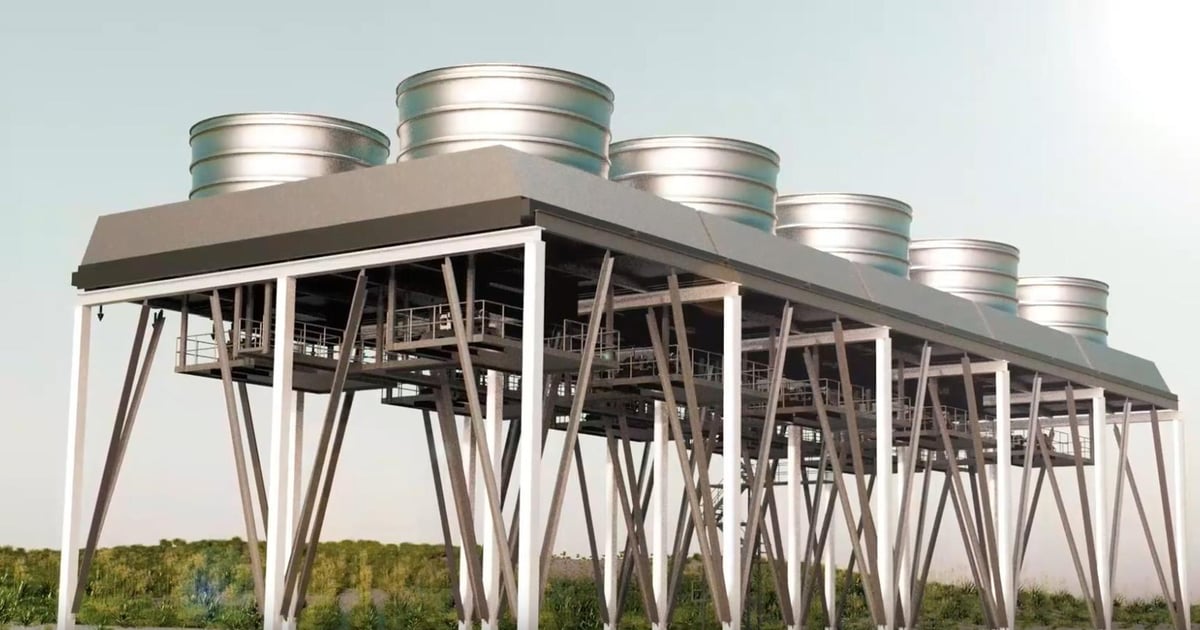
As next-generation generative AI clusters and modern graphical processing units (GPUs) push rack power densities past 100 kW—with future architectures threatening to breach the 1-megawatt threshold—traditional air-cooling methodologies have become entirely obsolete. By absorbing Kelvion’s deep portfolio of heat exchangers, dry coolers, and adiabatic systems, SLB is securing the critical missing link in the thermal loop. Management projects the acquisition will more than double its revenue opportunity per gigawatt of delivered data center capacity, supercharging a data center division that has already expanded at a compound annual growth rate (CAGR) exceeding 90% between 2024 and 2026.
Detailed Chronology and Transaction Mechanics
The path toward SLB’s acquisition of Kelvion reflects the dizzying velocity at which the data center construction market is being forced to adapt to compute-dense AI factories.
- The Growth Trajectory (2024–2026): SLB’s Data Center Solutions business experienced exponential expansion, capitalizing on the massive influx of hyperscale investments into prefabricated modular capacity. By the end of 2026, SLB expects its cumulative delivered capacity to comfortably surpass 2 gigawatts (GW).
- The Deal Announcement (August 2026): SLB unveiled the $4.1 billion buyout, targeting a transaction closing in the first half of 2027, pending customary regulatory clearances and antitrust reviews across relevant global jurisdictions.
- Valuation Metrics: The purchase price values Kelvion at roughly 11 times its estimated 2026 adjusted EBITDA before synergies, compressing to an attractive 8.5 times once expected post-merger optimizations are fully realized.
- Synergy Targets: SLB has outlined an aggressive timeline to capture $120 million in annual EBITDA synergies within three years of closing. Approximately $70 million of this total is expected to materialize through operational supply chain efficiencies, manufacturing optimization, logistics streamlining, and administrative consolidation. The remaining $50 million will be unlocked via cross-selling Kelvion’s premier technologies across SLB’s entrenched customer base and accelerating international market penetration.
Supporting Context & Metrics: The Economics of Thermal Management
To fully appreciate the strategic logic guiding SLB’s board, industry analysts point to the fundamental bottlenecks currently throttling hyperscale deployment schedules.
The Heat Rejection Bottleneck
While public discourse has largely centered around chip-level innovations—such as cold plates and coolant distribution units (CDUs)—industry experts emphasize that capturing heat at the silicon level is only half the battle. That thermal energy must ultimately traverse the facility’s complex cooling loop and be safely expelled into the external environment.
"Most of the attention has gone to cold plates and CDUs, but the segment repricing fastest right now is heat rejection," noted Alex Cordovil, research director at the Dell’Oro Group. "Kelvion turns SLB into an OEM in one of the fastest growing corners of the thermal chain."
Furthermore, escalating global scrutiny over municipal water consumption has heightened the demand for advanced dry coolers and hybrid adiabatic cooling systems—domains where Kelvion holds significant market share. In water-scarce regions or markets facing intense regulatory pushback and community opposition, Kelvion’s waterless cooling capabilities provide SLB with a vital competitive edge.
Financial Projections and Market Scopes
Kelvion enters the fold boasting formidable financial health. For full-year 2026, Kelvion anticipates generating between $2.3 billion and $2.4 billion in total revenue, accompanied by an adjusted EBITDA of $350 million to $400 million. Its dedicated data center vertical alone is expected to account for $1.2 billion to $1.3 billion of that top-line figure.
Following the integration, SLB’s combined data center operations are projected to achieve:
- Over $2 billion in revenue for the remainder of 2026.
- A target revenue window of $4.5 billion to $5 billion by 2028.
- Adjusted EBITDA contributions reaching $700 million to $800 million by 2028.
SLB estimates the broader addressable data center physical infrastructure market—excluding IT hardware and silicon—will swell past $150 billion by 2030. Even under Dell’Oro’s more conservative parameters, which place the physical infrastructure market at upwards of $80 billion by 2030, the growth runway remains immense.
Official Statements and Industry Perspectives
Management teams from both organizations, alongside independent market watchers, have framed the acquisition not merely as a portfolio expansion, but as a structural evolution of how digital infrastructure will be engineered and deployed in the late 2020s.
The View from SLB Leadership
According to Gavin Rennick, president of SLB’s New Energy and Industrial business, the transaction enables the company to bake thermal management directly into the foundational design phase of modular infrastructure, eliminating the inefficiencies of retrofitting cooling units downstream.
"This creates a more integrated infrastructure architecture with better alignment across performance requirements, configuration choices and deployment timing for customers," Rennick stated.
SLB CEO Olivier Le Peuch echoed this sentiment, emphasizing that the purchase extends SLB’s reach past pure engineering and fabrication into a holistic infrastructure strategy. By pairing its modular design capabilities—such as its ongoing work as a modular design partner for Nvidia AI factories—with Kelvion’s thermal engineering, SLB can streamline the rollout of massive AI clusters.
Furthermore, Kelvion’s geographic footprint heavily complements SLB’s domestic US base. While SLB has traditionally concentrated its data center footprint in North America, Kelvion brings deeply established operations, client relationships, and manufacturing centers across Europe, Asia, and the Middle East.
Navigating Ecosystem Complexities
Despite the clear synergies, market analysts warn that successful execution will hinge on integration rather than mere manufacturing scale.
"It’s less about what SLB sells today and more about what it becomes," Cordovil remarked. "Durable differentiation sits in system design and controls rather than in individual components. So the test is whether SLB can integrate, not whether it can manufacture."
An additional nuance of the acquisition involves market positioning: Kelvion operates as a Tier-1 component supplier to numerous third-party firms in the thermal management ecosystem. By acquiring Kelvion, SLB inadvertently finds itself operating as both a direct competitor and a critical supplier to parts of its own peer group—a dynamic that executive management will need to navigate carefully.
Future Outlook: Beyond Cooling to Behind-the-Meter Power
Perhaps the most provocative dimension of the SLB-Kelvion merger is what it portends for the future. Industry observers are already asking whether state-of-the-art cooling is merely an entry point into a far larger strategic ambition.
SLB’s historical core competency lies in the energy sector. As hyperscalers increasingly grapple with grid congestion and are forced to procure or generate their own independent power sources—turning to behind-the-meter generation solutions such as natural gas, small modular nuclear reactors (SMRs), and geothermal energy—SLB’s legacy expertise becomes uniquely valuable.
During recent briefings, Le Peuch and his executive team hinted at prospective cross-market synergies involving geothermal energy systems and industrial carbon capture technologies. As modern hyperscalers race to secure reliable, uninterrupted energy alongside ultra-dense cooling apparatuses, SLB is positioning itself to deliver a unified, turnkey package: integrated power, advanced thermal management, and modular infrastructure under a single operational roof.
As the transaction progresses toward its expected closure in the first half of 2027, the eyes of the digital infrastructure world will remain fixed on SLB. If the company successfully harmonizes Kelvion’s manufacturing prowess with its own engineering scale, it may very well redefine the blueprint for how the world powers and cools the next generation of artificial intelligence.
About the Author
Shane Snider is Senior News Writer at Data Center Knowledge, covering AI infrastructure, hyperscale data centers, cloud platforms, and the power and energy systems driving modern compute expansion. His reporting focuses on the operational, economic, and environmental forces reshaping digital infrastructure, including AI factories, utility constraints, liquid cooling, renewable energy procurement, and next-generation data center architectures. A recipient of recent Azbee awards for news series and government reporting, Snider is based in Raleigh, North Carolina.
- Email: [email protected]
- LinkedIn: Connect with Shane Snider