Executive Overview
The bustling rhythm of China’s ascendant space program has hit an unexpected and potentially turbulent pause. Industry analysts and aerospace monitors are casting anxious glances toward Beijing following indications of a technical anomaly involving the nation’s workhorse rocket engine, the YF-100. While official investigations are ongoing, preliminary speculation points toward potential structural or operational vulnerabilities in this ubiquitous liquid-fueled propulsion system.
Should the ongoing technical reviews confirm that the root cause of the recent anomaly stems from the YF-100 engine—which serves as the primary stage booster across a vast majority of China’s current and next-generation launch vehicles—the ramifications could extend far beyond a localized mission failure. The YF-100 is not merely a component; it is the absolute backbone of China’s modern space infrastructure, propelling everything from routine low-Earth orbit cargo supply runs to critical deep-space exploration vessels.
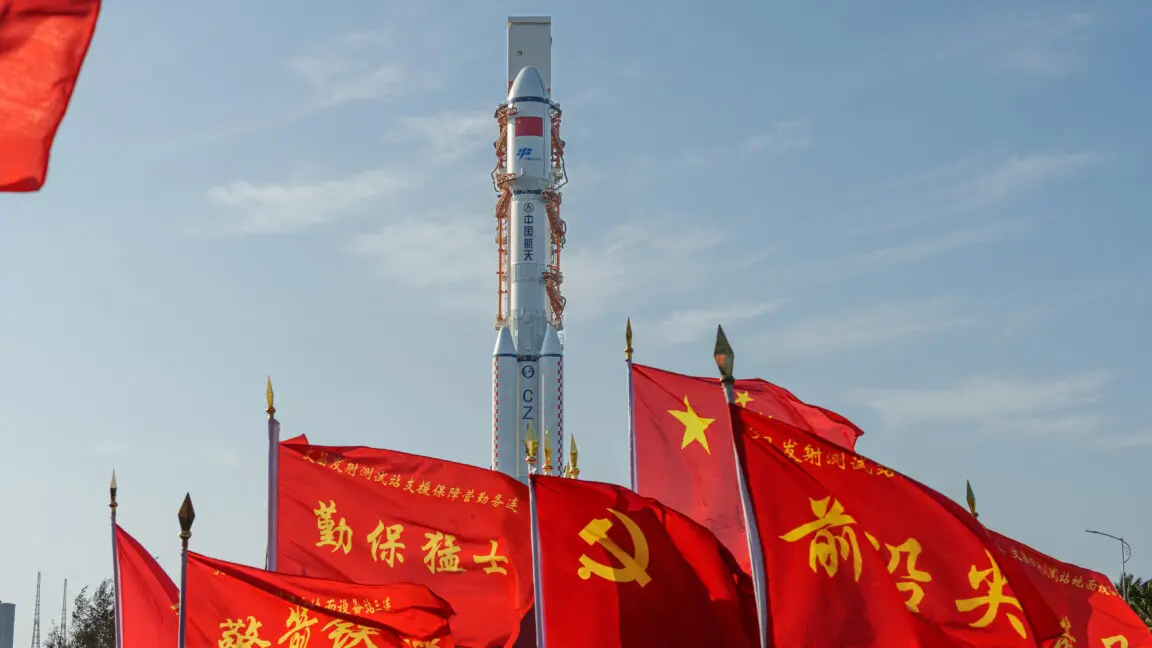
Most immediately, a grounding or mandatory redesign of the YF-100 engine family threatens to derail one of China’s most prestigious and strategically significant missions of the decade: the Chang’e 7 lunar south pole expedition. Scheduled to launch in a matter of weeks aboard a Long March 5 rocket—which relies heavily on YF-100-powered boosters—the mission represents a vital stepping stone in Beijing’s race against international competitors, including NASA, to establish a permanent foothold at the resource-rich lunar south pole.
This comprehensive report examines the technical specifications of the YF-100 engine, the cascading vulnerabilities its potential failure introduces to the broader Long March rocket family, the strategic stakes of the delayed Chang’e 7 mission, and the overarching future outlook for China’s geopolitical aspirations in space.
Detailed Chronology and Technical Background
To understand the weight of the current situation, one must trace the evolutionary history of the YF-100 engine and its integration into China’s national space architecture. Developed over years of rigorous research and testing by the Academy of Aerospace Propulsion Technology (AAPT), the YF-100 represented a quantum leap forward for Chinese rocketry.
For decades, China’s space program relied predominantly on hypergolic propellants—toxic combinations of dinitrogen tetroxide and unsymmetrical dimethylhydrazine (UDMH). While reliable, hypergolic fuels are corrosive, hazardous to handle, and environmentally damaging, severely limiting their scalability for heavy-lift applications. The introduction of the YF-100 marked a decisive shift toward clean, high-performance propulsion: liquid oxygen (LOX) and kerosene (RP-1).
Birth of a Workhorse
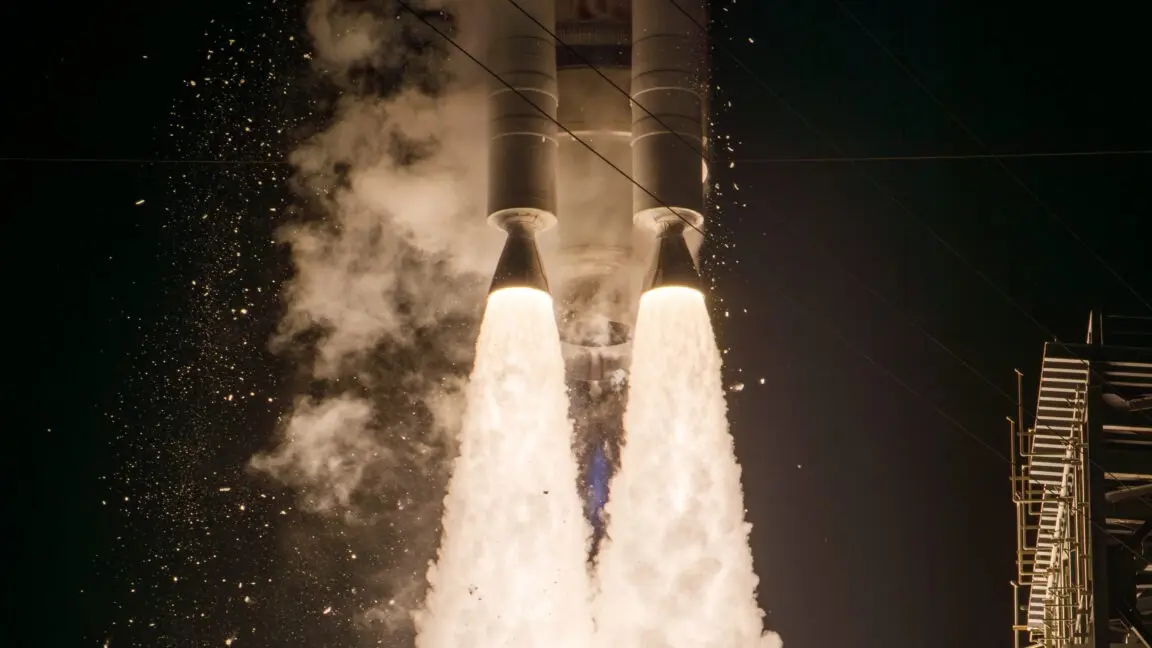
Entering active service over the last decade, the YF-100 was engineered to deliver a staggering 270,000 pounds (approximately 1,200 kilonewtons) of thrust at sea level. Utilizing a staged-combustion cycle—an advanced engineering feat that recycles exhaust gases to drive the fuel pumps, thereby achieving exceptionally high thermodynamic efficiency—the YF-100 positioned China among an elite tier of spacefaring nations capable of mastering high-pressure LOX/kerosene staged-combustion technology.
Over the past ten years, the engine has been systematically woven into the fabric of the nation’s space flight manifest. It first proved its mettle on the Long March 7, a medium-lift vehicle designed to replace older boosters, and subsequently on the Long March 7A variant. These rockets have shouldered the relentless burden of launching domestic and international communications satellites, as well as hoisting the Tianzhou automated cargo spacecraft. The Tianzhou vehicles serve as the logistical lifeblood of the Tiangong space station, ferrying critical supplies, scientific experiments, and propellant to taikonauts stationed in low-Earth orbit.
The Breadth of Dependency
The true vulnerability of China’s current launch manifest lies in its over-reliance on this single engine architecture. Unlike Western space programs, which often diversify their propulsion technologies across various contractors and methodologies, China has standardized the YF-100 across a sweeping array of launch vehicles.
Current operational data indicates that as many as nine distinct Chinese rocket models utilize the YF-100 in varying configurations. From the heavy-lift Long March 5 to the versatile medium-and-light configurations of the Long March 6 and Long March 8 families, the YF-100 is ubiquitous. Furthermore, looking toward the horizon, China’s next-generation heavy-lift and crewed vehicles—most notably the towering Long March 10, designed to land Chinese astronauts on the Moon—rely on modified, clustered variants of this exact propulsion technology.
If a systemic design flaw, metallurgical defect, or quality-control lapse is discovered within the YF-100 production or operational lifecycle, the impact will not be isolated to a single launch pad. It could trigger an unprecedented, program-wide grounding, forcing aerospace engineers to re-evaluate, inspect, and potentially retrofit dozens of boosters currently in production or sitting on launch pads across the country.
Supporting Context and Metrics: The Ripple Effect
To quantify the potential disruption, one must analyze the sheer volume of missions tied directly to the YF-100 engine family. The metrics tell a story of an industry operating at maximum capacity, where any interruption carries compounding delays.
Mission Portfolio Metrics
- Total Rocket Families Affected: Up to 9 distinct variants (Long March 5 through Long March 8, plus derivative concepts).
- Core Thrust Output: 270,000 pounds of sea-level thrust per engine; frequently clustered in groups of two, four, or eight depending on the rocket configuration.
- Primary Payloads: Tianzhou cargo resupply missions to the Tiangong Space Station, commercial constellations, classified national security payloads, and deep-space planetary probes.
- Launch Cadence Impact: China has maintained an aggressive, record-breaking launch cadence over the past five years, often exceeding 50 to 60 launches annually. A suspension of YF-100 operations would immediately stall a significant percentage of this manifest.
The Engineering Dilemma of Staged-Combustion Engines
Staged-combustion engines like the YF-100 operate in extreme thermal and mechanical environments. The turbine components are subjected to super-heated, high-pressure oxygen-rich gases, making them notoriously difficult to design without inducing material fatigue or combustion instability.
If the current anomaly is linked to turbopump failure, combustion chamber burnout, or dynamic instability during ignition or max-Q (maximum aerodynamic pressure), resolving it will require more than a simple software patch. It will demand exhaustive bench testing, destructive physical analysis of test articles, and rigorous verification flights. In the high-stakes world of aerospace engineering, rushing this process is a gamble few space agencies are willing to take, especially given the catastrophic consequences of a mid-flight failure during a crewed or high-value robotic mission.
Official Statements and Industry Reactions
As news of the potential anomaly circulates within international aerospace circles, official channels in Beijing have maintained a cautious, measured posture.
The Information Vacuum
Historically, China’s state-run space program operates under a centralized information paradigm. While successes are broadcast with immense national pride, anomalies or technical setbacks are frequently disclosed gradually, often masked behind euphemisms of "completing test objectives" or "further data analysis required."
Independent analysts tracking telemetry data, ground-station chatter, and maritime safety notices regarding rocket debris drop zones have pieced together the outline of an unexpected disruption. Representatives from the China National Space Administration (CNSA) and the China Aerospace Science and Technology Corporation (CASC)—the primary state-owned contractor responsible for the Long March series—have yet to release a comprehensive post-mortem detailing the nature of the anomaly.
International Observers Respond
Global space agencies and commercial competitors are monitoring the situation closely. NASA and European Space Agency (ESA) officials, who are navigating their own complex supply chains and technical hurdles, recognize that the stability of the global space ecosystem is interconnected. A prolonged grounding of China’s heavy-lift capabilities would alter the cadence of international scientific data sharing, academic cooperation, and orbital traffic management.
Commercial entities, meanwhile, are assessing whether alternative launch providers can absorb backlog demand if Chinese commercial payloads experience extended launch holds. However, with global launch capacity already constrained by high demand and geopolitical restrictions, shifting payloads to alternative providers remains a logistical nightmare.
Future Outlook: The Shadow Over Chang’e 7 and the Lunar Race
The most immediate and politically sensitive casualty of a potential YF-100 grounding is the upcoming Chang’e 7 mission.
Anatomy of the Chang’e 7 Mission
Slated to lift off within the next fortnight, Chang’e 7 is not merely another routine lunar probe; it is a technological masterpiece designed to cement China’s leadership in lunar exploration. The mission profile is exceptionally complex, integrating four distinct robotic elements into a single launch:
- An Orbiter: To map the lunar surface and relay communications.
- A Lander: To execute a precision touchdown near the lunar south pole.
- A Rover: To traverse the rugged, shadowed terrain.
- A Mini-Hopper: A specialized drone-like vehicle designed to leap into permanently shadowed craters to search for trapped water ice and volatile compounds.
The destination—the treacherous yet scientifically invaluable terrain in the vicinity of the Shackleton crater near the Moon’s South Pole—is the ultimate prize of modern lunar exploration. Water ice deposits hidden within these permanently shadowed regions are considered the holy grail for future crewed bases, as they can be converted into drinking water, breathable oxygen, and, crucially, liquid hydrogen and oxygen rocket propellant to fuel deep-space missions.
The Geopolitical Stakes
China and the United States (via NASA’s Artemis program and associated commercial partnerships) are currently locked in a high-stakes, 21st-century space race. Both nations have identified the lunar south pole as the strategic epicenter for future lunar habitation.
If the YF-100 investigation forces a delay in the Chang’e 7 launch window, the schedule for subsequent missions—including Chang’e 8 and China’s stated goal of landing taikonauts on the lunar surface before the end of the decade—could experience a domino-effect postponement. While a delay of a few weeks or months may seem minor in the grand arc of space exploration, in a geopolitical race where psychological momentum and first-mover advantage carry immense diplomatic weight, every day counts.
Conclusion
The emerging situation surrounding the YF-100 engine serves as a sobering reminder of the unforgiving physics of spaceflight. Even the most successful, reliable, and prolific propulsion systems are susceptible to the inherent risks of high-energy engineering.
Whether the current anomaly is quickly resolved with minimal disruption or triggers a comprehensive, program-wide overhaul of China’s primary rocket engine family, the consequences will ripple across the global aerospace landscape. For Beijing, the immediate priority is ensuring absolute safety and reliability—especially with human lives and national prestige hanging in the balance. But for the broader lunar timeline, the launchpad anomaly casts a long, uncertain shadow over humanity’s race to the south pole of the Moon.