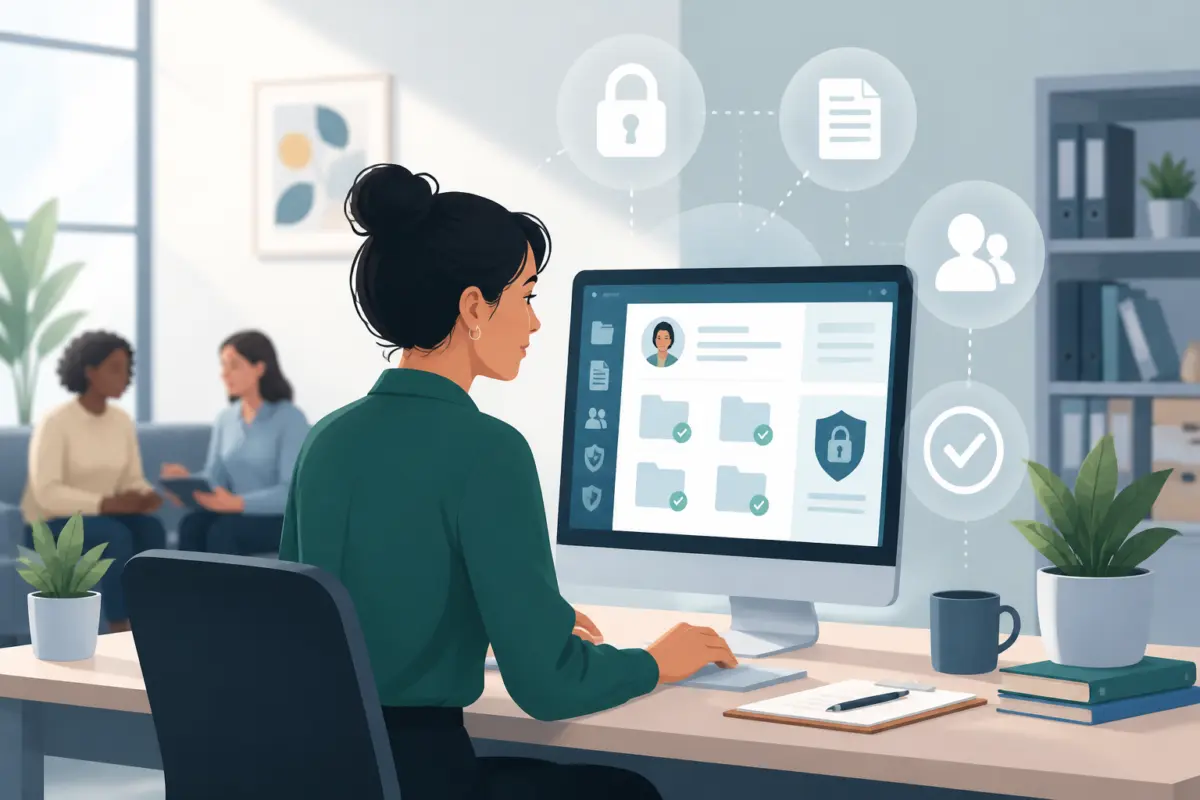
Executive Overview
In an era defined by rapid technological integration, the landscape of social work has undergone a fundamental transformation. Modern practitioners no longer rely exclusively on paper case files, locked filing cabinets, and face-to-face interactions. Instead, today’s high-demand social work roles require managing complex, multi-layered digital caseloads across cloud networks, telehealth applications, and messaging systems. While this digital evolution expands access to care for marginalized and at-risk populations, it simultaneously exposes vulnerable clients to unprecedented cyber threats.
Data breaches, ransomware attacks, and accidental disclosures happen every day, often targeting the very individuals who can least afford the fallout: survivors of trauma, individuals managing psychiatric conditions, children in the foster care system, and families experiencing acute crises. For the modern social worker, safeguarding client data is no longer merely an administrative task or an IT afterthought; it is a core ethical duty of care.
Embedding strict information governance into daily practice requires adherence to three foundational pillars: utilizing HIPAA-compliant end-to-end encryption, strictly refusing consumer-grade artificial intelligence tools for drafting case notes, and securing explicit, documented consent before sharing sensitive records. As high-demand social work careers grow increasingly complex—particularly across major healthcare hubs like California and within evolving international frameworks—practitioners must maintain rigorous digital boundaries. This comprehensive report examines the structural security measures, ethical guidelines, financial implications, and future outlook surrounding data protection in contemporary clinical social work.
Detailed Chronology: The Evolution of Digital Risk in Social Work
To understand the urgency of modern information governance, it is necessary to trace how the intersection of social work and digital technology has evolved over the past two decades.
- The Early 2000s (The Transition to Electronic Records): Healthcare and social service agencies began migrating from paper-based record-keeping to electronic health records (EHRs) and digital databases. While this transition improved administrative efficiency and inter-agency collaboration, it introduced early vulnerabilities, primarily revolving around password security, unencrypted workstation hard drives, and physical device theft.
- The 2010s (The Mobile and Cloud Era): Social workers increasingly adopted smartphones, tablets, and cloud-based storage solutions to manage caseloads on the go. This shift allowed practitioners to work remotely and respond to crises faster, but it also widened the attack surface. Incidents involving misplaced laptops, unsecured public Wi-Fi networks, and unencrypted email transmissions exposed thousands of sensitive client histories.
- The COVID-19 Pandemic and Telehealth Boom (2020–2022): Public health lockdowns forced social work and mental health services almost entirely online. Video conferencing platforms, telehealth apps, and remote messaging tools became ubiquitous. While this ensured continuity of care during a global crisis, it rushed digital adoption, often bypassing rigorous vetting of software vendors and leading to a surge in healthcare data vulnerabilities.
- The Artificial Intelligence Boom (2023–Present): The public release and mainstream adoption of consumer generative AI tools—such as ChatGPT and similar large language models—introduced a profound new threat. Seeking to alleviate crushing administrative burdens and high caseloads, some practitioners began utilizing public AI platforms to draft intake summaries, psychiatric evaluations, and case notes, inadvertently feeding protected health information into unvetted vendor servers with zero-retention deficiencies.
Supporting Context & Metrics: The High Cost of Unprotected Data
The necessity of strict information governance is underscored by sobering financial and systemic data. Healthcare and social service sectors remain primary targets for cybercriminals due to the immense value of Personally Identifiable Information (PII) and Protected Health Information (PHI) on the dark web.
The Financial and Human Toll of Breaches
According to the IBM Cost of a Data Breach Report, the healthcare industry suffered an average breach cost of $7.42 million, leading all global industries in financial fallout for the twelfth consecutive year. These figures encompass regulatory fines, legal fees, forensic investigations, system remediation, and the devastating loss of organizational trust.
However, statistics alone cannot capture the human cost. When a social work client’s psychotherapy notes, addiction history, or domestic abuse disclosures are leaked, the consequences are immediate and severe:
- Stigmatization and Discrimination: Leaked mental health records can jeopardize employment, housing applications, and social relationships.
- Erosion of the Therapeutic Alliance: Trust is the bedrock of effective social work. A data breach perpetrated through negligence or insecure software shatters the confidential sanctuary required for vulnerable individuals to heal.
- Physical Danger: For clients fleeing domestic violence or stalking, digital exposure of their current location or case history can result in direct physical harm.
Core Pillars of Information Governance in Social Work
Protecting clients in a hyper-connected world demands proactive, disciplined operational habits. Modern practitioners must integrate the following protocols into their daily workflows:
1. Enforcing HIPAA-Compliant Encryption
Anyone working in social work or healthcare must use safe, encrypted devices and secure connections. End-to-end encryption scrambles client intake files and psychotherapy data into unreadable ciphertext during transmission. Without AES-256 encryption across storage drives and messaging tools, even an unencrypted laptop left in a car can expose entire client histories.
- Hardware Segregation: Personal hardware must be strictly separated from work systems. Practitioners should only access work emails and case management programs on devices outfitted with HIPAA-compliant connections and multi-factor authentication.
- Remote Work Diligence: Even when traveling or working remotely, practitioners must continuously evaluate whether their environment or network puts client information at risk. Public Wi-Fi networks must never be used for client communications without a secure Virtual Private Network (VPN).
2. Prohibiting Public AI Programs
Public AI programs have taken the world by storm, but they possess zero place in professional social work. Consumer AI tools transmit user prompts to vendor servers where text is saved, analyzed, and reviewed. Pasting intake summaries, psychiatric evaluations, or family names into an unvetted prompt bar violates federal privacy standards immediately.
- The Ethical Mandate: A national survey and ethical guidance published by the National Association of Social Workers (NASW) emphasize that while practitioners increasingly explore automation for administrative drafts, the Code of Ethics demands zero disclosure of protected records to unauthorized external platforms. Organizations must adopt vetted cybersecurity frameworks for companies utilizing AI, ensuring enterprise tools feature strict zero-retention agreements.
- The Profile History Risk: Consumer AI platforms save user inputs to profile histories, rendering them accessible to platform administrators, internal employees, and potentially malicious hackers. Practitioners cannot delegate client confidentiality to third-party consumer tech companies.
3. Respecting Digital Boundaries
The ubiquity of social media makes it tempting to browse online profiles. However, ethical practice requires strict self-restraint. Standard 1.07 of the NASW Code of Ethics prohibits gathering client information electronically without informed consent, unless justified by an immediate emergency.
- Preserving Clinical Objectivity: Looking through a client’s private social media posts risks biasing clinical assessments and severely damages therapeutic rapport.
- Exceptions for Immediate Harm: It is ethically defensible to check a client’s digital footprint only when credible, pressing red flags arise—such as discovering that a patient is actively posting content related to self-harm or imminent danger to others. In such scenarios, the practitioner has an overriding duty of care to investigate potential safety crises. Deceptive tactics, such as creating fake accounts to monitor clients, remain strictly unethical under all circumstances.
4. Securing Explicit Consent Before Information Sharing
Collaboration is vital in social work, often requiring communication with family members, medical doctors, or external agencies. However, doing so is ethical and legal only when the affected individual gives explicit, documented consent.
- Mandated Reporting Exemptions: Practitioners are mandated reporters legally permitted to share information without consent only in extreme scenarios involving immediate threats of violence to self or others, or signs of child/elder abuse and neglect.
- Statutory Frameworks: International and state statutes reinforce these requirements. Under the UK Data Protection Act 2018, practitioners managing overseas cases must identify a defined lawful basis before handling sensitive personal information, proving that confidentiality remains the default rule unless clear statutory safety exemptions apply.
5. Proactive Client Communication and Transparency
Today, clients frequently experience heightened anxiety regarding data privacy. Social workers can alleviate this stress by establishing transparency early.
- Written Privacy Notices: Providing a written privacy notice during the initial intake session—explaining how case notes are stored, who has access, and what encryption standards are utilized—establishes trust immediately.
- Documenting Permissions: Before referring a client to a medical professional or communicating with family members, practitioners must secure and document explicit permissions in writing.
Official Statements and Ethical Frameworks
Professional bodies across the globe have updated their guidelines to address the modern digital landscape.
A spokesperson for the National Association of Social Workers (NASW) noted in recent ethics updates:
"The integration of digital tools into social work must never outpace our commitment to client confidentiality. Whether navigating telehealth platforms or evaluating administrative automation, the client’s right to privacy remains absolute. Digital convenience cannot supersede ethical duty."
Furthermore, regulatory bodies enforcing the Health Insurance Portability and Accountability Act (HIPAA) emphasize that accountability rests squarely on the shoulders of the practitioner and their employing agency. Regulatory enforcement bodies have clarified that ignorance of software data-sharing policies does not excuse unauthorized disclosures of protected health information.
Future Outlook: The Intersection of Automation and Human Trust
The future of clinical and community social work will inevitably involve more automated systems, not fewer. As caseloads grow and administrative burdens mount, artificial intelligence and advanced digital platforms will be integrated deeper into healthcare and social service delivery.
However, protecting vulnerable populations requires treating information security as a primary duty of care rather than an afterthought. Ensuring that care teams adopt new software safely requires establishing rigid data governance standards. By combining enterprise-grade encryption, zero-retention enterprise AI tools, strict boundary-setting, and transparent communication, the social work profession can prevent devastating data breaches while preserving the human trust that makes healing possible.