By Global Mobility & Tech Desk
Published: October 2023 / Updated for Comprehensive Analysis
Executive Overview
India’s hyper-accelerated quick-commerce ecosystem—where consumers expect everything from fresh groceries and pharmacy staples to high-end smartphones delivered to their doorsteps within minutes—has given rise to a secondary industrial boom: sustainable urban logistics. As millions of gig workers mobilize across dense, traffic-choked metropolitan areas, the demand for clean, affordable, and reliable transportation has never been higher.
Seizing this historic market shift, Bengaluru-based electric mobility startup Yulu has successfully raised $93 million in fresh funding. The Series C financing round comprises $63 million in equity—led by GEF Capital Partners—and $30 million in debt financing. This capital injection values the company at approximately $170 million post-money, according to insiders close to the transaction.
Founded in 2017 initially as a casual bike-sharing platform for urban commuters, Yulu has engineered a strategic pivot. Today, it functions as the backbone of India’s gig economy, renting out electric two-wheelers on flexible weekly subscription plans. This model allows delivery drivers to bypass the high capital expenditure of purchasing their own vehicles, entering the workforce frictionlessly.
With roughly 50,000 vehicles currently on the road, Yulu’s fleet logs a staggering 1.6 million zero-emission miles every week, facilitating upwards of 750,000 daily deliveries. Armed with its latest war chest, Yulu plans to quadruple its fleet to 200,000 bikes over the next two years, introduce a new line of high-speed scooters for long-haul logistics, and chart a definitive course toward an initial public offering (IPO).
Detailed Chronology: From Urban Commuter Novelty to Gig Economy Lifeline
The 2017 Origins: Solving First- and Last-Mile Woes
When co-founder and CEO Amit Gupta—previously known for his role as co-founder of InMobi—launched Yulu in late 2017, the urban mobility landscape in India was vastly different. The startup initially positioned itself as a dockless bicycle-sharing service designed to solve the perennial "first- and last-mile" transit problem for daily metro and bus commuters. Consumers could unlock mechanical bicycles via a mobile app for short trips around tech parks and transit hubs.
However, the economics of public dockless bike-sharing proved challenging, plagued by issues of asset wear-and-tear, vandalism, and shifting municipal regulations.
The COVID-19 Pivot: Embracing the Delivery Boom
The true turning point for Yulu arrived with the onset of the COVID-19 pandemic in 2020. As lockdowns paralyzed cities and traditional commerce ground to a halt, digital delivery services for food, groceries, and essentials skyrocketed. Suddenly, a massive demographic of gig workers found themselves in urgent need of reliable, economical transportation.
Yulu recognized this structural shift in real-time. The company transitioned its focus away from casual public commuting and toward B2B fleet rentals tailored for delivery executives. Today, approximately 95% of Yulu’s revenue is derived from renting electric bikes to gig workers on weekly subscription plans, with the remaining 5% generated by station-based consumer rentals in its home market of Bengaluru. Consequently, the company formally abandoned its earlier ambitions of selling vehicles directly to retail consumers, doubling down entirely on commercial fleet logistics.
The $93 Million Series C Milestones
The recent $93 million Series C financing round represents a major validation of Yulu’s pivot. The equity portion of $63 million, spearheaded by GEF Capital Partners, included $5.5 million dedicated to buying out shares from early seed investors whose funds were reaching the end of their lifecycle.
Notably, existing heavy-hitting backers—such as Indian automotive giant Bajaj Auto and global manufacturing leader Magna International—chose not to participate in the round. By waiving their pre-emptive rights, they cleared the path for GEF Capital Partners to secure its target ownership stake. According to CEO Amit Gupta, this Series C round is expected to be Yulu’s final equity fundraising event prior to an eventual public listing. Future expansions of the vehicle fleet will be financed primarily through debt and strategic lease financing vehicles.
Supporting Context & Metrics: The "AWS of Mobility"
To understand Yulu’s market positioning, one must examine the sheer scale of its operations and its unique financial mechanics.
Fleet Performance and Scale
- Active Fleet Size: ~50,000 electric two-wheelers.
- Weekly Impact: ~1.6 million zero-emission miles logged.
- Daily Output: Powering over 750,000 deliveries every single day.
- Geographic Footprint: Active in 12 Indian cities. Yulu directly manages operations in Bengaluru, Mumbai, Delhi-NCR, and Hyderabad, while utilizing franchise partnerships across eight other regional markets.
Financial Health and Unit Economics
Yulu’s business model has matured significantly over the past several fiscal cycles. Having achieved a positive EBITDA (Earnings Before Interest, Taxes, Depreciation, and Amortization) during the last financial year, the company is now on track to turn fully profitable before interest and taxes (EBIT) next year.
While specific revenue figures remain tightly guarded, Gupta confirmed that Yulu’s overall revenue scaled an impressive seven-fold between fiscal 2023 and fiscal 2026.
The Ecosystem Relationship: Who Are Yulu’s Real Customers?
A common misconception is that Yulu supplies vehicles directly to quick-commerce platforms like Blinkit, Zepto, Swiggy Instamart, or Amazon. In reality, Yulu’s direct customers are the individual gig workers who rent the bikes on weekly subscription terms.
However, Yulu maintains symbiotic operational relationships with virtually every major quick-commerce, food delivery, and e-commerce giant operating in India—including Amazon and Walmart-owned Flipkart. By providing dependable, charged, and maintained electric bikes directly to workers, Yulu effectively operates as the underlying infrastructure layer for the entire sector.
Describing this dynamic, Gupta coined a striking industry analogy: Yulu is "the AWS of mobility." Just as Amazon Web Services provides the cloud computing backbone that allows software startups to scale without building server farms, Yulu supplies the physical mobility infrastructure that empowers delivery drivers to operate independently—ensuring third-party logistics providers cannot siphon away excessive margins from workers’ earnings.
Official Statements and Strategic Insights
Speaking directly about the funding and Yulu’s trajectory, CEO Amit Gupta emphasized the deliberate shift away from equity dilution toward sustainable, debt-fueled growth.
"We have built a robust, self-sustaining economic engine," Gupta noted during an exclusive interview detailing the Series C round. "With our positive EBITDA performance last year and our sights set on EBIT profitability next year, our capital strategy moving forward relies on debt and lease financing rather than continuous equity rounds. This Series C positions us perfectly for our eventual public market debut."
Addressing the evolution of the market, Gupta highlighted how the rise of quick-commerce necessitated a total rethinking of Yulu’s vehicle engineering:
"When quick-commerce first emerged, our low-speed vehicles were adequate for localized deliveries. But as delivery radiuses expand and consumer demands shift toward express parcel services and bike taxis, our gig workers require more robust machinery. That is why we are introducing the Yulu Express."
Future Outlook: The Road Ahead to 200,000 Vehicles and Beyond
As Yulu looks toward the horizon, its strategic roadmap is anchored in three primary pillars: fleet expansion, product diversification, and geographic scaling.
1. The Rollout of "Yulu Express"
Up until now, Yulu’s fleet has relied heavily on low-speed, compact electric two-wheelers manufactured in partnership with Bajaj Auto. While ideal for dense, slow-moving urban traffic, these vehicles have limitations regarding speed and payload capacity for longer-distance runs.
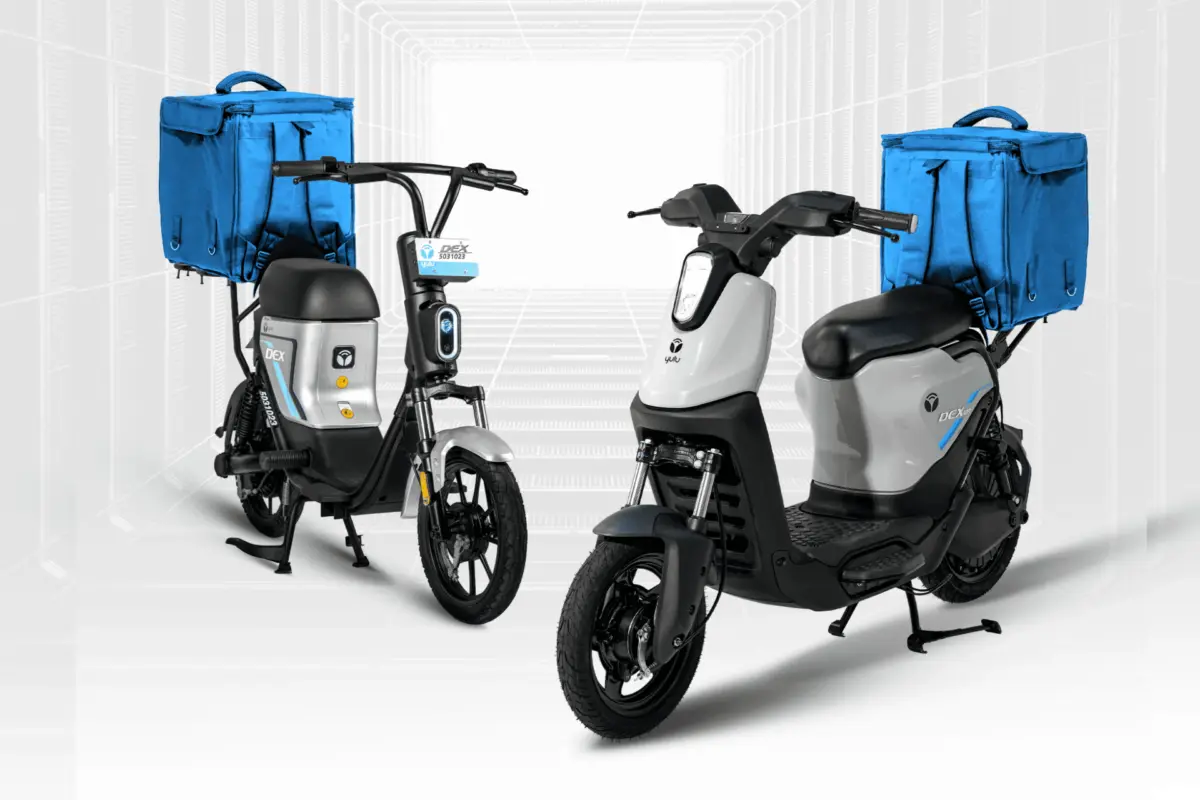
To capture new logistics use cases—such as longer-haul e-commerce deliveries, bike-taxis, and express parcel services—Yulu is introducing a full-sized, higher-speed electric scooter branded as the Yulu Express. Sourced from a new, undisclosed Indian manufacturing partner, these vehicles represent a qualitative leap in Yulu’s hardware capabilities.
- Approximately one-third of Yulu’s targeted 200,000-vehicle fleet will consist of the Yulu Express model.
- Roughly 500 units of the new scooter are already operational in Bengaluru, with pilot programs underway across three additional cities.
2. Aggressive City Expansion
Yulu currently maintains a presence in 12 Indian cities. Over the next 12 months, the startup aims to expand its footprint to roughly 20 cities. Key metropolitan targets for this next wave of expansion include Chennai and Pune, where rapid urbanization and booming gig economies present ideal conditions for sustainable micro-mobility solutions.
3. Toward an Initial Public Offering (IPO)
With profitability metrics firmly in sight and a dominant market share in the electric gig-mobility sector, Yulu’s leadership team is laying the groundwork for a public market listing. By utilizing the fresh $93 million injection primarily to scale its vehicle count from 50,000 to 200,000 over the next 24 months—supplemented by debt financing—Yulu is proving that sustainability and high-growth commercial viability can successfully accelerate hand-in-hand across the developing world’s most dynamic digital economy.