Executive Overview
In the increasingly crowded digital advertising ecosystem, capturing and retaining consumer attention is harder than ever. Standard video campaigns on YouTube excel at broad reach and high impression metrics, but they often struggle to convey nuanced brand narratives or guide audiences through a deliberate consideration journey. Enter Google Ads video sequence campaigns—a powerful yet frequently underutilized tool designed to show multiple video clips in a strictly predetermined order to individual viewers.
Unlike other YouTube ad formats that may cycle through creative variations dynamically or haphazardly, video sequences allow media buyers to construct a narrative arc. Whether introducing a revolutionary product, reinforcing a unique selling proposition (USP), or retargeting users based on prior engagement, sequences turn passive viewers into active participants in a brand’s story.
However, building an effective video sequence requires navigating a distinct set of configuration rules within the Google Ads interface. From choosing the correct campaign setup parameters—such as avoiding standard reach objectives in favor of unguided creation—to mastering strict bidding constraints like Target CPM and managing granular step transitions, execution demands precision.
This comprehensive guide delves into the structural mechanics of Google Ads video sequences. We will explore how to set up these campaigns from scratch, configure multi-step ad groups, leverage tools like Google Asset Studio for creative optimization, apply real-world examples from brands like Yarbo, and interpret critical performance metrics to maximize return on ad spend (ROAS).
Detailed Chronology: Step-by-Step Campaign Architecture
Building a successful video ad sequence requires a meticulous, chronological approach within the Google Ads dashboard. Missing a single configuration step—such as choosing the wrong campaign objective—can lock you out of the sequence feature entirely. Below is the definitive workflow for launching a video sequence campaign.

Phase 1: Campaign Creation and Objective Selection
The journey begins in the Google Ads admin panel.
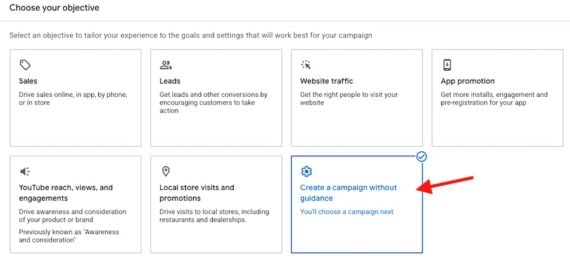
- Initiate Creation: Click the blue button to create a new campaign. Crucially, you must select “Create a campaign without guidance.” Choosing pre-set goals like “YouTube reach, views, and engagements” will bypass the sequence options.
- Select Campaign Type: Choose “Video” as your campaign type.
- Choose the Subtype: Once the video type is selected, look for the campaign subtype options and select “Ad sequence.”
- Configure Core Settings: Enter your campaign name, budget, location targeting, languages, and network preferences.
Phase 2: Bidding and Frequency Capping
Video sequence campaigns operate under specific structural constraints enforced by Google:
- Bidding Strategy: Advertisers are restricted to Target CPM (cost-per-thousand impressions) bidding. Because sequences rely on controlling the exact order of visual delivery across impressions, automated bidding models focused purely on conversions or views are limited in this context.
- Frequency Capping: You must establish a strict frequency cap to govern how often a single user can see the entire sequence. Google provides two standard windows for this: limiting the sequence appearance to once every 7 days or once every 30 days. This prevents ad fatigue and ensures your narrative unfolds at a natural, non-intrusive pace.
Phase 3: Sequence and Ad Group Setup
Each step in your video sequence corresponds to an individual ad group. Therefore, a four-step sequence will consist of four distinct ad groups within the campaign structure. Each ad group contains:
- A specific video creative.
- Customized headlines and Calls to Action (CTAs).
- Tailored transition rules.
Phase 4: Defining Step Transitions
For video two and beyond, advertisers must define step transitions. Google offers three distinct trigger conditions to dictate how a user progresses from one video to the next:
- Impression: The user is served the preceding video, regardless of whether they watched it or scrolled past.
- View: The user must actively watch a designated threshold of the preceding video.
- Skip: The user actively skips the preceding video.
By combining these triggers, advertisers can build branching or linear narratives. For example, you can program step two to display only if the user watched the first video, or serve a different follow-up video if they skipped the introduction.
Supporting Context & Metrics: Crafting Creative and Interpreting Results
Even the most impeccably structured campaign will fail if the creative assets do not align with the narrative goals. Furthermore, evaluating a video sequence requires looking past superficial metrics to understand true audience progression and engagement.
Leveraging Google Asset Studio for Creative Agility
Creating multiple distinct video clips for a sequence can strain production budgets. Fortunately, marketers can leverage Google’s Asset Studio to streamline production.
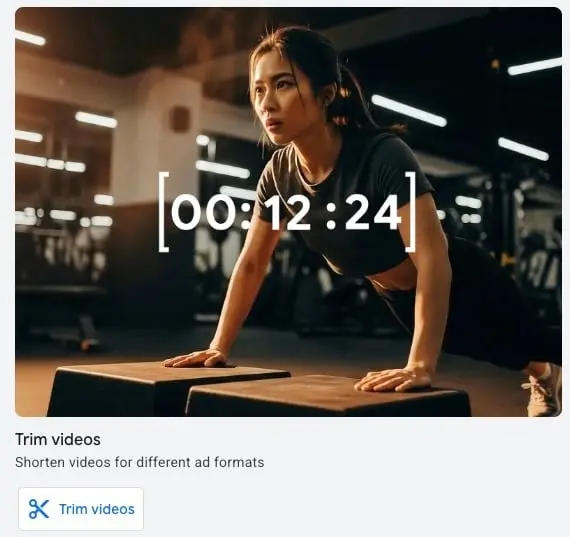
- Trim Videos Option: Asset Studio features a robust “Trim videos” tool that allows editors to take a single, comprehensive product demonstration video and slice it into bite-sized segments suitable for different stages of a sequence.
- Format Flexibility: The tool supports various video formats and durations, making it easy to adapt horizontal assets for multi-step storytelling.
- Note on AI: While Asset Studio includes AI-generated video capabilities, best practices suggest exercising caution. Relying exclusively on AI-generated video assets sequentially can feel disjointed or inauthentic to users; human-edited, brand-authentic footage generally yields stronger emotional resonance.
A Real-World Application: The Yarbo Case Study
To visualize how this works in practice, consider Yarbo, a manufacturer of advanced robotic lawn mowers. Yarbo’s marketing team wants to run an “Introduce and Reinforce” sequence using a single, comprehensive product demo video.
- The Foundation: The team takes their master demo video and uses Asset Studio to split it into two distinct clips.
- Step One (Introduction):
- Creative: The first trimmed clip focuses on the core problem-solving aspect of the robot.
- Headline: “Save Time.”
- CTA: “Learn more,” linking directly to the brand’s homepage.
- Objective: Build initial awareness and drive curious users to explore the broader ecosystem.
- Step Two (Reinforcement):
- Creative: The second clip highlights specific seasonal offers and immediate utility.
- Headline: “Labor Day Sale.”
- CTA: “Buy now,” linking directly to the main product conversion page.
- Objective: Retarget warm users who engaged with the first video and drive direct transactions.
Alternatively, Yarbo could configure four 15-second “Engage and Differentiate” clips highlighting specific features (e.g., snow blowing, lawn mowing, leaf sweeping, and app control) in a strict, sequential order to cement product versatility in the consumer’s mind.
Interpreting Sequence Results and Performance Metrics
Video ad sequence campaigns are fundamentally designed to generate demand, build brand equity, and foster deep engagement. Standard conversion tracking is still viable, but the true health of a sequence campaign is measured through specialized video metrics provided by Google:
- Video Played to 25%, 50%, 75%, and 100%: These quartile metrics reveal exactly where drop-offs occur. If 100% of users see video one, but only 10% make it to video four, your narrative pacing or creative length needs immediate optimization.
- Earned Actions: Metrics tracking earned views, earned subscribers, or earned shares indicate that your sequence successfully compelled users to interact with your brand beyond the initial paid impression.
- Skip Rates: Analyzing skip rates per ad group helps determine which creative hooks are failing to capture attention, allowing media buyers to swap out underperforming assets in real time.
Official Statements and Industry Perspective
Digital marketing experts and platform engineers continually emphasize that video storytelling is transitioning from static, isolated ad placements to immersive, serialized experiences. Industry veterans point out that while standard YouTube campaigns are optimized for immediate scale, sequences address the psychological reality of consumer decision-making: people rarely buy complex products upon first exposure.
By forcing a chronological delivery of messages, brands can mimic the classic "awareness, consideration, decision" sales funnel within a single video channel. Advertising platforms are responding by making creative trimming and asset management tools—such as Google’s Asset Studio—more accessible, lowering the barrier to entry for mid-market brands seeking enterprise-grade storytelling capabilities.
Future Outlook: The Evolution of Serialized Video Advertising
As privacy regulations tighten and third-party cookie deprecation alters cross-site tracking, walled gardens like YouTube are becoming paramount for full-funnel marketing. The future of video ad sequences lies in hyper-personalization and dynamic narrative assembly.
In the coming years, we can expect machine learning algorithms to play a larger role in determining how sequences adapt based on real-time user behavior across Google properties. Rather than rigid, linear sequences (Video A $rightarrow$ Video B $rightarrow$ Video C), advanced campaigns may soon feature AI-driven branching paths that automatically serve the most contextually relevant next step based on a user’s historical watch time, search queries, and engagement velocity.
For forward-thinking advertisers, mastering the fundamentals of video ad sequences today is the essential first step. By combining strict technical campaign setups—such as unguided creation, Target CPM bidding, and precise frequency capping—with creative asset trimming and rigorous metric analysis, brands can unlock unprecedented engagement and turn YouTube into a powerful, serialized narrative machine.