Executive Overview
India stands at the precipice of a historic economic transformation. As the most populous nation on earth, boasting a youthful demographic where half the population is under the age of 25 and over 840 million consumers wield smartphones, the country represents the final major frontier for explosive digital commerce growth. Yet, despite these staggering macroeconomic indicators, India’s digital retail penetration remains remarkably modest when measured against mature giants like the United States and China.
The primary friction point for policymakers in New Delhi is not a lack of consumer appetite or technological readiness, but rather a delicate socio-economic balancing act. Government leaders face the profound challenge of ushering in a high-speed digital economy while simultaneously shielding the millions of traditional, brick-and-mortar mom-and-pop shops—locally known as kiranas—that form the backbone of domestic retail, driving a massive 75% of national consumer goods sales.
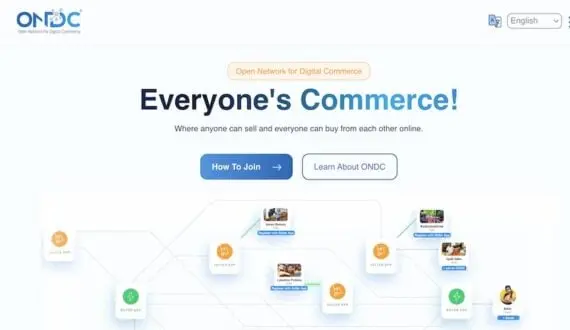
To navigate this tightrope, the Indian government has engineered a two-pronged digital strategy. The first was the creation of the United Payments Interface (UPI), a globally celebrated, government-backed peer-to-peer digital payment infrastructure that revolutionized financial inclusion. The second, more recent initiative is the Open Network for Digital Commerce (ONDC). Launched in 2021, ONDC is an open-source commerce framework designed to democratize digital retail. By decoupling the components of an online transaction—connecting buyer apps, seller apps, logistics providers, and payment gateways through open standards and transparent rules—ONDC aims to liberate independent merchants from the walled gardens of dominant marketplaces like Amazon India and Flipkart.
For global brands, domestic enterprises, and local kiranas alike, ONDC offers a compelling alternative characterized by dramatically lower commission fees, transparent search algorithms, portable customer ratings, and direct access to a vast, interoperable digital ecosystem. While regulatory hurdles for foreign entities remain stringent, understanding and integrating into the ONDC framework is rapidly becoming a mandatory playbook for any enterprise looking to capture a share of India’s impending ecommerce boom.
Detailed Chronology
The evolution of India’s digital commerce landscape did not happen overnight. It is the result of deliberate legislative frameworks, infrastructural experiments, and economic adaptations designed to foster homegrown technological innovation while protecting vulnerable domestic merchants.
2016–2019: The UPI Blueprint and the Rise of the Smartphone
The foundation for India’s digital public infrastructure was laid long before ONDC was conceived. The launch of the Unified Payments Interface (UPI) in 2016 proved that India could successfully execute population-scale technological interventions. By standardizing real-time payments across competing banks and digital wallet providers, UPI eliminated cash friction and onboarded hundreds of millions of previously unbanked citizens into the formal financial system. Concurrently, plummeting cellular data costs and an influx of affordable smartphones pushed internet penetration past the 800-million mark. However, while financial transactions were digitized at warp speed, retail commerce remained heavily concentrated. Foreign-backed marketplaces captured the urban elite, while millions of neighborhood kirana stores watched their margins shrink under the weight of aggressive platform discounting, leaving regulators searching for a structural remedy.
2020–2021: Pandemic Pressures and the Genesis of ONDC
The COVID-19 pandemic laid bare the vulnerability of small merchants who lacked digital storefronts, accelerating the urgency for an inclusive e-commerce architecture. Traditional marketplaces proved too expensive and structurally restrictive for ordinary shopkeepers, who lacked the technical sophistication and capital to manage complex seller dashboards, warehousing, and advertising fees. Recognizing that a monopolized digital retail sector could displace tens of millions of micro-entrepreneurs, the Department for Promotion of Industry and Internal Trade (DPIIT) under India’s Ministry of Commerce and Industry conceptualized the Open Network for Digital Commerce in 2021. Modeled philosophically on the open protocols of UPI, ONDC was created not as a monolithic marketplace, but as a neutral, non-discriminatory network protocol.
2022–2023: Early Pilots and Ecosystem Seeding
Following its formal incorporation as a Section 8 company, ONDC moved rapidly from theory to practice. Initial pilot programs were launched in select cities across India, testing the interoperability of disparate software applications. Early adopters included grocery and food-delivery vendors, where high-frequency transactions could stress-test the network’s logistics and inventory protocols. During this phase, early seller apps like Mystore, GoFrugal, and CostBo onboarded local merchants, while consumer-facing tech giants and fintech firms—such as Paytm and Magicpin—integrated buyer-side applications. The network proved that a customer using one app could seamlessly purchase goods from a merchant registered on an entirely different application.
2024–Present: Institutional Scaling and Global Brand Integration
Today, ONDC has transitioned from an experimental government project into a thriving commercial network. While its transaction volume has not yet matched the omnipresence of UPI, its growth trajectory is steep. Crucially, the network has evolved beyond a pure social welfare initiative for mom-and-pop shops. Major multinational corporations—including Unilever, Nestlé, PepsiCo, Procter & Gamble, L’Oréal, Johnson & Johnson, and Red Bull—now utilize ONDC as an alternative distribution channel. Furthermore, prominent quick-commerce players like Blinkit, Swiggy Instamart, and Zepto are increasingly eyeing or integrating ONDC rails to optimize supply chains and minimize customer acquisition costs, signaling a maturation of India’s open commerce experiment.
Supporting Context & Metrics
To fully appreciate the strategic significance of ONDC, one must examine the hard data defining India’s retail economy, the structural inefficiencies of traditional e-commerce marketplaces, and the mechanics of the open-network model.
Macroeconomic Realities of Indian Retail
- Demographic Dividend: Half of India’s 1.4+ billion population is under the age of 25, representing a digitally native generation with high lifetime-value potential for consumer brands.
- Smartphone Penetration: Approximately 840 million consumers access the internet via smartphones, creating an unprecedented addressable market for mobile-first retail.
- The Kirana Dominance: Traditional physical grocery and convenience stores (kiranas) account for an astonishing 75% of national consumer goods sales. These millions of micro-merchants represent the social safety net of urban and rural employment.
- Digital Retail Lag: Despite its massive population and smartphone base, India’s overall e-commerce penetration rate as a percentage of total retail remains a fraction of mature markets like China and the U.S., highlighting enormous latent demand.
Marketplace Economics vs. The ONDC Advantage
| Feature | Traditional Marketplaces (Amazon India, Flipkart) | Open Network for Digital Commerce (ONDC) |
|---|---|---|
| Architecture | Walled garden; closed ecosystem controlled by a single corporate entity. | Open-source network protocol; interoperable apps communicating via open standards. |
| Seller Commission Fees | High (ranging from 18% to 40% depending on category and fulfillment costs). | Low (ranging from 3% to 10%). |
| Data Ownership | Platform owns customer data, search ranking algorithms, and buyer analytics. | Transparent algorithms; non-discriminatory sorting; portable ratings and merchant data. |
| Lock-in Effect | High; merchants are dependent on platform algorithms for visibility and sales. | Low; sellers can switch apps, retain customer relationships, and multi-home. |
| Logistics Integration | Tied to proprietary fulfillment networks (e.g., Fulfilled by Amazon). | Unbundled logistics providers integrated seamlessly into the transaction chain. |
How the Architecture Operates
The genius of ONDC lies in its unbundling of the e-commerce transaction. In a traditional marketplace, a single platform handles discovery, payment, inventory management, and logistics. On ONDC, these functions are modular:
- Seller Apps: Software applications (such as Mystore, CostBo, and GoFrugal) that allow merchants, brands, and kiranas to digitize catalogs, manage inventory, and process orders. Registration on a single seller app instantly exposes a brand’s products to the entire network.
- Buyer Apps: Consumer-facing interfaces (such as Paytm, Bajaj Finserv, and Magicpin) where shoppers browse, search, and checkout. A user on App A can buy a product sold by a merchant on App B, fulfilled by logistics provider C, and paid for via UPI.
- Logistics & Gateway Providers: Independent third-party delivery and tech infrastructure providers that plug into the network to ensure seamless fulfillment without centralized pricing pressures.
Category Performance and Global Brand Adoption
Not all retail categories scale at the same velocity on ONDC. High-frequency, low-consideration categories dominate the current volume:
- High-Growth Categories: Grocery, food delivery, and home and kitchen items experience rapid scaling due to high daily order frequencies.
- Moderate-Growth Categories: Fashion, pharmaceuticals, and hospitality scale at a steadier pace, constrained by sizing, regulatory compliance, and complex fulfillment requirements.
Multinational fast-moving consumer goods (FMCG) giants have recognized that ignoring ONDC means leaving money on the table. Brands such as Unilever, Nestlé, PepsiCo, P&G, L’Oréal, and Johnson & Johnson use ONDC not to replace traditional marketplaces or direct-to-consumer (D2C) websites, but as an additive, low-cost distribution layer. Furthermore, global food brands operating within India’s booming quick-commerce sector are leveraging ONDC rails to slash customer acquisition costs and bypass exorbitant marketplace commissions.
Official Statements
The emergence of ONDC has garnered intense scrutiny and commentary from policymakers, tech industry leaders, and international business analysts.
T. Koshy, Managing Director and CEO of ONDC, emphasized the fundamental philosophy driving the network during a national logistics summit:
"ONDC is not an application; it is a network based on open protocols. Just as Unified Payments Interface made payments interoperable regardless of the apps people used, ONDC is designed to make digital commerce frictionless, democratic, and accessible to the smallest roadside vendor. We are leveling the playing field so that a neighborhood kirana store in a tier-3 city enjoys the same digital discoverability as a multi-billion-dollar corporate conglomerate."
DPIIT Officials, in policy briefs concerning the regulation of foreign direct investment (FDI) in e-commerce, have consistently highlighted the social imperative of open networks:
"Our regulatory framework must protect the livelihood of millions of traditional retailers who form the bedrock of the Indian economy. Digital transformation cannot be allowed to become a tool for monopolistic displacement. Through ONDC and supportive regulatory guardrails, we are ensuring that technology empowers the grassroots economy rather than crushing it."
Industry analysts specializing in cross-border trade have also weighed in on the strategic realities facing international merchants entering the subcontinent. As noted in recent trade assessments:
"Foreign brands entering India historically faced a binary choice: bow to the high commission structures and data-hoarding tendencies of dominant private marketplaces, or burn excessive capital building independent D2C channels from scratch. ONDC introduces a viable middle path. For companies willing to navigate India’s complex regulatory environment, the network offers unprecedented reach at a fraction of traditional operating costs."
Future Outlook
As India races toward its projected status as the world’s third-largest economy, the trajectory of its digital commerce sector will be defined by the maturation of open networks like ONDC. Several key trends and strategic imperatives will shape the landscape over the coming decade.
1. The Convergence of Quick-Commerce and Open Networks
Quick-commerce—the promise of 10-to-20-minute grocery and essentials delivery pioneered by firms like Blinkit, Zepto, and Swiggy Instamart—has captured the imagination of urban Indian consumers. The logical next evolution involves the integration of quick-commerce logistics networks into the ONDC protocol. By allowing hyper-local kiranas to act micro-fulfillment centers powered by ONDC’s open logistics layer, neighborhood stores will be able to compete directly with heavily funded dark-store operators, preserving local supply chains while meeting modern consumer demands for instant gratification.
2. Regulatory Evolution and Cross-Border Access
India’s regulatory environment regarding foreign direct investment in e-commerce remains notoriously stringent, designed deliberately to prevent foreign giants from exercising predatory pricing or operating exclusive inventory models. However, as ONDC matures, policymakers may increasingly view compliant foreign brands and cross-border sellers as beneficial contributors to network liquidity. Global companies that master local compliance—understanding the intricate matrix of marketplaces, distributors, D2C channels, and cross-border restrictions—will find ONDC an invaluable asset for scaling distribution beyond Tier-1 metropolitan centers into high-growth Tier-2 and Tier-3 cities.
3. Deepening Financial and Logistical Inclusion
The long-term success of ONDC will depend heavily on the continuous reduction of technological friction for non-digital-native merchants. As AI-driven conversational commerce interfaces and vernacular language support become standard features across seller applications, even illiterate or semi-literate shopkeepers will be able to manage inventory, voice-search stock, and fulfill orders effortlessly. Coupled with instant credit access enabled by UPI-linked financial data, ONDC will likely transform the corner kirana into a fully digitized, omni-channel micro-enterprise.
Conclusion
India’s digital commerce story is no longer just about replicating Western or Chinese e-commerce models. Through the brilliant synthesis of public digital infrastructure like UPI and open-source frameworks like ONDC, India is pioneering a uniquely inclusive path to digital retail. For foreign sellers, domestic brands, and traditional merchants alike, the message is clear: the open-commerce revolution is no longer a theoretical experiment—it is the operating system of India’s retail future. Those who adapt to its open protocols today will capture the definitive growth engine of the 21st-century global economy.